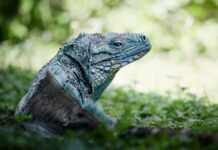
Cayman’s blue iguana population has increased by 18 with the recent hatching of the first clutch of the nesting season.
The Blue Iguana Conservation programme and the National Trust for the Cayman Islands announced the arrival of blue iguana hatchlings in a press release earlier this week.
Joseph Jamieson, assistant manager of the programme, told the Cayman Compass on Friday that the eggs that hatched were rescued from flooding last month and placed in the incubator.
“It was really great to see these babies emerge. Everybody was very happy to see that we got these guys through the whole process. These eggs are the first set of eggs of the season. They were collected early and were saved before the flooding from the rainfall earlier last month,” he said.
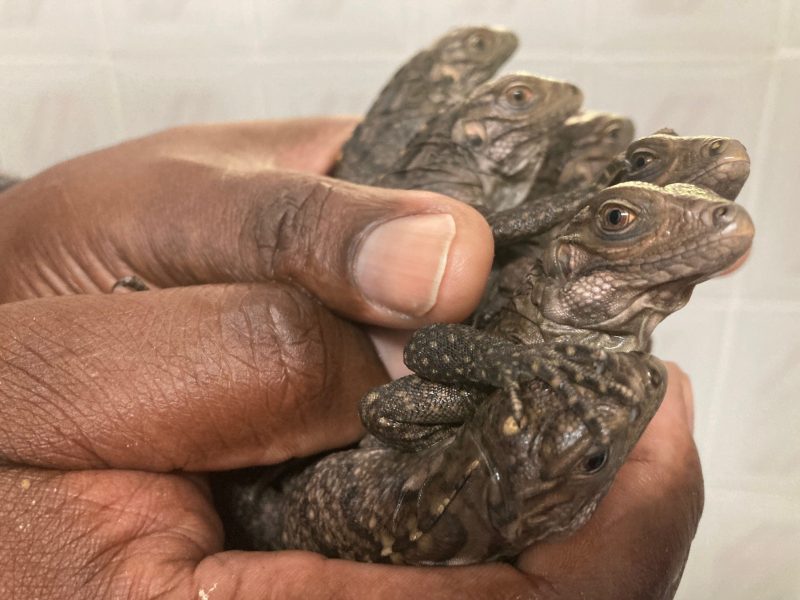
Jamieson said more eggs are being incubated after being rescued ahead of Hurricane Beryl’s passage last week.
Incubation increases survival chances
The eggs are incubated about 72 to 75 days, Jamieson said, adding that “incubating the eggs improves the … number of survivors”.
He said when the Blue Iguana Conservation programme goes through the process of incubating the eggs it gives the babies a 90% to 95% chance of survival versus the 50% chance of survival they would have in the wild.
The National Trust release said that eggs were laid within the captive breeding programme and also recovered from outside the facility from a nest which was considered threatened by the extensive recent flooding.
“The parents of these eggs were released approximately 3 years ago and continue to reside happily within the Queen Elizabeth II Botanic Park. Their eggs joined the others in incubators providing them an opportunity for a better chance of survival, and they are healthy and doing well,” the statement said.

The new hatchlings, the statement said, “are a positive sign” of the success of the programme and growth of the population of the blue iguanas.
“The use of incubators, monitoring the eggs, and the hatchlings, has been a vital component of success for the Blue Iguana Conservation programme. The newborn hatchlings are cared for and monitored in the incubators for about a week before being placed at the Blue Iguana Conservation Nursery,” Jamieson said in the National Trust release.
Heavy rainfall and flooding can potentially lower the survival rate of nests in the wild, according to the release.
Jamieson told the Compass he was proud of the work the team has done thus far to bring the blue iguanas back from the brink of extinction.
He appealed to the community to continue to assist the programme through food donations for the iguanas and financial contributions.
“We also have to take the iguanas to the vets on occasion, we drive around the island to collect food for them, and we maintain the facilities. It takes a lot to keep the programme going. We urge the community to continue to support the Blue Iguana Conservation Programme,” he added.
Last year, the programme released approximately 100 blues into the wild, including protected areas such as the Salina Reserve, Colliers Wilderness Reserve, and the Queen Elizabeth II Botanic Park.
“Protected areas are vital for the preservation of natural habitat and food sources for the blue iguanas. The Grand Cayman Blue Iguana has become an iconic symbol of these islands used frequently by government and businesses. The programme to protect and preserve them is dependent on the support of the community, including financial contributions and volunteer time,” the release said.
The blue iguanas are safe and doing well post-Hurricane Beryl, but the facility requires “quite a bit of cleanup”, it said. “The community can help support our wardens in their efforts to cleanup the debris at the BIC facility by making a donation.”
Donations can be made online at the National Trust website.
Related Videos