

By Simon Cawdery, Compass columnist

Open a newspaper, listen to a politician, watch a current-affairs programme. There’s a fair chance there will be a discussion about housing, its affordability and potential ‘solutions’. Sometimes the crisis seems manufactured to fit an alternative narrative (immigration, for instance), but sometimes it is real, and Cayman seems to have a real housing problem.
Cayman’s housing crisis is clearly not an aggregate problem. Just look at the sheer mass of construction occurring across the island. What Cayman has is a mismatch between supply and demand in the lower/lower-middle income sector, a sector that is often referred to as ‘affordable housing’.
At the other end of the spectrum, huge investment is going into the luxury end of the market, in many instances, subsidised by the government. What’s particularly galling is that for a country that worries about an affordable housing crisis, there is not more frustration that poor people are subsidising the houses of ultra-rich foreigners.
In very few circumstances do the wealthy receive housing subsidies at the expense of the poor, and yet Cayman perpetuates this anomaly through the bizarre tactic of offering import-duty concessions to developers.
Most housing market solutions discussed in this article will require some form of government intervention. Such intervention will cost money, and money is not in unlimited supply. But there’s an easy, revenue-raising opportunity that would be economically sensible to introduce, would raise money, and would do so in a progressive (tax-wise) way, rather than being regressive.
If readers take nothing else from this article, nor read any further, can I at least make an impassioned appeal for your support to scrap import-duty concessions for luxury developments. It’s nonsensical. “Subsidise the rich, at the expense of the poor” would not have won Robin Hood many friends, after all.
Evaluating the options
In an ideal world, the market would balance out supply and demand across the affordability curve, and government intervention would be deliberately limited. Government isn’t the solution to a country’s problems. Indeed, often its actions can be a contributor to them, and government is very bad at getting out of something once it starts doing it.
But the clear evidence is that there has been a market failure, with plenty of luxury residences being built off Seven Mile Beach, along canal-front areas and in other higher-end locations, but limited activity in other areas.
Housing and cost-of-living crises are not uniquely Cayman problems. Cayman would do well to learn from what other countries have done and, most importantly, to not repeat the mistakes others have made. Thus, let’s look at policies that have been tried in other countries:
1. Ban foreigners from buying homes
A poor policy decision. Cayman’s reputation has been built on being a welcoming destination for foreigners, with predictable laws and regulations and a fair treatment of rights. Abusing that for the housing market is short-sighted. What would follow? Investors would rightly worry about where foreigners will be targeted next. The bad genie would be well and truly out of the bottle.
Not only that, but foreigners buying homes contribute substantially to Cayman’s reserves through the stamp duty levied on such purchases and the import duty arising. In addition, restricting property purchases would likely discourage people from wanting to relocate to Cayman, which would further reduce government revenues through reduced work-permit fees and import-duty revenue.
2. Create a dual market so that only certain homes can be bought by locals
There’s a reason this hasn’t been tried in more countries. It creates two housing markets, as well as creating a transfer of wealth from certain house-owning locals to other locals. Who decides what property is “good for locals versus bad for foreigners”. Do we really want bureaucrats deciding which parts of the island we can live in? Are bureaucrats good at allocating resources better than the market?
3. Property tax on unoccupied properties
This is a proposal that is being considered seriously in a number of countries. The economics of it aren’t great though, as it is very difficult, without intrusive inspections, to determine what is “unoccupied”, and to monitor compliance. There are good ways to use property taxes (to be discussed later) but this isn’t one of them.
4. Ban properties from being used for tourism
Barcelona is the latest city to toy with this. The argument being that banning Airbnb frees up property for local residents – after all, if the property isn’t being rented to a tourist, surely it can be rented or occupied by a local? The problem with this approach is that it distorts the market mechanism for housing. Who is to say that a tourism property would be affordable by those who can’t get housing currently? What if a tourism property is owned by someone and rented out to help earn income to feed their family? The motives may seem pure, but the unintended consequences are often large and painful.
What about potential good policies?
Let me start by saying that there is no ‘magic bullet’. All solutions will have side effects, some of which may be negative and unpredictable. Against that backdrop, this article will seek to identify some solutions that can possibly ‘make a difference’, noting that there may be many inherent deficiencies with each of them.
1. Stamp duty
Increase the stamp duty on high-end homes. Introduce a 1% surcharge on high-end properties. This would cost US$10,000 per million-dollar-home value. It may appear to be a high number, but in reality it’s tiny in comparison to the property’s value. These funds could be used to develop a housing fund to support affordable housing and provide mortgage funding to lower-income persons (more later on this).
If your concern, on reading this, is that it would discourage transactional activity, well, I have an easy solution for that. Break up the monopoly that is the multiple listing system and its commission rates. Even the US is investigating it for anti-competition reasons. Allow free market competition there, and you could see commission rates halve. That would more than offset this cost.
2. Introduce an annual property tax
Cayman’s current stamp duty tax system incentivises government to plan for the short-term only. The current system works on the notion that ‘more transactions equal more revenue’. Lo-and-behold, Cayman concentrates too much on property construction, with little focus on the infrastructure or longer-term planning to support this development.
Keep the current stamp duty system (or even reduce it), but build upon it through an annual property tax. To keep things simple, it could perhaps start at 0.1% per annum for properties under US$1 million and 0.2% per annum for properties over US$1 million. This fee would solve two issues:
(i) it would help support the infrastructure that goes with new development – such as the roads and sewerage systems;
(ii) it would marginally disincentivise speculative purchases of additional properties since there would be an annual cost of owning a property (thus delivering one of the wishes of those who want to ‘tax second homes’).
Whilst it would be good to dedicate a fair share of the revenue to solving the housing crisis, government could also use a fraction of the income to build up its own catastrophic insurance fund. Cayman, being low lying, and with more and stronger hurricanes forecast, may face a time when residents struggle to get home insurance. Acting now could build up a buffer to help manage that future risk.
Historically, the argument would be that valuing properties is subjective and difficult. But today, there are more than enough statistics to enable an accurate valuation on every home at almost any point in time. Each property would be assessed periodically (every 10 years, say). This valuation would then form the basis on which the tax would be paid for the next decade, thereby minimising complexity.
Non-payers would be easy to enforce against. The land registry would simply refuse to permit a transfer until the accumulated debt had been paid off.
Certain properties can be exempted. If there is an economic need to exempt houses valued at less than, say, US$200,000, then simply do that to avoid burdening the lower income in society.
How much might this raise? Let’s take a guesstimate of Cayman’s residential property values. I don’t know the answer, but US$1 billion of transactions occurred in 2023, according to the Land Registry. That represented 2,198 properties. There could be close to 40,000 properties in Cayman (given the population size). That would make the value of properties in Cayman around US$20 billion. I could be way off, high or low. It doesn’t matter. The principal is key here.
Take that US$20 billion and multiply it by 0.1%. That’s US$20 million of annual revenue for the government. Perhaps the real number is half my guesstimate. That’s still US$10 million of revenue. Perhaps it’s double. The point is that this is a sustainable source of recurring revenue that is progressive, not just paid by residents (non-residents who own property would be impacted), and could be used by government to fund value-enhancing projects to benefit low-income and disadvantaged Caymanians, as well as fund real infrastructure developments and the aforementioned catastrophic insurance reserve. And don’t forget the 0.1% rate can be tweaked if needed, too.
3. Permit increased densification
Many places in the world offer high-quality accommodations to individuals in densities that are far greater than those offered in Cayman. So why isn’t increased densification and increased height the obvious options across the island? For developers, it brings down the average cost of a build – more units on the same land footprint, which can help reduce the costs to buyers (and renters).
Lower costs equal more affordability. Increased densification might also encourage more mini-communities, where coffee shops or boutiques choose to open, because of the number of people in close proximity. It would seem to be a no-brainer that property development in most condo zones should permit up to six or eight floors.
Why is it that, currently, the only places where higher building heights are permitted are in areas that benefit the ultra-rich, while the poorer areas of the community suffer from housing policies that keep their costs higher than they need to be.
4. Create a capital fund to support low-income families
Lower-income families face a gruelling challenge persuading banks, first, of their credit worthiness, and then finding the deposit for the property.
The government could contribute to a development fund that underwrites such families (who would have to pass certain tests of willingness and intent to pay), in exchange for an equity ownership of the property.
Such families would then be able to acquire their first home and build up equity in it. When they sell, the development fund earns its share from the sale, and the balance, less debt, goes to the family in question. This approach has the advantage of having fewer market-distorting effects. It can correct the dysfunction of families not being able to afford deposits by owning equity in the property. If necessary, the equity component can increase if payments are not forthcoming, thereby protecting its exposure, all while providing a route out of low-income for families.
5. Redevelopment
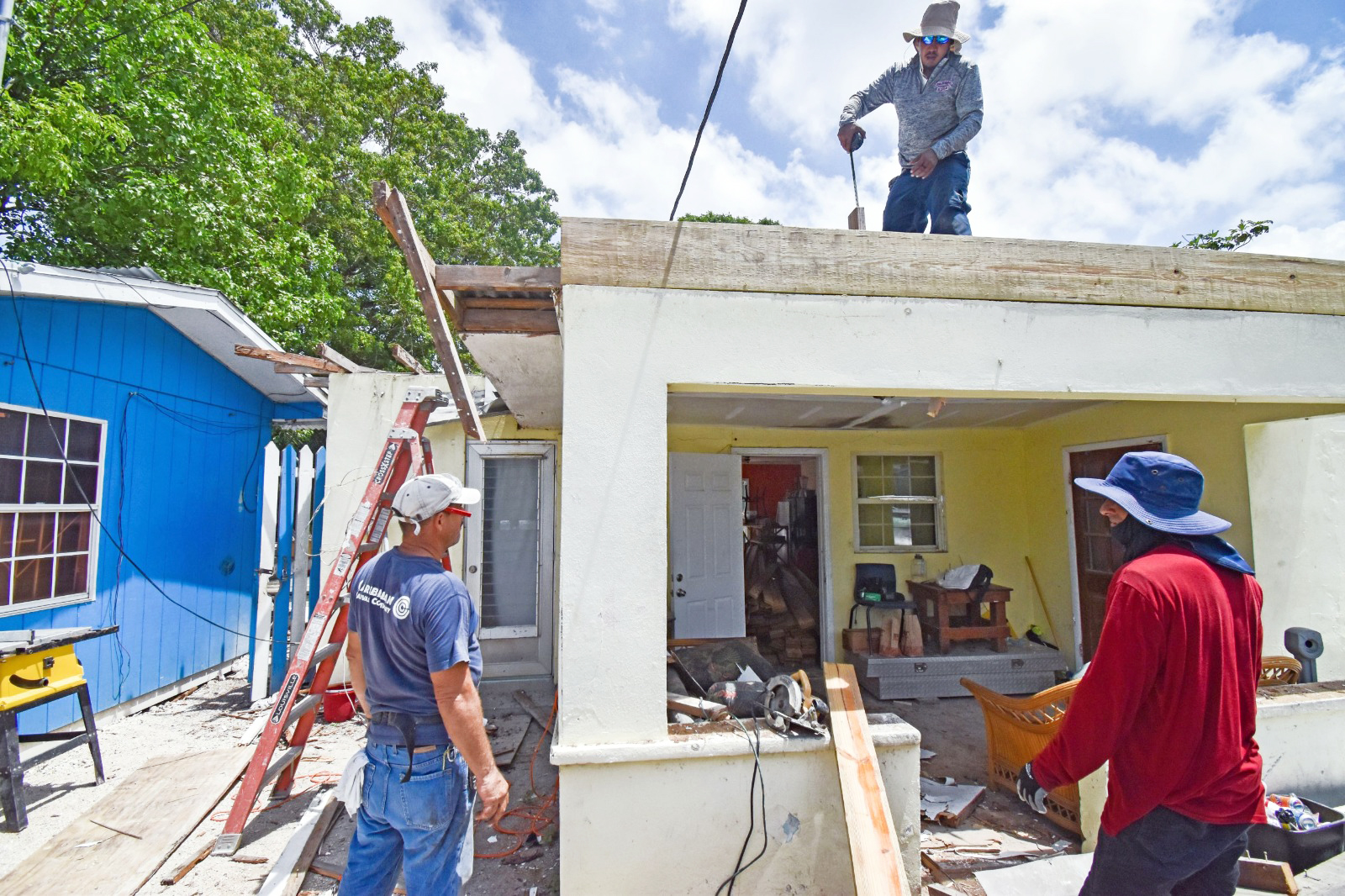
Certain areas of Cayman are ripe for a tear-down and rebuild, and if Cayman were strategic, it could do so in a way that would benefit all parts of the community.
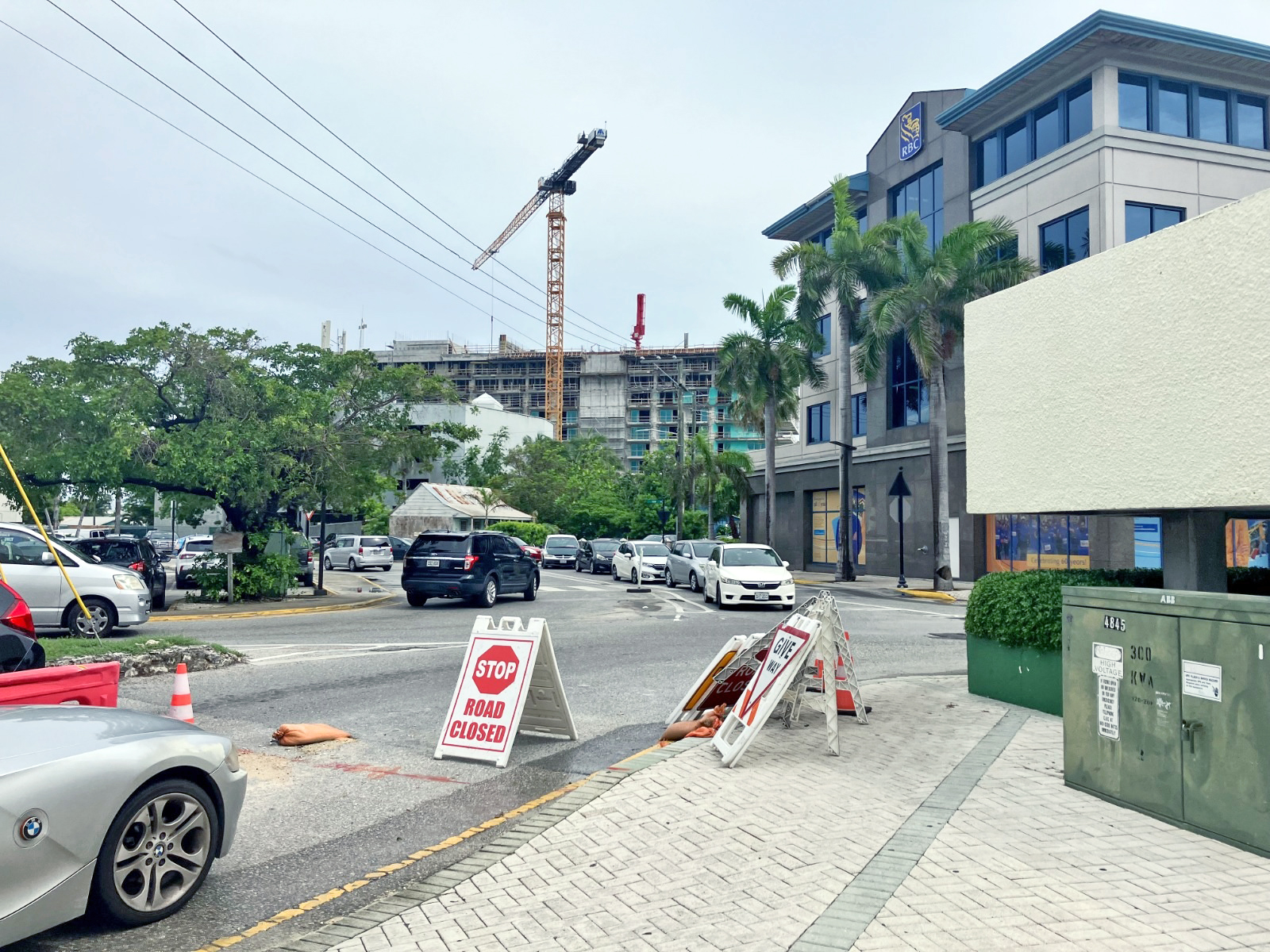
Let’s start with the eyesore that is George Town. Before the complaints rush in, I will allow that George Town has perhaps four or five buildings that are worth preserving, for their architectural and historical interest. Some others are functional office buildings. The rest would be better bulldozed. Honestly, do the exercise yourself: walk around George Town and ask yourself “would the town look better if this building were bulldozed and replaced by something else?” My guess is you will answer yes in respect of 90% of the buildings.
And that’s to say nothing of the ghost town that George Town is. Not only because of the inexcusably long construction works that have blanketed the streets in noise pollution, dust, grime and frustration (and not actually made impactful improvements), but simply because George Town offers nothing to anyone.
What restaurateur wants to operate there? Where’s the evening crowd? Gone elsewhere as soon as they can, due to the sullen atmosphere that descends at dusk. The lunchtime crowd? Most businesses have moved out, leaving only those with no control over their destiny to remain, and plenty of empty offices. George Town, it must be admitted, is not fit to be the capital city of the Cayman Islands. Time to bring out the bulldozer!
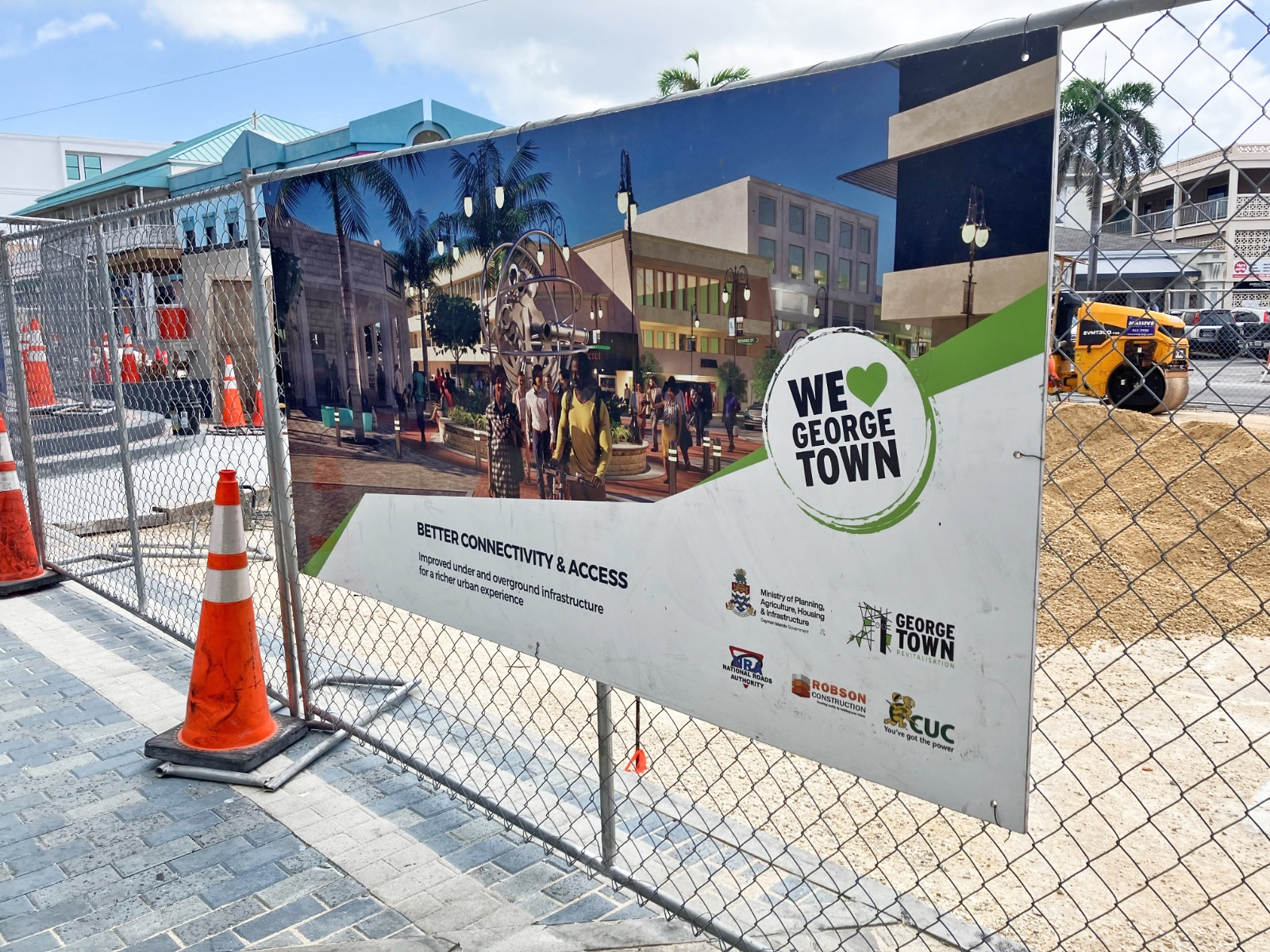
Fortunately, various other cities across the world have faced similar dilemmas. Detroit was a disaster for many decades, but has now been revitalised by creative urban planning. Certain areas of New York and London also spring to mind. But each of those formerly depressing and miserable places had recognised the value of innovation and change. Let’s bring change to George Town.
George Town should be re-zoned to permit everything – residential, hotels, shops, restaurants, high-rise, high-density. Say yes to it all. Imagine a George Town re-zoned to permit 10-storey loft-style living above shops and cafes. Not only would affordable-style housing exist in the centre of George Town, but those same people living there would have lower living costs because they could walk to work and to shops, and thus materially reduce their commute and travel costs.
An extreme but interesting idea would be for the government to buy up certain buildings and work with developers to transform them into residential units. What would motivate developers to knock down and then rebuild when few, currently, want to live there? If the government, either itself or through its development bank, took certain equity in the project and then offered developers guaranteed rental income for five years (and then retained an option to acquire the unit), this could incentivise development.
The risk to developers would be low – they would get guaranteed income post construction, they wouldn’t be responsible for 100% of the build, and the government would have an option to buy the units after a certain number of years. This option could then be sold, in due course, to those families that maintain a high-quality payment history, paying on time and have built up a small equity reserve.
Indeed, if building up a reserve is not affordable, the government could even offer some form of subsidy. After all, subsidising persons to get on the property ladder for a short period of time is far more economically sensible than paying rent for a family for decades. In addition, the government, by retaining an equity portion can benefit from the longer-term redevelopment plan that it has initially spurred.
No easy fixes
Solving a property market problem is never going to be an easy, nor a short-term fix. The first step that must be taken is, of course, acknowledging and accepting that the problem exists.
Following acceptance, ideas can come. But timidity must not be the flavour of those ideas. Timidity suits tranquil times. Below the surface in Cayman, things are far from tranquil, and inventive, robust and strategic ideas are needed.
It is time for Cayman, its elected representatives, and its people to think of some fresh ideas. There may be many good ones not contemplated in this article. That’s great. What Cayman needs is a forceful and honest discussion on its problems, because, without that, the right solutions will never be identified.
Simon Cawdery, CFA, is an investment manager and governance professional who lives and works in the Cayman Islands. He writes regularly for the Compass.
Related Videos











So, same old up-side-down socialist “recommendation” to make those who are earning their way through this crisis to subsidize those who do not. Envy politics does not create wealth, it only fuels division and punishes effort and prudence with predictable results.
All anti-Darwinist policies naturally and inevitably lead to devolution, i.e.: they make the end result worse for everyone. Anyone on the stipend would never look for work. And if effort is punished, none will eventually be exerted. Cuba & Venezuela come to mind. It’s an evidence-based conclusion.
What can be considered instead is leveling the stamp duty down from what it currently is (already sky-high 7.5%), or abandoning it entirely, because it does noticeably reduce the Island’s attraction to prospective high-end immigrants. And those migrants do fuel the economy. We should be focusing on the future, the growth, not the redistribution of the last vestiges of wealth from those few who knew how to save to those who never did.
Far from the poor subsidizing the rich the stamp duty paid on expensive homes contribute massively to the government budget. Buy a new condo on 7 mile beach and you’ll pay some $1/2 million in Stamp Duty. About enough to employ 10 teachers for a year. And the cycle repeats when those properties are sold.
The suggestion is that an annual property tax might start at 0.1%. But you can guarantee that once the government discovers how lucrative it is the rate will go up and up.
By example: The annual property tax rate in Florida equals about 2% of the value of the home. So a home worth $1 million would attract an annual tax of $20,000 per year. On the other hand the Stamp Duty in Florida (Doc Stamps) is 0.7% compared to about 8-10% in Cayman.
Instead of spending money or firework and drone displays spend it on decent road systems. Starting with an overpass / flyover for the Hurley’s roundabout. If it wasn’t a torture to drive from the east of the island many reasonable priced homes could be built there.
Easy fix apply a tiered income tax with the rich lawyers, accountants, developers are charged the highest to ensure they pay their fair share for the upkeep of the infrastructure costs.
Interesting article. As an owner of a second home in Cayman, I am very concerned about some suggestions, in particular the annual property tax. Most taxes, whether income tax, property tax or sales tax always start out low. Governments cannot help themselves but to continually raise taxes. There is never enough money for any government. Governments are also notorious for spending “other people’s money” without any real regard of being thrifty. Look at how much the CI government just spent on celebrating the new holiday,$650,000CI!
Should government get more money?
How can the author dismiss “immigration” as a factor in shortage of “affordable: housing?
Supply and demand, my friend.
Here in Canada, facing a solar shortage under a high level of immigration, the single family home is increasingly moving beyond the reach of the population. The answered seen in many immigrant cultures is the multigenerational home with multiple incomes to make for affordable living.
Joint (family) tenants in common and 50 year mortgages are becoming a frequent feature of rental and house purchase.
Even the Bank of Canada has recently acknowledged the role of immigration as contributing to the “housing crisis”.
McKeeva Bush opened the flood gates of immigration with the granting of Cayman Status to (n) thousands in the na.e of economic growth. So why be surprised that the chicken has come home to roost?
Apologies for the predictive text errors
Might I suggest that detested term “income tax”. Enlist the wealthy to help the poor, the tax could be applied only to earnings over CI$100,000 p.a, the beauty of this being it applies to all, – Govt Ministers, Civil Service mandarins, M’P’s and the private sector. The tax could be levied on a sliding basis e. g minimum rate on earnings from $100K to $125K and rising thereafter at progressively lower rates in bands of say $25K. The drawback being implementation will require an increased workload on the Civil Service (in some areas this is needed). This would not apply to those not working here.
If properly structured it need not be an undue burden on the taxpayer, yet provide a significant source of income for Govt to assist the poor with subsidised housing, medical treatment and other areas where they are in need.
Excellent article, many thanks for writing it Simon, and for publishing it, Compass team.
Yes to:
1. Permit increased densification and increased height. Simon has argued this very well: it is insane that Caymanians are denied access to cost-effective housing. CIG should emulate Singapore’s HDB (Housing Development Board) model by developing state-owned, multi-storey housing projects with affordable rental and ownership schemes. By using public land and implementing strict regulations, the government could ensure efficient use of space, reduce housing costs, and cater to diverse income groups while maintaining quality and community-focused living environments.
2. Break up the monopoly that is the Multiple Listing System (MLS) and its commission rates. This is long overdue: MLS is daylight robbery (at least Dick Turpin wore a mask).
3. Redevelop George Town. It is presently an ugly combination of the worst aspects of Northern England seaside town long past its prime, plus a third world building site. The only comparable island capital that is worse is Road Town in the BVI.
4. If one must increase stamp duty on high-end homes, then (a) do it only for those over e.g. US$3M or more – US$1M is too low; and (b) ring-fence the funds to provide housing for Caymanians. Non-ring-fenced funds will be wasted at best; embezzled at worst.
However:
For the love of God, no to annual property tax: the government already squanders immense amounts of money, and an annual property tax would simply begin an inexorable ratchet of ever-higher taxes year-on-year. A property tax would not be hypothecated, and therefore would just be wasted on junkets and pork-barrel projects. At least (1)-(4) above would directly contribute to housing for Caymanians.
The local Caymanian population needs protection. It’s relatively straightforward since there aren’t too many of us, and most have jobs and homes. However, those with low incomes and those new to the market also need safeguarding.
Why is no one addressing the issue of the banks? The Canadian banks represented in Cayman are powerful entities and could easily offer more favorable credit options, such as cheaper mortgages. Someone should advocate for putting pressure on all banks to provide better credit options. We all know the importance of securing commercial credit and mortgage credit (including for cars) at rates lower than the U.S. market. This should be an easy win—just 1% lower than PRIME, and watch people invest!
The island’s population is growing and needs to continue increasing, but we’ve lost control of the balance. Low-income inbound workers are on the rise to support the tourism industry because there aren’t enough local Caymanians to fill hotel jobs (or they simply don’t want to work in that sector). As a result, these positions are being filled by hardworking, low-income foreigners who send their earnings back home. That’s not sustainable for our economy. We need to attract the middle class back, encourage families to return, retain our Caymanian middle class, and ensure wealthier Caymanians keep their money here rather than moving it abroad.
Someone in the government needs to become the Tsar of credit reform in Cayman.
Offer favorable credit options to Caymanians as soon as possible.
Modernize the planning regulations to allow smaller restaurants to open, providing cost-effective options for tourists and fostering competition.
Increase the population by attracting the right types of people who will keep their money in the local economy.
Thank you
“Government isn’t the solution to a country’s problems. Indeed, often its actions can be a contributor to them, and government is very bad at getting out of something once it starts doing it.”
The author should take his own advice. An annual property tax may start out small but government would keep going back to raid the piggy bank. And once this kind of tax is imposed, the government may well decide to start taxing all manner of things. Terrible idea.
On the other hand, bulldozing George Town is a great idea. A carefully-planned, new town centre would be a huge asset.
Erroll: IF COO could be issued within 4 weeks of building completion, not 7to 9 months as presently issued, hundreds if not thousands of apartments would become available SOONER. A 16 – townhome complex, completed in FEBRUARY this year now hope COO will be issued by- mid September. Real estate agents advised–GREAT NEWS, that means it only took 7 months.
Those purchasers had to rent properties until COO’s were issued. This would be simple step of GET THE JOB DONE.
One of the biggest threats to stable home ownership appears to be the reluctance – or perhaps the inability – of insurance companies to grant property insurance at rates that are affordable to rapidly increasing numbers of home owners. Currently the homeowner is faced with absurdly high demands for insurance cover payments on their reinstatement values, and penalising those who try to insure at affordable rates with draconian penalties for underinsurance. Any reasonable person has to see that this must stop. Either the companies must give customers more flexibility in the arrangements they choose to make or there will have to be government action to compel them to do so. Perhaps they should be forced to compete with public-private partnerships that not only have company interests in mind but also those of their customers.