

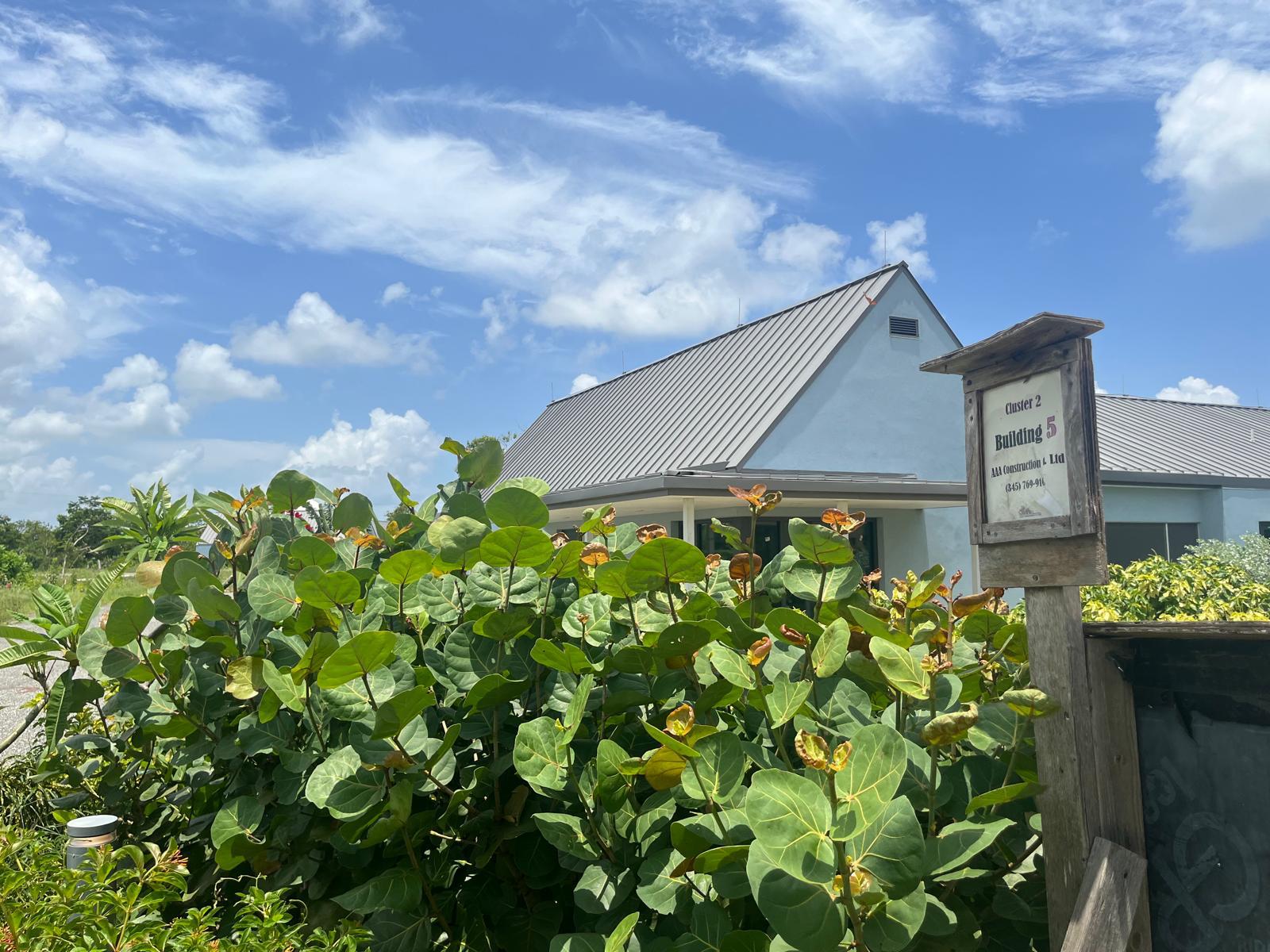
Caymanian mental health patients living in group homes in Jamaica are sending a plea to their government: ‘Bring us home’.
For decades, the islands have been sending patients with serious mental health issues to group homes in Jamaica.
A new facility in East End was designed to allow people with those conditions to be treated in Cayman, close to their family and friends.
But the facility, which celebrated a groundbreaking ceremony when construction kicked off in 2019, is still not open.
“We have been promised for six years that they are going to bring us home,” one long-term patient told the Compass in a phone call from Kingston, where she lives with around 30 others in a residential group home.
“Each month they say, ‘We are coming to get you, we are coming to get you’, and they still haven’t come.”
The route to the groundbreaking ceremony itself was a protracted process, taking five years of planning just to get the 54-bed facility, which had an original cost estimate of $15 million, to the starting line.
In her latest update to Parliament, Health Minister Sabrina Turner said she was no longer willing to predict when it would open.
“I will not provide another estimated timeframe for the Poinciana Rehabilitation Centre as that remains beyond my control,” she said in a statement to Parliament in July.
She indicated that 22 staff were now able to occupy the central administration buildings. But more checks and building permits are needed before the residences are cleared for occupation.
A director was hired in July 2023, and a full team of clinical staff are on the government payroll. Turner indicated they are involved in preparatory work in the hope that the centre, originally slated for a 2021 grand opening, would be able to accept patients soon.
‘We are sitting here like zombies’
Meanwhile in Kingston, Jamaica, at two residential group homes, there are currently around 10 Caymanians, watching with interest and mounting frustration.
Two residents, both high functioning despite their mental health conditions, told us they are tired of waiting.
“We have mental health issues but we are humans. We are being treated like we are nobody. We are not bums or beggars,” one woman who has been in Jamaica for over a decade told the Compass.
She said she has been cut off from her family and has a young grandson whom she has only met over Zoom. While government funds treatment for Caymanian patients in Jamaica, it doesn’t assist with family visits.
Another patient, who has been in a similar facility for several years, said, “Every time we ask when we can come home, it is always another three or four months.”
She said she felt neglected by her country and bewildered by the delays.
“The place is built and staffed. They need to open it and send for us. All of us Caymanians want to leave here. We are not happy here. We want to come home,” she said.
The residents say they receive a drip-feed of information from Cayman and, after numerous false promises, are beginning to lose hope.
They were not specifically critical of the care they receive in Jamaica, though they complained of boredom and estrangement in an unfamiliar place.
Dr. Wendel Abel’s group homes in Kingston have accepted referrals from Cayman for almost three decades and the facilities have a generally good reputation.
The main grumble from residents is that they are bored and that those with conditions that are manageable with medication live restricted lives in close quarters with people who suffer from more serious ailments.
They also want to be closer to their families and their communities as they seek to reintegrate into society.
One of the women, who was initially sent to Jamaica for drug rehabilitation and later diagnosed with post-traumatic stress disorder from being abused as a child, said she could not leave the group home other than for appointments, accompanied by a member of staff.
“I am just tired of being here. There is nothing to do. I am surrounded by people with schizophrenia. We don’t get treatment or even a proper diet,” she said.
The second patient, diagnosed with bipolar disorder, again after drug rehabilitation, said the hardest part was living away from family and community with nothing to do. She was complimentary about the staff at the group home, but said there was little programming.
“We are not getting counselling. We sit and smoke cigarettes and drink soda, and now and then we get together and play dominoes. We are sitting here like zombies doing nothing. We have been put away from society, out of the island, and nothing is being done,” the patient said.
‘Cayman can do better’
Dr. Marc Lockhart, the former chair of the Mental Health Commission, resigned from that post in frustration over the delays in putting the much-needed, long-term residential healthcare facility together in Cayman.
He said the arrangement with Jamaica was a longstanding agreement that helped fill the gaps in care available locally.
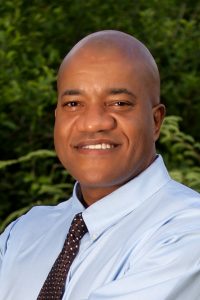
But he warned there was no obligation for any Jamaican institution to accept Caymanian patients and the island should not have to lean on its poorer neighbour for support.
Lockhart, who has visited the Cayman patients in Jamaica on numerous occasions, said the care provided was “adequate and responsible”.
But he acknowledged the standard of living and social care in Jamaica was generally lower than in Cayman and the capacity of even the most well-intentioned facility would inevitably be tested by circumstances.

He said a large group of people had put “every effort and ounce of energy” into designing a cutting-edge facility for Cayman that would be able to provide the best evidence-based treatment for its people in a serene setting in East End.
“I don’t know why it is taking so long,” Lockhart said. “It is very much needed. For those of us who deal with this [patients with mental health challenges] every day, it is extremely upsetting and frustrating.”
In prison or on the streets
Not all patients can go to Jamaica. Some are treated in the US; others end up undiagnosed in the community or languishing in prison.
The Cayman Compass has previously reported on prisoners being held indefinitely at HMP Northward because they are considered mentally unfit to enter a plea or are homeless with nowhere else to go.
One patient, Travis Webb, who was found not guilty of an attempted murder charge by reason of insanity, has been living in an acute inpatient ward at George Town Hospital for several years, in the absence of acceptable alternatives.

Webb’s family previously told us they had sought help for months after he started displaying erratic behaviour, but did not get support or a diagnosis until he committed the crime that landed him in prison.
At trial, both the prosecution and defence acknowledged that he had an untreated mental health condition at the time of the incident that meant he could not be held criminally responsible for his actions.
An outline business case report, produced for government in 2016, highlighted the challenges posed by the lack of facilities in Cayman for those with long-term conditions.
“Those who are unable to seek care abroad are either treated in an acute care setting, incarcerated in Northward Prison, cared for by their family members or rendered indigent,” the report states.
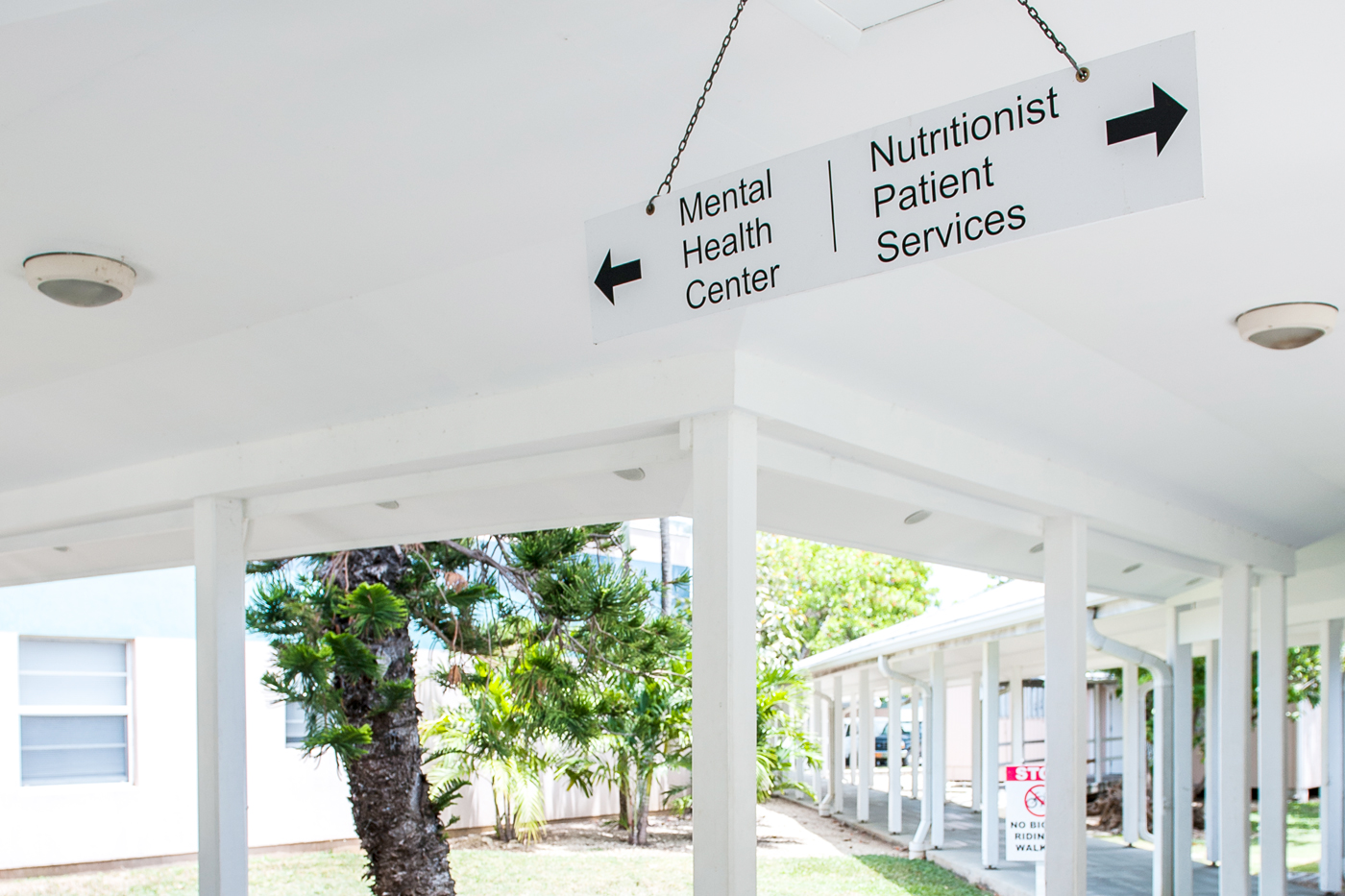
The acute care ward at George Town Hospital is intended as an inpatient facility for short stays of no more than a week. But it has become a default facility for those who need residential care.
The 2016 report highlights two patients who at that time had each spent more than a year in that ward at George Town Hospital across hundreds of separate admissions over the previous three years.
No formal tracking of Cayman patients in Jamaica
The same report also warns there is no formal arrangement to monitor the care and progress of Caymanians sent to Jamaica for treatment. At the time it was compiled, one of those patients had been in Jamaica for 18 years.
Caymanians are typically sent to Jamaica following a referral from their doctor with the costs initially funded by insurers and ultimately covered by the Ministry of Health.
The report indicates an expense to the Cayman Islands government of around $25,000 a year per patient for treatment in Jamaica compared with $114,000 in the US and a total bill of $630,000 to the public purse.
It notes, however, that those patients sent to the US return sooner than those who go to Jamaica.
“The public insurers indicated during discussions that they do not receive progress updates on patients treated in Jamaica,” the report says.
Still, the longstanding practice has been to send patients in need of care that cannot be provided on island to Jamaica.
‘I want what’s best for patients’
Dr. Wendel Abel, who runs the two group homes that currently house 10 Cayman Islands residents, said the jurisdiction had been sending patients to Jamaica since the 19th century.
He said care had advanced a great deal since then and the community group home model – where patients receive 24/7 care and supervision in a residential setting – had been the preferred model in Jamaica since the 1990s. Prior to that, patients were often sent to that country’s Bellevue psychiatric hospital.
Abel said most, if not all, of the patients in his care should be able to return to Cayman once the new facility is open.
He said many of the patients were high functioning once they were on medication and there had been numerous success stories of people who had received training or work experience while at the group homes.
“The vast majority of people living with mental illness can live and work in their community. No longer do people have to be living in facilities for the rest of their lives,” he said.
Abel added that he supported and encouraged the development of the new facility in Cayman.
“It has long been recognised that people need to be treated as close to their family as possible and within their community,” he said.
“For me, this work is a labour of love and I want what is best for the patients. I know they want to go home and I 100% support it because I know that is what is best for them.”
A survivor speaks
One person who has navigated almost every element of the mental health system in Cayman and Jamaica over the past decade is Quincy Brown.
The thespian, singer and former radio personality has had a long-term struggle with mental health and drug addiction.
After a particularly fraught period in his personal life in 2018, he says he attempted suicide. He was treated initially in Cayman and then spent six months at one of the group homes in Jamaica.
Despite setbacks since then – including his conviction for drug possession in Cayman Brac – he is currently sober and in good health.
“I’m taking my meds. I’m doing my therapy. I’m getting enough sleep, I’m eating well, I’m in good mental health right now. I’m also a recovering drug addict and alcoholic, so I’m doing what is needed. But there would have been a point I would have been a candidate for Poinciana Rehabilitation Centre,” he said.
Brown said he thrived in the group home setting in Jamaica and was given freedom to come and go.
But he said others, with more serious conditions or with immigration restrictions, were only allowed out for appointments under supervised care – something that was confirmed by Caymanian patients and doctors at the group homes.
“It seemed that some were overmedicated and caged up,” he said.
He looks at the long-delayed mental health facility as a solution to a problem that has not been given high enough priority in Cayman for too long.
Brown accompanied the Compass on a road trip to the East End facility last week. He said he was impressed by the serenity of the surroundings, highlighting the contrast with the crowded group homes in Jamaica.
Ready to open?
At the end of a long, quiet lane through farmland and bush, the stone walls and steel grey signage announcing Poiniciana Rehabilitation Centre in neatly stencilled lettering give the facility the look and feel of an exclusive health club.
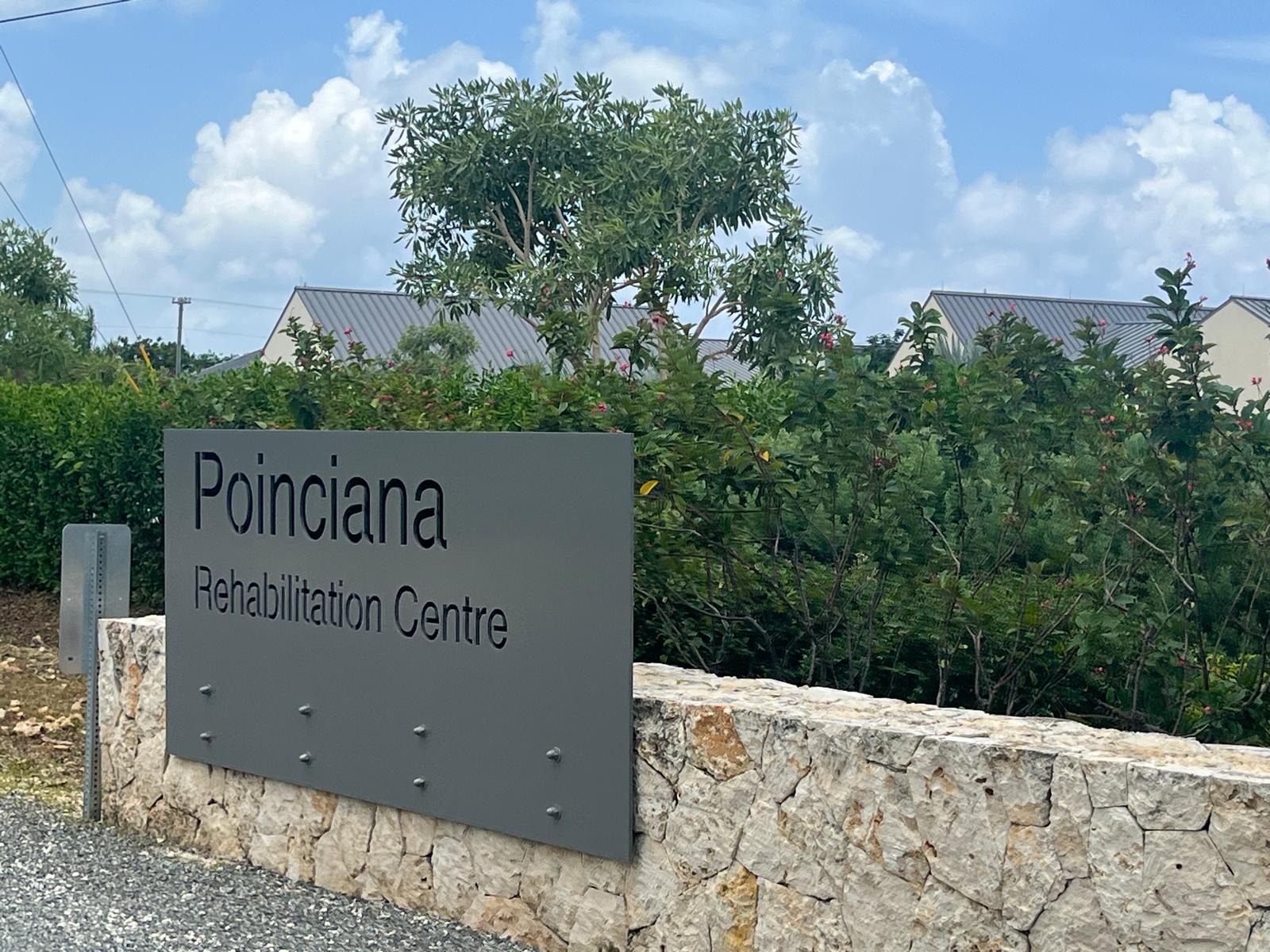
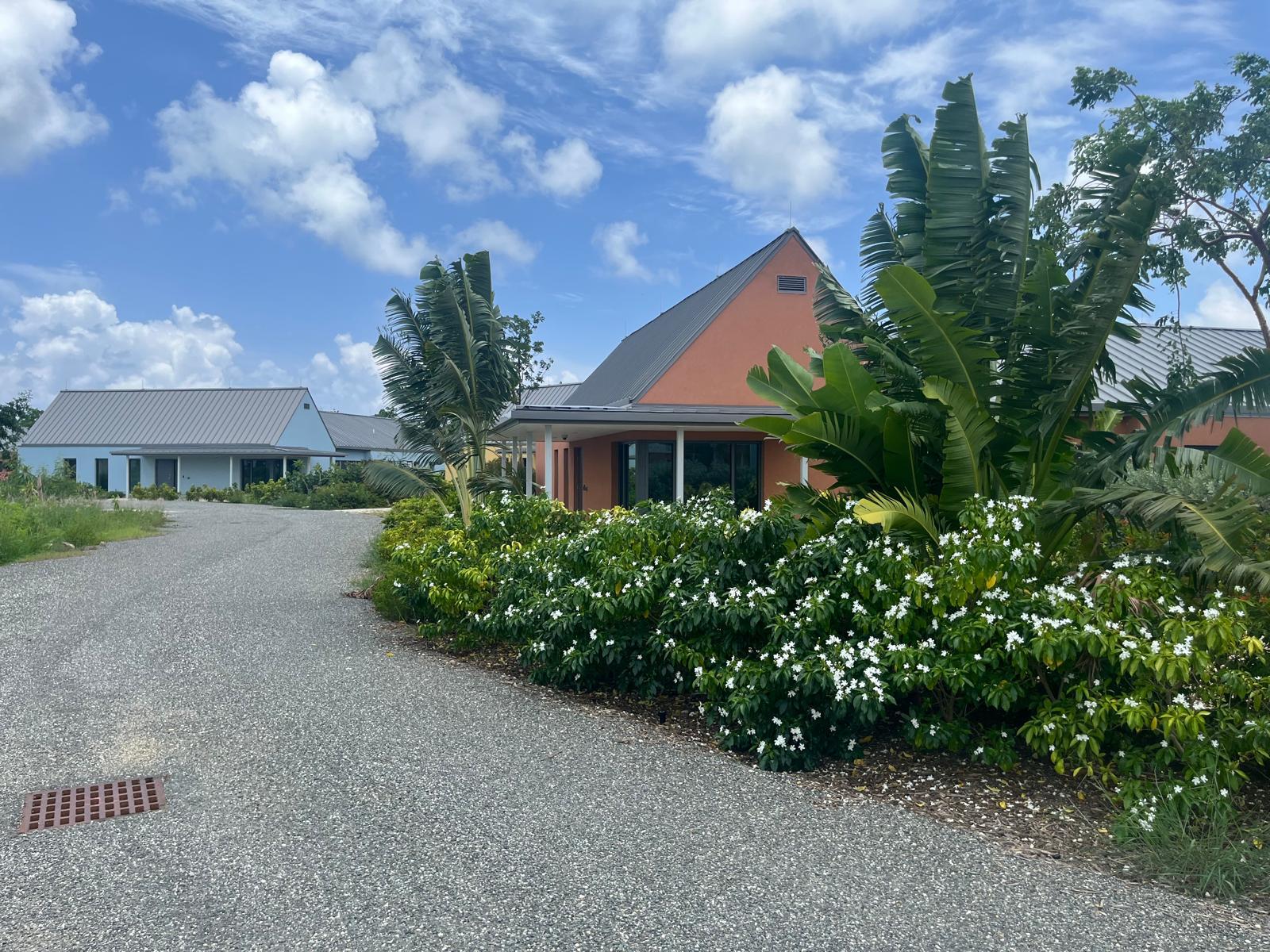
A curving avenue leads through landscaped gardens, dotted with clusters of coloured cottages that surround three central buildings and a basketball court.
There were no signs of construction in progress and a meeting was apparently taking place in the central hub. Shrink-wrapped furniture was visible through the windows of the cottages, not yet cleared for occupancy.
To an untrained eye, the facility looks ready to open.
Brown said he was surprised to find the site substantially complete, given the absence of a timeline for opening. He said the state of the facilities gave him hope that a solution to a decades-old problem would be around the corner.
“We’ve got to be near to opening now,” he said.
“I just think it’s time for us to stop playing politics and bring our people home.”
Waiting for permits
In fact, the Poinciana buildings have been in place for some time. A promotional video, produced by the Cayman Islands government in February 2023, showed the health minister and other staff members touring the facilities and cottages, which appeared to be complete. At that time, Turner highlighted supply chain issues among the reasons for the delayed opening and indicated the “finish line” was near.
Speaking in Parliament last month, she said a “special permit to occupy” the three central buildings – an administration building, cafeteria and activity centre – had been obtained in July, allowing the 22 staff members to begin working from the premises. Under questioning from Opposition MP Barbara Conolly, she acknowledged these staff were on salary, despite the absence of patients. She said they were engaged in preparatory work ahead of the planned opening.
While noting this was a “step in the right direction”, she said final permission to occupy was still needed for the three main buildings and the residential cottages, and highlighted a “plethora of problems”, including with mechanical engineering and plumbing inspections.
As the ministry awaits those building permit approvals, she said preparations were being made to repatriate Caymanians in institutions overseas.
For the residents that spoke to the Compass, that time can’t come soon enough.
“I want to come home. I have been clean and sober for 13 years and I want to come back to Cayman and be a productive citizen,” one woman said.
“I want Caymanians to get together and rally and protest and say it is time for our people to come home and for the facility to be opened. We have waited too long. We want to see our families.”
- The Cayman Compass submitted a series of questions to the Ministry of Health seeking clarity on the reasons for the delay in opening, how long clinical staff have been on the payroll, how much has been spent on their salaries and the likely timeline from the building being cleared for occupancy to the first patients being admitted. We also filed a freedom of information request seeking costs expended on the project to date. These issues will be explored in a later story.
Related Videos












This appalling situation highlights the biggest problem with our Government and Civil Service which has never been addressed – lack of accountability. It simply is not good enough for the Health Minister to shrug her shoulders and say the delay is “beyond her control”. She carries overall responsibility for this sad situation and she needs to provide detailed reasons for the delay, what is being done to resolve it and provide a finite completion date,she is accountable to the public, that goes with the job. If she cannot do this she should no longer be in charge of the Health Ministry.