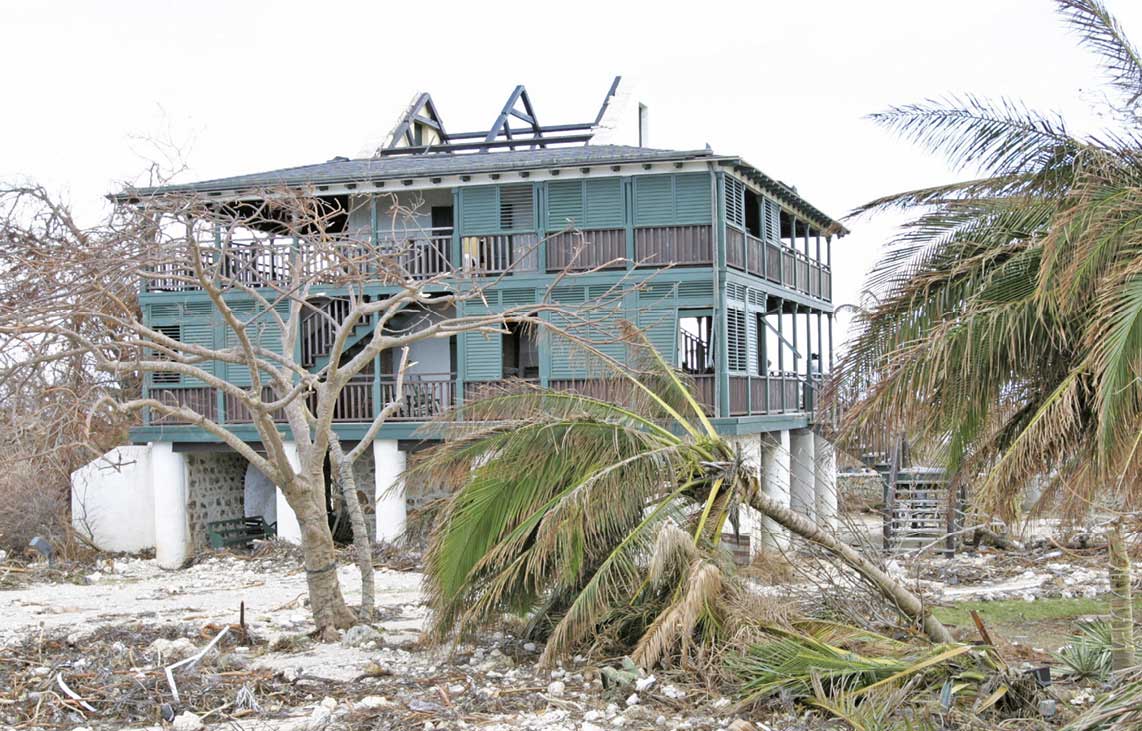
Some of Grand Cayman’s oldest cultural landmarks were badly hit in Hurricane Ivan, while others stood the test of time.
Those which sustained damage from the storm included the Cayman Islands National Museum, Pedro St. James, the Mission House, Miss Izzy’s Schoolhouse, Jackson’s Wall, Watler Cemetery and the Queen Elizabeth II Botanic Park.
Miss Lassie’s house on South Sound, however, survived the storm, showing the strength of the island’s traditional wattle-and-daub structures.
MUSEUM
The National Museum on the waterfront in George Town shut its doors for five years following Ivan.
The building was affected by mould in the aftermath of the storm, while the museum support facility in Pasadora Place suffered flood damage.
Artworks in the main building were taken to the National Gallery of the Cayman Islands for safekeeping, and around 3,500 objects in the support facility had to be rescued, cleaned and put into a container for storage.
While the mould remedial was underway, the museum took the opportunity to undertake other renovations to ensure that the building was strong for many years to come.
Dating back to the 1830s, the historic property began life as a one-storey building used for government business. Since then, it has served the function of post office, library, secondary school, dancehall and courthouse, expanding to a second floor along the way.
During the renovations following Hurricane Ivan, historical writings were discovered under layers of a wall in the Old Gaol section of the museum. The building had also served as a jailhouse in one of its previous incarnations and the wall, covered in graffiti written in pencil, dates back to those times. That area is now enclosed in glass, through which visitors can see the writing of the long-ago prisoner.
PEDRO ST. JAMES
Pedro St. James also suffered extensive damage during Ivan and was closed for several months afterwards.
The Great House, which was built more than 200 years ago by Englishman William Eden, is the most imposing structure of its era in Grand Cayman and it required to have its roof repaired following Ivan.
The house’s historical significance includes the decision there in 1831 to form the first elected government in the Cayman Islands. In 1835, the local announcement was made from the steps of Pedro St. James that slavery had ended in the British Empire.
The visitor centre on the property also required major renovations and the grounds had to be cleared of debris thrown up from the sea. The repairs, which totalled tens of thousands of dollars, included reinforcements to ensure the property was stronger and better prepared to weather future storms.
MISSION HOUSE
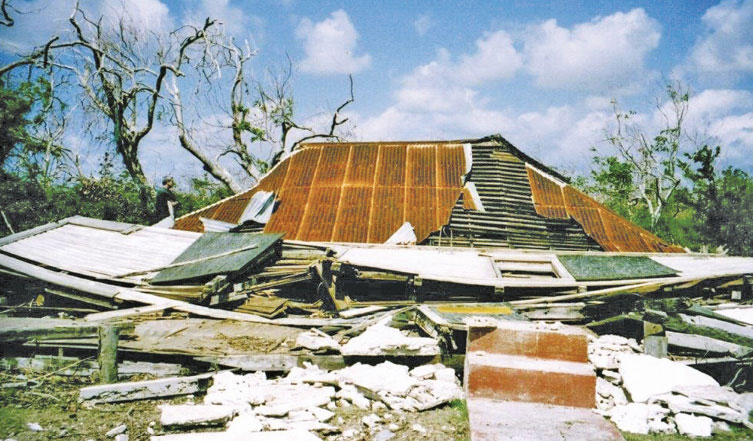
One of Cayman’s oldest buildings, the Mission House in Bodden Town, was flattened by Hurricane Ivan.
An historic site overseen by the National Trust for the Cayman Islands, the property dates back to the early 1700s when it is was utilised by settlers for its supplies of abundant waterfowl and water.
The site rose to prominence in the 1800s and became known as the Mission House to early missionaries, teachers and families who lived and contributed to establishing the Presbyterian ministry and school in Bodden Town.
Clean-up of the site post-Ivan began in 2005 and the house reopened to the public in 2007, rebuilt to replicate the original building as closely as possible.
MISS IZZY’S SCHOOLHOUSE
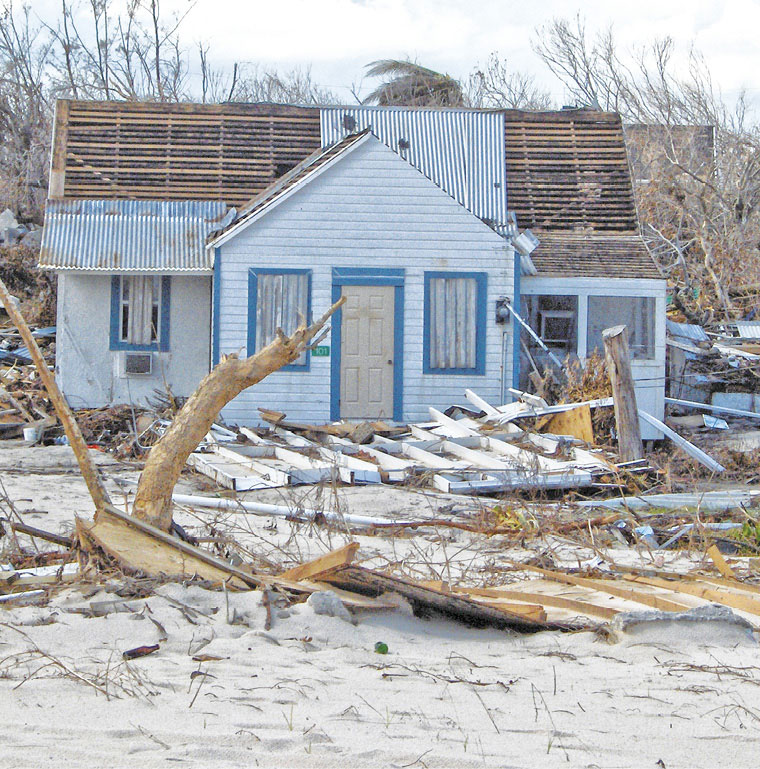
Another historic National Trust property that was destroyed by Ivan is Miss Izzy’s Schoolhouse.
The property, which is located at the end of Farrington Lane in West Bay, is more than a century old and was given as an outright donation to the trust by Miss Ivy Powell, sister of Isabel Powell, better known as Miss Izzy.
The building and site were historically significant because of their symbolic association with private school education in the mid 1940s. Although public/government schools had started to operate from around 1921, many parents still preferred to send their children to smaller, neighbourhood private schools to which they had grown accustomed.
JACKSON’S WALL
Located in Newlands on Hirst Road between Milton Drive and College Close is the ruins of Jackson Wall, which was split apart in Ivan.
Jackson’s Wall is possibly one of the oldest structures in Cayman and may pre-date the arrival of the John Shearer Jackson who settled in Grand Cayman around 1770.
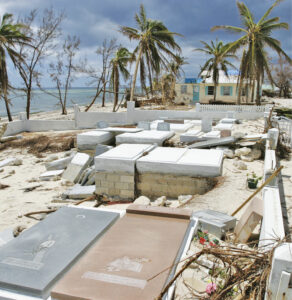
It is believed the ruins are actually steps that once led up to a large house. Oral accounts indicate that it was a two–storey home and, if that is the case, it would certainly put it in the realm of importance with Pedro St. James, Fort George and the National Museum building.
WATLER’S CEMETERY
Another National Trust property damaged during Ivan was Walter’s Cemetery in Old Prospect Road. Storm surge from the sea took out part of the wall made from wattle and stone.
The cemetery is culturally important for its unique house-shaped graves which are part of Cayman’s built heritage and also for the building technique used to construct the walls of the graveyard.
QUEEN ELIZABETH II BOTANIC PARK
The Botanic Park in North Side suffered significant tree and plant loss during Hurricane Ivan and took more than six months to clean up and reopen to the public.
Most of the damage occurred as a result of the sustained high winds, with remedial work carried out by machete and chainsaw.
Staff, even though they had their own hardships to deal with, worked four to five hours a day getting the park back into shape, saving what could and removing what was considered beyond repair.
Three 40-foot containers of plants were brought in to replant the devastated areas in the 65-acre park.
MISS LASSIE’S HOUSE
One of Cayman’s top cultural buildings – Miss Lassie’s House in South Sound – survived the wrath of Hurricane Ivan.
Also known as Mind’s Eye, this historic property is more than 100-years-old and had previously made it through hurricanes including Gilbert in 1988, and the 1932 storm that devastated Cayman Brac and destroyed 60 homes in Grand Cayman.
The only structural damage during Ivan was to the outdoor kitchen – known in Cayman as a cookrum – which was built of wood in 1947. Even the seagrape tree in the yard has been standing for more than a century.
The house belonged to Gladwyn Klosking Bush, lovingly called Miss Lassie, and was built by her father between 1878 and 1881.
Miss Lassie was an intuitive artist who began painting at the age of 62, after what she described as a visionary experience.
The unique markings on the walls of the house, its fragility and the cultural significance of the site, placed Mind’s Eye on the World Monuments Watch List in 2012.
Sadly, the cookrum that got damaged during Ivan was sold or given away before the Cayman National Cultural Foundation took possession of the wattle-and-daub property.
Related Videos