

The warning from the world’s largest cruise operators to the Cayman Islands could not have been clearer.
In the plush surroundings of the Governor’s Ballroom at the Westin Grand Cayman on Seven Mile Beach last week, executives at MSC Cruises and Carnival Cruise Line confirmed that, yes, if the Cayman Islands didn’t invest millions of dollars in building a cruise berthing facility, then the next generation of cruise ships would simply sail on by, taking their lucrative port fees and thousands of spending passengers with them.
For an island which has a significant cruise tourism sector, this is a big problem. It not only affects government revenues – cruise ships pay huge sums in port charges and passenger fees – but the livelihoods of businesses that depend on the cruise sector, including taxi drivers, food and drink vendors, tour operators and retailers.
The rise of the megaships
As cruise ships get larger and larger, leading them to be dubbed ‘Cruisezillas’, this is a unique problem for the jurisdiction, which is one of the largest cruise shipping destinations in the world, but still without a cruise berth which would allow cruise passengers to walk on and off the ship. Instead, passengers have to be brought ashore by tender boats, which might not be an issue for ships with a few hundred passengers, but is a logistical nightmare when you’re dealing with several thousand people at a time.
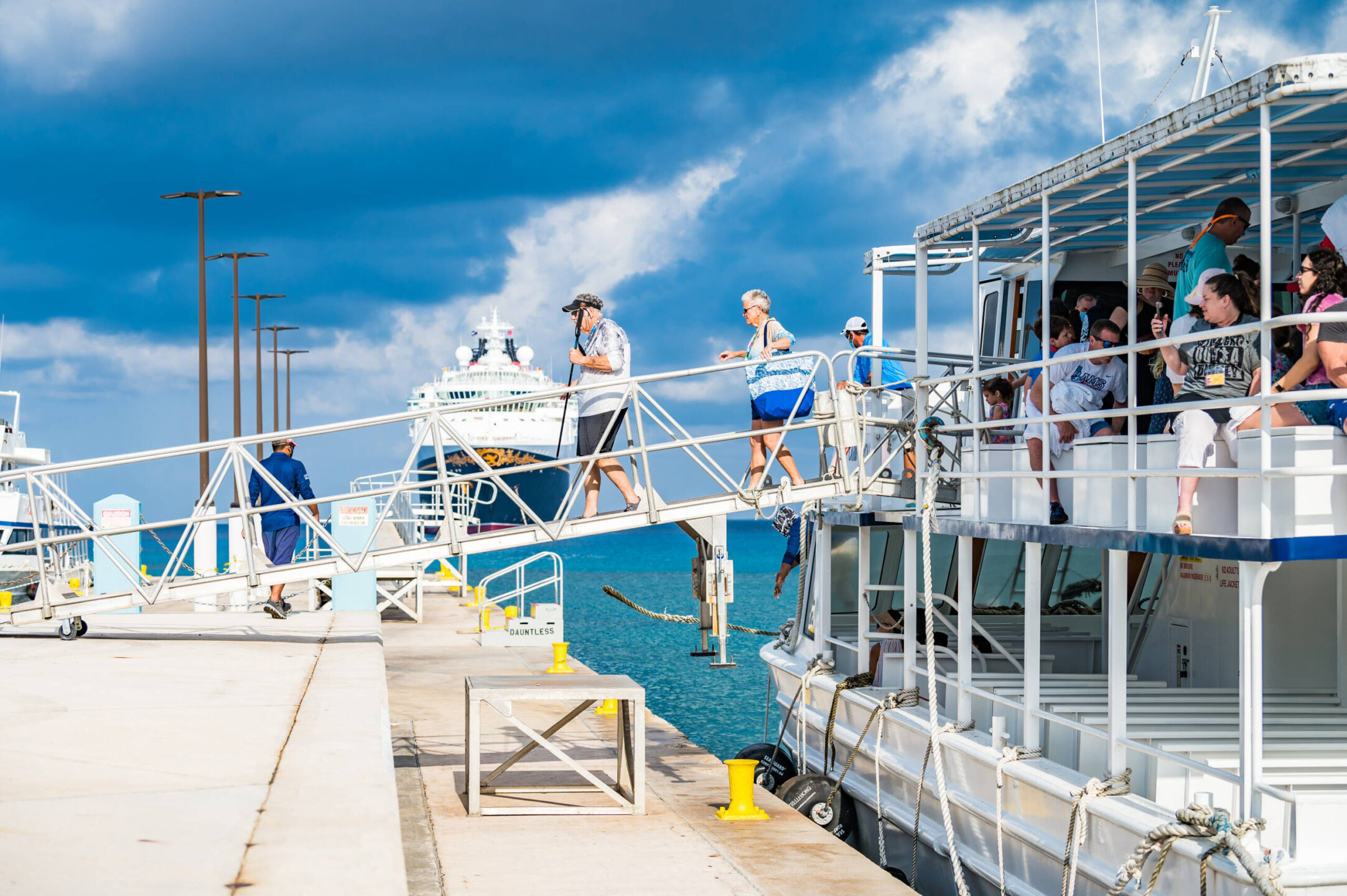
Faced with huge queues and costs to get passengers ashore and back again in a strict time limit, cruise operators are simply refusing to call into tender-only destinations.
The impact is already being felt. In 2023, around 1.3 million cruise passengers visited the Cayman Islands, according to figures from the Department of Tourism, up from 2022 but a 31% drop from the 1.8 million visitors received in 2019.
Putting this in context, 2023 was actually an all-time record for the Caribbean overall, with 31.1 million cruise visits to the region, according to the Caribbean Tourism Organisation (CTO). This was an increase of 11.3 million, or 56.8% over 2022 and surpassed 2019, the previous record, by 2.4%.
Projections indicate that the cruise sector will continue its upward track, with an estimated 34.2 million to 35.8 million cruise visits expected in the Caribbean in 2024.
Cruise traffic is booming – just not in Cayman
This boom in traffic is clearly not being shared by Cayman.
For the first three months in 2024, compared with the same period in 2019, nine destinations reporting to the CTO saw increases in cruise visits, ranging from 10% in Saint Lucia to 285% in Bermuda. Meanwhile, the other four destinations all saw declines: Barbados (down 0.3%), the Turks and Caicos Islands (down 3.9%), Jamaica (down 10.4%), and the Cayman Islands, a huge 36.6% fall.
In the first six months of 2024, cruise passenger arrivals to the jurisdiction numbered 634,212, down 14.3% on 2023, with 197 cruise ship calls, 50 fewer than in the first half of 2023. Projections for 2024 overall expect just 746,000 cruise passengers arriving on Grand Cayman, and blame is being firmly placed on the Cayman Islands’ reliance on tender boats.
It’s a subject which the Cayman Islands Chamber of Commerce recently weighed in on. Said a spokesman: “As cruise lines continue to build larger vessels, they increasingly prefer destinations with fixed piers that offer greater efficiency and safety. The lack of such infrastructure in the Cayman Islands has disadvantaged the destination, leading to fewer ships choosing to dock here.”
The rise of the megaships
There is no doubt that cruise ships are getting larger, doubling in size in the last decade alone. The world’s largest cruise ship, Royal Caribbean’s Icon of the Seas, weighs nearly 250,000 tonnes, has 20 decks, 40 restaurants, seven swimming pools and can take 7,600 passengers at full capacity.
As well as this giant, Royal Caribbean is rolling out its Oasis class of cruise ships, which each take more than 5,000 passengers, not counting crew.
It isn’t just Royal Caribbean’s ships which are growing in size though – its cruise rivals, such as Carnival and MSC, are also adding larger ships to their Caribbean fleets.
In 2000, the biggest cruise ship in the world was Royal Caribbean’s Voyager of the Seas, with a gross tonnage of 137,276. Since then, the average size of the 10 largest ships has doubled from 103,000 GT to 205,000 GT and the trend is showing little sign of stopping.
The million-dollar cruise question
The question is what should Cayman do to address the problem? A proposed referendum over plans to build cruise berthing facilities several years ago became mired in legal arguments and was eventually dropped, but the issue is more crucial than ever.
A new forthcoming referendum on the issue, should, according to Tourism Minister Kenneth Bryan, be a “straightforward” question, but the solution is far from simple. Saying yes to cruise berthing facilities does not necessarily mean saying yes to the ‘Cruisezilla’ ships of tomorrow, which will undoubtedly bring in crucial revenues but could risk changing the nature of these islands for good.
Campaign group CPR Cayman recently launched a survey for people to express their views on the issue ahead of the national referendum. The group has long been warning about how a cruise berth could affect the quality of life in the Cayman Islands, with traffic congestion, overcrowding and safety issues being paramount, particularly where tourist attractions are arguably already at capacity. There is also the impact on the unique Caymanian eco-system, such as its waters and coral reefs.
Says the group: “We accept the fact that tourism is an essential part of our economy. However, Caymanian tourism has been built for decades on the natural beauty of Cayman. As tourism morphs, what will Cayman transform into, as the market demand is pulled toward the cruise boat facility and our environment begins to die?”
While modern cruise ships are more environmentally-friendly than the carbon-emitting behemoths of yesteryear, there is no doubt that they can have an impact on the environment, both natural and man-made. Traffic congestion on cruise ship days is legendary and having thousands of cruise-shippers descend at once can’t help but have an impact on any destination.
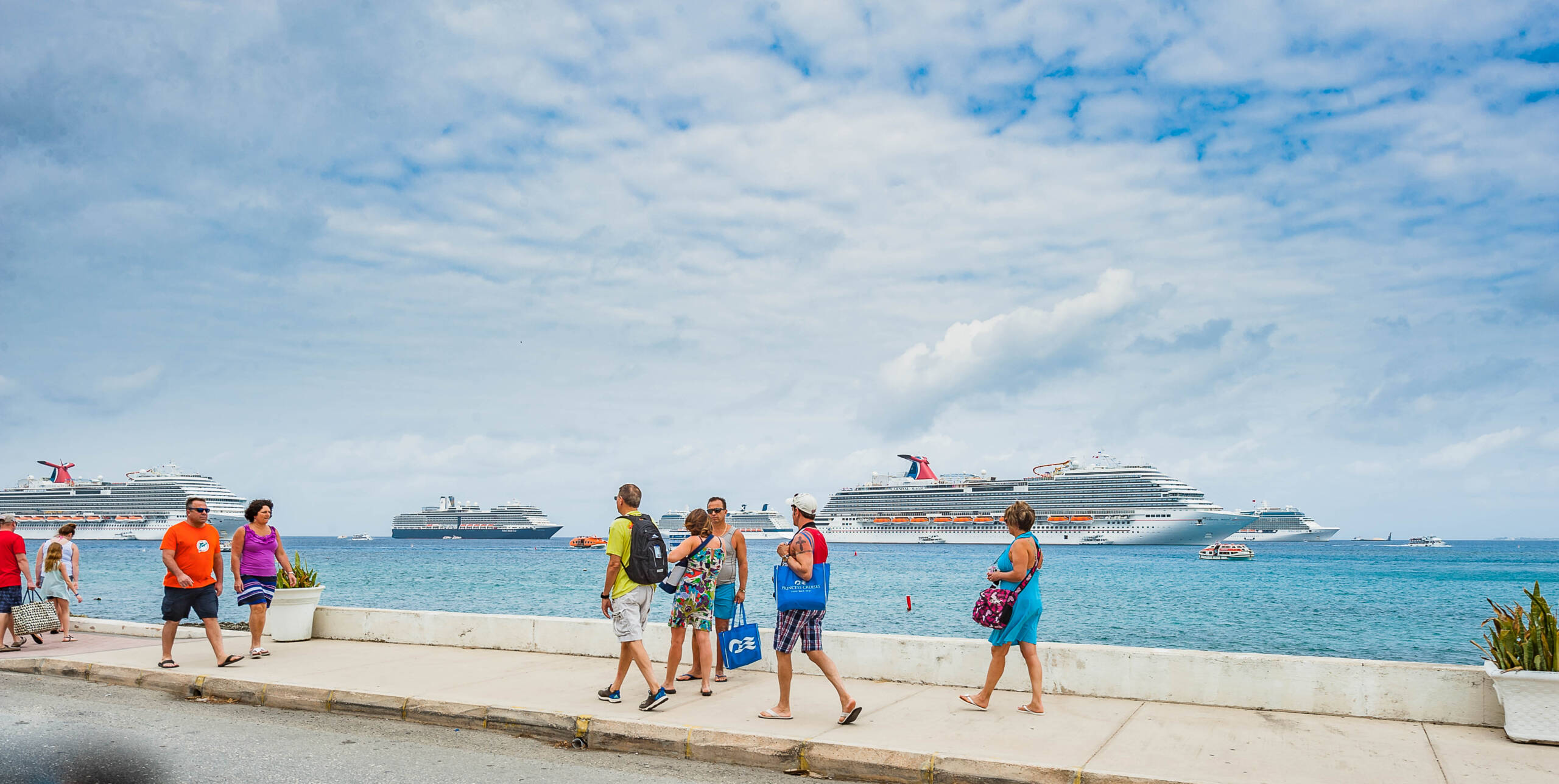
Indeed, it is the impact of cruise ships and their passengers which has led to authorities in Venice, Amsterdam, Barcelona, Dubrovnik, Bruges, Mallorca, Maine, Florida, California and Alaska to restrict cruise passengers. The Greek government has just announced a 20 euro tax per cruise ship passenger, following its moves to combat over-tourism by restricting the number of cruise ships and passenger visits.
What are the alternatives?
However, simply reducing the number of cruise visitors to the Cayman Islands would not address the economic issue, which is that cruise shipping is very lucrative to the nation, bringing in around $200 million each year. The Chambers of Commerce says a possible solution could be to explore alternatives which would diversify the tourism sector and arguably cause less of a permanent impact on the island.
It notes: “The Cayman Islands can create a more resilient and sustainable tourism industry that benefits visitors and the local community by expanding into different types of tourism. By promoting these activities, the islands can attract a segment of tourists who are less dependent on cruise ship schedules and more interested in extended stays.”
These include enhancing the current stayover options, such as luxury resorts and hotels; eco-tourism, which showcases the islands’ diverse ecosystems and natural beauty; and adventure tourism, including scuba-diving and snorkelling, kayaking, paddle-boarding and jet skiing. Other options to be explored could include cultural tourism, health and wellness tourism, culinary tourism and sports tourism – all options which do not necessarily require the mass-tourism options of mega cruise ships.
“By focusing on alternative forms of tourism, supporting local businesses and strategically planning for the future, the Cayman Islands can build a more resilient and sustainable economy,” concludes the Chamber.
Businesses whose livelihoods depend directly on increasing the number of cruise ship passengers as much as possible might disagree. But looking at how other destinations across the Caribbean are wrestling with the same issue offers a potential middle way between embracing the megaships and missing out on crucial cruise shipping revenue in the future.
Quality, not quantity, in Anguilla
At 35 square miles, Anguilla is around half the size of Grand Cayman. The government in Anguilla has made a deliberate decision to eschew the megaships, and has instead chosen to focus on smaller, luxury cruise ships.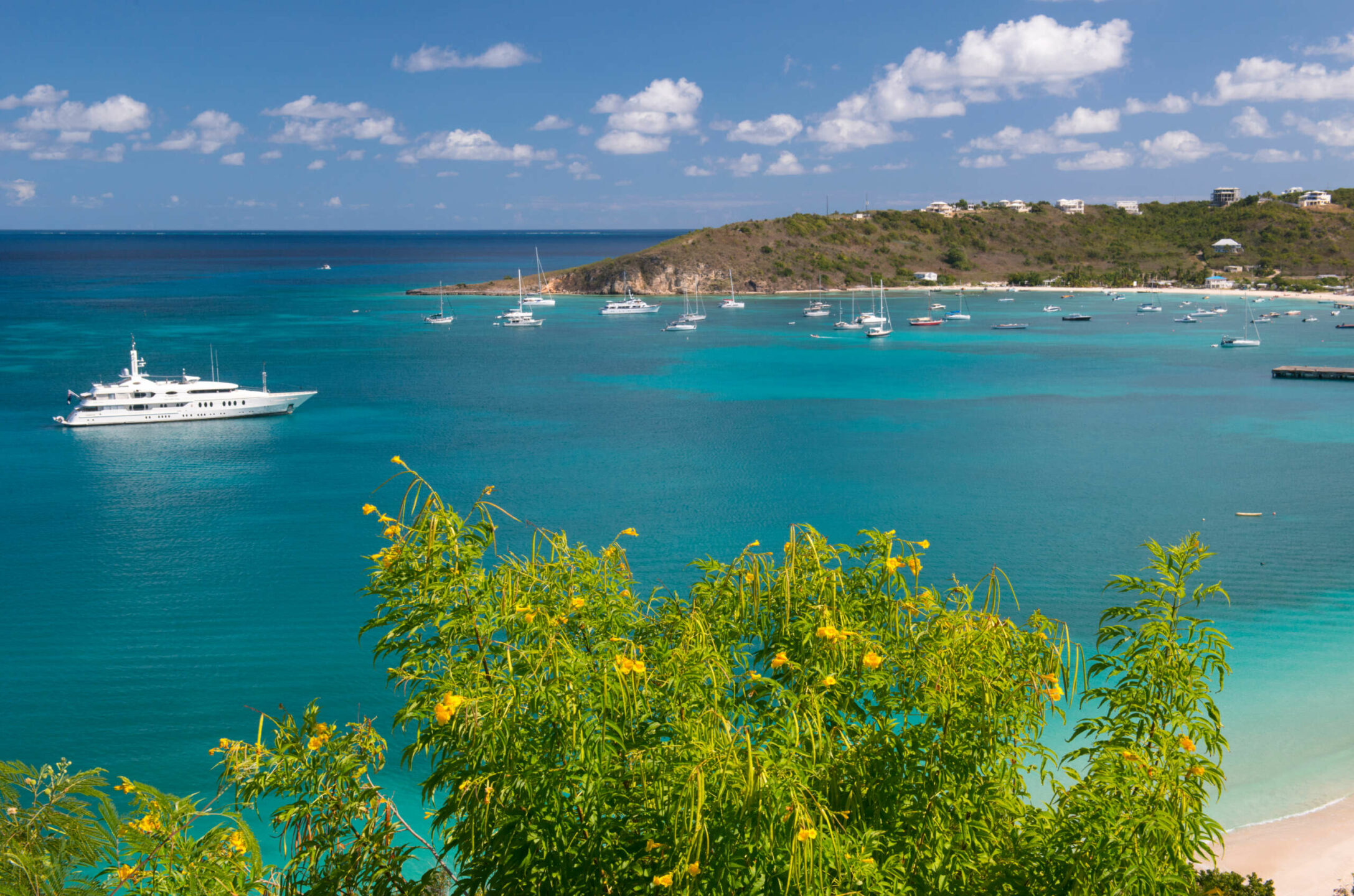
“One of the things we pride ourselves on is that we don’t subscribe to commercial tourism,” says Stacey Liburd, director of tourism at the Anguilla Tourist Board. “We don’t have the infrastructure that will support large cruise ships, and if you are hosting ships which have thousands of passengers, then what does that mean for the quality of the tourism offering? Do we have enough activities that they will find worth coming on the island for, and if something happens, can our hospital and medical centres support that?”
She adds, “When you’re thinking about the cruise industry, there’s a lot to think about in terms of infrastructure, manpower, human capital and so on, but you also want to ensure that your stayover visitors have a nice balance. There’s also the concern around the environment and marine life.”
But what about the prospect of being bypassed by the larger ships in the region in favour of other ports with greater capacity? “We’re OK with that!” laughs Liburd. “We can’t be for everyone. We have to focus on what we do well, and on other sources of revenue. We’re not trying to diversify totally away from tourism, it’s just being able to diversify our revenue streams, so if one of them gets hit, then it doesn’t cripple our economy.”
Instead, Anguilla is redeveloping its airport capacity to boost the number of visitors it can receive by air, with a new terminal building and a longer runway. “That’s our focus right now,” confirms Liburd.
Spending per head by overnight guests – which includes accommodation and meals and is likely to be for several nights – for any Caribbean destination far outweighs spend by cruise visitors, who are likely to spend just a few hours at each destination. The key for Anguilla, as many other tourist destinations, is to convert the cruise visitors of today to the week-long holiday makers of tomorrow, so making the cruise experience as attractive as possible is key.
So what should the Cayman Islands do, in the opinion of some of its Caribbean neighbours? “The Cayman Islands should be doing whatever is best for the Cayman Islands,” says Liburd diplomatically.
“I think for islands like Jamaica and Bahamas, it [mass cruising] makes sense – they have the activities, they have the infrastructure to support it, and it contributes to their revenue. Some of the smaller islands who now accept cruise ships, though, I think if they can pull back and rethink, I think they would, because that contributes to other environmental factors, such as marine life and reefs.
“There are some who probably want to pull back, but again, it’s such a huge contributor to revenue I’m not sure what that is going to look like. If you spend millions on a marina, then pull back on cruise, then you’re going to have to have some other plans in terms of how to use it.”
Dominica – going for growth
Around 225 miles south of Anguilla is Dominica, which is the polar opposite to Anguilla in its cruise ship plans. This nation has a target of a million cruise ship passengers a year by 2030, a huge leap from the current annual total of 300,000.
“We are very keen in growing our cruise ships passengers,” says Marva Williams, director of tourism at Discover Dominica Authority. “We welcome the possibility of bringing in more cruise ships and we want to build capacity to maybe even six cruise ships to our docks during the day. It’s an annual $20.8 million boost to the economy and we want to increase that.”
Cruise shipping in Dominica is already booming, with an 11% increase between the 2022-2023 and 2023-2024 seasons, with more ships bearing greater numbers of passengers to its shores. While Dominica can already accommodate, with some careful timing, two or even three cruise ships at once, it is planning to build a new cruise berth to welcome in the next generation of megaships.
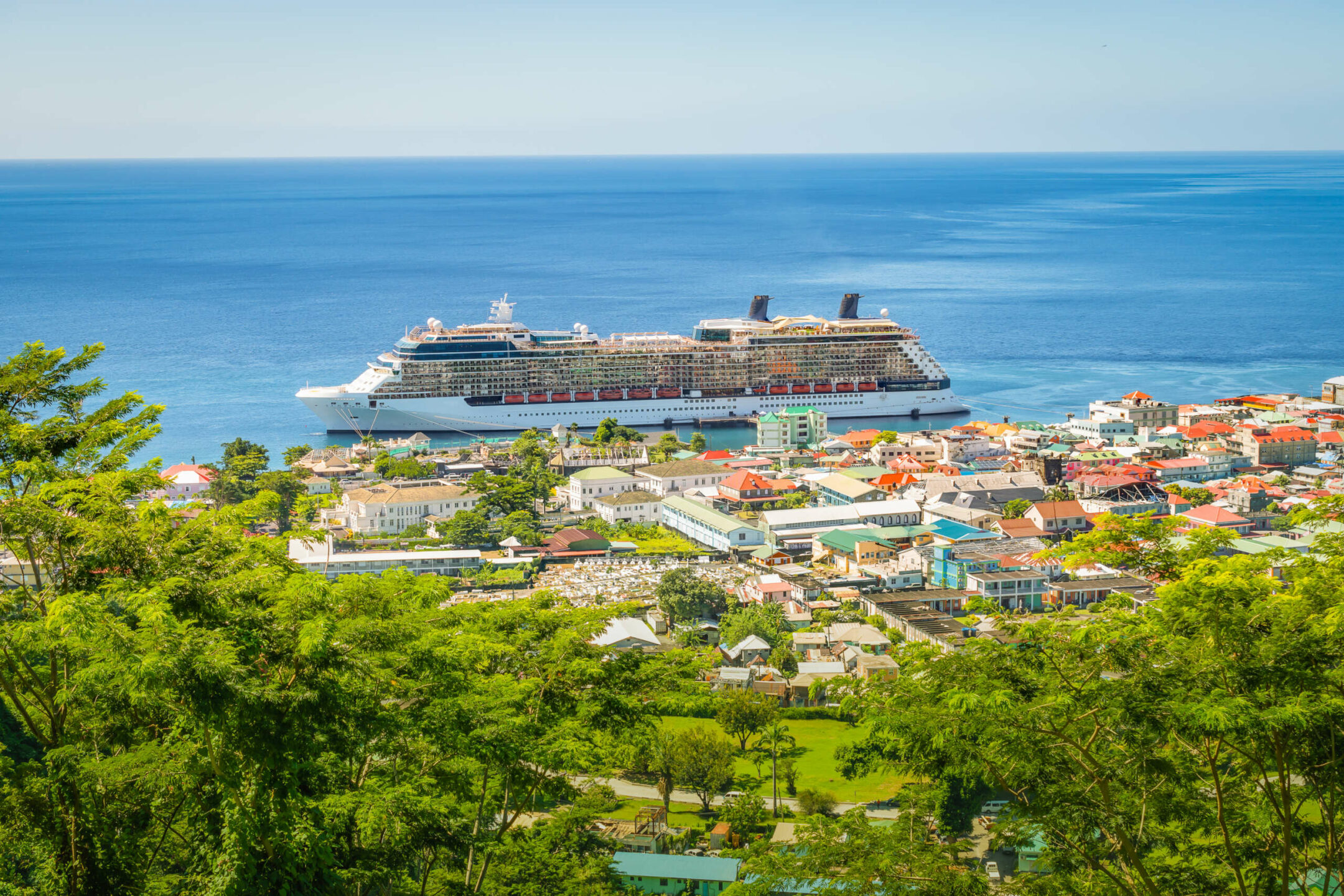
“We know that we have some work to do but we are very keen in growing our cruise ship passengers so we’re looking to develop and build on what we have now,” says Williams. “It does cause a certain level of congestion internally, so we’re talking to stakeholders and letting people know when the cruise ships are coming in, so they are prepared. But, in Dominica, we have the capacity to host more visitors and we want to fill that capacity.”
Increasing cruise visitors is not only lucrative in itself, but Williams is keen for them to return, and stay longer that just a few hours. “We want to give them an amazing experience so they come back and stay for five days or more,” she says. “We have a lot of things that you need time to experience so this is about giving people a taste of Dominica – they come briefly, but fall in love.”
Making the best of its location in Saint Martin
Differing in approach yet again is French Saint Martin, which shares an island with Dutch St Maarten. According to Valerie Damaseau, Saint Martin’s commissioner for tourism and culture, Saint Martin has “more of a unique, high-end feel which is very intimate and nothing to do with the big ships – that’s something which, politically, we don’t want”.
Handily though, Philipsburg, the capital of St Maarten, is near by and does cater for the larger cruise ships, which means the French side still benefits from the tourism spend, without having to build vast terminals itself.
“Maybe for Saint Martin, [the decision] is too easy,” muses Damaseau, “because we have the Dutch side, but even without that, we would still not choose the mass tourism from the big cruise ships. Everyone has to understand their product and our product does not cater for that.”
Instead Saint Martin caters for smaller, more high-end cruise ships and is currently considering upgrading its existing berth at Galisbay port, not to cater for larger ships, but to improve the tourism experience by separating out its cargo facility.
“We don’t have mass-market hotels, we have boutique hotels.” says Damaseau. “Our product is unique and after the pandemic, we realised that we didn’t want to mess it up with mass tourism.”
She adds, “Across the Caribbean, there’s something for everyone, so it’s about positioning yourself, knowing and sticking to your true identity. You have to define who you are and what you have to offer. You don’t have a tourism product without a country’s people or its culture, so if Caymanians don’t see a need for this mass tourism then that is a choice that they’ll have to make.”
Related Videos









Currently I’m in Bonaire and they have only two cruise ships per week and it’s delightful!
Even with that if you’re staying on island you avoid going to town. Bonaire does charge a tourist tax of $75 per persons upon landing if you haven’t already paid through their website.
I hope Cayman does not build a dock for the Mega Ships. Thousands of people each day will ruin the small island. Be a more exclusive destination rather than a mass destination. Do cruise passengers really spend significant money while visiting? I’ve seen thousands of cruise passengers over the years and they do not look like big spenders. Keep Cayman Special.
Let them go! The infrastructure, financial and environmental costs are too high! Let’s focus on stay over visitors and residents. And on improving the quality of our offerings, rather than ever increasing numbers – which we cannot accommodate comfortably!
Its not only the “taxi drivers, food and drink vendors, tour operators and retailers” who benefit. Many of these cruise ship passengers return to Cayman a year or two later because the loved the island, and book hotels or AirBnb’s for a week or more thus driving the lodging sector and the restaurants, etc etc.
The Florida Caribbean Cruise Association research shows that cruisers do not spend a lot of money when in port. That, and they are not likely to come back as a stay over visitor to this destination given costs.
Fortunately some Caribbean nations have been intelligent enough to avoid mass cruise ship tourism. We do not have the facilities to cater to the cruise ship masses onshore,and should concentrate on stay over visitors. A lot of our cruisers spend very little here and a survey of departing passengers will bear this out. Hotels , restaurants and North Sound tour operators do very well with our stayovers so we should concentrate on them. I suggest our Minister of Tourism pays a visit to Anguilla where they have their priorities in the right order.
I agree with anyone who lives on the island that all the infrastructure being created is not for cruise industry. All the highways , hospitals , schools etc. We haven’t built even shade for 2 million people in rain or sun. It is disgusting how nothing has been done for 60-80 year old people who sit in a car in the hot sun at hotels, airport or royal Watler port. It is a crying shame how we have no infrastructure either town or Spotts dock neither. This industry has been producing millions of dollars per year for our country. Never put to use for the industry at all. We are like the step children of an evil father. Why do you all say that there are so much people in the centre of town when we have transportation to take them on tours or the public beach. Improper use of Caymans’ most valuable resource. Why doesn’t Government build a private beach with bars, restaurants, pools, watersports for profit? Please allow our people to keep their businesses going. You need it. BUILD THE PIERS
This is a really well written piece on the reality of Cruise tourism across the region. One of the first issues is that we tend to look at income in the shortterm as all that matters and, disregard the variables which require serious discussion on the tourism sector.
We have built a high end stay over sector and brought into that the cruise tourism piece which caters to a totally different, lower end market.
Couple of things:
1. We need to pause and look seriously at what will sustainable tourism look like 15- 20 years from now for this jurisdiction. From the cruise side of things once we destroy the marine environment with the installation of these piers in George Town and disrupt the natural wave flows during bad weather we cannot turn things back to ‘how it was’. What impact does this all have on SMB? What impact on the high end tourism product which line SMB now?
2. We keep focusing on income to on land and water sports businesses in the short term. These are important questions but we need to step away from the short term money grab and answer the question at #1. Govt should be doing the work to better understand the wide ranging impacts this cruise sector can have on this small island and operate not from a place of fear instilled by large cruise lines rather from a place of focus on what is best for Cayman. Who owns these Cayman Islands anyway?
Government should be raising the tough sustainability questions we, as a small island trio need to be talking about in our homes. Questions which the voice of the people needs to be engaged on not when plans are in the works but when the slate is clean and credible. This is to help people here vision what a sustainable future for these islands could look like in and help them understand what that can mean for them now and their children’s future. This is not to disregard the current concern for those who make a livelihood from cruise tourism rather they are part of that process.
To have a Referendum question which asks yes or no to the Cruise port is the biggest disservice this or any government could do to these islands. This Referendum ahead of us is a turning point in the future of what we understand Cayman to be.
This article bring to our attention how other islands are managing the process of cruise tourism and some insights into why they choose the route they are going. Excellent piece.
Interesting how each person from the destinations say Cayman has to decide what is best for itself. Have we done that work? No. I really do hope that we do more than foist a Referendum upon the citizens of these islands. Cruise ship companies win and we destroy that which we merely hold in trust for those who come behind us.
We only have so much roadway on the waterfront for thousands of persons milling around, only so much North Sound area to put boats in all at once, only so much psychological congestion for the people who live and work here to subsist within. The decision is much greater than simply push cement in the sea and get piers. Its about the whole social fabric of these islands and our natural environment. Its about what we build out today for future generations. It is Not about US. It is about tomorrow.
Outstanding comment JennAnn.
I think the present level of cruise passengers ( even after Covid ) DECREASE the quality of life for those of us that stay on the island. Grand Cayman should be an exclusive destination for smaller high end cruises. Days of 10,000+ cruise visitors, many of them returning to the boat for lunch, strain our natural resources, and don’t do the purchasing that smaller ( more expensive) boats bring. Rapid growth and environmental preservation are not compatible on this small gem of an island. Beware the developers !!!
Cayman’s cruise industry isn’t just about attracting mega-ships; without a berthing facility, we risk also losing smaller ships too, as many of them are being phased out in favor of larger vessels. The cruise lines warned us for years and the chickens are now coming home to roost. The industry is down 40% from its peek in 2019. It’s no longer a bluff and the naysayers are still now trying to KILL the industry. The consequences extend far beyond a few businesses as often touted. Many of those so called business have business in other thriving cruise ship jurisdictions —so let’s not also loose sight that over 3,000+ jobs and $225 million in annual revenue are at stake. While environmental concerns should be addressed, the reef in question is already compromised as a result of 40 years of anchoring . We must balance responsible environmental management with the urgent need to protect the livelihoods of thousands of Caymanians who rely on this industry. It’s easy for those disconnected from the industry and sitting on their 7th (sorry 10th floor) office to make these disconnected pronouncements about an industry that they clearly don’t fully understand or have been fed misinformation and false narratives. Like the great Robert Nesta Marley said “ he who feels it knows it”. Has anyone of them taken the time to think what happens to these people who happen to be working class Caymanians and what it means not only to them but the impacts on our society at large?
I believe the stay over tourism market is still underdeveloped. I vist 3-4 times a year and usually stay a week each time and spend around $8K per trip. Many people of the means to do the same have no idea about the Cayman Islands incredible experience. If the money proposed to be spent for a terminal is instead spent on international marketing and adding more activities on island, I think the return will be far greater.