Just one in four of the sewage treatment plants at private properties checked by the Water Authority across Grand Cayman last year met the legally required minimum standards.
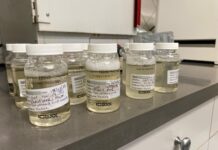
The Water Authority Act requires that the levels of biochemical oxygen demand (BOD) and total suspended solids (TSS) in treated sewage in private and public sewerage treatment plants be a maximum of 30 parts per million (ppm). Only 37 of the 139 private plants tested last year met both those requirements.
BOD is the amount of oxygen needed by bacteria in septic tanks and sewerage treatment plants to break down large organic molecules into smaller molecules, while TSS refers to organic or inorganic solids that float on the surface or are suspended in water.
Gelia Frederick-van Genderen, director of Water Authority – Cayman, which is the regulatory body for local wastewater systems, says Cayman has approximately 700 treatment plants and 17,000 septic tanks, serving about 80% of the population.
The Water Authority deals with the treatment plants at larger developments, like condo complexes, apartment blocks and hotels, while the Planning Department is responsible for the septic tanks at single residential dwellings.
A list of 547 private properties that have been checked over the past 12 years was released to the Compass under the Freedom of Information Act.
According to the 2023 sample results from the Water Authority, a number of sites were literally dozens of times higher than the minimum requirement.
For example, one development, in South Sound, was 56 times the legal TSS limit, at 1,680 ppm. Another, a shopping plaza in George Town, was more than 45 times the limit, while a restaurant in West Bay was 40 times the limit, at 1,187.5 ppm.
On the BOD front, many of the sites included in the 2023 samples did not include BOD results.
The Water Authority says, to keep up with the development boom and widen its scope of the performance of the more than 700 treatment plants in Cayman, it is also performing TSS testing randomly on some plants each month. If the TSS results are good, it usually follows that the BOD results will be similar.
The results shown to the Compass were a considerable improvement over 2009, when the newspaper carried out a similar FOI request. Back then, one of private systems tested were more than 100 times over the legal limit for BOD, and others were found to be more than 1,000 ppm.
In 2009, those results showed one site that had an alarming 8,240 ppm of total suspended solids, while another had 1,670 and a third was found to have 1,305 ppm.
More resources
Frederick-van Genderen, in emailed responses to the Compass, said the Water Authority’s on-site wastewater management programme had undergone continuous improvement over the years, “resulting in over 50 certified onsite wastewater treatment plant technicians in the Cayman Islands capable of conducting monthly maintenance.
“Before the testing regime was intensified in 2022, the number of plants meeting the 30/30 standards for Biological Oxygen Demand (BOD) and Total Suspended Solids (TSS) was minimal,” she said.
“With increased staff and programme enhancements, the Water Authority observes a growing number of compliant treatment plants.”
Impact on reefs and water lenses
Asked if sub-standard systems could affect Cayman’s water lens and the coral reefs, Frederick-van Genderen said, “The OWMP [on-site wastewater management programme] and the Authority’s effluent disposal well specifications prioritise environmental protection, specifically targeting risks to freshwater lenses and the marine environment.
“However, substandard systems and wells can negatively impact our natural resources. Through the OWMP, the Water Authority is committed to further mitigating these environmental impacts.”
Sub-standard effluent treatments have been found elsewhere to have a significant impact on coral reefs, such as in Key West in Florida, where a massive die-off of elkhorn coral in the 2000s was found to have been caused by a human pathogen released into the sea in runoff from wastewater systems.
No prosecutions
All private properties in Grand Cayman must have, at minimum, a septic tank and deep effluent disposal well, and those that produce more than 1,800 gallons of wastewater a day are required to have an aerobic treatment unit, which uses oxygen to accelerate the breakdown of any organic matter that goes into a toilet.
In Cayman, whenever a strata or property owner’s system fails to meet the legal BOD or TSS standards, they are informed via email by the Water Authority.
If owners of sewage treatment plants repeatedly fail to comply with the minimum standards, the Water Authority can issue them with notices of violations and warning letters, but no one has ever been prosecuted for failing to meet the legal requirements.
Frederick-van Genderen says that while notices and letters have been issued over the past two decades, “prosecution regarding substandard treatment plants is typically not pursued” as advising and mediating with those in non-compliance is considered a “more effective way of using the Authority’s resources”.
She said the Water Authority had “achieved success in working with the owners of treatment systems that are out of compliance by offering advice and networking connections with the service providers to achieve better compliance”.
Now that the Water Authority has expanded its capacity to test systems, the director said, the next step is to expand its educational outreach to homeowners, strata management companies, and businesses, “emphasising their crucial roles in ensuring the proper operation and maintenance of onsite wastewater treatment systems”.
With its current resources, the authority checks about 14 sites a month. “These plants are selected based on criteria such as treated volume and high-risk categories, including schools, prisons, and medical facilities,” Frederick-van Genderen said.
Recent flooding effects
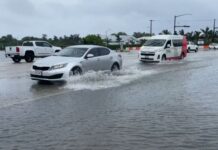
Cayman experienced extensive flooding during the passage of Tropical Storm Helene. Frederick van-Genderen said this had caused effluent disposal wells in low-lying areas to no longer drain properly due to the temporary rise in the groundwater table.
“As a result, septic systems or aerobic treatment units may no longer properly discharge into the wells, increasing the risk of sewage backup into homes or gardens, especially if the system is not watertight,” she said.
The Water Authority has advised the public to exercise caution around flooded onsite systems, as the water may be contaminated with sewage, posing a health risk.
“Please note that the Water Authority is aware of the flooding risks posed by extreme weather events, which also align with concerns about rising sea levels due to climate change,” she said.
“Our standard design for effluent wells requires that the distance between the horizontal pipe discharging from the treatment system into the effluent disposal well is at least 4 feet 4 inches above mean sea level. Since 2015, this requirement has been part of our inspections for new treatment systems reviewed in Certificate of Occupancy sign off requests from the Planning Department. If a well does not meet this condition, the developer is required to install an effluent pump.”
However, she added, “Unfortunately, older developments in low-lying areas or single households, where Water Authority inspections are not required to be conducted, may not meet these standards, making their onsite treatment systems more susceptible to flooding.”
Related Videos