

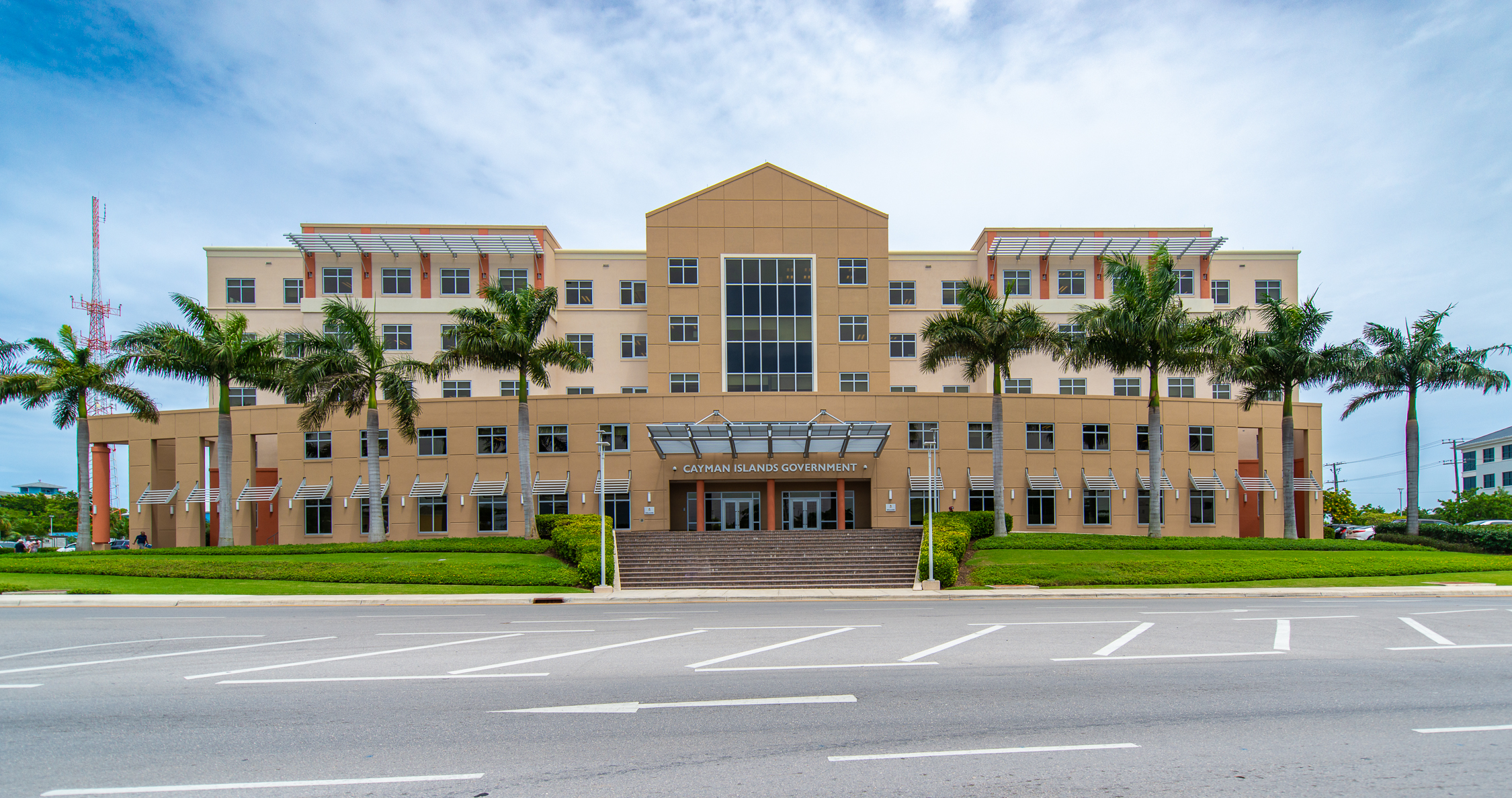
Government is moving ahead with plans to secure a $150 million loan option, which has raised concerns among opposition lawmakers.
Chief among the worries are the timing, with the loan taking place close to the general election next year, and the amount being sought.
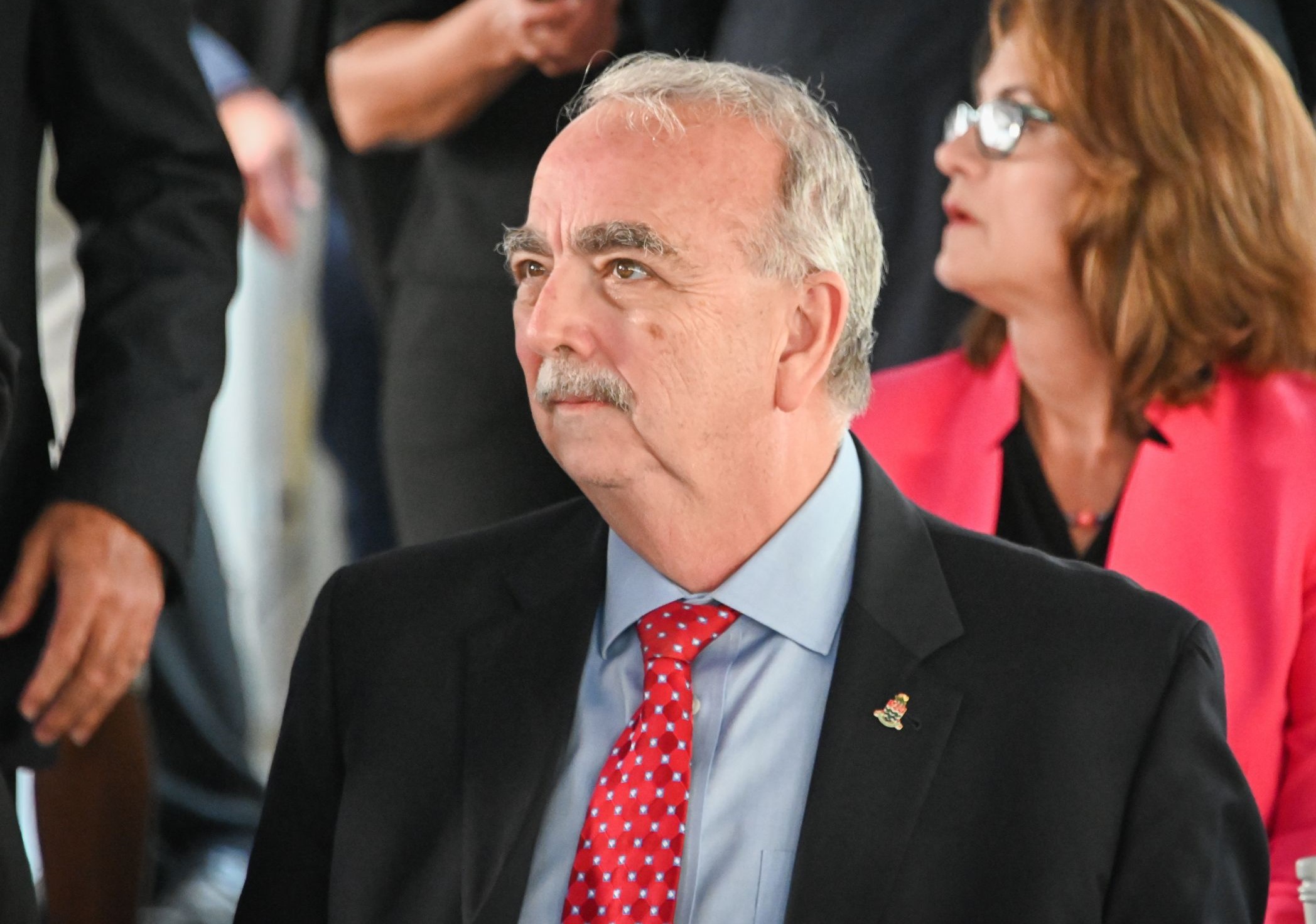
Progressives and Opposition Leader Roy McTaggart, in a statement to the Cayman Compass, said government’s plan to borrow a further $150 million is “irresponsible”.
“This move to borrow the $150 million is shocking only because of how close it is to the general election. Let’s not forget the government has already borrowed $349 million,” he told the Compass in a written statement Monday night.
The United People’s Movement administration, in its budget presentation in December 2023, had indicated it was looking at new borrowing of up to $150 million over the two-year budget cycle.
A tender for the loan option was posted on 27 Sept. on government’s public procurement portal Bonfire. The request for a “loan facility”, a type of financial assistance that allows borrowing up to a certain amount over a short period, comes after government touted a surplus for the first half of the year.
Ministry of Finance officials, responding to queries on the proposed loan facility, said the move has no connection with the general election in 2025, adding that to date, no new borrowing has been incurred for 2024.
“The 2024 budget always showed that $27 million of loan funds would be drawn down in 2024 and $123 million of loan funds would be used in 2025 for a total of $150 million,” it said, adding the loan facility is needed to fund a portion of the government’s capital expenditure, not its operating expenditure, over two years.
The preceding, it said, was the position that was made known to Parliament in late November 2023 when the 2024 and 2025 budgets were presented to Parliament.
“While the government has an operating surplus, the surplus is not enough to cover the planned capital expenditure,” the emailed statement said.
It explained that the budgeted surplus, which is the government’s revenues less its operating expenditure, for the 2024 financial year was $43 million, while the budgeted capital expenditures for 2024 was $172 million. So, while a surplus is budgeted to exist, it is not sufficient to cover the planned capital expenditure.
“Borrowings are incurred to bridge the gap,” the statement said.
The loan option, once secured, the statement said, will be used to fund a portion of the capital expenditures for 2024 and 2025, which includes a number of road development projects, school building projects, including the Cayman Brac High School, and other investment projects.
As of 31 Aug., the government’s debt balance was $424.4 million, it added.
“Although the Government is legally empowered – by the Parliament – to borrow up to a total of CI$ 150 million over the two-year period of 2024-2025, for the period 1 January 2024 to 30 September 2024, Government had not taken out any new loan funding,” the ministry statement added.
In 2022, the Wayne Panton-led administration converted a US$403 million loan facility agreed with local banks, which was brokered under the former Progressives government into a permanent loan.
The proceeds of that facility were to fund capital expenditures that were approved, together with the borrowing, in the 2022-23 budget. In the interim, the proceeds were to be invested into 2-Year US Treasury notes, which was an initiative of then Finance Minister Chris Saunders.
Saunders, now an independent opposition MP, told the Compass that he too was worried by government’s spending, when reached for comment on the loan.
Saunders added, however, that the proposed borrowing should not surprise anyone, as it was approved in the last budget.
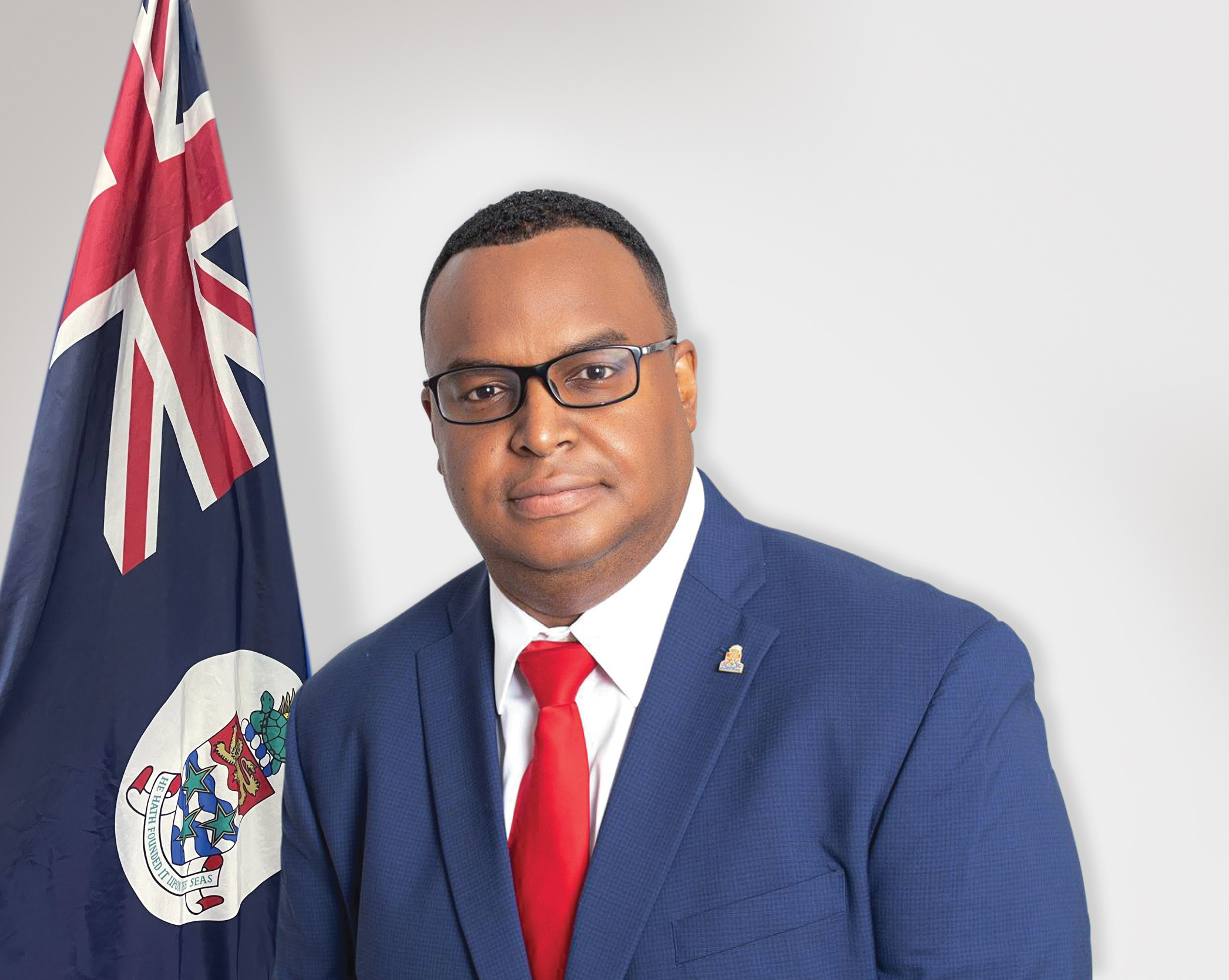
“The real surprise is the departure from the disciplined approach that I introduced whereby non-staff-related expenses above $5,000, outside of contractual obligations such as utility costs, had to be pre-approved by the Minister,” Saunders said by email.
This allowed the elected arm of government “to push back on expenses that were unnecessary, which helped to reduce expenses”, he added.
He said the challenges with government finances started from the Strategic Policy Statement process, where he warned that then Minister of Finance Wayne Panton was sailing “too close to the wind”.
“If not for the quick intervention of the current Minister of Finance [Premier Juliana O’Connor-Connolly], there was a very strong possibility that the country would not have passed a budget before the 31 December 2023 deadline. In short, Premier O’Connor-Connolly was given a train to steer that was already heading off the track and had little time to correct it between October 2023 and December 2023,” he said.
When he was finance minister, the targeted spend in central government for the 2023 financial year, not including statutory authorities and government companies, was $950 million, which was the approved budgeted amount, he said.
‘We do not play politics’
Saunders said that while the final expenditure for 2023 is yet to be published, he understood it would be about $1.03 billion, or $80 million above the year’s target, based on discussions in Finance Committee.
Saunders was guarded about commenting further on government’s fiscal position, saying, “We do not play politics with the finances of our country.”
He also said he does not have enough information as to what the government intends to do with the proposed funds to make a statement on whether the borrowing is necessary.
“That would be irresponsible of me,” he said. “However, what I can say is that I regret that I did not push through the bond that I proposed early on in our government when interest rates were at their lowest – ever.
“The vast majority of funds that we initially borrowed were actually re-invested in US securities, so much so that central government finished 2022 with $580 million in cash and US securities,” he said.
Three months later, at the end of March 2023, central government was sitting on approximately $790 million in cash and US securities, he said.
‘Cash burn’
By the end of September 2023, total cash and US securities were $582 million, resulting in a cash decrease of $208 million during that six-month period, Saunders said.
“The real alarm was that during the same period, the Government’s surplus decreased by $124 million, going from $235 million at the end of March 2023 to $111 million at the end of September 2023,” he said, adding that there was a “cash burn” of $84 million during that period.
During those six months, O’Connor-Connolly was not in her current posts of premier and minister of finance.
“That is what she inherited,” Saunders added.
McTaggart said that he too warned during the December 2023 budget session that government’s budget plans “would recklessly drain all available revenues, over $1 billion a year, to fund their extravagant spending while piling on massive new debt to finance capital projects”.
“In just four years, this administration will have saddled Caymanian families and businesses with a staggering half a billion dollars in new debt. Worse, their announced combined capital projects will undoubtedly demand even more borrowing,” he said.
McTaggart pointed out that under the previous Progressives administration, there was no new borrowing and it repaid over $325 million in debt, rebuilt reserves, and funded capital projects from revenues collected.
‘Massive borrowing spree’
McTaggart said that when the Progressives left office in 2021, “the country’s debt was under $250 million. And with no tax increases, we decreased taxes on families and businesses over our two terms. And helped families and businesses survive during a pandemic.”
He questioned why the current government was “recklessly burdening future generations of Caymanians with the cost of its unchecked spending. For what? Where are the results? So far, they have virtually nothing to show for this massive borrowing spree.”
The new loan option also follows the government’s decision to abandon the ReGen project on the basis that it had become too expensive and would have cost the country too much in the long run.
Troy Jacob, acting chief officer in the Ministry of Sustainability & Climate Resiliency, in responding to Compass queries on the ReGen termination, said discussions are still ongoing with the Dart-led consortium to exit the contract.
“The Government will share more information on the project as it becomes available,” he said via email.
There is no indication when government will re-issue the tender for another solid waste management system in the wake of the scrapped project.
Outline of new borrowing tender
The government tender is seeking an unsecured, 15-year amortised loan facility in the amount of CI$150,000,000 or US$182,926,829.27.
The request for proposals has a closing date of 18 Oct.
The new borrowing, according to the tender documents, would drawdown on the loan in two tranches. The first, for CI$27 million, would be taken out on signing of the agreement, “but by no later than 25 November 2024”.
The second tranche proposed is for $123 million, to be withdrawn “within three months of executing the agreement or upon one month’s written notice of drawdown”.
Government is asking that tenders be submitted for the entire long-term financing facility individually or as a syndication, with one institution taking the lead with respect to the funding proposal.
The tender states that the facility will be repaid in equal monthly instalments over the life of the loan, commencing one month after the date of signing the agreement.
Each tender submission must include a local industry impact statement demonstrating the ownership of the company and the number of Caymanians employed, among other requirements.
Related Videos










For sure, it’s a lot easier to spend money, than to earn it. It’s also convenient to borrow money just before the election and to leave it to the next administration to find the money to repay it.
It is a spending problem, not a revenue problem. Stop borrowing and live within your means like everyone else has to!