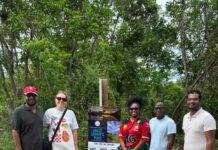
The National Trust for the Cayman Islands held their Annual General Meeting on Thursday 26 Sept. at the George Town Yacht Club.
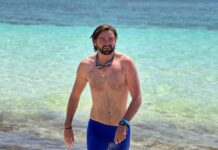
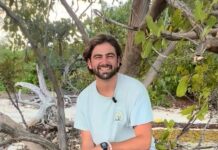
At the AGM, Ashvin Murugesu from West Bay was announced as the new chairperson of the National Trust Council, taking over the helm from Melanie Carmichael who had been in the role since 2022.
In a profile on the National Trust website, Murugesu is described as “deeply passionate about the rich heritage and natural beauty of the Cayman Islands”.
Outgoing Chairperson Carmichael said the trust’s new council is “poised to deliver excellent results with a strong leader from West Bay and several business-minded persons now on the Board, including Brigitte Kirkconnell-Shaughness”.
Looking back on some of the key achievements of the past year, Carmichael said they were able to purchase and protect a 14.4-acre parcel, consisting of sesuvium marsh habitat “in its pristine, natural state never disturbed by human activity” on the eastern end of Little Cayman.
A booklet published for the AGM also described the marsh as “dotted with small freshwater ponds that are essential for the survival of resident and migratory birds, as well as the endemic Sister Islands Rock Iguana”.
Carmichael also said they improved fundraising this year, bringing in US$250,000 for the Land Reserve Fund at an event hosted by Karen and Chris Luitjen. The funds will go towards the goal of expanding the protected areas in the Salina Reserve in East End.
She also highlighted the success of a maritime heritage fundraiser, and general improvements to the governance structures, among other areas.
Frank Roulstone, director of the National Trust, said the primary mission of the organisation was to protect environmentally sensitive and historically significant sites.
“We currently protect 6% of Cayman’s natural environment and we want to increase that to 11% across all three islands,” Carmichael said.
Roulstone said it was too early to say if the trust would embark on any major new initiatives or changes in direction in 2024, as the council had only just been installed. However, they were working on several ongoing projects, including finding ways to put the refurbished Eldemire House in Cayman Brac to good use, along with protecting and preserving the traditional Cayman catboat that was located on the Eldemire property.
Blue iguana protection
They also plan to continue with the next phase of the archaeological investigations at the Jackson Wall site in Savannah and in the near term, he said, they were “looking forward to the arrival of Dr. Calle, formerly of the Bronx Zoo in New York, who would be doing health checks on 111 blue iguanas prior to their release into the wild”.
Roulstone explained that the health checks were required because there was a virus circulating in the invasive green iguana population.
“We don’t want to expose our native blue iguanas to this virus if it can be avoided, but right now we are having to find food and feed about 250 iguanas in the captive breeding programme, rain or shine every day of the week,” he said.
“So, we are keen to get the health checks completed for these two-year-old iguanas so we can release them into the wild.”
The iguanas in the breeding programme are released at two years old, because according to Roulstone, “at that age they have reached about a little over one foot in length, which is believed to make them less vulnerable to predation [primarily] from feral cats”.
There are some concerns, however, that the iguanas may still be too small and, therefore, still vulnerable to predation as two-year-olds.
A Darwin Grant that is currently in its last year is using motion sensors and wildlife cameras to monitor, research and track the iguanas and other wildlife in the Salinas Reserve. Since the beginning of the year, the 46 cameras have identified 23 different iguanas. According to Roulstone, they are all large adults.
“We are not seeing any juveniles, so we are concerned that we may still be losing them to predation,” he said.
He said they were working on strategies to further protect the endangered species in the nature reserve. He added that along with the iguana sightings, the cameras were also detecting numerous types of birds, agoutis and other wildlife, along with a couple of feral cats, which make periodic appearances on the cameras.
Related Videos