

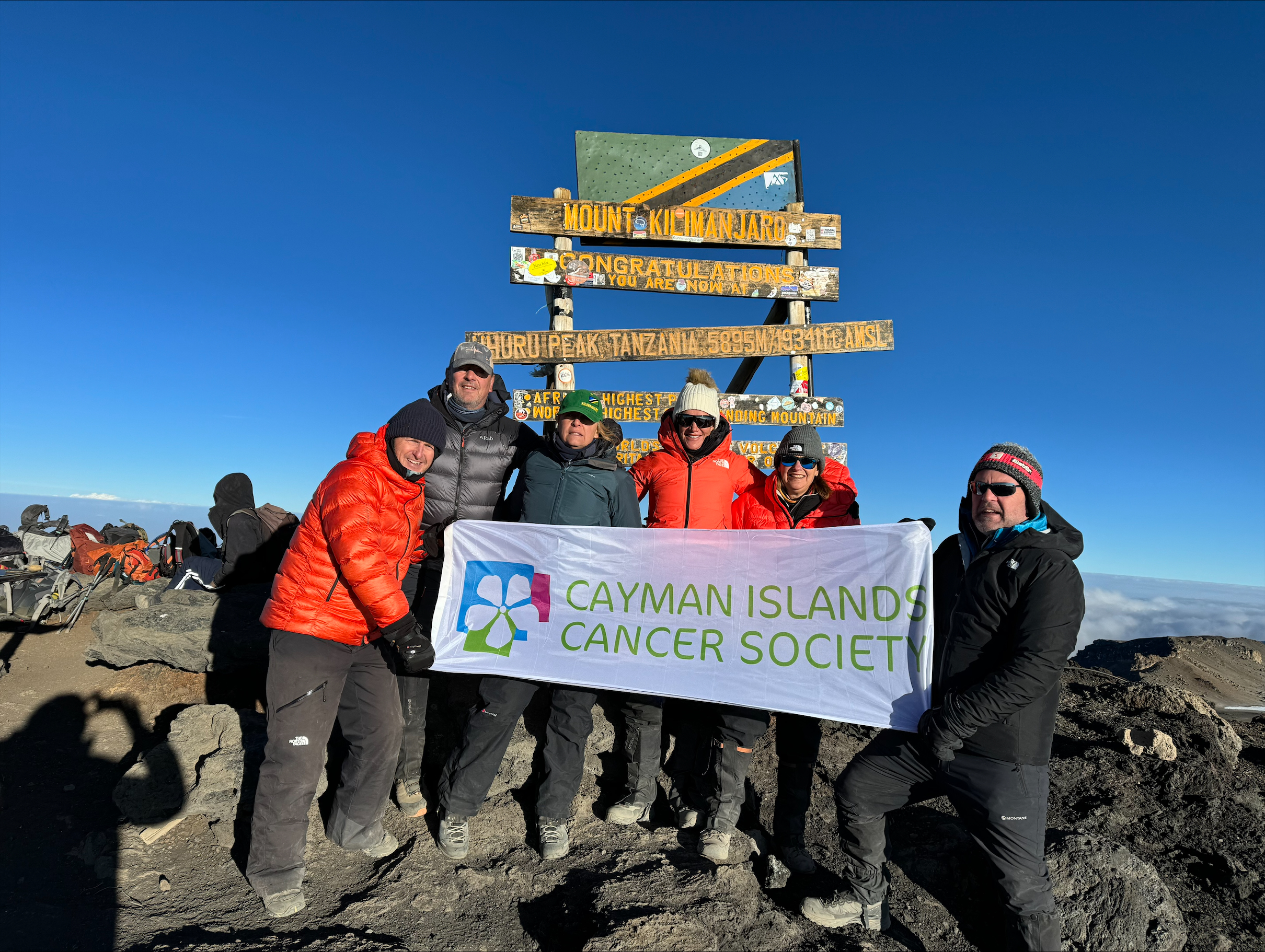
As fundraisers go, this was a lofty one.
Six Cayman Islands residents summited Mount Kilimanjaro last month, raising more than US$22,000 for the Cayman Islands Cancer Society.
Rebekah Brooks, her husband Greg, Sarah and Roger Priaulx, and Sharon and Andrew Galloway made it to the top of the 19,341-foot-high mountain in Tanzania in Africa in early September.
Brooks, who is chairman of the Cayman Islands Cancer Society, told the Compass the momentous climb was one of her ‘bucket list’ items, that she can now cross off.
In a bout of “island fever” during COVID, she decided once she could leave, she was going to go climbing – and not just climb any mountain, but one of the biggest in the world.
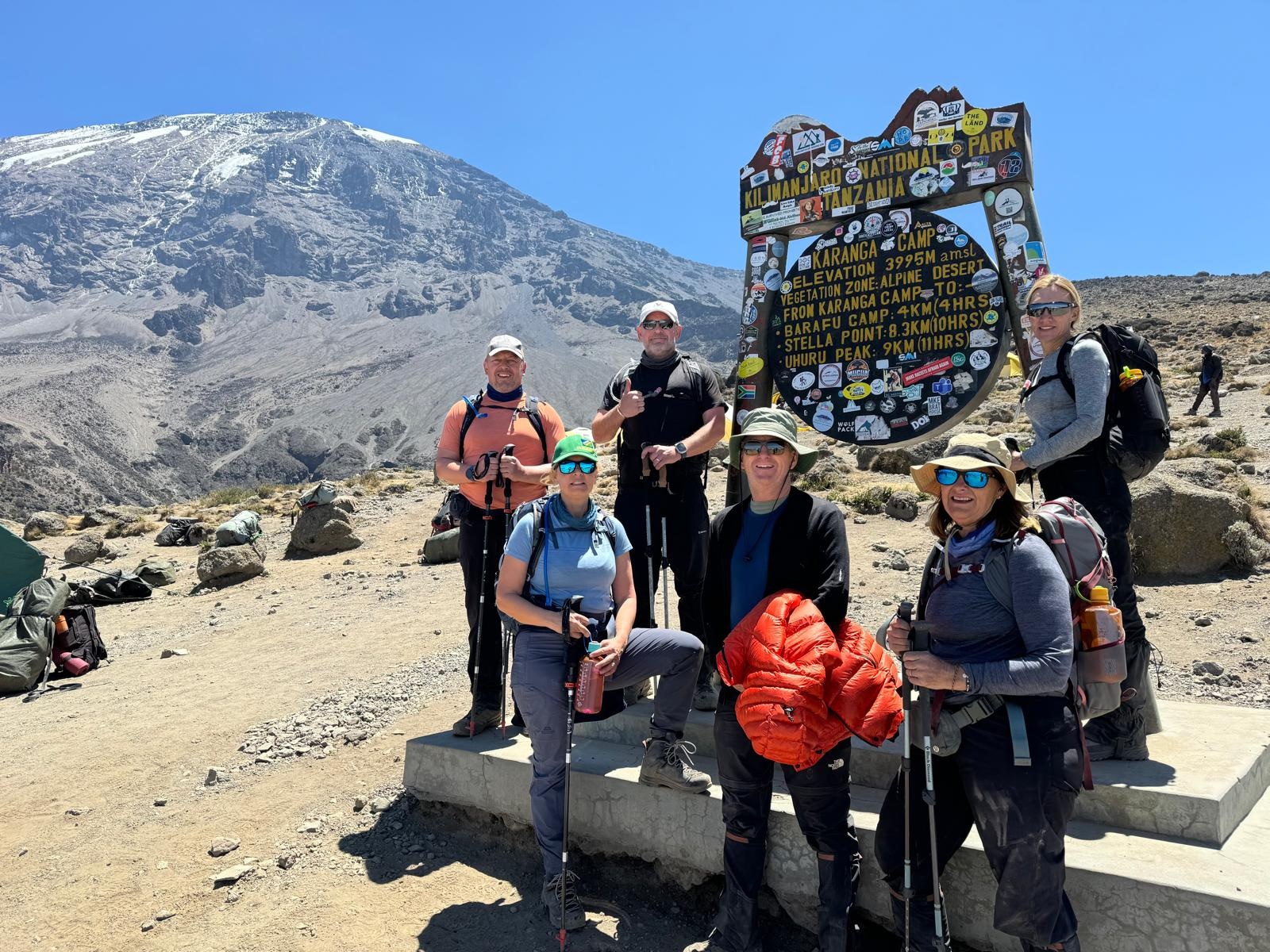
After Cayman finally opened its borders again and she was free to travel, she went on a skiing trip with friends, and they started talking about what was on their bucket lists.
“I said ‘Next year, I’m going to knock [climbing Kilimanjaro] off my list’ and they all said they’d love to do that, too. I figured the more, the merrier.”
After a four-day trip to the Tarangire Safari Park in Tanzania, to help them acclimatise to the high altitude that none of the six Cayman Islands residents were used to, as well as to see some amazing wildlife, it was time to head for the mountain.
They took the northern Lemosho route, Brooks says, which was a slower climb, taking them eight days – six days to get up to the summit and two days to get back down.
“We chose that route because we wanted to make sure we were acclimatised before we did it,” she said.
There were some ups and down – literally. Sometimes, led by their guide, they’d hike a trail, and then come back down some of the distance to camp out and sleep.
Because Cayman is so low lying, altitude sickness is an especial concern for climbers from here. Brooks said she took altitude sickness medication and was drinking five litres of water a day to ensure the elevated heights didn’t impact her too much.
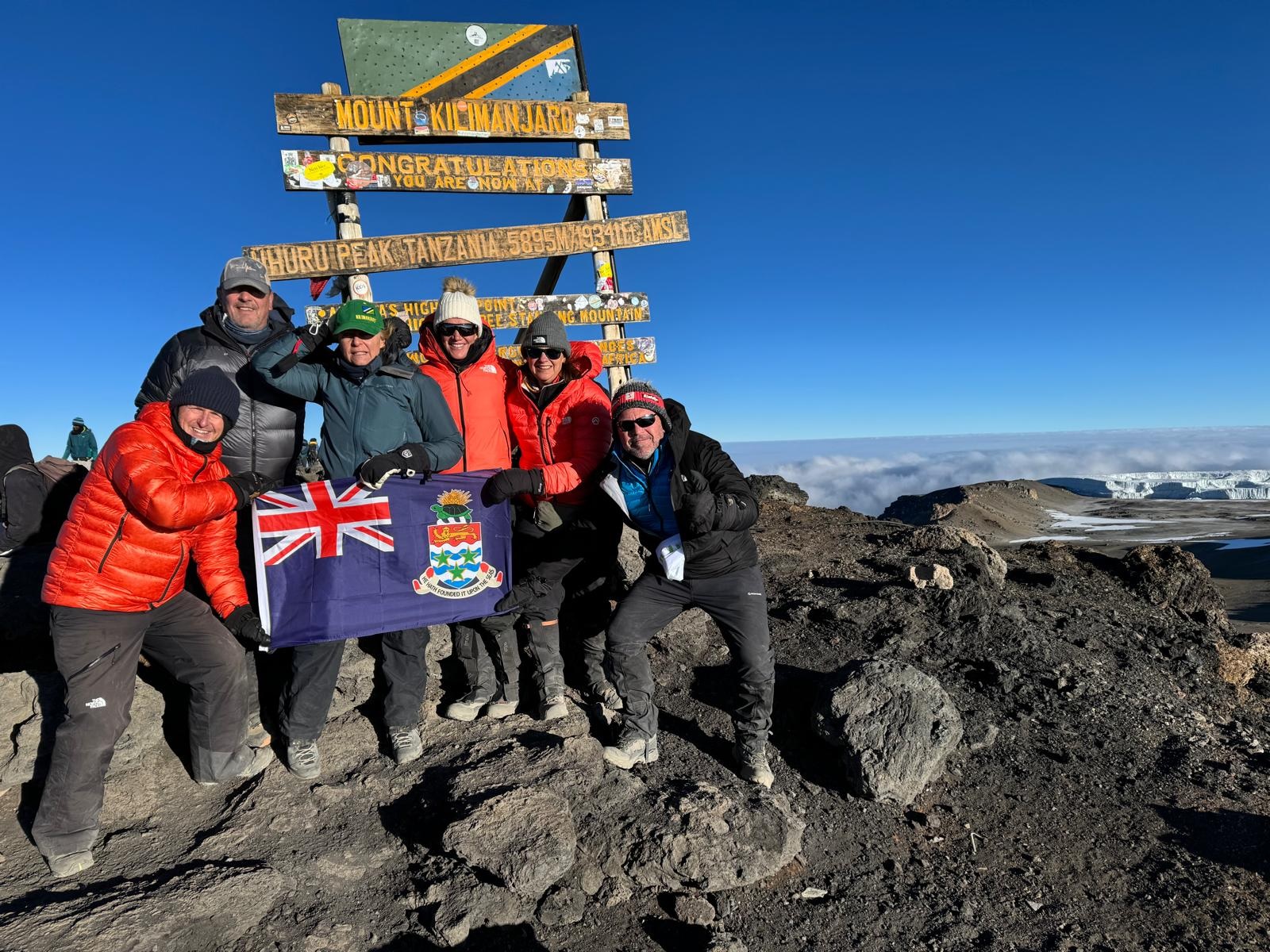
The group, which pitched tents and camped on the mountainside every night, was accompanied by a guide, two junior guides and sherpas.
“They were incredible,” Brooks says. “Our guide had done the climb something like 300 times.”
The hardest part of the trip, perhaps unsurprisingly, was the final climb to the summit, she says.
“The day before we summited, we had to walk six hours to base camp,” she says. “We had lunch and were told to go for a nap. We got up for dinner, and then were told to go back to bed, and then we woke up at midnight. It was really cold, minus 8 or 10.
“I had seven layers of clothes on top and four layers on the bottom because I was really feeling the cold. I was like the Michelin Man!
“It was pitch black when we headed off.”
The climb lasted six-and-a-half hours, as they made up the final push, using their head lamps to see the way ahead.
“That was probably the most challenging part,” Brooks says, though the toughness of the climb was offset somewhat by church songs the guides sang to them. “It seemed really fitting as we were going up.”
With the head lamps of other groups of climbers visible along the way, she said it was “like a pilgrimage”.
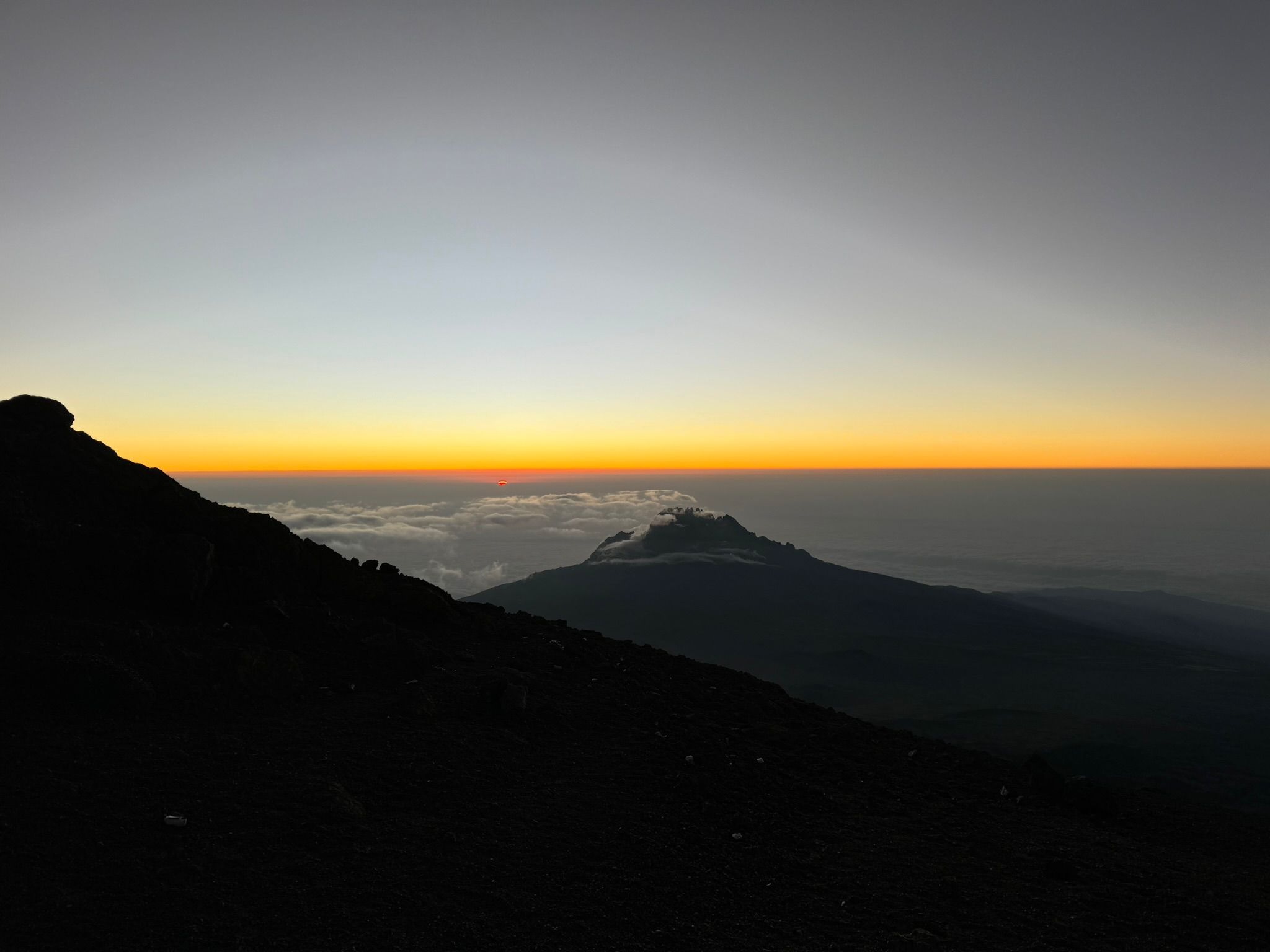
When they got to the top, they watched a stunning sunrise.
“Climbing Kilimanjaro was an unforgettable challenge, but sharing this experience with close friends and knowing we were raising funds for such an important cause made it incredibly worthwhile,” Brooks said.
“The generosity of those who supported us will directly impact the lives of individuals in our community who are battling cancer, and we are all so grateful for that.”
Related Videos








Climbing to an altitude of 19,341 ft is an amazing achievement, very few of our residents have ever climbed that high. Congratulations to all of them for making it all the way to the top.