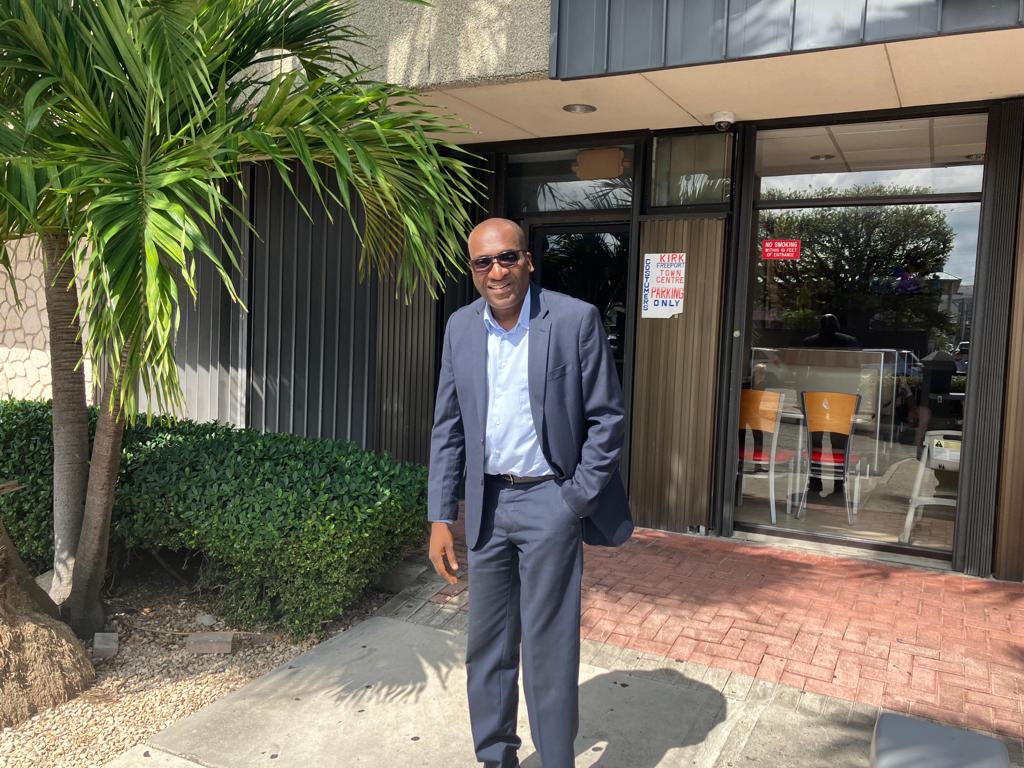
A former banker and football administrator convicted of fraud and money laundering has filed a formal complaint alleging “conflict of interest” from prosecutors in his landmark Cayman Islands case.
Canover Watson claims prosecutors were unduly influenced by the need to get the jurisdiction off the global Financial Action Task Force’s anti-money laundering grey list.
Renewing and expanding on arguments which proved unsuccessful in his appeal against conviction and sentence, Watson argues that members of the prosecution team were conflicted because of their separate political goals linked to Cayman’s compliance efforts.
Watson highlighted the role of several members of the prosecution team in the islands’ efforts to meet the task force’s criteria, which included showing evidence of successful money-laundering prosecutions.
Watson has argued that his case was the “lynchpin” of Cayman’s efforts to get out of the crosshairs of global regulators. And he claims prosecutors unfairly fused this political goal with their judicial role.
Similar arguments failed in the Court of Appeal last year. The judges found this defence did not give “rise to a conflict of interest”, but rather served the “interests of justice”.
Now Watson has renewed the argument in a professional standards complaint targeting all three prosecutors involved in the case.
“The prosecutorial strategy and sentencing arguments in this case were directly influenced by external political and economic pressures, including those relating to national security,” he claims in a complaint filed with judicial authorities and shared with the Cayman Compass.
Watson was sentenced to eight years of imprisonment, later reduced to seven on appeal, after being found guilty of obtaining secret commissions, money laundering and false accounting while an official at the Cayman Islands Football Association.
The offences involved payments of US$1.54 million obtained from regional football body CONCACAF through the presentation of false invoices for sports equipment said to be from a kit supplier in Pakistan. The Court of Appeal upheld the conviction and found no evidence of prosecutorial conflicts, stating the case was in the public interest.
Neutrality of prosecutors?
Watson’s latest complaint calls for an investigation into a local prosecutor and two UK-based counsel, who he claims were also involved in Cayman’s FATF compliance efforts.
In documents submitted to the Director of Public Prosecutions, the Governor’s Office and the chief justice, shared with the Compass, Watson claims all three prosecutors breached their professional duty to remain impartial and free from political influence.
The complaint is being actioned by the chief justice, a spokesperson for the Judicial Administration confirmed.
Watson argues in his written documents, “All three prosecutors held dual roles as both prosecutors in Mr. Watson’s case and contributors to Cayman’s efforts to meet Financial Action Task Force compliance requirements. These roles created an irreconcilable conflict of interest, which was not disclosed, compromising prosecutorial independence and raising serious ethical concerns.”
Conflict arguments failed in appeal hearing
Similar arguments were advanced by Watson in his appeal against sentence but were dismissed by the court, which said there were clear reasons to prosecute Watson for “serious dishonesty”.
“We do not agree that there were any conflicts of interest or apparent bias,” the Court of Appeal judgment states.
“There is nothing to suggest that the decision to prosecute was taken for political reasons or as a result of other influence or pressure or for any other malign reason.”
It added that there was no obligation for the prosecutor or investigator to disclose their involvement with Cayman’s efforts to get off the grey list to the court.
“The aim of assisting the Cayman Islands to achieve FATF compliance was not one which gave rise to a conflict of interest. It was a laudatory aim. The proper investigation and prosecution of money laundering and financial crime in the Cayman Islands is in the interests of justice. To seek to advance such an aim is in the interests of justice.”
The new complaint filed by Watson focuses more directly on the prosecutors’ professional obligations and, if successful, would not directly impact his conviction other than the sentence.
As well as the local prosecutor’s direct role in the compliance efforts, an addendum to the complaint notes that both UK-based counsel reference their involvement in Cayman’s FATF compliance efforts in professional biographies.
Conviction helped get Cayman off grey list
Watson’s submissions indicate, “The conviction appeared to play a highly significant role in FATF’s eventual decision to remove the territory from the grey list.
“While achieving compliance with FATF standards is an important policy objective, conflating such goals with prosecutorial outcomes risks eroding the independence and integrity of the justice system.
“Prosecutors must remain distinct from broader government initiatives to ensure justice is impartial and not perceived as politically motivated.”
His complaint adds that independent oversight of the judiciary is required.
“The undisclosed conflicts and procedural irregularities in Mr. Watson’s case reflect broader systemic issues within the Cayman Islands’ justice system. These failures underscore the need for independent oversight to prevent the misuse of prosecutorial powers in politically charged cases,” it states.
Asked how the complaint would be dealt with, a spokesperson for the Judicial Administration stated in an email response to the Compass, “The Complaint is being actioned by the Honourable Chief Justice pursuant to the Legal Practitioner’s Act and the relevant Practice Direction.”
Judges have the power to suspend attorneys from practicing or to strike them from the court rolls. This action can only be taken after communicating with the attorney and allowing them to respond and call witnesses.
The complaint documents filed by Watson and referenced in this article present only one side of the argument. The Compass reached out to the Director of Public Prosecutions but received no response.
Related Videos