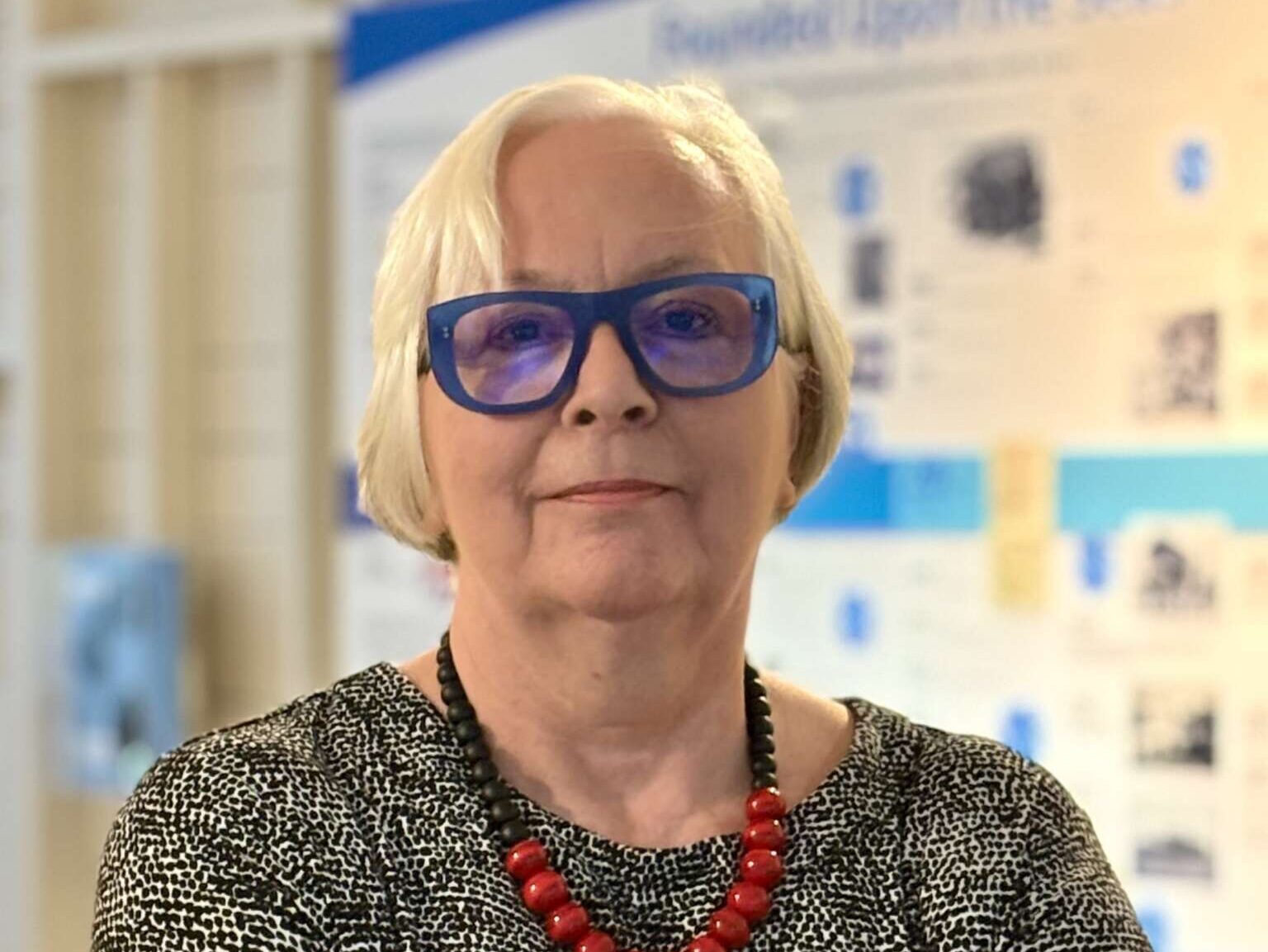
Veerle Poupeye assumed her role as the director of the Cayman Islands National Museum in George Town on 5 Nov., the day a hurricane warning was issued for Rafael.
When she arrived in Cayman, the former curator and executive director of the National Gallery of Jamaica found a staff complement of just four people and almost nothing in the budget for acquisitions. Despite that, she has some bold and big plans for Cayman’s museum and expects to add more staff over the coming months.
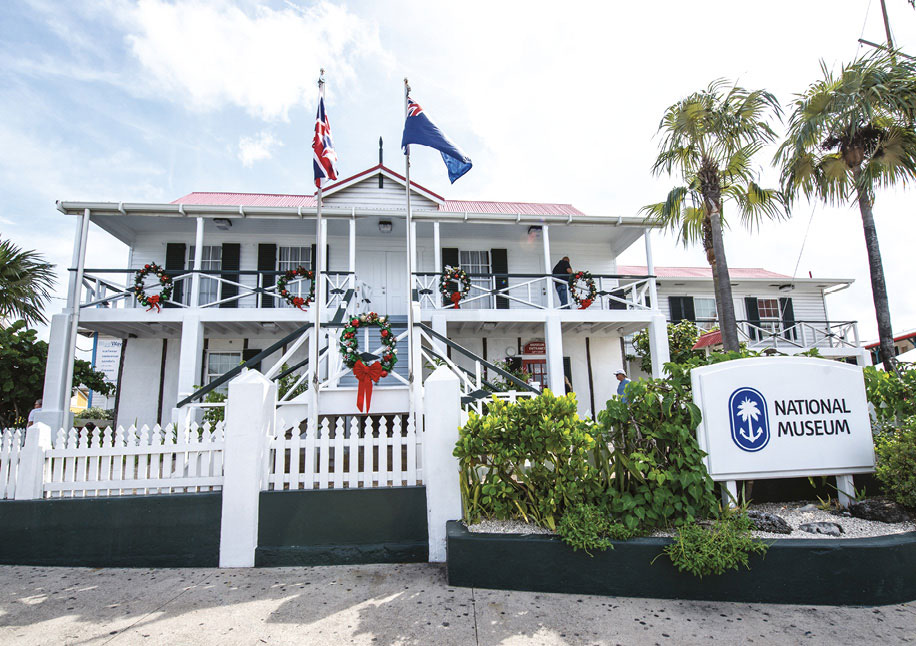
“The view from my office is of the cruise terminal and to a certain degree, we have a capitative audience with cruise ship passengers,” she said, before quickly adding, “The most under-represented audience are local residents.”
With that in mind, one of her first decisions was to open the museum until 5pm on Saturdays and offer free admission those days.
“Right now, our local visitors are mainly the school groups. Family visits are something we rarely see. We want to change that. We want our residents to regard going to the museum as part of what they regularly do,” she said.
Poupeye said Cayman’s National Museum has a solid foundation and a lot of potential with which to work.
“The museum has to move with the times and the collection needs to grow and develop,” she said.
“There is a need to broaden the understanding, while being true to the stories that have been established. I am not devaluing what has already been done, but there are many new angles.”
Poupeye signalled that she plans to flesh out the stories of slavery, race and also piracy.
“It is not easy terrain, but as a museum we have a responsibility to challenge the way we think,” she said.
“Radical social transformation has been occurring in the Cayman Islands over the past 30 to 40 years and while the desire to protect cultural identity is a legitimate response, we also have to accept that cultural plurality has also been part of the Cayman Islands story.”
She added that although it is risky, museums can and should be prone to controversy. She mentioned, for example, that the younger generations are becoming more engaged about race as an issue.
“With growing diversity, we have to respond to these things. Our potential audience includes the full spectrum,” Poupeye said.
Later this month, the museum will launch new audio guides that will provide an introduction to each gallery and to the museum as a whole. The audio guides will be available in eight languages.
“We will begin with English, Caymanian dialect, Spanish, French, Italian, German, Jamaican Patois and Tagalog,” she said.
“We are sending a signal that everyone is welcome at the museum. We are prepared to engage with everyone.”
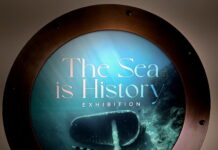
She said the team has quite a few exhibitions planned.
“We will be doing one on the mosquito. It is a social and cultural issue and there will be an element of play. We are working to engage with our audience more. We are planning a junior curator summer camp. We are expanding our visibility to local residents and providing more museum-related content on social media,” she said.
The lease is also running out in March for the museum support facility, where the majority of the 12,000 artefacts in the national collection are stored.
“I know that the existing facility at Pasadora Place was flooded in Hurricane Ivan in 2004, and although the elevation in George Town presents some challenges, I believe we have found a new facility that offers the best possible solution,” she said.
“It is as safe as it can get, given the circumstances.”
Before the conclusion of her two-year contract as the museum director, she wants to make sure the Cayman Islands can lead in certain areas.
“The Museum Association of the Caribbean was a moribund organisation and Natalie Urquhart of the National Gallery reinvigorated it. The Cayman Islands can lead. We don’t have to be a follower. We can lead,” she said.
She added that she is very impressed with the existing staff of just four people.
“They all contribute so much, and I am still in awe that despite having so few people, they continued to produce exhibitions,” she said.
“The museum used to employ 10 people and ideally it would be a staff of 15.”
She said they are working on recruitment and a succession strategy.
“There are a number of young Caymanians who have done studies in relevant areas and they are now returning to Cayman. So, I am quite optimistic and I plan to do my part to make sure that when I leave, there is vibrant future for the Cayman Islands National Museum,” she said.
In addition to her former role as the executive director of the National Gallery of Jamaica, Poupeye has also taught at the University of the West Indies, Emory University and at New York University, and has written for numerous journals and respected cultural publications.
Related Videos