

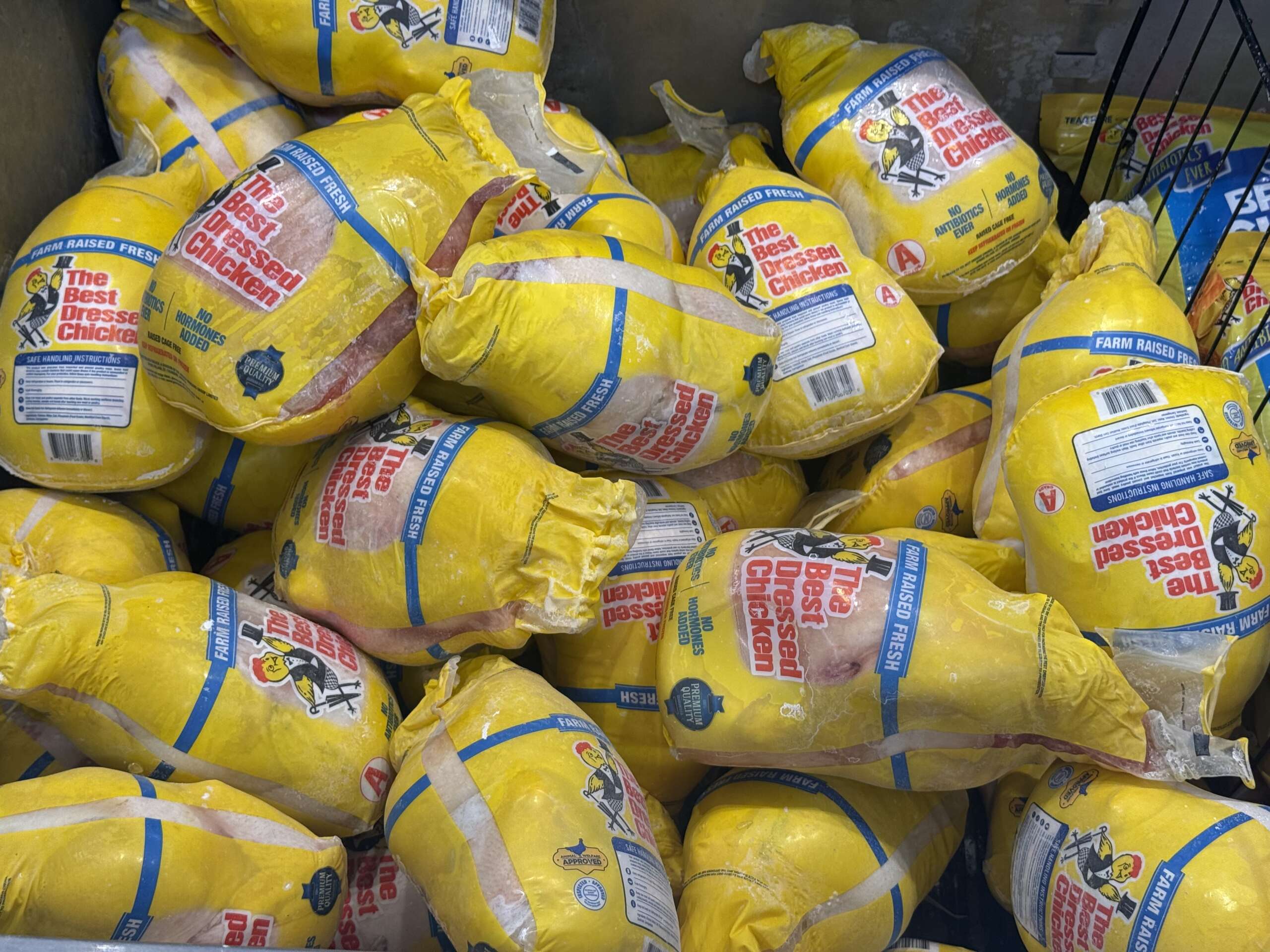
Jamaican food holds immense untapped potential in the Cayman market. That’s the view of Jamaica’s Minister of Agriculture, Fisheries and Mining, Floyd Green.
And data from the International Trade Centre, a joint UN-WTO agency that helps small businesses in developing countries trade globally, suggests he could be right.
“I see not just a partnership in exports, but a deeper collaboration where we help Cayman move toward greater self-sufficiency,” said Green in a recent discussion with the Compass.

Since Green’s appointment as minister of agriculture, Jamaica has deepened its agricultural ties with Cayman, particularly following a 2022 bilateral agreement that broadened the list of Jamaican food products approved for export.
Pamela Coke-Hamilton, a Jamaican lawyer and executive director of the International Trade Centre, notes the impact. “Jamaican food exports to the Cayman Islands have grown faster than total Cayman food imports: 218% versus 137% between 2013 and 2023,” she told the Compass.
But still, there is plenty of untapped opportunity.
Data from the International Trade Centre’s Export Potential Map points to Jamaica as an under-leveraged but strategically vital partner in food trade for Cayman. The data-driven tool, which assesses countries based on supply capacity, demand potential and trade access, reveals that Jamaica has far more to offer than Cayman is currently tapping into, especially when it comes to Jamaican food.
With a rich supply of root vegetables, fresh produce and value-added staples like patties, sauces and seafood, Jamaican food could be the key to building a more secure, sustainable and regionally connected future for Cayman.
Starchy root vegetables alone represent an untapped annual potential of $647,000, while citrus fruits, vegetable oils, lobster and crawfish, decaffeinated coffee and processed cheese represent significant white space. Cayman currently imports no citrus from Jamaica, despite an estimated annual potential of $211,000, according to the ITC.
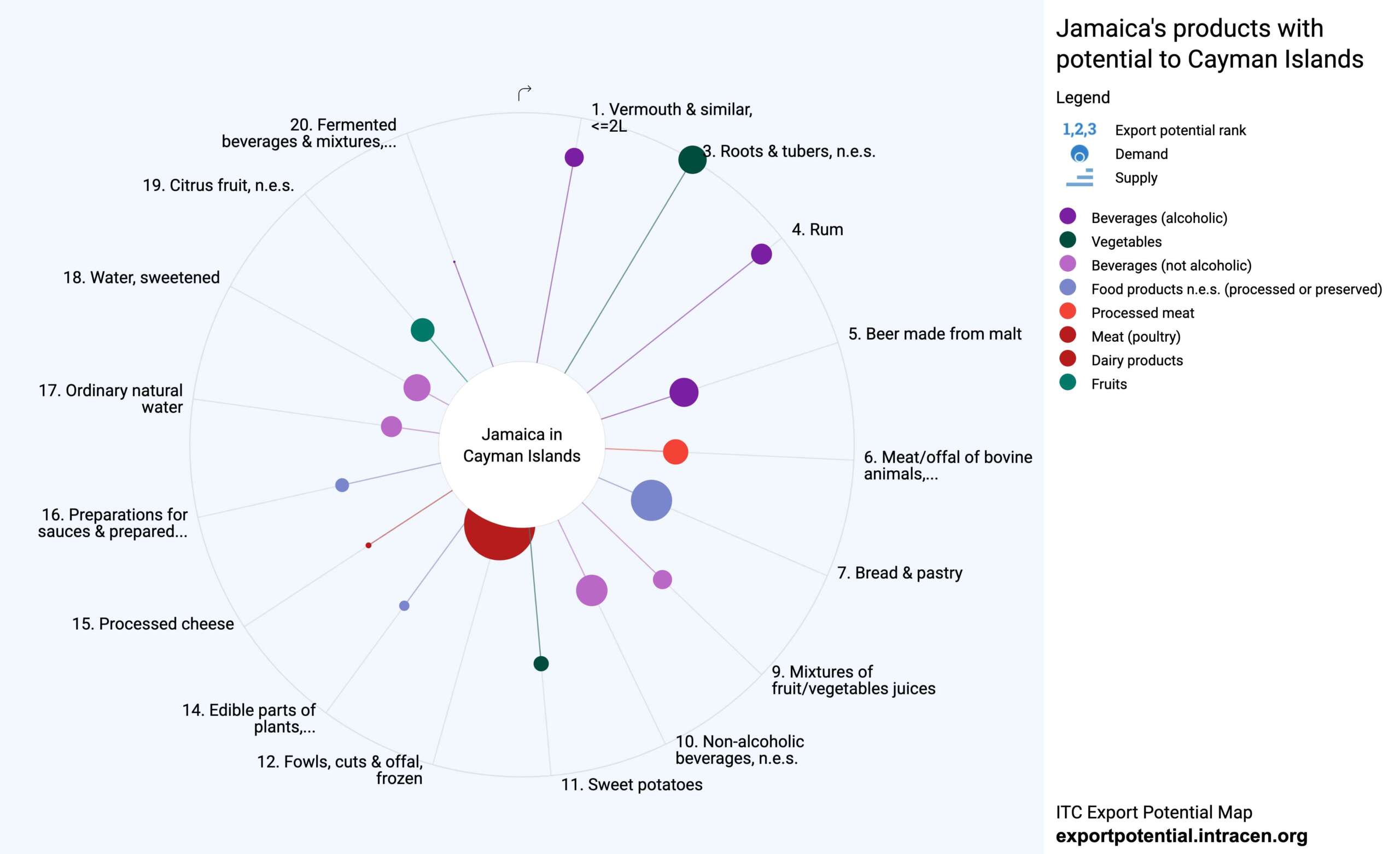
Other exciting opportunities lie in value-added products. Jamaican patties, canned ackee, sauces, spices, jams and beverages are already in demand in diaspora markets. There is also the opportunity for collaboration in the production of value-added products.
“Cayman could be doing more than just importing,” Green says. “We could also be looking at value addition – importing Jamaican tomatoes, for example, and converting them locally into sauces and pastes.”
JAMPRO, Jamaica’s export promotion agency, estimates the total value-added export sector at more than $256 million annually.
Green also sees potential for Caymanian investment in Jamaican agriculture. “We’re repurposing former sugar lands and putting them on the market,” he says. “This could be an opportunity for Cayman entrepreneurs to grow for export, under Jamaica’s Special Economic Zones.”
Building on meat imports
Livestock is also starting to gain momentum.
Meat is Cayman’s largest food import category, having totaled US$34 million in 2023. Jamaica exported more than US$14 million in meat products in the first quarter of 2024, though much of it went to other countries. In 2023, 22 Jamaican Red Poll cattle were brought into Cayman from Jamaica for breeding, and now, the pork industry is being eyed by Green as a promising new opportunity.
“Our pork industry has truly transformed over the last maybe two decades from being a largely backyard driven sector to having many more industrial players and having some of the top genetics in the world,” says Green, pointing to Caribbean Broilers’ top-tier genetics from Newport Genetics Ltd. “We often produce more than the local market can absorb.”
Cayman imported more than $5.8 million in pork from the US last year – but almost none from Jamaica.
Jamaica’s poultry sector, too, is robust, covering 88% of the country’s own demand while also exporting chicken and related products, like nuggets, to Cayman.
Between 2018 and 2023, Cayman more than doubled its poultry imports from Jamaica. Today, poultry accounts for roughly 35% of Jamaica’s food exports to the island, valued at about US$5.4 million.
Raw sugar also saw a large surge: Jamaican sugar exports to Cayman jumped more than 50% between 2018 and 2019 and grew by more than 250% over the following four years.
Another important milestone was the first-ever shipment of sustainably certified queen conch from Jamaica to Cayman in February this year, after Jamaica became the world’s first country to earn Marine Stewardship Council certification for its queen conch fishery.
Jamaican food exports have offered Caymanians access to fresh, culturally significant produce that support both countries’ economies, while aligning with Cayman’s goals of enhancing its food security and supporting sustainable agricultural practices.
This level of trade is impressive, given Jamaica’s relatively small size and structural production constraints.
“Jamaica itself is a net food importer, with a food trade deficit of $844 million on average between 2019 and 2023,” says Coke-Hamilton.
Related Videos








Great initiative to support our neighbors!