

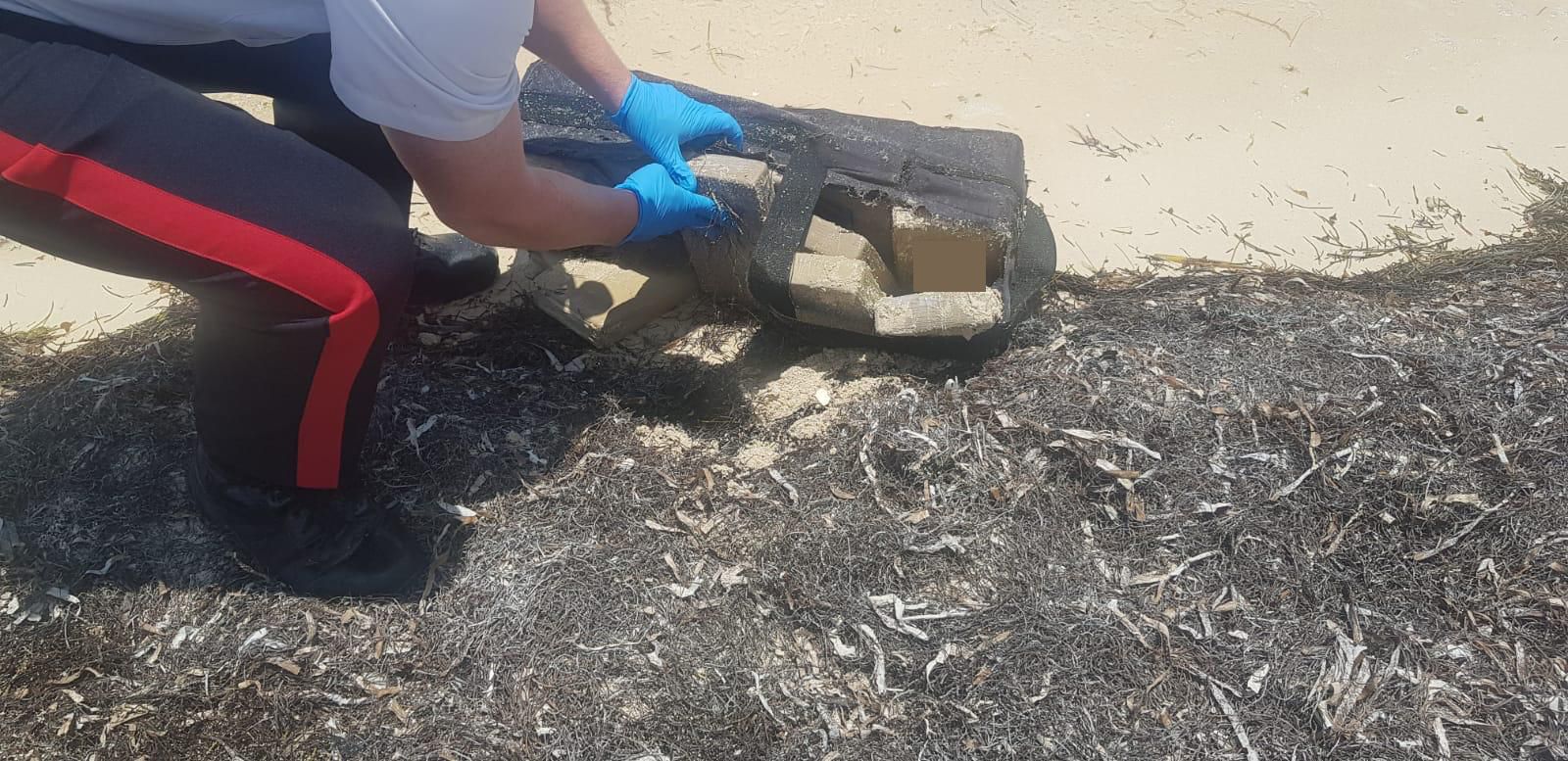
Police recovered more than $1.65 million of cocaine that washed up on Cayman’s shores last year.
The figure is likely a fraction of the amount of drugs that arrive in these islands on the tides, according to investigators, regional analysts and sources in the drug trade.
Some of the cocaine that arrives in Cayman has been ditched by cartel boats running drugs into the US from South America. It may have floated for months, sometimes even years, before it finds its way to Cayman.
Some of the cocaine that washes up here is handed into police. But then the rest of it is quickly sold on at cut price to local dealers or middlemen.
Officially, there were 98 kilograms of cocaine washed up on beaches or found in the ocean around Cayman last year, with a street value estimated by police at around $1.7 million.
A source with links to the Cayman drug trade told us the actual figure would be far higher with a significant portion of the local market supplied by cocaine that arrived here accidentally. He said some people were prepared to take the risk of trying to sell the drugs to a local dealer.
“Cayman is awash in cocaine right now,” he said.
“What happens is boaters or fishermen find it and these guys [dealers or middlemen] will buy it off them in one lick. The fishermen don’t really want anything to do with it, so they just sell it off for quick cash.”
He said he had heard of cases where people traded cocaine they had found for a boat engine or a wave runner. In some cases, it is a cash deal at a knocked-down price.
Sometimes there is a middleman involved who will take it off the hands of the finder quickly, taking on the risk of holding onto it before they sell it on.
But the result is usually a bargain for the dealer.
“Some people will find drugs washed up and call the police. Most people are not going to do that.”
If the cocaine is well sealed and in good condition, it goes to the ‘white collar’ market, he said. If it is wet or otherwise damaged, it gets “cooked up and sold to the crack dealers”.
Right now, he claimed, there is so much cocaine washing up, the market is literally flooded and the street price for ‘powder’ has become two to three times cheaper than a year ago.
In a separate interview as part of a series on the drug trade last year, a dealer told us his entire supply chain for cocaine comes from drugs that are found in the water or on the beach. The supply is reliable enough for him to meet the high demand from mostly ‘white-collar’ consumers, he says.
The figures for drugs that wash up in Cayman dwarf those intercepted in proactive police investigations. Police data shows there was 5kg confiscated following proactive investigations, compared with the 98kg that arrived on the tides.
Jail risk for finders
Police warn that anyone who finds cocaine and takes a decision to keep it or sell it on will be investigated and could be prosecuted for possession with intent to supply, which carries a multi-year jail sentence.
A spokesperson cited multiple cases over the years where people had been charged in connection with drugs they claim to have found. In 2024, the cocaine seized by police after washing up on the beach came from three large incidents — all involving cases where the public raised the alarm.
Cocaine washed up in Cayman
- 2024: 98kg (215.6lbs), street value: $1.65M
- 2023: 70-76kg (154-168lbs), street value: $1.17M – $1.27M
- 2022: 56 kgs (123lbs), street value $ 1.1M
* Figures in CI$ from police stats. 2022 figure also includes stat from police seizures.
The value of cocaine varies and is dependent on supply and demand. Police’s own valuation shifts from year to year and represents a conservative estimate, according to the Royal Cayman Islands Police Service annual data reports.
Asked about claims that cocaine that washes up in Cayman frequently ends up in the local trade, the spokesperson added, “It is certainly possible. Regardless of the source of illegal drugs in our communities, we will continue to pursue and prosecute those who are involved in their distribution.”
The spokesperson said most of the cocaine that is found on the beaches is not believed to be intended for the local market, even if it ends up being sold locally.
Those comments were echoed by Commissioner of Police Kurt Walton during an appearance on the Compass TV talkshow Forefront last week.
He acknowledged “hundreds of thousands of dollars” worth of cocaine wash up in Cayman each year, most likely ditched from narcotics traffickers using the windward passage between Cuba and Hispaniola to run drugs from south and Central America.
‘Cost of doing business’
Regional security expert Anthony Clayton, a professor at The University of the West Indies, said the sheer amount of cocaine being run out of South America meant it was inevitable that some of the dregs of that trade would end up in the water and that a percentage of that would arrive in Cayman.
The profit margins involved mean there will always be people willing to take the risk, he said.
“A dollar of cocaine in Colombia is worth $30 by the time it reaches the US and as much as $80 by the time it gets to Europe. If these guys have to throw 5% or even 10% of that overboard to avoid getting caught by the coast guard, that is just the cost of doing business.”
He said narcotics traffickers frequently use low-profile or semi-submersible boats to avoid radar detection.
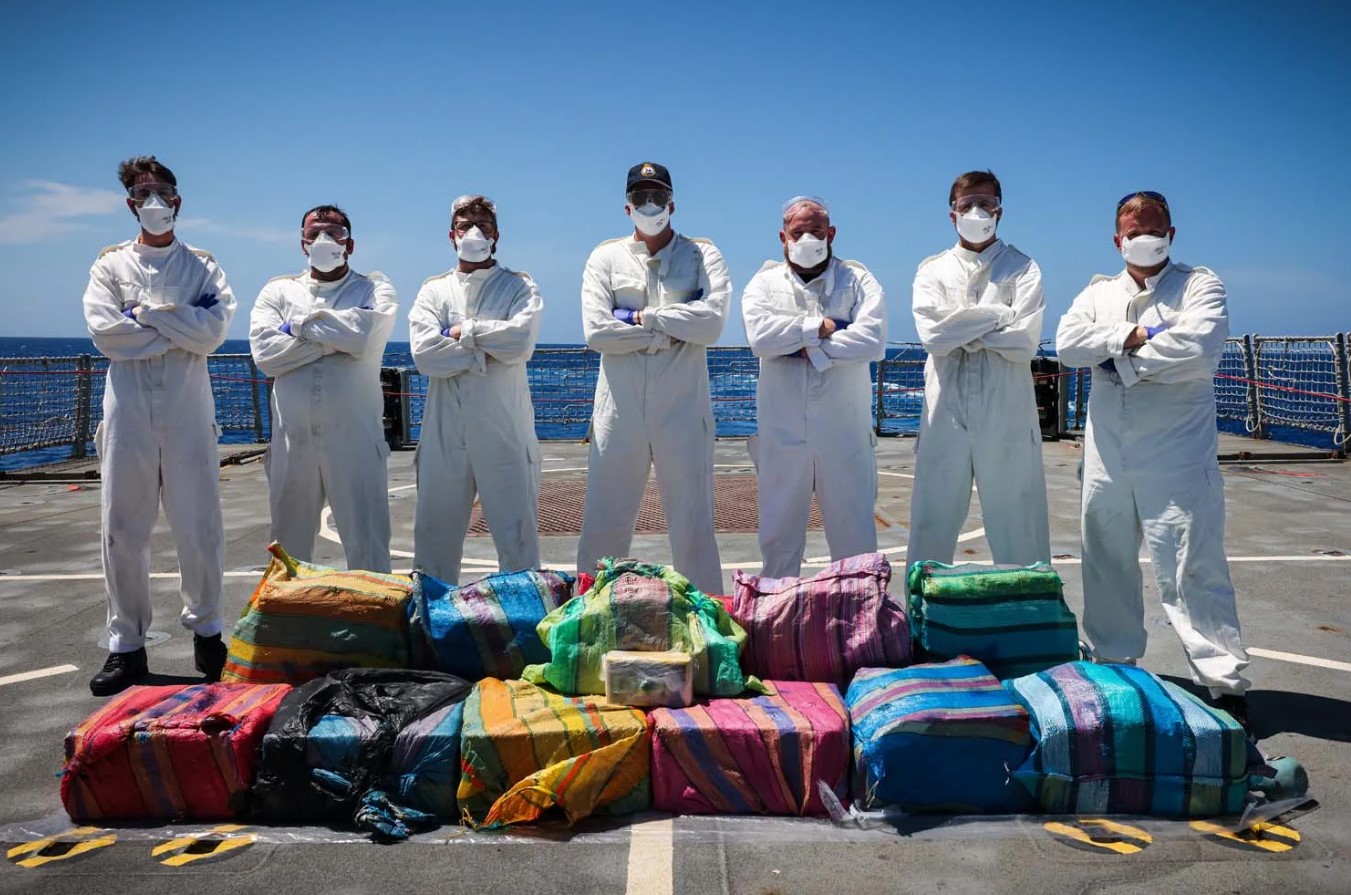
In September last year, Royal Navy patrol ship HMS Trent, which patrols the Caribbean and provides support to British Overseas Territories, intercepted a ‘narco-sub’ carrying 2,000kg of cocaine said to be worth more than £160m.
On some occasions, however, says Clayton, traffickers will deliberately sink their vessel and wait to be rescued rather than be captured with illicit cargo.
On other occasions, he said drug boats might accidentally drop cargo during an at-sea exchange or packages may go astray when dropped off in the ocean with a GPS.
“That is a likely source of what you are getting in Cayman,” he said.
“What you get is likely the downstream effects of something that happened some time previously.”
Policing Cayman’s borders
Walton, in his interview with Compass TV last week, said the global nature of the drug trade made policing Cayman’s borders an enormous task that involves partnerships between police, coast guard, Customs and Border Control, the UK Navy, and regional and US law enforcement.
The UK government recently committed to an investment in radar, and the coast guard has been developing its technology, staffing and capabilities. Walton highlighted border security on the high seas, at the port and airport, and customs as a key priority that needed continued monitoring and investment. He added that Cayman could not view itself as a small community police force and needed to be resourced appropriately for its role in dealing with the impacts of multi-national crime.
“We are a national police service — one little island in the middle of the big blue sea. It’s down to us, the protection of our country. I take protection of my country very seriously. When I say I need more resources, it’s because I’ve done the homework. I’ve done the analysis.”
Related Videos








I am curious about the use of the conditional “could” rather than “shall” or “will” in the sentence about referral for prosecution upon retaining found narcotics and onward sale to dealers or others. This is a criminal act and should be prosecuted in all circumstances without question. It would be a good start to fixing the drug problems on the island.
Best thing to do if you find this is to rip the bag open and dump it in the ocean.
That way you know for sure it is destroyed.