

The prospect of Cayman’s independence from the UK isn’t likely anytime soon, two prominent Caymanians have said.
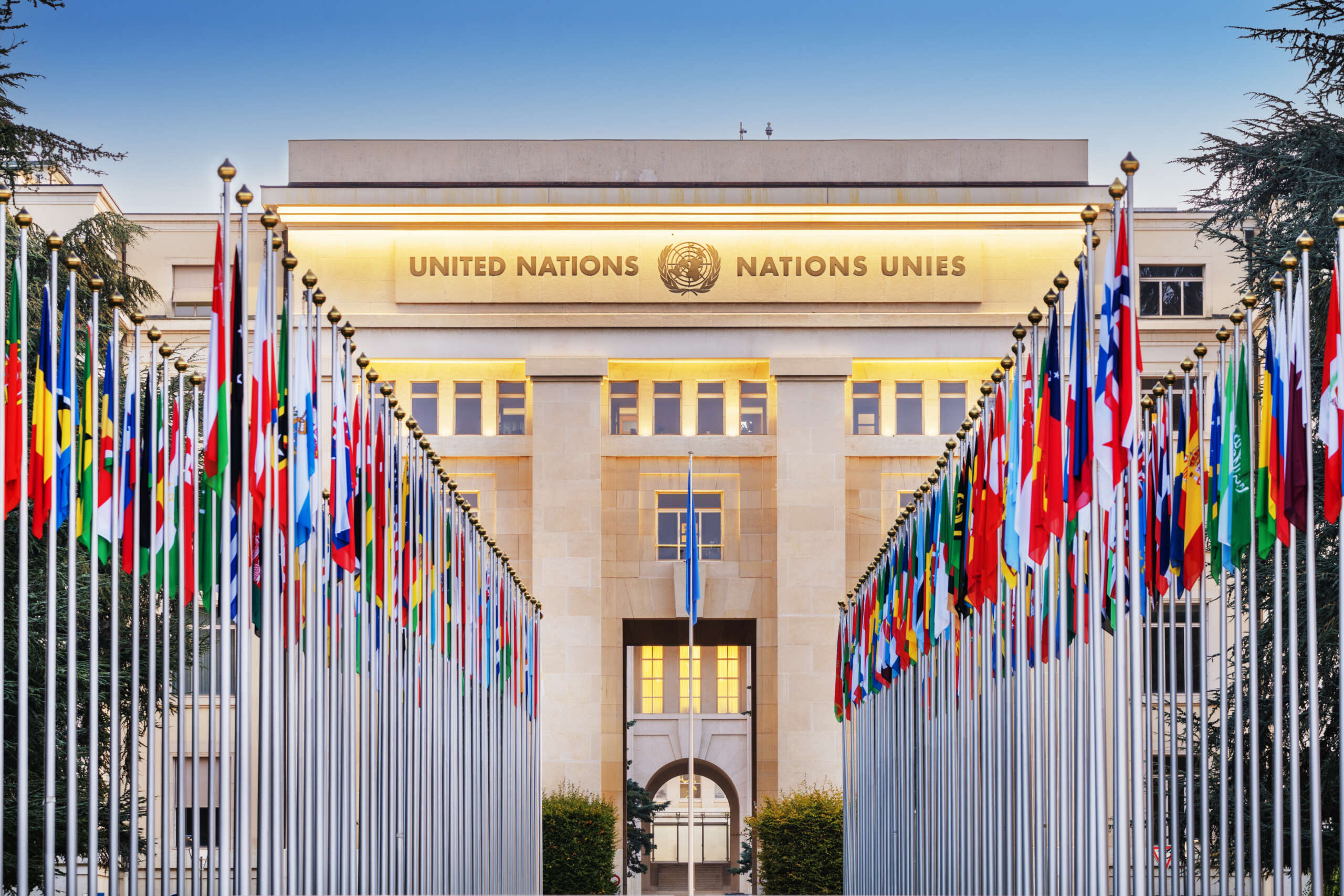
The verdict came after the government of the British Virgin Islands publicised a draft resolution of the UN Special Committee on Decolonization, known as C-24, which called for independence for the UK overseas territory.
A similar document on Caymanian independence was published by C-24 last December.
But pro-independence Roy Bodden, a former politician and former president of the University College of the Cayman Islands, said there was no great desire to cut the country’s ties with the UK.
“I have never been an apologist for colonialism and I’m certainly not one now,” Bodden said. “But I know enough to know you can’t just jump into independence from where we are – we’re not prepared.”
He said, “You can’t just jump into it like a shower. That’s why some other countries in the Caribbean haven’t made it. They didn’t have a plan.”
The C-24 in 2020 set 2030 as the target date for decolonisation of the 17 territories, including Cayman and other UK overseas territories and dependencies – the fourth time it has singled out a decade since the first goal was set in 1990.
Bodden said a realistic target for Caymanian independence – to allow for an education campaign and preparation of the workforce and economy – would be the middle of the century.
He added Cayman should look east for its inspiration to Singapore, where its founding father and long-time leader Lee Kuan Yew, who ensured its population had the education and skills needed to turn the tiny state into an economic powerhouse.
Bodden, a former United Democratic Party legislator and Cabinet minister in the then Legislative Assembly, said, “That’s the disappointment I have in our leaders down through the years – our leaders don’t have any political philosophy or political ideology.
The writer, historian, political sociologist and political economist added, “That’s why they branded me a radical, a socialist, a Marxist – not that I’m any of these things.”
But Bodden, 79, said young people “definitely” had a different attitude to going it alone compared with previous generations.
He added “younger and more educated people, who are less conservative” were more inclined towards independence.
But Bodden said that country had “too much insularity” and had to find a way to “accommodate those people who have come here from outside” before independence.
Bodden said, “I would like to see it happen in my lifetime – I believe we can do it.”
But lawyer and social commentator Steve McField, said the country was content with the status quo.
He added, “There is no great movement for anything other than where we are in Cayman right now.
“They are satisfied with the 2009 Constitution Order at present.”
McField said he had been one of the Cayman representatives to a UN consultation committee for several years.
He added, “The Cayman government gave instructions on what the position should be.”
McField said a string of new laws in the 1960s, which laid the ground for Cayman’s economic transformation into a major offshore financial centre, had made the country prosperous.
He added, “There was no need to beat the drum about independence. That’s not on the agenda.
“There is no interest in independence for independence’s sake. We are more interested in economic independence.”
McField added that Cayman also had a different history from other parts of the English-speaking Caribbean.
He said, “Our roots go further back in terms of loyalty to the crown than the British Virgin Islands, Turks and Caicos and others like Jamaica.”
The C-24 draft resolution on Cayman highlighted its “serious concern” that Cayman had last been involved in its activities in 2010.
A government spokeswoman said it was aware of the latest draft resolutions.
She added, “As there is no ongoing engagement with the UN on this matter, we have no additional comment to provide at this time.
“Should there be any relevant developments that warrant further communication, we will provide appropriate updates through official Government channels.”
Related Videos









This U.N. committee has been waffling on about independence for U.K. territories for decades and for decades they have been rebuffed by annoyed Caymanians who have told them to mind their own business. Roy Bodden is entitled to his opinion but “in his lifetime” is likely to be not that far away, and it is highly unlikely we will have a Premier of Chinese descent. Mr McField is exactly right in saying that idependence is not on the agenda. I believe the BVI like the Turks and Caicos have given the U.K. cause for concern with their governance.
WE ARE NOT INTERESTED IN ANYBODY’S IDEAS OF INDEPENDENCE.
IF IT AINT BROKE DONT FIX IT.
Cayman is not perfect but let’s be grateful and not take for granted what we have here to enjoy every day. Our country has a large percentage of individuals here from other countries where their forefathers thought this path of destruction was for a better quality of life. Why would we want to take such a risk?
Cayman DOES NOT NEED TO and in many of cases DOES NOT WANT TO GO INDEPENDENT.
This is honestly the most absolute ridiculously silly thing to do.
Those few that have this very silly belief that Cayman and Caymanians would be better off being an independent nation don’t know how good they have it, are greedy, and can’t see logic that Cayman can never be an independent nation.
Cayman don’t have the leadership for independence
Cayman don’t have the financial means not the financial responsibility to be independent
Cayman does not have the infrastructure to be independent
Cayman doesn’t have any resources to be an independent nation
Cayman has very little resources to export into the international Market**
** If you dare say Cayman has the financial industry and/or Tourism industry sadly yes we do however pull the UK out of the picture the poof all of that gone and it’s not a sustainable industry by itself without the UK backing.
Cayman does not have the defence capability to fully defend itself from enemy threat without the UK.
Many countries who were a British Overseas Territory are either doing not great to really poorly or failing or begging to be returned as a British Overseas Territory now being run by a communist dictatorship or in a civil War or simply cease to exist as a nation.
When there was questions about British sovereignty of the Falklands Islands Argentina thought to take advantage of that and invaded the islands and started a war now new referendum asking the Falkland Islanders if they Wanted to remain British or not and go independent record vote 99.80% voted to proudly stay British. When the Handover of Hong Kong to Communist Chinese state the Chinese didn’t stick to the planned timed handover and slow transition to Chinese way of life, china gone it and did a quick flip now any Hong Kongers are protesting and begging to be returned under British rule.
when in recent time UK Government trying to sell off and hand the Chagos Islands aka British Indian Overseas Territory to Mauritius who has close ties to China. Many Chagoan are currently in the UK protesting this effort to have the right to self determination and to stay with the UK. Also Mauritius itself was a British Overseas Territory which is in its own issues and who they they having backing them.
UN should stay out of it and for any other British overseas territories who are suggesting to the UN or any other international bodies that this needs to be a thing should be working with the UK to solve the crisis that is occuring in their own countries not calling for independence.
Sorry for the long rant, had to seriously express how ridiculously mad this idea is.