

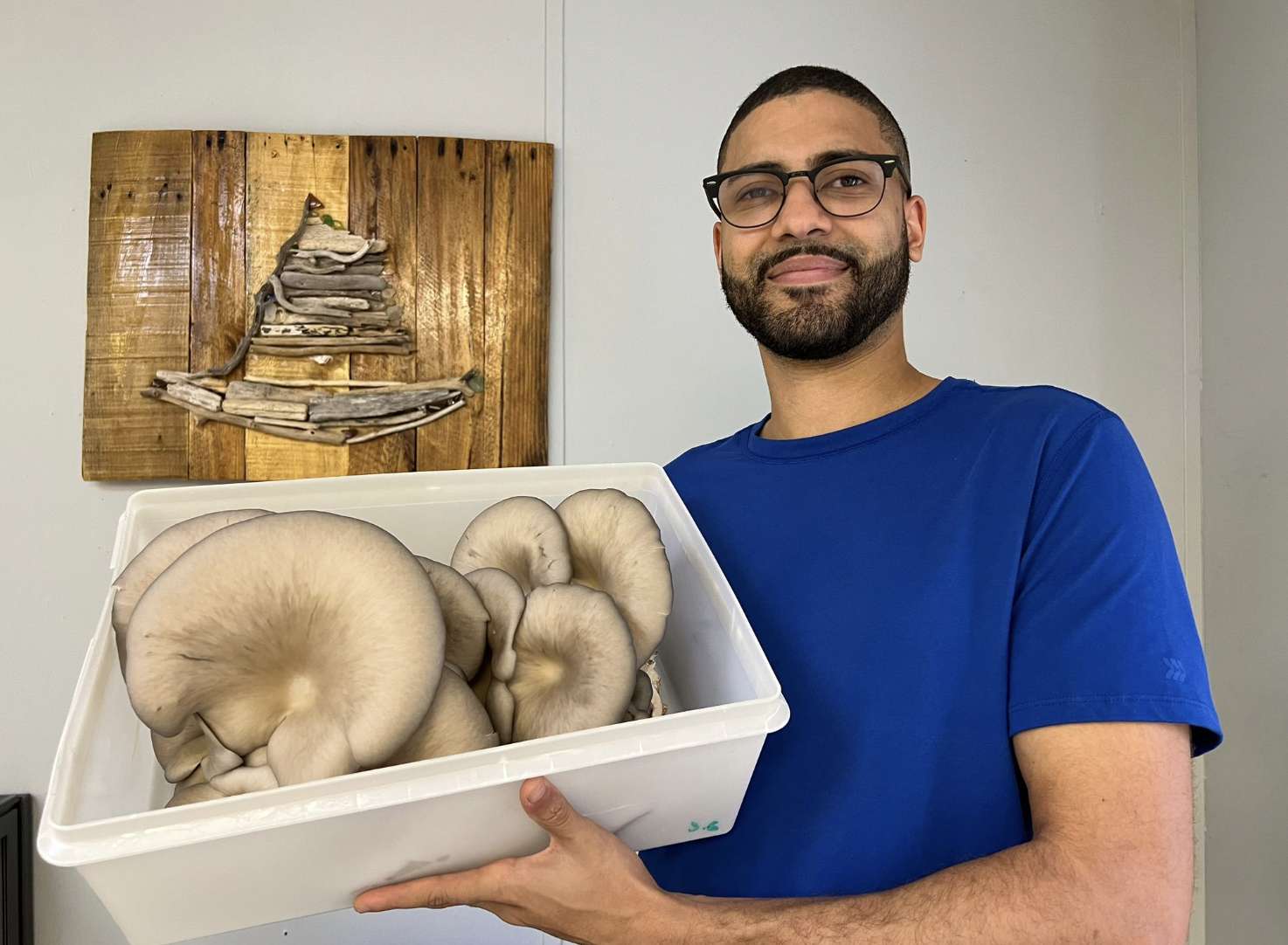
Hidden away in a quiet Savannah neighborhood, a modest structure houses one of Cayman’s most high-tech farms and the heart of a growing local mushroom movement. Primitive Greens, co-founded by Codi Whittaker, grows gourmet mushrooms, like blue oyster, black king, lion’s mane, golden oyster and chestnut, year-round in a climate-controlled container, untouched by the islands’ limited land and climate challenges.
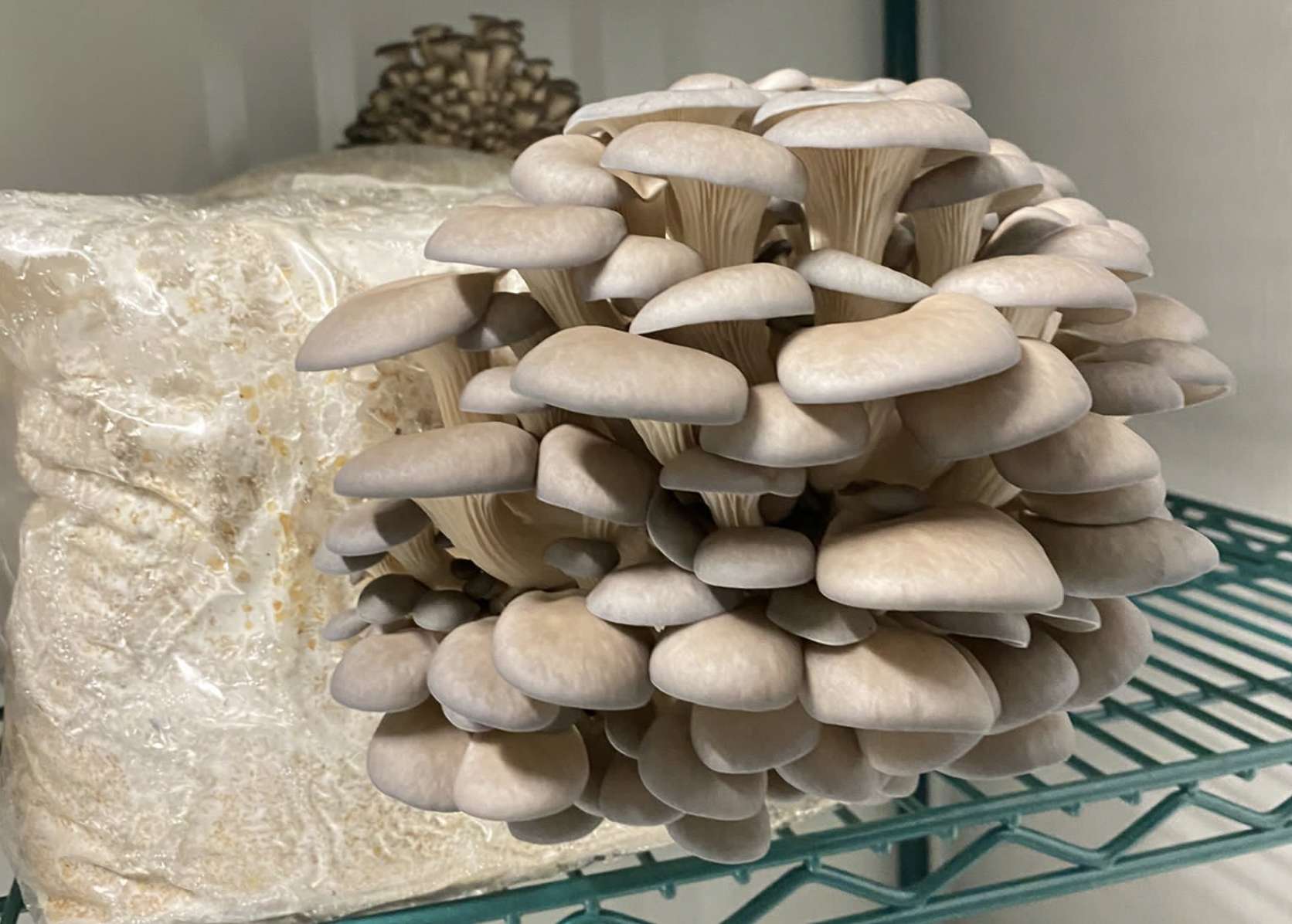
Blue oyster mushrooms – the most popular variety – bloom from neatly stacked bags lining shelves, thriving without soil, sunlight or pesticides. The high-efficiency system produces the equivalent of 2 to 3 acres of traditional farmland using only 320 square feet and five gallons of recycled water per day.
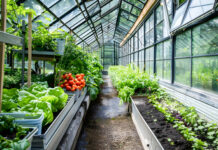
Just metres away, another container grows leafy greens and herbs.
The farm specialises in wood-loving mushrooms, cultivated on a substrate of wood pellets and soybean hulls that mimics a decomposing tree. The highly controlled process delivers harvests in just a few weeks – a fraction of the time it takes using traditional outdoor methods.
“To grow the same amount outdoors, you’d need about half an acre, and even then, it’s much trickier,” Whittaker said. “You’re dealing with the elements, so timing is everything. You might plant something and wait three months before it produces. In our setup, we harvest in just four weeks because everything is fully controlled and isolated.”
A growing mushroom movement
Primitive Greens supplies 100–220 pounds of blue oyster mushrooms each week, with peak yields reaching 400 pounds. The farm also produces 200 pounds of lettuce weekly and has room to scale.
In March, Foster’s Camana Bay store began offering Primitive Greens’ blue oyster mushrooms, giving consumers direct access to the locally grown fungi for the first time – and at a noticeably lower price than imported mushrooms.
“If you’ve checked mushroom prices at the grocery store lately, they’re crazy,” Whittaker says. “We sell ours for about half the price of imported varieties. That’s because imported mushrooms are picked early for shipping, when the mushrooms are still small.
“We harvest at peak maturity, so four ounces of ours is a lot bigger in volume. Plus, they’re way fresher – often just a day old, sometimes harvested the same day – so they taste better and have more nutritional value too.”
Restaurants across Grand Cayman have embraced the product. Ragazzi, Avecita at Kimpton Seafire, the Ritz-Carlton, Grand Cayman restaurants, Ristorante Pappagallo, Bonny Moon, Fidel Murphy’s, The Kitchen Steakhouse and Vivo are among a growing number of establishments that have featured Primitive Greens’ mushrooms on their menus.
At the Ritz-Carlton, Grand Cayman, chefs order up to 50 pounds of Primitive Greens mushrooms per week during peak season from October through May. The locally grown fungi feature in a range of refined dishes, from tempura served with mushroom pâté, pistachio mousse and pickled mushroom, to creamy risotto finished with laurel dust. They’re also simmered in lamb and Barolo ragù over paccheri, pickled and layered with rosemary porchetta and truffle aioli, or spiced with Caribbean jerk atop a Venezuelan cachapa with corn crema, greens, and crispy choclo.
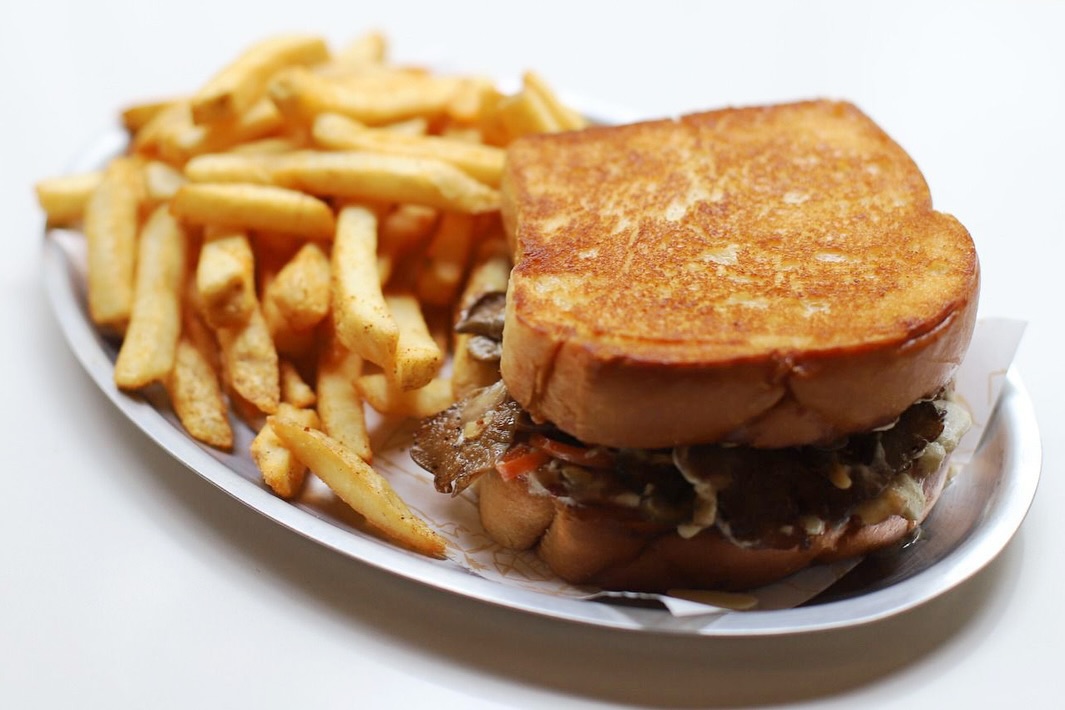
At Bonny Moon, they appear in Kinoko sushi rolls, grilled skewers with ajo blanco, and a vegetarian sandwich that has been praised for its “smoky, sweet, savoury and umami notes.” At Ristorante Pappagallo, the blue oysters elevate a rich gnocchi dish with porcini and white truffle cream.
Last year, Avecita’s ‘Back 2 Roots’ dinner featured Primitive Greens’ lion’s mane and black king mushrooms, and a collaboration between chefs Jolene Nelson of Nyämaste and Britta Bush of Saucha Conscious Living spotlighted a three-course menu built entirely around their mushrooms.
Nelson described Primitive Greens’ lion’s mane mushrooms as “gorgeous” and “a powerhouse”.
“What makes them even more amazing is that they were grown right here on island,” she wrote in a social media post. “Fresh, local, sustainable and coming through with all the health benefits! It seriously doesn’t get any better than this.”
Primitive Greens’ vision extends beyond the luxury market. Whittaker has drawn up plans to partner with the Cayman Food Bank, using a container farm to supply hundreds of families each week with fresh, nutrient-rich produce. But, like many vertical farming businesses, this hinges on one major obstacle – energy.
Energy policy stumbling block
Each one of Primitive Greens’ containers uses a considerable amount of energy. At full operation, Whittaker says that monthly power bills can reach $3,000 per container, a figure that limits what crops the farm can grow and how much it can scale.
To reduce costs, Primitive Greens proposed building a 3-megawatt floating solar plant to power its operations – and sell excess energy back to the grid to offset expenses. But the plan hit a regulatory wall.
For now, Primitive Greens is permitted to use solar for internal use only, putting its vision for a self-sustaining agricultural system on hold.
Despite the setbacks, the vertical farm continues to supply restaurants, chefs and supermarkets. Its model – compact, climate-resilient and hyper-efficient – is gaining increasing attention.
“We can grow gourmet mushrooms and fresh lettuce year-round, right here in Cayman. All we need now is to lower our energy costs to take it to the next level,” says Whittaker.
Related Videos







This is fantastic. Congratulations with the enterprise and wishing you a speedy and successful expansion.
“BRAVO” for stepping up and being creative with the farm-to-table concept!!!
Congrats Mr. Whittaker and I wish you continued success.
There are so many small farmers and cottage industries emerging. The present Minister responsible for agriculture appears to be serious about his push towards greater food security. Congrats there too.
But ultimately, local produce will not sell if it’s priced above imported comparatives. That is and has been the case for decades.
So, with the present Government initiatives, some mechanisms must be implemented to allow local farmers to sell their produce for a profit BUT for less than imports.
Tariffs is a trendy word. What if ‘tariffs’ (duty) on certain imported produce be gradually increased (over years, while local sources are increasing) so that the local comparative is better priced?