

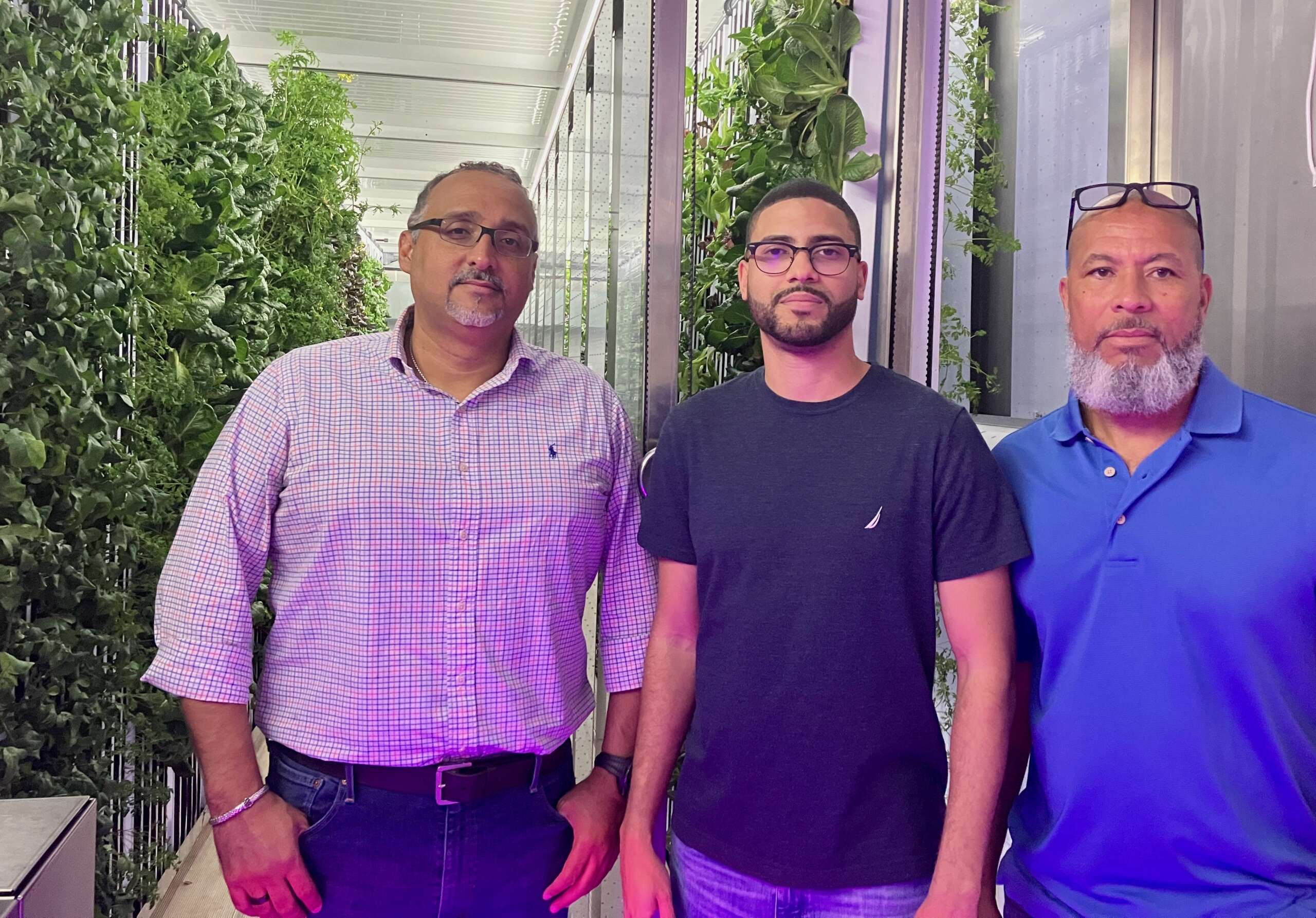
Plans for a solar-powered container farm that would sell excess energy back to the grid cannot be approved in the Cayman Islands as currently envisaged, regulators have said.
Primitive Greens wants to build a floating 3MW solar plant to power a large indoor container farm that would produce enough leafy greens to feed the entire population.
But the financial model for the business depends on it being able to use solar power both for the hydroponic farm and to sell energy to Caribbean Utilities Company.
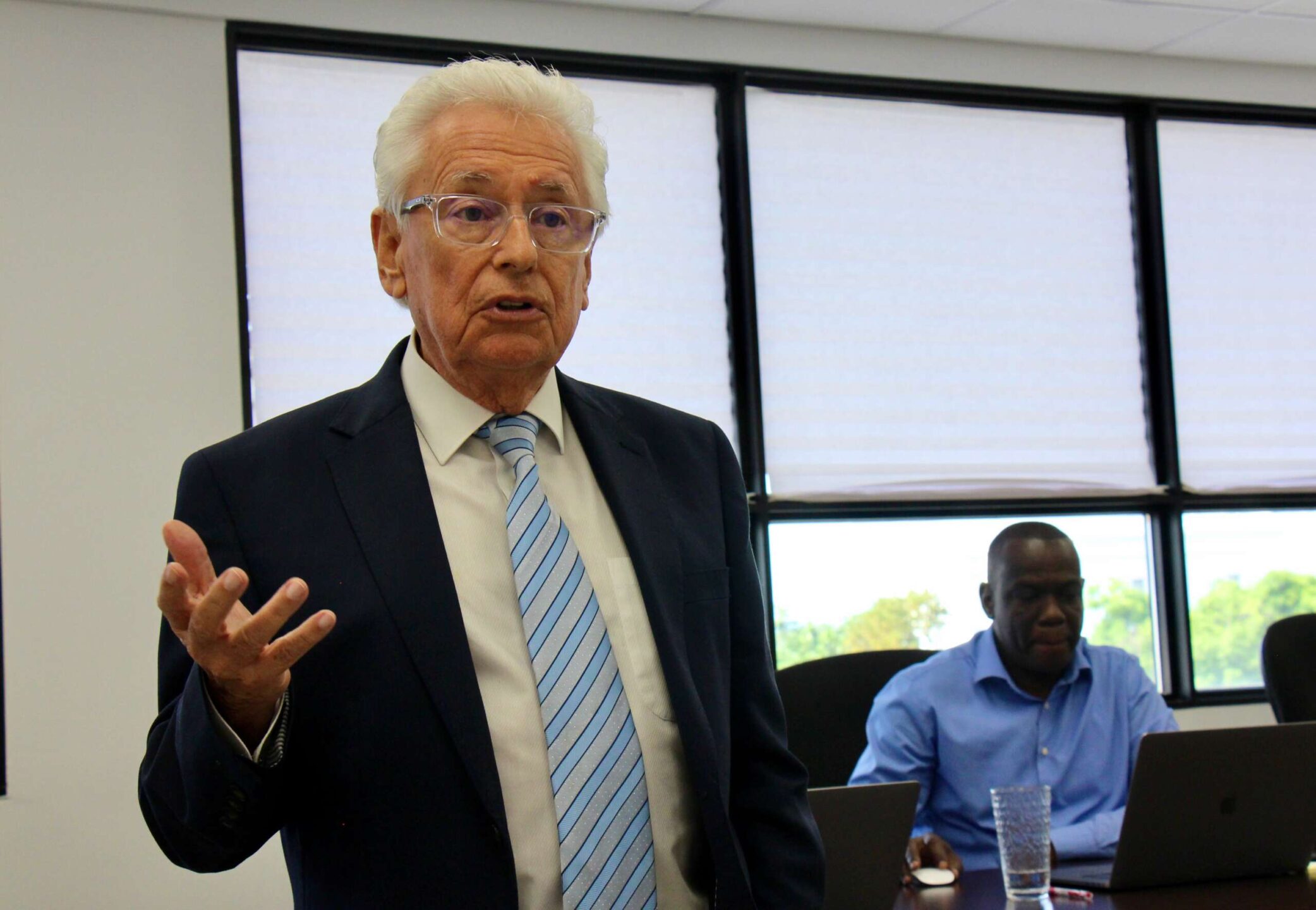
Peter Gough, CEO of utility regulator OfReg, said the application had to be viewed as a utility-scale power-generation project. He said it would be fine for the business to build a solar installation for its own purposes, but selling the energy to CUC is more complicated.
He said an energy project on that scale would have to be approved through a competitive bid process.
Gough said the OfReg board was supportive of the project but its hands were tied and the applicant had been informed of this.
He added that the regulator doesn’t have the power to pre-approve a power purchase agreement between CUC and the business, and Primitive Greens would need to ascertain if the utility was willing to accept the proposed system and carry out an interconnection study, among other steps.
Capacity questions
CUC currently decides how much renewable energy can be allowed on the grid.
Until recently, the utility company had insisted 29MW was the maximum that could be permitted without impacting operating efficiency.
Last month, they agreed to another 9MW.
All of that capacity has been put into the CORE and DER programmes, allowing homeowners and businesses to install small solar arrays to cut their power bills and sell energy back to the utility company.
Gough said there was no capacity for the Primitive Greens project.
“A lot of the board members felt that this was an innovative idea, but we are in a situation where we can’t just give them 3MW. That is utility scale and it has to be publicly procured,” he said.
“We are guided by the laws of the land, we can’t just do it because we think it’s right.”
Primitive Greens responds
Primitive Greens disputes this interpretation of Cayman’s laws and insists it has received no response to its application to OfReg.
The company said in a statement to the Compass that it was simply asking OfReg at this point, to pre-approve a rate at which it would be able to sell electricity to CUC, before it negotiates a Power Purchase Agreement.
It is also asking OfReg to designate the project as ‘innovative’ which, under the National Energy Policy, the business says would ultimately allow the regulator to approve the application.
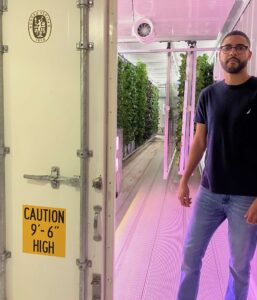
Primitive Greens says it recognises that it would still need to negotiate a PPA with the utility company.
But the agri-business says it doesn’t make sense to jump through those hoops until and unless it gets an indication from OfReg that the rate will be accepted.
It states that it has had no definitive response one way or the other on this from the regulator despite numerous requests for information.
In a written response to questions from the Compass this week, Primitive Greens said it was “erroneous on legal and regulatory grounds” for OfReg to suggest its hands were tied on the project. The company added it was not feasible economically to continue with the project with a solar microgrid sized only for self consumption.
“The floating solar microgrid is required to provide low-cost clean energy and save on land use for Primitive’s farm and is sized to 3.1 megawatts in scale. At this scale, the cost of energy allows for the full range of crops to be grown in an economically viable way at or below the cost of imported produce,” the company said.
It also questioned how selling around 2MW of excess energy to the grid could be designated as utility scale, citing previous public statements from regulators that 5MW was the threshold.
The company said it is impractical to tender a project like this in any case, as there is no one else who could bid for it because CUC is the only entity that legally could sell the energy to Primitive.
The business owners say they are still hopeful the project can be approved in Cayman, although they are simultaneously working on a plan to operate solar-powered container farms in Turks and Caicos.
“Food security is too important to the country to have it derailed by regulatory red tape and special interests,” they added.
Related Videos










Several interesting things at play here.
* Primitive Greens have never received a response on the approval or denial of their application. Indeed they had to file an FOI to confirm if such a determination was even made, first they heard about it was from the media last week. The application has been pending at OfReg for almost a year.
* The only definition of “Utility Scale” in any law, policy or regulation in the Cayman Islands is in the National Energy Policy which states 100% of the energy is sold to the utility. Primitive is not selling 100% of the energy to the Utlity and thus does not meet the definition and further OfReg and CUC have only ever referred to utility scale systems as those either 5MWs and larger of which Primitive is 3.1MW and only 2MWs is being sold to CUC and potentially less over time as the facility grows. There are single companies in Cayman that already produce more than 2MWs of solar power and are not considered utility scale providers. In short OfReg is literally “making it up” out of thin air.
* OfReg says it can’t pre-approve a PPA with CUC. The demonstrable reality is OfReg was never asked to pre-approve a PPA with CUC. It is nowhere to be found in the Primitive application to OfReg. The comment thus does not make any sense and once again on this point, they’re simply “making it up” to make it seems as if they have actual legitimate justifications.
* Capacity, the energy from Primitive is controlled by a commercial battery system as part of a Microgrid and the power is dispatchable (does not make the grid unstable). OfReg thus have not a clue as to the impact on capacity at this stage as this would be subject to Primitives negotiations via the PPA with CUC in terms of the system use cases and whether they indeed want dispatchable solar power at night. The irony is the project technology is fundamentally the same as OfReg recent 23MW solar + storage project (arguably more so as a full microgrid) which does not impact the intermittent capacity they’re referring to. In short OfReg are again “making it up” and even so could simply approve the application “subject to capacity” if they chose, that’s not an actual barrier but again they are scrambling desperately for justifications to prevent making an actual regulatory decision on the project.
* As of todays date (March 21, 2023) OfReg still has not informed Primitive, after almost a year, as to the status of their application on the basis of their “actual” requests for approval, despite the claims made in this article. Which tells you what you need to know about OfReg as a professional regulatory organization.
There simply is no downside to this project!
With COL continuing to increase and families struggling, why are the powers that be not all over this project? Off Reg, CUC, CIG, are we really that ignorant to something that can benefit all of the CI and ohhhh no importation cost being added to over priced produced that expires by Day 2 of purchasing?
This is again another example of the Merchant Class/Special Interest Groups setting US back all for what? SELF GAIN! Simple.
Primitive Greens, I applaud your efforts and BTW your greens are REALLY good! I truly hope you get this all sorted as it really would be a slap in the face to be able to carry out this project in another country and not your own! That to me is the most insulting part of this whole debacle!
After reading 3 articles up this is unbelievable. 3%. That is what we have now and someone wants to put in more solar and the government can’t figure out how to get it done,
Food security is vital here.
While I accept that there must be a limit on the total amount of power that can be generated by solar for load balancing reasons we are nowhere near that limit now.
The current CORE system pays a fixed amount per KW generated. It is obviously unappealing to CUC to pay homeowners close to the market price for electricity. Would it not be better for long-term contracts to pay, say, 70% of the retail price. Allowing CUC to resell the power at a profit over their power lines but still being a fair return to homeowners.
What part of the planet is OffReg living on?
Let’s take a look at what’s happening worldwide – climate change and its consequences, food shortages, supply chain falling apart, war in Ukraine, massive cost of living increases etc. etc etc.,
Cayman is no way self sufficient in food and never will be as our population continues to grow exponentially and out of control.
Solar powered container farms have been successfully introduced all over the world. They are a concept that helps fill a gap in food production. Just look at Barbados…..
https://www.enfsolar.com/news/19018/grace-solar-barbados-agrivoltaic-system-successfully-connected-to-the-grid
This is not rocket science. Where is our Ministry of Sustainability? These food production units should be given a green light from our premier. In fact, they should be kick started if we are going to deal with what is coming down the road….
Government should intervene and even “subsidize” this overwhelming needed Cayman Food Supply Project….
Where is our Ministry of Sustainability for our 3 Islands needing this successful food supply project?