

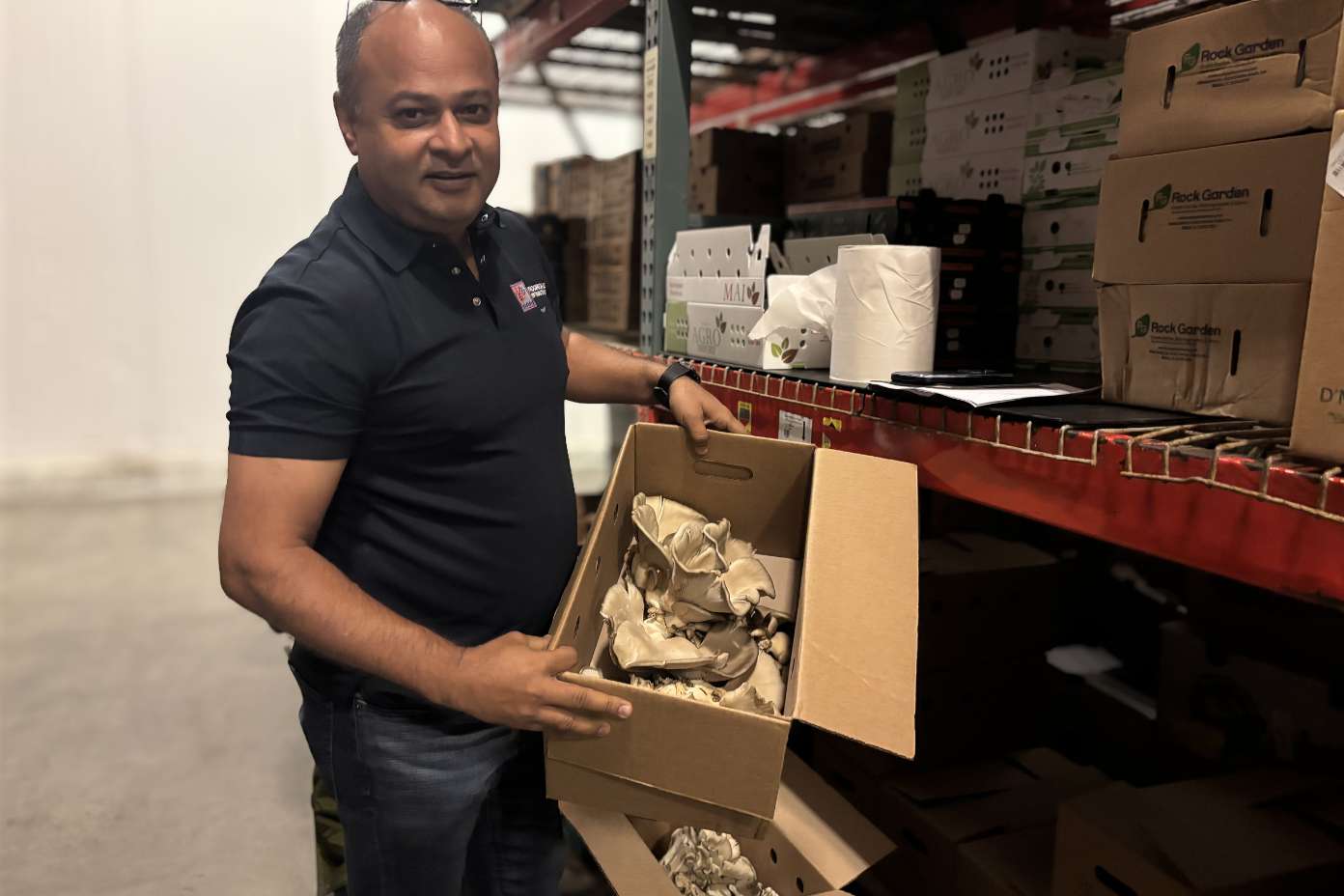
Primitive Greens, a Cayman-based vertical farm growing gourmet mushrooms and leafy greens inside climate-controlled shipping containers, has entered into a supply partnership with Progressive Distributors, one of the Cayman Islands’ largest wholesale distribution companies.
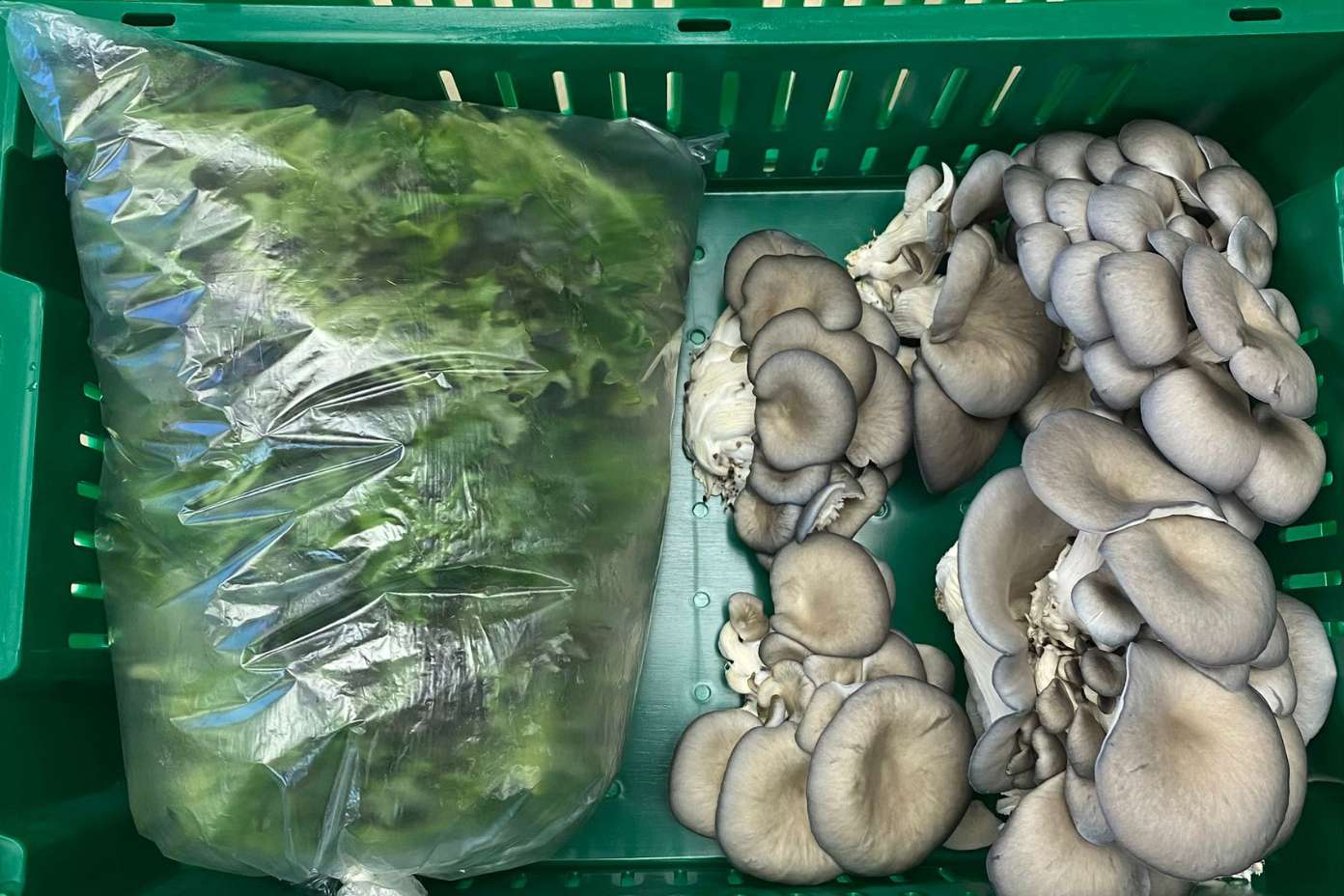
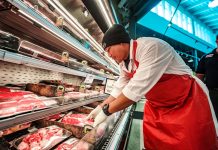
The agreement, which began in October 2025, places Primitive Greens’ blue oyster mushrooms, black king mushrooms and salad mixes into Progressive’s distribution network serving hotels, restaurants and retailers across Grand Cayman.
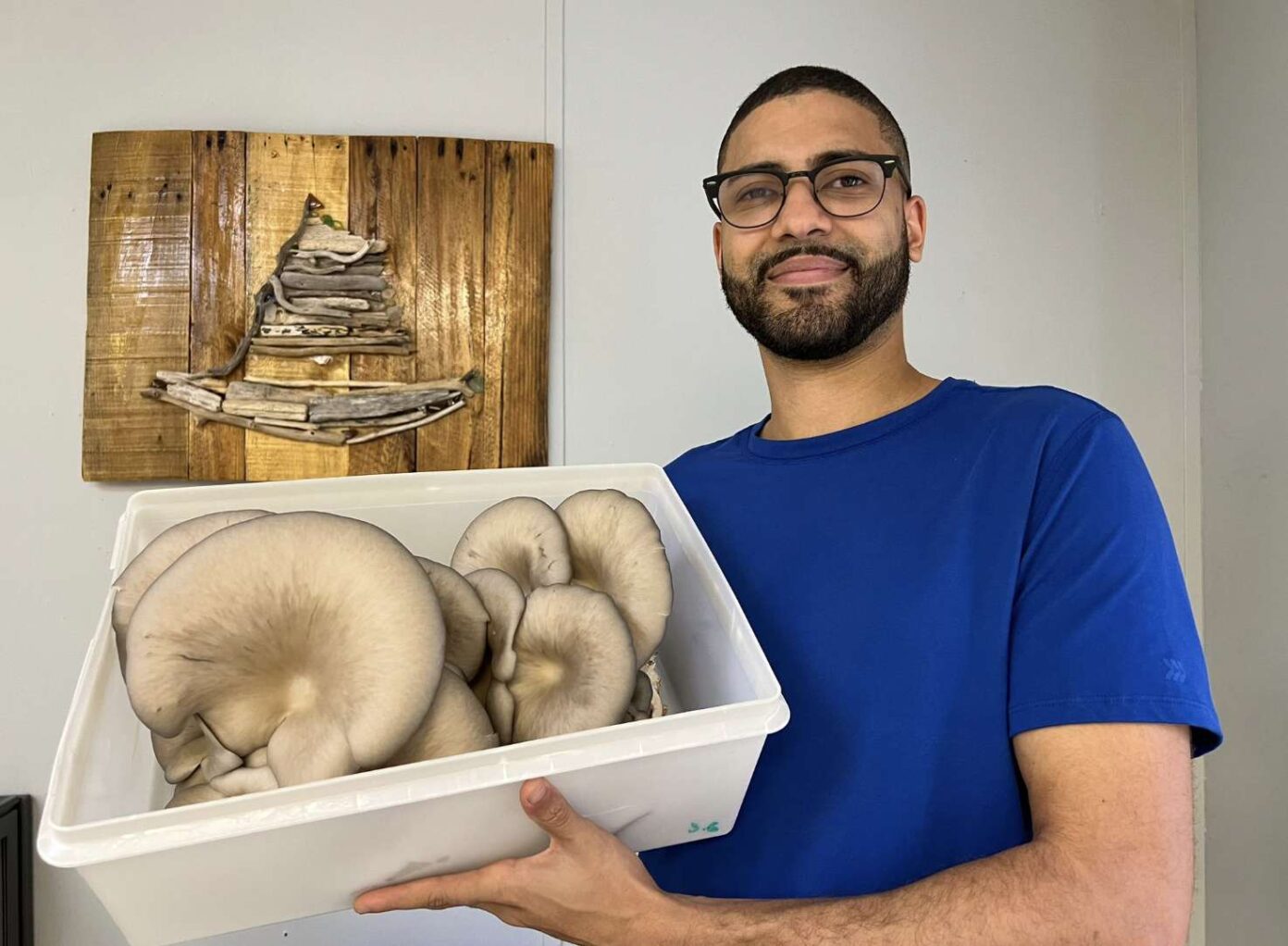
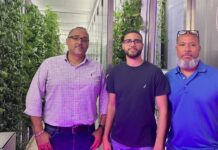
For Primitive Greens co-founder Codi Whittaker, the partnership represents a significant operational shift for the business.
“After years of supplying restaurants directly, we were able to build a substantial client list, which took up a lot of our time doing direct deliveries,” Whittaker said.
“Instead of managing dozens of individual relationships with chefs, we are now focused on high-volume fulfillment. This allows us to solely focus on what we are good at – growing fresh produce.”
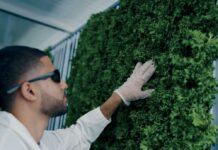
The Savannah-based indoor farm produces gourmet mushrooms year-round without soil, sunlight or pesticides. According to the company, its system can generate the equivalent of two to three acres of traditional farmland using about 320 square feet and roughly five gallons of recycled water per day.
Primitive Greens currently produces between 100 and 220 pounds of blue oyster mushrooms weekly, with peak output reaching around 400 pounds. The farm also grows approximately 200 pounds of lettuce each week.
Its products have appeared on menus at restaurants including Ragazzi, Avecita at Kimpton Seafire Resort + Spa, The Ritz-Carlton, Grand Cayman, Ristorante Pappagallo, Bonny Moon, Fidel Murphy’s, The Kitchen Steakhouse and Vivo.
Reliability and handling standards
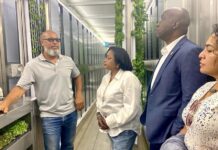
According to Progressive Senior Sales Manager Alok Singh, the partnership required Primitive Greens to meet the same reliability and handling standards expected from international suppliers.
“We are responsible for making sure that when we deliver the product, it’s in excellent condition every single time,” Singh said.
He said Primitive Greens was willing to adapt to Progressive’s packaging, handling and delivery requirements.
“That’s the best part about Primitive Greens – they were open to meeting our core requirements,” Singh said.
Reliability in supply also proved critical.
“They’ve been very reliable, both in the quality of the product and in maintaining a steady supply,” Singh said.
Primitive Greens said indoor farming offers a level of production stability that is difficult to achieve in Cayman’s outdoor growing conditions, while also helping address challenges linked to limited agricultural land.
“To grow the same amount outdoors, you’d need about half an acre, and even then, it’s much trickier,” Whittaker said in a previous Compass interview.
“You’re dealing with the elements, so timing is everything. You might plant something and wait three months before it produces. In our setup, we harvest in just four weeks because everything is fully controlled and isolated.”
Energy costs
Despite the expansion, Whittaker said energy costs remain one of the biggest barriers to scaling indoor agriculture locally.
The company says electricity costs can reach about $3,000 per container each month at full operation. Primitive Greens has proposed solar-powered systems aimed at lowering costs and increasing production capacity, but those plans have stalled under current regulations.
“You want an amazing and consistent product. You want the local product. You want to call it local in your menu. Now it’s possible,” Singh said.
Related Videos








“The company is currently only permitted to generate solar power for internal use, limiting its ability to offset operating costs through energy sales.”
We read in today’s Compass about the government wanting to expand solar energy generation, yet blocks the sale to CUC of electricity generated privately.
Let’s encourage this please. No more roadblocks.