

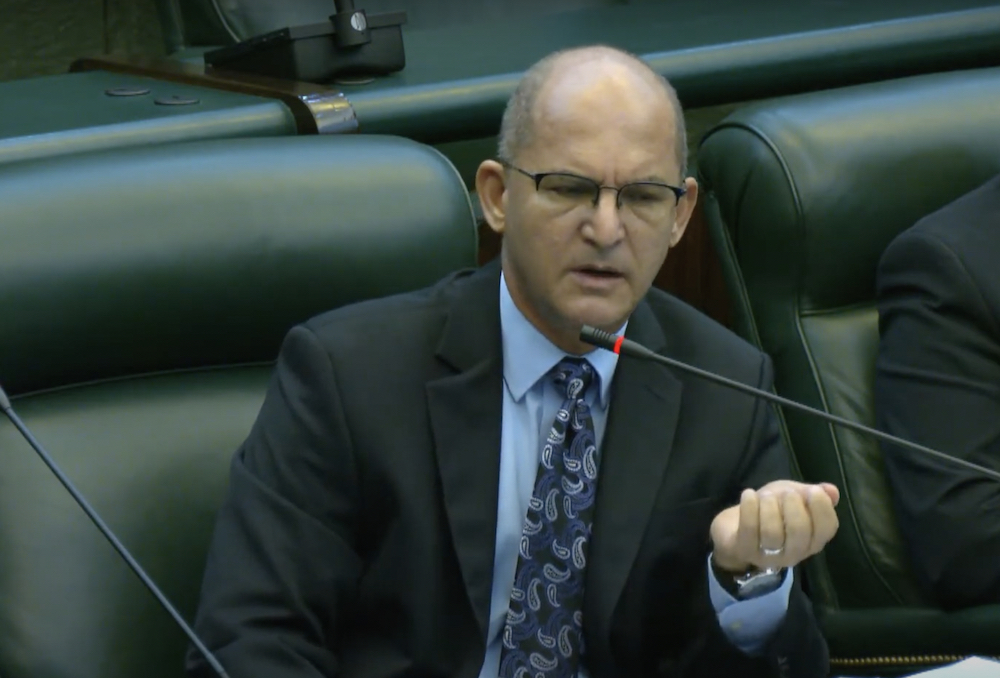
The government needs to build up a “war chest of dollars” to protect the Cayman Islands from future economic shocks, a senior civil servant told MPs.
Financial Secretary and Chief Officer for the Ministry of Finance and Economic Development Kenneth Jefferson was addressing members of the Public Accounts Committee who met on 4 Sept. to scrutinise the auditor general’s performance report, ‘Improving Financial Accountability and Transparency: Long-term Financial Sustainability’.
The report, which was published in February, warned that the Cayman Islands was at risk of not being able to meet its financial commitments unless it got to grips with its spending strategy.
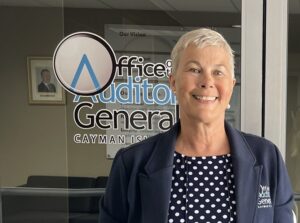
The then Auditor General Sue Winspear said public sector spending had been increasing at an “unsustainable” level and, given the demands of an ageing population and a growing debt burden, government might not be able to meet its commitments in the future without a long-term fiscal strategy in place.
According to the government spending grew 51% between 2018 and 2023 while income only rose by 25%, a situation that Jefferson described during the Public Accounts Committee meeting as “problematic”.
“We cannot have the level of expenditures rising faster than the rate of growth of revenues,” he said. “It’s not something that the government would want to sustain going forward.”
Jefferson told the committee that he would like to see government get back to achieving regular surpluses every year to build up strong financial reserves.
“One of the best ways, I think, of addressing the risks that the government faces, particularly the external risks like economic downturn,” he said, “would be having a great war chest of dollars in the form of general reserves to fight whatever comes along.”
He said regular surpluses had enabled government to help people during the pandemic.
“That is a trend that I would like the government to get back to; of achieving $100 million surpluses a year.”
Jefferson said government regularly recorded a surplus of more than $100 million in the years from 2016 up until the pandemic, whereas the surplus was down to $54 million in 2022, $40 million in 2023 and $60 million in 2024.
If government were able to achieve surpluses of more than $100 million, he said, and took $40 million out each year to add to the current reserves of $119 million, “We would end up, at the end of 10 years, [with] general reserves of a half a billion dollars and that is what is desirable.”
Related Videos








The quickest way of building up such reserves, which is an excellent idea, is to reduce unnecessary expenditure. Eliminating waste and curtailing hiring and reinvesting in technology will reap quick dividends. It is eye popping how quickly AI is being deployed in professional services businesses on island. Apply this to the civil service and many people can be freed up from paper pushing and can retrained into far more valuable roles. They don’t need to be let go, in fact the opposite. They can be redeployed into important roles where there are currently capacity constraints and more staff are needed. CIMA and Planning are just two examples.
Ai needs to be taken seriously in government’s civil service departments to obtain value for investment and give better service to the public.
There are still way too many civil servants allowed to work from home with no supervision. This practice needs to be stopped. Waste of taxpayer money.