

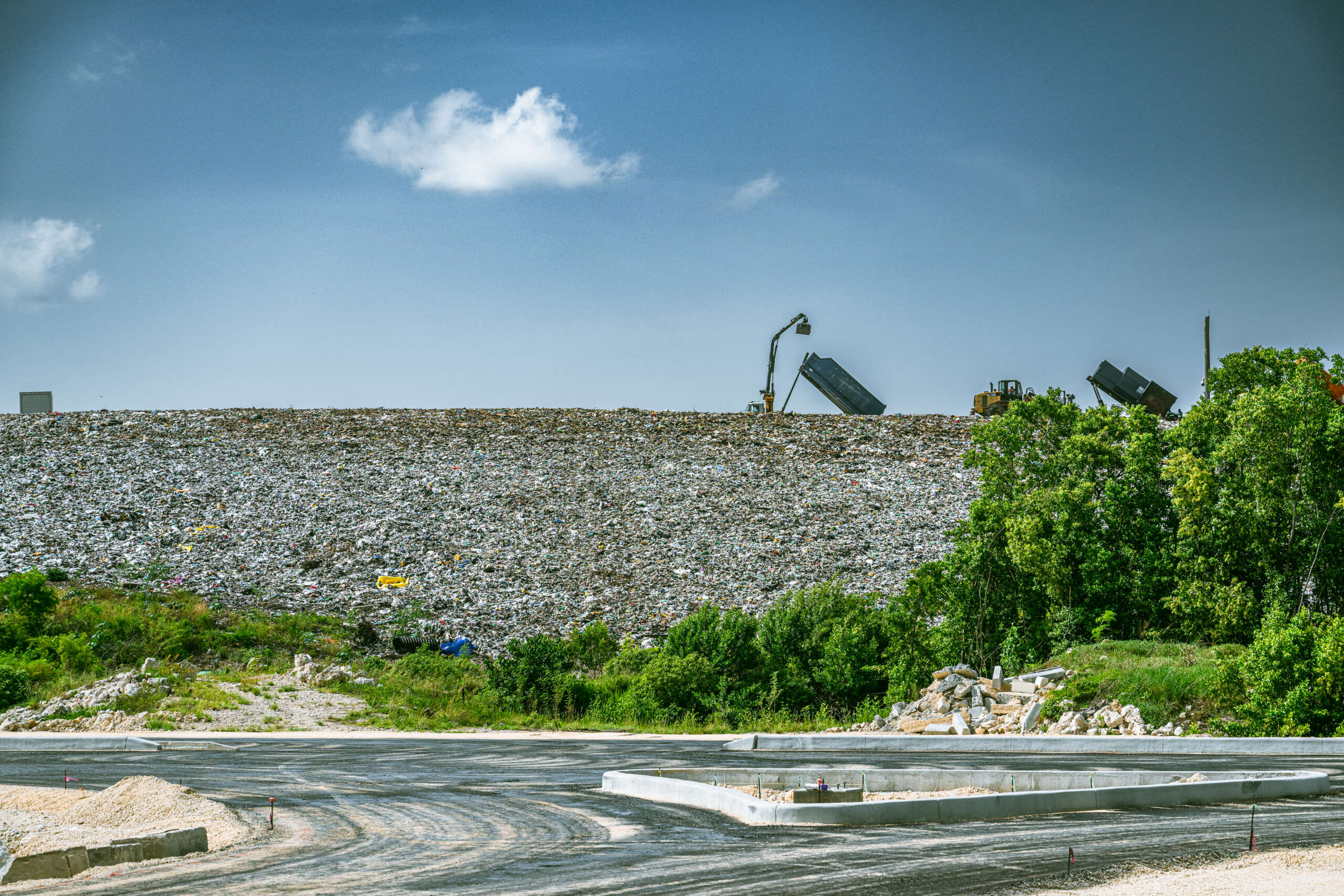
An auditor general’s report into the now-abandoned ReGen solid waste management deal has been officially released.
The contents of the report, which covered the project from its inception in 2014 to October 2021, was widely leaked and reported on last year.
Significant portions of the report published on Friday, 24 Jan., have been redacted, including the costs of the project, “due to commercial sensitivities”, Auditor General Sue Winspear said. However, she stated that a full unredacted version would be released once government formally terminates the deal.
Discussions on exiting the agreement with the Dart-led consortium are continuing, with Cabinet recently granting Minister for Sustainability and Climate Resiliency Dwayne Seymour permission to extend the deadline for the termination of the contract until 28 Feb. – the second extension of the deadline. Negotiations were earlier extended to 31 Dec. 2024, from the original 31 Oct. deadline.

Winspear described the genesis of her deep dive into the financials involved in the now-defunct deal, saying she had been asked by the then governor, Martyn Roper, and Wayne Panton’s incoming PACT government, to undertake the performance audit in August 2021. She said she submitted her draft report to the civil service in early December that year.
“I understand that the Government used that report and my recommendations in its ongoing negotiations with the Contractor. However, we did not receive a formal response from the civil service on the report,” she said in a press release accompanying the released report on Friday, 24 Jan.
In July last year, the government announced it was beginning discussions to exit the deal with the consortium, following years of delays in finalising the financial close on the agreement.
Winspear said, after this announcement, she decided to issue to Parliament the report she had sent to the civil service in 2021, but to not make it public at the time because of the commercial information it contained.
“Since August 2024, the civil service has provided comments on the factual accuracy of the report and provided significant amounts of additional evidence. I have updated the report accordingly and am publishing it today,” she said.
Due diligence
In the earlier leaked report, the auditor general had raised concerns about a perceived lack of due diligence checks on consortium members.
Following the later input from the civil service, the official report has been revised to note that the government did carry out due diligence checks on the contractor and all members of the consortium.
Unsuccessful first public-private partnership
The audit report notes that the ReGen agreement was the first public-private partnership (PPP) deal the government has entered into.
“PPP agreements can provide governments with options to invest in infrastructure without having to pay the upfront construction costs,” Winspear said. “However, PPPs are a form of borrowing and governments must pay contractors for operating the service or facility over the life of the contract.”
She said government had failed to to reassess the value for money of the PPP and whether it was the best way to finance ReGen between choosing the consortium as the preferred bidder and signing the project agreement.
Escalating costs
The report states that ReGen’s construction costs increased significantly after procurement in 2017, as the government increased the minimum amount of waste it planned to send to the facility and changed the scale of the energy recovery facility, for generating electricity from the treatment of non-recyclable waste.
“Overall, ReGen’s estimated construction cost rose significantly after the preferred bidder was selected,” Winspear said. “However, the Government did not review these cost increases to ensure they were reasonable.”
The consortium was chosen as the preferred bidder in what at the time was known as the Integrated Solid Waste Management System, or ISWMS, project, following a tender exercise, in 2017. The deal on that project wasn’t inked until April 2021, just three weeks before the general elections, when the Progressives-led government and the consortium signed on the dotted line.
Despite that signed deal, after three-and-a-half years of negotiations, the two parties were unable to come to an agreement on the financing of the project.
‘Understated estimates’
The auditor general’s investigation found that the estimated cost of the project over 25 years (described in the leaked report as $790 million) was “likely to be understated”.
That cost involved the government paying the consortium “a monthly unitary charge for operating the facility over the 25-year contract period”, Winspear said, adding that government had not assessed how those charges would affect its future borrowing limits and financial ratios.
Despite the increase in cost between 2017 and 2021, no updated value for money assessment was done, Winspear pointed out.
“It is very likely that an updated value for money assessment would have shown that conventional funding or borrowing would provide better value for money than the PPP,” she said. “In addition, the Government’s financial health had significantly improved since it prepared ReGen’s Outline Business Case in 2016 and it had been funding major capital projects using conventional funding for a number of years.”
The report also concluded that while the agreement contained adequate safeguards for most project risks, some safeguards needed to be strengthened.
Government taking finds ‘seriously’
Commenting on the Auditor General’s report, in a statement issued Friday afternoon, Deputy Governor Franz Manderson said government welcomed it and took its findings “seriously”.
“Transparency and accountability are integral components of our approach, and we express our ongoing commitment to incorporate these insights into future projects,” he said.
He added that a chief risk officer had been appointed and given the responsibility of developing a risk framework for the entire civil service as one of the primary accountabilities of the role.
“These efforts aim to enhance risk management, ensure alignment across government entities and protect public resources. They also signal government’s pledge to nurture sustainable development, public trust and resilience,” Manderson said.
A response was also issued by the Ministry of Sustainability and Climate Resiliency and Wellness, headed by Dwayne Seymour.
It said the ministry “remains guided by the Cabinet and the appointed Advisors on the project with regards to exiting the ReGen project agreement in accordance with the latest exit extension date granted by the Cabinet on 28 February 2025”.
Dart: ‘Good faith’ negotiations
In a statement from Dart in response to the audit report, the company’s CEO and executive director, Mark VanDevelde, said, “We have, at all times, negotiated in good faith with the Cayman Islands Government toward the development and implementation of an Integrated Solid Waste Management System to address an issue of national importance.”
He said that following the government’s announcement of its intention to terminate the negotiations, Dart has been engaged in discussions with the government on a memorandum of understanding “which, in part, seeks to advance and resolve this matter”.
He added, “We look forward to working with the Deputy Governor and the Cabinet-appointed team on efficient and mutually beneficial outcomes.”
As of this week, government has announced no new plans for an alternative solution to the landfill, in light of exiting the ReGen deal.
Read the newly released audit report here.
Related Videos










“Commercial sensitivities”, AKA “Embarassing bits”.
New Landfill needs to moved to government owned land north of the new arterial highway from Newlands to Bodden Town. This land at this time is wet lands and considered swamp land, but with the latest civil engineering technology, this land could be designed for an environmental safe Landfill using membrane liner technology, that has been proven environmentally safe for over the last 30 years.