

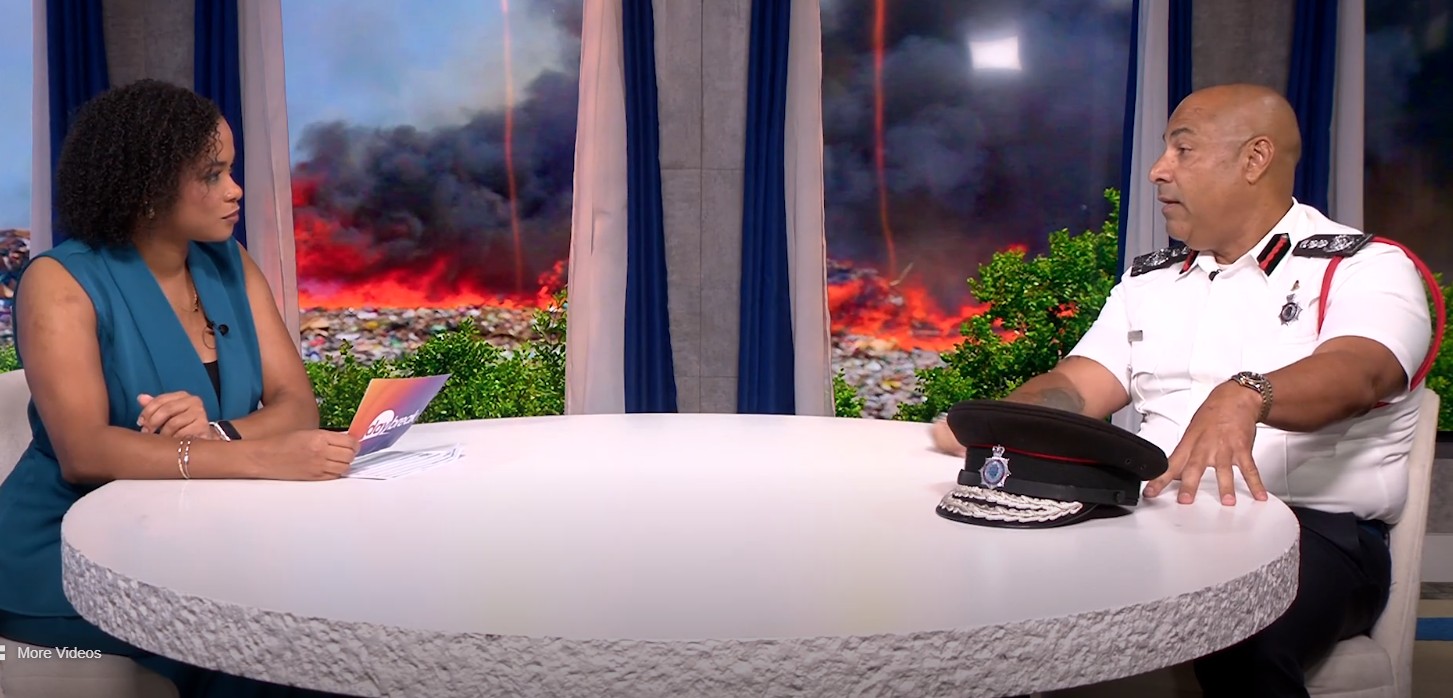
From his days as a rookie to now running the fire service, Randy Rankin has been fighting landfill fires his whole career.
There have been more than 100 fires at the landfill over the past two decades and Rankin has been involved in fighting most of them.
Starting as a young officer on the front lines 32 years ago he is now calling the plays from the fire chief’s seat.
He pulled his men off the landfill site on Thursday almost exactly a week after smoke was first reported in the latest landfill inferno.
In the initial phase some crews worked for shifts of up to 36 hours.
But it is the ones that weren’t there that Rankin feels most sympathy for.
Even while committing more than 50 firefighters to tackle the landfill – a crew had to be on standby to respond to other emergencies.
“Every firefighter wants to be out there,” he said.
“Of course, it gets tiring being there for prolonged periods of time. You get out you get a few hours rest, and you’re on it again. We live on a small island. We have a limited amount of resources, so we gotta get it done.”
He paid tribute to his staff who he said train every day to be ready for an event like this.
“They’re just amazing. They’re always ready, always poised to respond and just get it done.”
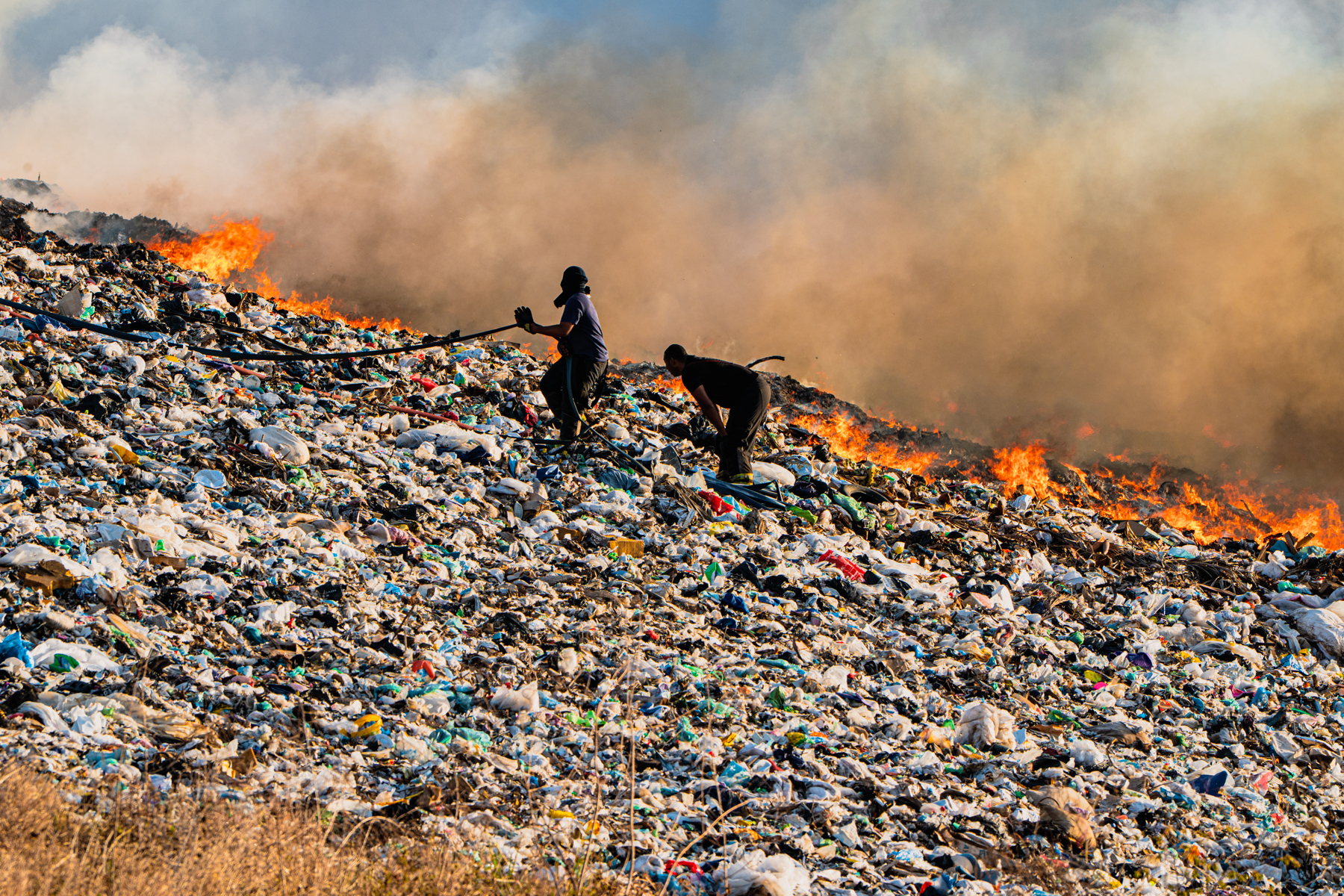
And while the landfill fires frustrate and anger the public, the response to the firefighters from the community at times like these is universally positive. People sent pizzas and plates of food for the crews and the tributes on social media were heartwarming.
Three firefighters needed hospital treatment, two of them from prolonged exposure to smoke, and a third from an injury. All have been discharged and are fine, Rankin said.
Many of the senior officers have been involved in fighting multiple landfill fires over the years.
Rankin said that he still likes to be involved on the ground.
“I would never ask the guys to do something that I haven’t done or am not willing to do.”
While his job now involves wider concerns, he says his focus at times like these is same as always.
“When I’m at the scene, I’m dealing with the fire. I don’t care about anything else.”
Over the years, technology and tactics have changed but the approach is still the same.
There’s a lot of fuel in a landfill and it is about containing and dousing the flames. It takes an extraordinary amount of water pumped from deep wells and a dyke on site.
“We pump hundreds and hundreds of thousands of gallons of water on those types of fires,” he said. “Thankfully [we] have water at our disposal on site and that’s free.”
The fire service works closely with landfill bosses on fire prevention, he says. But the landfill remains a concern that needs constant monitoring.
“When you think about the site, it is filling up,” he said.
Related Videos

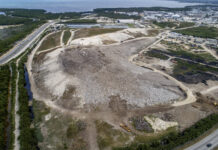
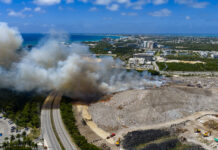
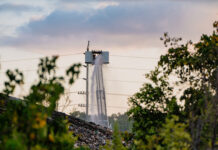







The firefighters faced hazardous, smoke-filled environments, leading to hospitalizations in April 2026.
“All have been discharged and are fine, Rankin said.”. The fundamental problem with this statement is that it oversimplifies recovery by equate “hospital discharge” with being “fine”. He is either not understanding or is dismissing delayed health impacts. Official statements focusing on “immediate, visible symptoms” fail to address long-term toxicological risks.
While the Chief, Dwight “Randy” Rankin, framed the long hours as a testament to the “amazing” dedication of his crew during the April 2026 landfill fires, the practice reveals several critical issues (unless his statement about 36-hour shifts doesn’t mean people were working 36 straight hours) such as significant fundamental safety problems and potential violation of occupational safety standards.
The chief’s comments acknowledge a “small island” with “limited resources” needing to “get it done,” which confirms that these shifts are a result of urgent operational necessity rather than standard safe practice.
While safety regulations exist, there seems to be a gap between occupational health policies and on-the-ground realities.
The photos suggest that adequate protective gear for firefighters is either unavailable in the Cayman Islands or simply ignored. Some personnel appear to have no gear at all, and I have yet to find an image of a firefighter who is fully equipped.
What am I missing here? No sane person would agree to fight toxic dump fires without PPE for 36 hours straight, unless they have a death wish.
Having over 100 fires at a single landfill over two decades indicates a fundamental failure in landfill management, safety protocols, and regulatory oversight, shifting the burden of control onto emergency services rather than prevention.
Everybody knows that—it has been said numerous times—yet nothing happens. The public practically remains passive, believing they are invincible and that it is someone else who will get cancer, neurological disorders, congenital abnormalities, and other conditions.
“We pump hundreds and hundreds of thousands of gallons of water on those types of fires,” he said. “Thankfully [we] have water at our disposal on site and that’s free.”
The use of hundreds of thousands of gallons of water on landfill fires likely carries high environmental costs, including the depletion of local resources and the creation of CONTAMINATED RUNOFF.
The Cayman Islands Fire Chief has noted that despite new equipment, the island has limited resources and that responding to major incidents while maintaining standby coverage for other emergencies is a CONSTANT CHALLENGE.
Aren’t rapid development and increasing building heights adequately matched by infrastructure and emergency service capabilities? Shouldn’t it be a concern when fire-fighting resources are limited?
Even modern high-rise buildings designed with advanced fire suppression systems, non-combustible materials, and strict safety codes can suffer significant fires. Power failures can disable electric fire pumps, cause sprinklers and alarm monitoring inactive.
Isn’t the increase in visitors and private planes in Grand Cayman concerning, given the limited firefighting resources?
Is it correct that the Cayman Islands Fire Service ladder trucks still only reach up to 100 feet, which is roughly 10 stories?
Does overbuilding, such as the Westin Grand Cayman hotel expansion, create evacuation problems? There seems to be no room for cars; in case of emergency, the hotel guests and staff might have to leave on foot because the 10-storey expansion proposed 97% of its required parking to be located off-site near Sunshine Suites.
With the landfill fires, in the hundreds, are authorities trying to kill the people. Looks like. Your hospitals will tell the story with the diseases from the fires.