Dear Editor,
The major landfill fire of 16 April 2026 sparked renewed discussion on how best to manage disastrous situations such as this. Stakeholders are rightly interested in what is being deployed to diffuse the hazards produced and what additional resources, if not readily accessible, can be organised quickly.
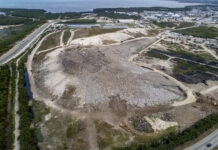
The site, known as Mount Trashmore, has long been an emotive topic. Fires are frequent. A media outlet reported over 50 fires in the five years preceding its special report in April 2023. The humanitarian hazard of landfill fires in Cayman (small island, vicinity of people, humid temperature) far surpasses that of a large, inland landfill.
A major concern is the surface, deep-seated and smoldering ‘SSE’ fires’ effects on water quality. Modern US landfills like Apex Regional Landfill are in a mountain valley, over 20 miles from a city, with liners to protect groundwater AND a 500-foot buffer of rock and earth to separate waste from the water table.
This persisting situation is producing toxic fumes including per- and polyfluoroalkyl substances (PFAs) and dioxins. Dioxins pose severe risks including cancer, immune system damage and hormonal disruption. PFAs known as ‘forever chemicals’ are linked to reproductive issues, developmental delays in children and high cholesterol.
In the US, PFAs contamination is considered a major threat to drinking water supplies. Highly toxic loads in air are also a major result of landfill fires. These arise from carcinogenic pollutants benzene and other volatile organic compounds, heavy metals, and high levels of carbon monoxide (CO) and hydrogen sulphide (H2S).
While more monitoring data and strategic insight would be very helpful, my gut feeling is that humanitarian and environment funding is urgently needed along with international and national expertise to achieve a comprehensive, community-focused, rapid response.
If the Department of Environmental Health or other connected agencies are unable to process or receive the necessary budget or resources to match the challenge, the question is whether another entity is to have a relevant role. After Hurricane Ivan, the CINRF was established to assist with re-housing.
Many successful landfill hazard management strategies exist. Short of a development moratorium (which would be unpopular until the situation is remedied), AI, robotic technology and infrared thermal imaging are becoming increasingly popular. Waste export e.g., to Malaysia (Germany, Japan, UK) is also a commonsense approach.
While debates continue regarding what to do on a national level, there are vital steps every household should take. Those isolating in homes must keep the air they breathe clean by locking out polluted outdoor air and purifying indoor air. A HEPA SANS purifier can signal significant pollution and when the air quality is clean again.
Reverse osmosis is the accepted gold standard for residential water purification. This includes NSF-certified countertop versions. These surpass carbon filters with a microscopic membrane which filters out PFAs, nitrates, fluoride, pesticides and heavy metals e.g., arsenic and lead which bioaccumulate and are linked to organ damage.
Personal strategies must also target cellular health and elimination of stored contaminates – GPL-TOX and blood panels, NAC and glutathione supplementation, activated charcoal and zeolite (binders), and dietary support including organic, non-GMO green leafy vegetables for the liver and adrenals.
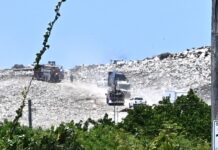
For Cayman’s firefighters, these valued members of the civil service are being exposed to a diverse mix of combustion products and combustible materials at a flaming or smoldering landfill. In the US about 30 firefighters are injured annually from landfill fires. Last week two Cayman firefighters had to be hospitalised.
As someone exposed to mould in office premises in the aftermath of Hurricane Ivan, I am very familiar with how important it is to get ahead of toxic loads. Vital right now are government (/private) resources dedicated to front-line workers, all elderly, young children and persons with autoimmune and chronic conditions (high cholesterol).
For information on a functional medicine approach to health visit this website.
In terms of NGOs working on best practice policies in this area, a leading one in the US is Full Circle Future. It is devoted to solutions that reduce pollution from landfill fires and organic waste. The charity works at the intersection of community health, environmental justice and reducing pollution.
Christina Rowlandson
Related Videos