If Cayman fails to act on dementia, the country will face what one doctor is calling a “crisis of epidemic proportions”.
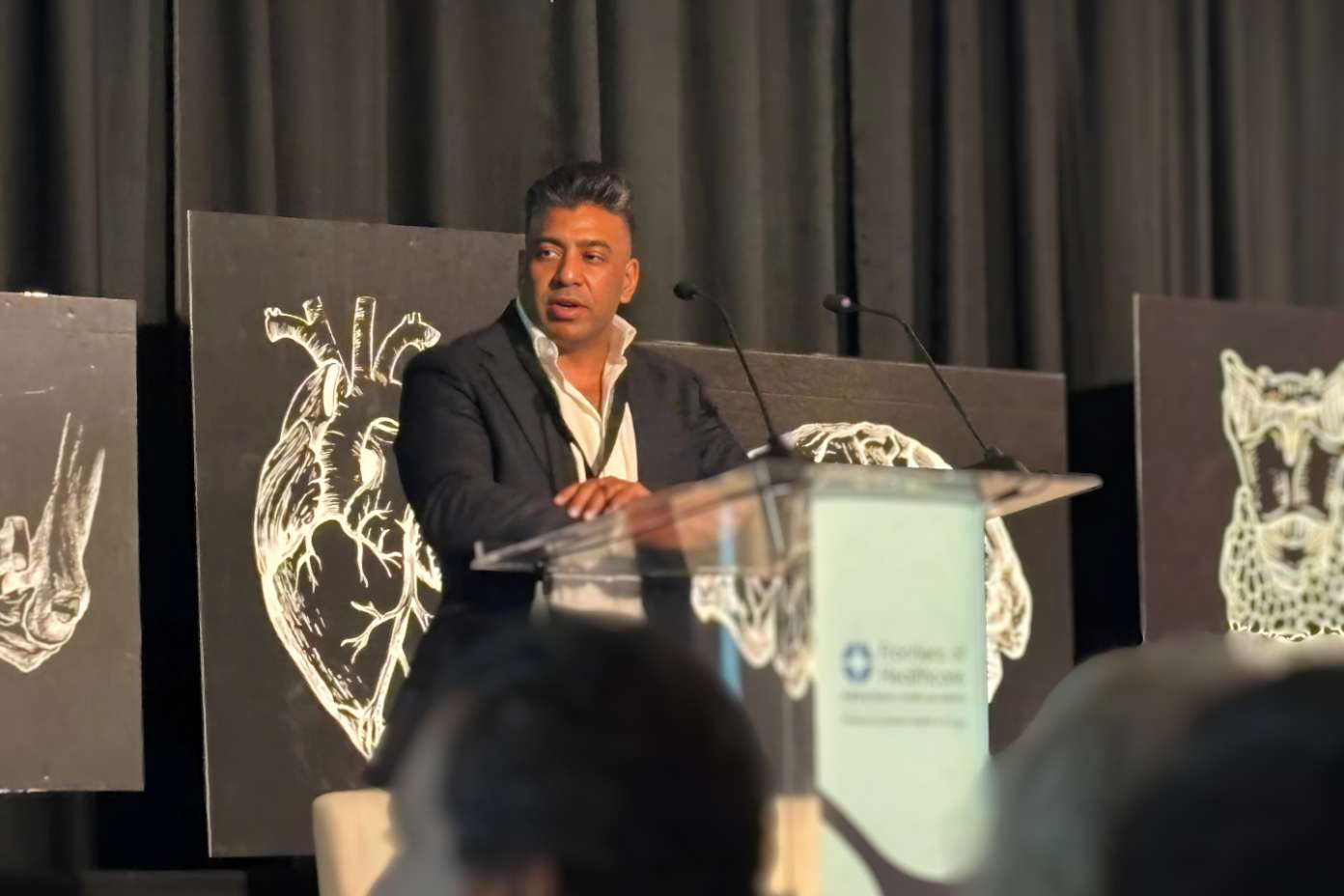
That was the warning from Dr. Ryan Punambolam, neurologist at Doctors Hospital, who delivered a presentation on ‘Bending the Dementia Curve in Cayman’ at the Frontiers of Healthcare conference on 26 Sept. The event, hosted by Doctors Hospital and Integra Healthcare, brought together the healthcare community to address some of Cayman’s most pressing medical issues.
“If we reflect on the status of dementia on this island, it is not a pretty picture,” Punambolam told the audience. “We are due to see a doubling of prevalence in the Cayman Islands by 2050.”
The growing burden of dementia
According to Ministry of Health statistics, 1,053 people in Cayman had been diagnosed with dementia as of 2021, the majority with Alzheimer’s disease. But Punambolam believes the true figure is likely higher, as the country has no national dementia registry to provide accurate data.
“Ironically, I can tell you precisely how many cruise ship tourists will be in George Town next Thursday, but we do not have a precise count of how many people are living with dementia on this island,” he said.
“To make things worse, if you have dementia, there are very few specialists on this island, and if you do happen to have an appointment, guess what insurance will cover? … The insurers will cover you when you’re admitted with your catastrophic stroke, heart attack, brain tumor and end-stage dementia, but they’ll cover very little for an outpatient preventive health appointment. And, unfortunately, all this is a manifestation of the fact that we do not yet have a national dementia plan.”
These systemic issues are compounding an already dire problem that is worsening.
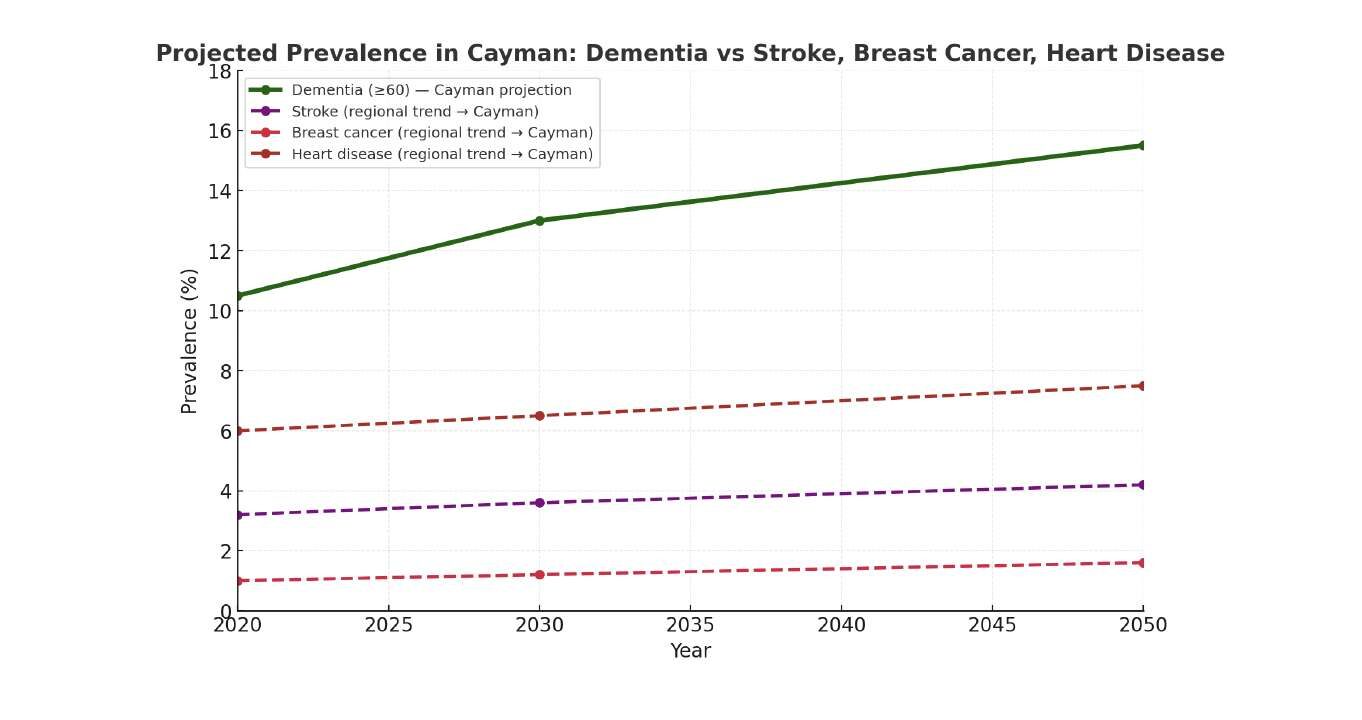
Dementia is projected to grow faster than any other major chronic disease globally and regionally. In Cayman, it could surpass stroke, breast cancer and heart disease by 2050, with prevalence among those over 60 rising from 10.5% in 2020 to as high as one in five.
Punambolam noted that despite its looming economic and social toll, dementia still lags behind other diseases in funding and awareness. “It’s an unfair climate and it’s a systemic issue,” he said.
Social inequities
Punambolam’s presentation highlighted sharp inequities in dementia outcomes.
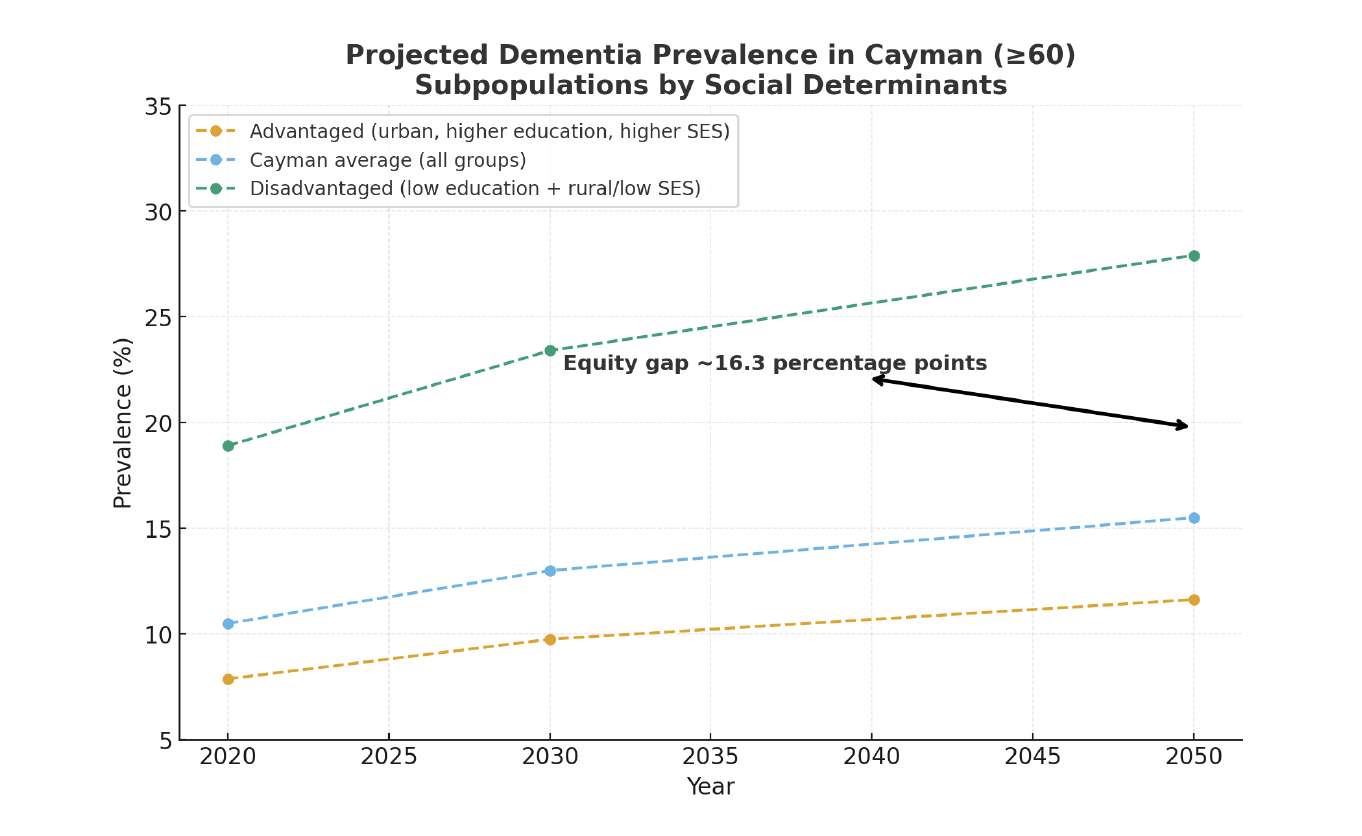
Projections show disadvantaged groups – those with lower education and lower income – could face dementia rates more than 16 percentage points higher than advantaged groups by 2050.
“Inequity is going to be exaggerated for those who are weakest and most vulnerable, including for brain diseases such as dementia,” he said.
The STEPS 2023 National Health Survey reinforced these concerns, finding that nearly half of Cayman adults aged 45–69 already carry three-to-five risk factors for chronic disease, including smoking, poor diet, obesity and hypertension – all of which heighten dementia risk.
Bending the curve
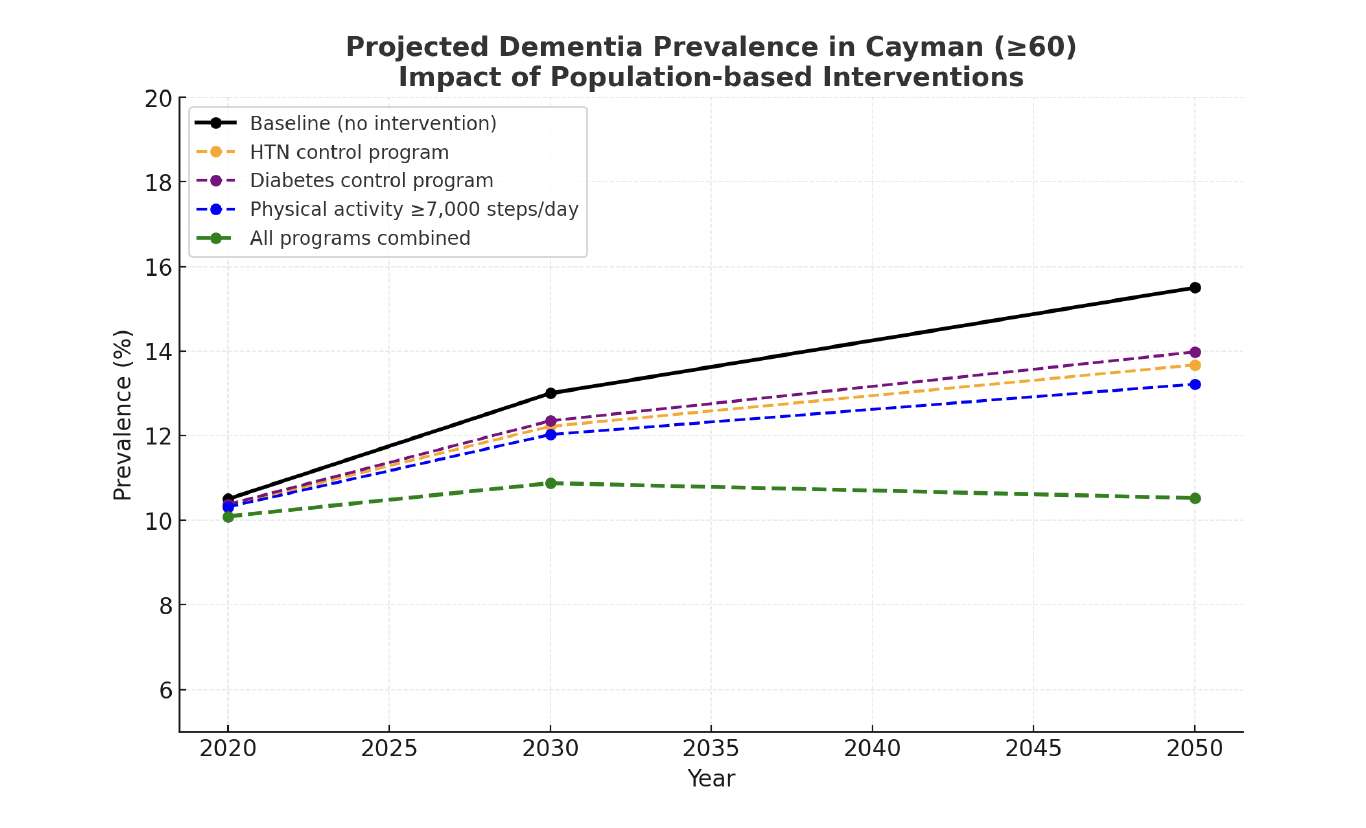
Despite the grim projections, Punambolam insists the curve can be bent with timely interventions. Population-wide strategies – such as improving diet, reducing smoking, maintaining healthy blood pressure and cholesterol levels, engaging in mental stimulation, and social and physical activity – could reduce the risk of dementia by almost one-third by 2050.
“Brain health and dementia care needs to be a political issue on this island,” he stressed. “We need to change the way we do business. Our job is to keep hospitals empty and that requires a greater focus on health promotion.”
Doctors Hospital is positioning itself at the forefront of that effort, recently becoming the first hospital in the Caribbean to offer Donanemab, a groundbreaking Alzheimer’s treatment developed by Eli Lilly that targets amyloid plaques, which are linked to the disease, in the brain.
But Punambolam stressed that innovation in treatment is not enough without structural change.
Systemic issues
He emphasised that the projected rise in dementia is not an inevitability but a preventable systems failure.
“We do not yet have a national dementia plan. And if you fail to plan, you plan to fail,” he warned, urging the creation of a long-delayed dementia strategy to promote healthier lives, reduce risk, expand early detection and ensure equitable access to care.
Cayman is not alone in facing these challenges. Alzheimer’s Disease International estimates dementia cases in the Caribbean are projected to grow by 155% by 2050. Yet only 16% of Caribbean nations have implemented national dementia plans.
Punambolam’s recommendations include universal cognitive screening by age 45, affordable vascular clinics, wider access to biomarkers and a national dementia registry to measure progress and address equity gaps.
“This is the challenge of our generation,” he said. “We have the plan, we have the knowledge, we have every infrastructure possible to turn it around. All we need is a dream and the will to do it.”
Related Videos