Leading figures from the Cayman Islands Chamber of Commerce have praised the government’s accountability efforts, but called for the implementation of a strategic development plan.
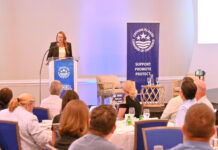
Speaking on Compass TV’s Forefront show on 6 Nov., the chamber’s CEO Wil Pineau and president Omari Corbin highlighted the need for the business community to be able to evaluate the government’s successes and failures.
“The council wants to develop an action plan that we can work with government in assessing their priorities and making sure that our members have better information about their achievements and whether they’re on the mark or not,” said Pineau.
“We won’t be able to track every single outcome,” said Corbin, “but we will focus on the outcomes that are most important to our members and also to the community.”
This initiative, to introduce a government accountability scorecard, was first announced in September 2024.
Pineau gave a tentative timetable of six months for the scorecard to be ready.
“It is a watershed moment for us at the chamber and government because there’s good conversation going on,” he said.
Corbin noted that while these types of scorecards are common in other jurisdictions, it’s the first time it will be attempted in Cayman. “It’s going to be very important for Caymanians,” he said.
SPS aligned with chamber vision
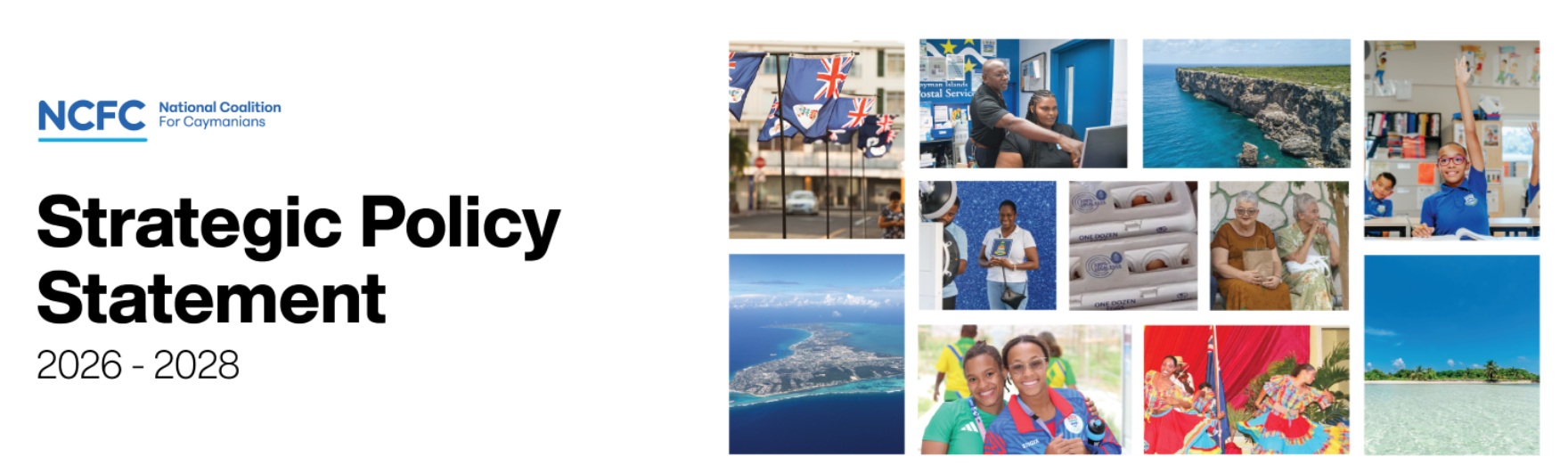
On 15 Oct., the government published its Strategic Policy Statement 2026-2028, which laid out its short-term economic vision. It’s a combination of physical projects, such as building new roads, with theoretical concepts, like the digital transformation.
Meanwhile, the chamber has its three pillars advocacy agenda, which consists of: building a future-ready workforce; sustaining economic success; and advancing quality of life.
Pineau noted that the government’s plan fits well with the chamber’s priorities. “I think if we look at the three pillars the Chamber Council has established, every one of those three pillars can fit into the priorities in the strategic policy statement. They align really nicely,” he said.
Need for a long-term vision
But while the SPS outlines the government’s short-term priorities, both Pineau and Corbin feel a longer-term development plan is needed.
“There is a desperate need for a national development plan,” said Pineau. “There is a need for a wider picture view of how we’re developing.” He added that a broad-based strategic development plan for the country was needed.
Pineau noted that Cayman’s last nationwide strategic plan was Vision 2008, yet it was never implemented.
“If I go back into the history of the chamber, many councils have advocated for that. I was involved in Vision 2008 myself,” recalled Pineau.
But the rapid expansion in Cayman’s economy and population since then means a plan is essential, said Pineau. “I think the country is growing at the pace where it probably definitely needs a holistic conversation about its future.”
Indeed, recent debate about affordable housing, immigration and the cost-of-living crisis would indicate that Cayman needs a holistic plan to deal with these issues.
Vision 2008 showed that making a plan is the easy part, but implementing it is more difficult. And that’s where Corbin thinks the scorecard will help.
“It’s one step to put the plan in place,” he said, “but the more important step is, OK, how do we then bring that to life? And that’s where the scorecard will play a role.”
Related Videos