
Cayman spent more on importing food, cars, machinery and building materials in the second quarter of 2025, but saved money on petroleum products.
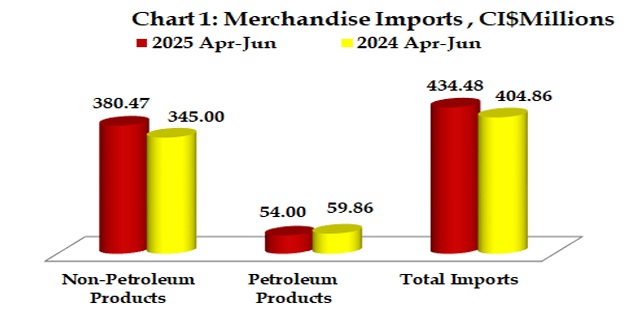
According to the Economics and Statistics Office of the Cayman Islands, the jurisdiction imported $434.5 million worth of goods in the second quarter of 2025, a 7% increase compared to the same period of 2024.
The data was published on 26 Nov. as part of its Quarterly Trade Statistics Bulletin.
It was striking that the value of non-petroleum imports rose by 10.3%, while the cost of importing petroleum-related products fell by 9.3%. Coupled with inflation data released on the same date, it suggests that the Cayman Islands has benefited from a fall in global energy prices in 2025.
“There is no doubt that falling global energy costs are helping Cayman’s economy at the moment,” said Simon Cawdery, director at HLX Management. “They are keeping a lid on inflation and reducing the cost of petroleum-related imports and shipping costs for all imports.”
Import breakdown
While the country is spending less on fuel, it is ramping up imports of manufactured goods and food. The value of machinery and transport equipment purchases from abroad rose by 8.7%.
Within that segment, the standout numbers were the road vehicles, where import value rose 14.1% and general industrial machinery and equipment, which rose by 32.7%.
Cayman’s booming construction sector is also reflected in the import numbers. Iron and steel imports grew by 57.4% while cork and wood manufactures rose by 11.4%.
The second-quarter inflation report from the Economics and Statistics Office have shown the rising cost of food and non-alcoholic beverages in Cayman. That is also partly reflected in the jurisdiction’s food and live animal import bill, which rose 7.0% in the second quarter. Another food-related segment, animal and vegetable oils, fats and waxes, grew by 5.9% over the same period.
Related Videos