

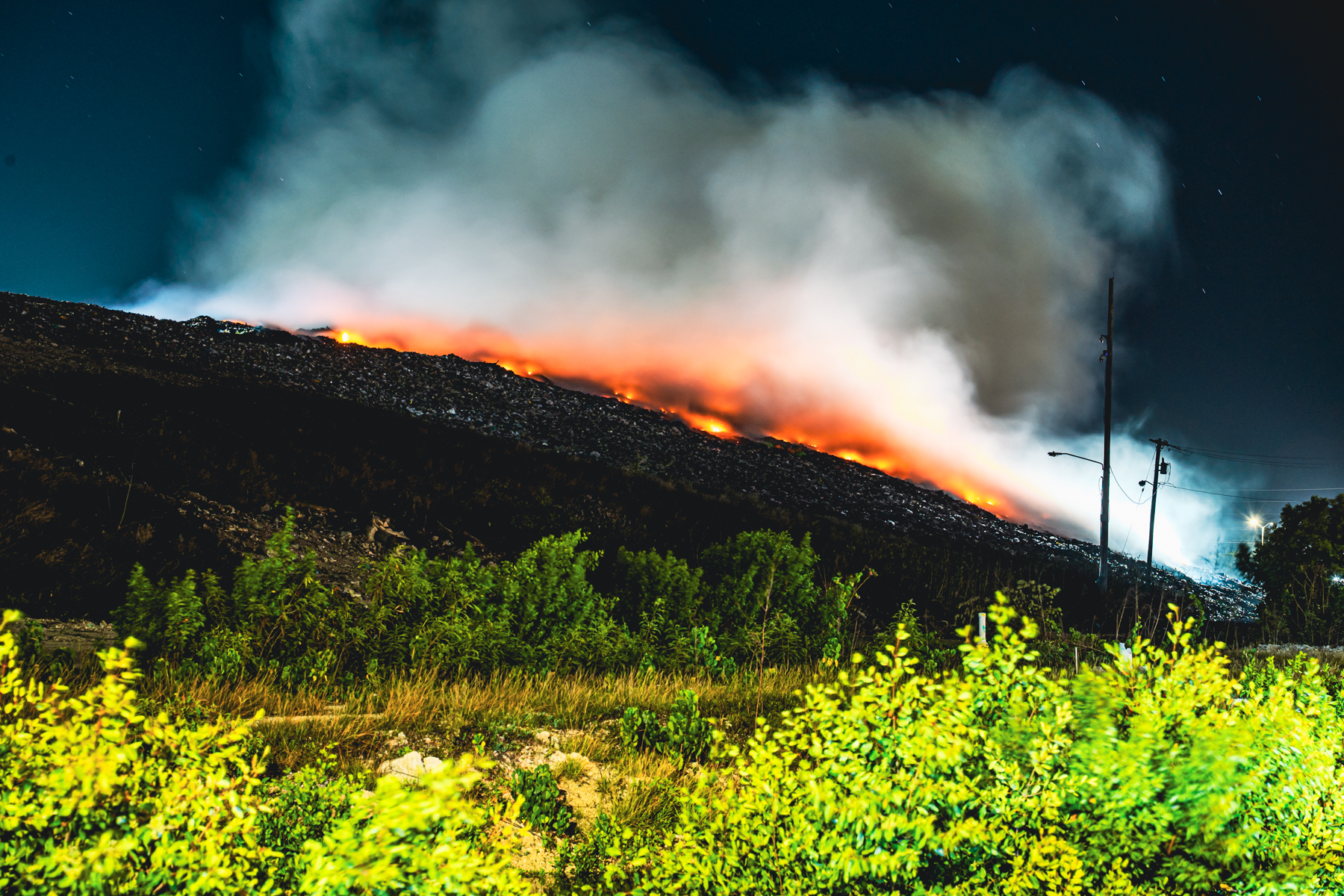
Four firefighters remain at the Cayman landfill to carry out damping down operations on part of the site, government officials have said.
The government said the team was conducting “saturation of an area of concern on the north side as part of ongoing monitoring and final suppression efforts” and that the fire was “largely extinguished”.
Officials added that a health check sweep of areas affected by clouds of thick and toxic smoke after the blaze broke out on Thursday, April 16 had been carried out.
The checks turned up no one that required treatment, but a joint team of health staff, regiment troopers and police had given people advice on how to get medical treatment if needed.
No increase in respiratory complaints
Health officials said, “The Ministry of Health, Environment and Sustainability can confirm that there has been no increase in the number of patients at Health Services Authority facilities presenting with respiratory complaints or individuals requesting assessment and management associated with the recent fire at George Town Landfill.”
They added, “Two individuals who attended the site were treated for eye irritation and discharged shortly after treatment as they did not require hospital admission.”
Officials said they had no figures on people who might have attended private sector providers for treatment.
Two firefighters were taken to hospital for evaluation overnight on Thursday. One firefighter was treated for respiratory related issues and the other for back pain.
Health fears
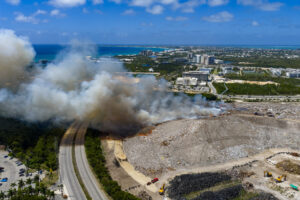
Residents living in the path of the smoke plume from the burning landfill on Friday said they feared for their health.
The wind blew smoke from the fire across the Esterley Tibbetts Highway and through residential neighbourhoods in the West Bay Road area, where residents on Friday complained of irritation from air pollution.
The continued closure of part of the highway through most of the morning on Friday also contributed to rush hour traffic delays on West Bay Road and Eastern Avenue.
Short-term plan outlined
Katherine Ebanks-Wilks, the minister responsible for health and the environment, said last Friday that the coalition government believed there was enough space at the dump to create a new fully lined facility that would extend the life of the George Town landfill.
She said that proposal, combined with investment in recycling and composting infrastructure, could give government another decade to come up with a long-term solution to a problem that has plagued Cayman for more than 30 years.
The fire forced the closure of roads and schools and created smoke plumes that were visible to arriving tourists on planes and cruise ships.
The blaze raged for 24 hours and needed 50 firefighters to bring it under control.
It was at least the eighth occasion in the past two decades that a major landfill fire has made the front page of the Compass.
Related Videos



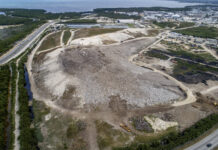







The official statements regarding health checks following the April 16, 2026, Grand Cayman landfill fire sounds superficial because they focus primarily on immediate, visible symptoms rather than long-term toxicological risks.
The statement that welfare checks found no one needing immediate treatment, despite the presence of toxic smoke, highlights a reactive rather than preventative approach to a long-standing environmental health crisis.
“…there has been no increase in the number of patients at Health Services Authority facilities …”
Dump fires emit toxins like dioxins, furans, and PFAS, causing DELAYED HEALTH IMPACTS often missing from IMMEDIATE hospital data.
The statement focuses on immediate respiratory complaints and eye irritation, which may not capture the full, long-term health risks associated with the toxins released from the landfill fire.
Desperate times call for desperate measures. The current approach and tired rhetoric regarding Cayman’s waste management overhaul indicate that new leadership and new expertise are needed—leaders with a proven track record of successful accomplishments in the field of waste management in a small island environment, aligned with the latest technology and alternative financing to address the issue efficiently.
Grand Cayman is facing a national health emergency that requires immediate actions, not delays until 2028-2030.