At a glance
- Education Minister Rolston Anglin said government is set to raise school leaving age
- Textbooks about Cayman history and culture to be introduced into schools
- National Parent Teacher Association body to be established
Government plans to raise the mandatory school leaving age for students from 16 to 18 in the next few years, said Education Minister Rolston Anglin.
Speaking at the public meeting of West Bay MPs on 20 April, Anglin, who was sitting alongside Premier André Ebanks, Environment Minster Katherine Ebanks-Wilks and Parliamentary Secretary Julie Hunter, said, “One of the things that I ran on [for election] was the basis of moving compulsory education to be extended to age 18. The government is completely committed to that in the next budget cycle.”
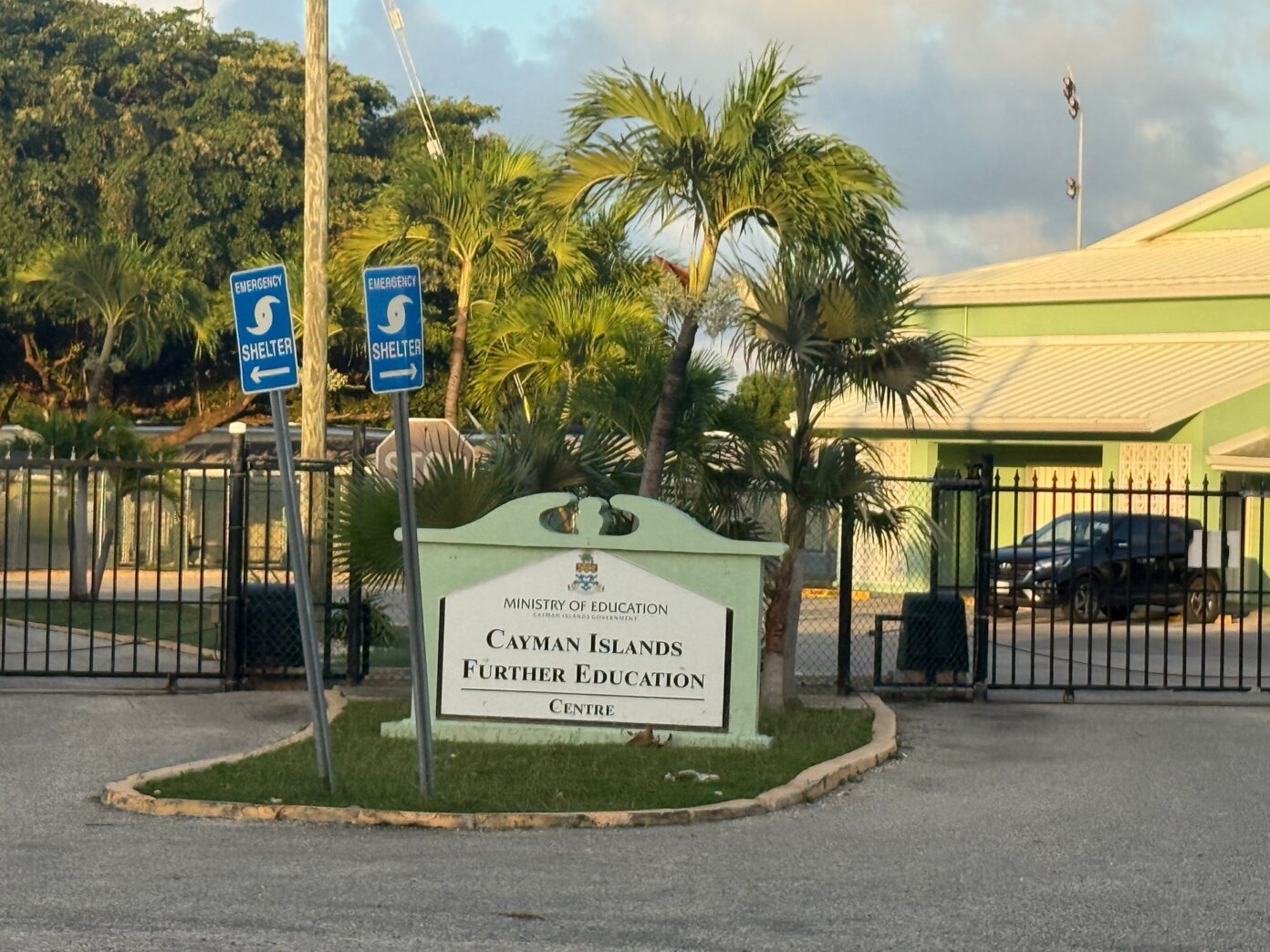
He told the public meeting that Cayman Islands Further Education Centre – often referred to as CIFEC – would be restructured to meet its original premise of providing vocational training for students to equip them for the jobs market, as well as a place where they could retake their exams.
“That was the original vision for CIFEC back when I created that back in 2011,” he said, “but sadly, for the last 12 years, nothing has been done to move that forward.”
Industry courses
Anglin said that he wanted CIFEC to be able to offer industry-ready technical and vocational courses, which were designed with end jobs in mind.
“The fact is, once we get the two-year CIFEC programme, we will be able to go to every industry and work collaboratively with them and pick the qualification that they tell us is the most meaningful and relevant,” he said. “We’re not going to just create that in a vacuum.”
To applause from assembled constituents, he said, “That is how we’re going to change lives. That is how we’re going to upskill Caymanians. That is how we’re going to get Caymanians on the property ladder by ensuring we help recreate the middle class in this country, which has been absolutely decimated over the last decade.”
Graduation reforms
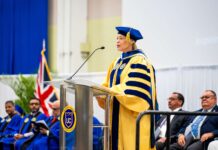
Anglin said that he was also going to standardise graduation ceremonies in public schools across island, saying that they should not be running “for four hours”.
Speaking from personal experience, he said, “I couldn’t be more frustrated to have sat on a platform at a high school graduation, which is supposed to be one of the most memorable nights for a young person, and to see them and their families leaving in droves because the ceremony had then reached three hours.”
Anglin said there were also plans to increase learning about Caymanian heritage and culture in schools, with the education and culture ministries working closely with the Cayman National Cultural Foundation to produce social studies textbooks for use in public schools.
“This is critically important,” said Anglin, “because as a small community, we cannot continue to have our children go through a public school system and not have a systematic way in which we transmit the knowledge of who Cayman is, what Cayman is, what Caymanianism is about”.
He added, “We know we have a lot of non-Caymanians in our system. And so, if you come from another country, you’re not able to transfer that knowledge to our students, because you just don’t know. It is something our teachers are begging for because they recognise that they go on what someone is telling them in a lot of instances and what they read, versus what they feel and can know for themselves. Not having a definitive text is a great challenge in our public school system.”
Safe spaces for sharing
He said that he was also recreating the ‘safe space’ conversations where those working in the education system, including leaders and teaching staff, could share information about what was happening in schools.
“How can you manage and create policy that is meaningful if you’re not going to schools and hearing directly from the practitioners?” he asked. “That is why we have had so much misguided policy; why we are back to having teachers confused around shifts in policy.”
He said that more parents needed to be involved in their children’s schooling and that more focus needs to be spent on equipping schools with the resources they need, saying, “There’s no school in this island that is adequately resourced with school counsellors, special intervention specialists, education psychologists … none.”
National PTA plans
Anglin said that he was also working on establishing a National Parent Teacher Association and getting more schools and parents involved.
“We have to go from pockets of excellence to a system of excellence,” he said. “I can tell you right now, at Sir John A. Cumber Primary School, we have the model school, great principal, great PTA president, great PTA executive, great parent teacher body.
“That’s not happening across our system, so we’re going to be creating a national PTA that is going to be the body that’s represented by all PTA presidents, that will allow us to then ensure we systemise every PTA, and we can bring the weak ones up.”
Related Videos