
Government is working to end the revolving door syndrome that sees the same faces cycling in and out of the prisons system.
But while inmates speak of “frequent fliers” and “repeat customers” – including some who deliberately commit offences to get a roof over their head, food or healthcare – hard data on Cayman’s recidivism rate is in short supply.
Figures ranging from 50% to 70% have been quoted in the past, and representatives of the Inmates Council put the ratio of repeat offenders even higher in recent interviews.
But Cayman’s official recidivism rate currently stands at less than 20%, according to officials in the Ministry of Home Affairs.
That figure comes with the significant caveat that it only includes those who return to custody for a new offence within two years of release.
Lisa Malice, acting deputy chief officer in the Ministry of Home Affairs, said that was the standard global definition of recidivism and the appropriate yardstick.
“The way in which recidivism was being recorded previously, it’s defined as someone who has just come back to prison,” she said. “So any person who has come back to us would be considered a repeat offender.
“Our statistics used to be captured that way, which is why it seemed quite high – around 50%.”
The two-year window has its own caveat. With the average time from charge to conviction running at 14 months, a prisoner who re-offends shortly after release may not complete the court process in time to be counted in the recidivism data, especially if they enter a not-guilty plea.
Deputy Governor Franz Manderson, speaking on Compass TV show Forefront earlier this year, said the official two-year re-offending rate stood at 15% in 2023, and zero for female prisoners. He credited the conditional release law, halfway houses and the Department of Community Rehabilitation’s case management approach with driving the improvement. But he acknowledged the rate rises to 46% when a longer timeframe is applied.
Malice said the change in methodology inevitably showed a lower re-offending rate. The key aim is to standardise the way data is collected across the system.
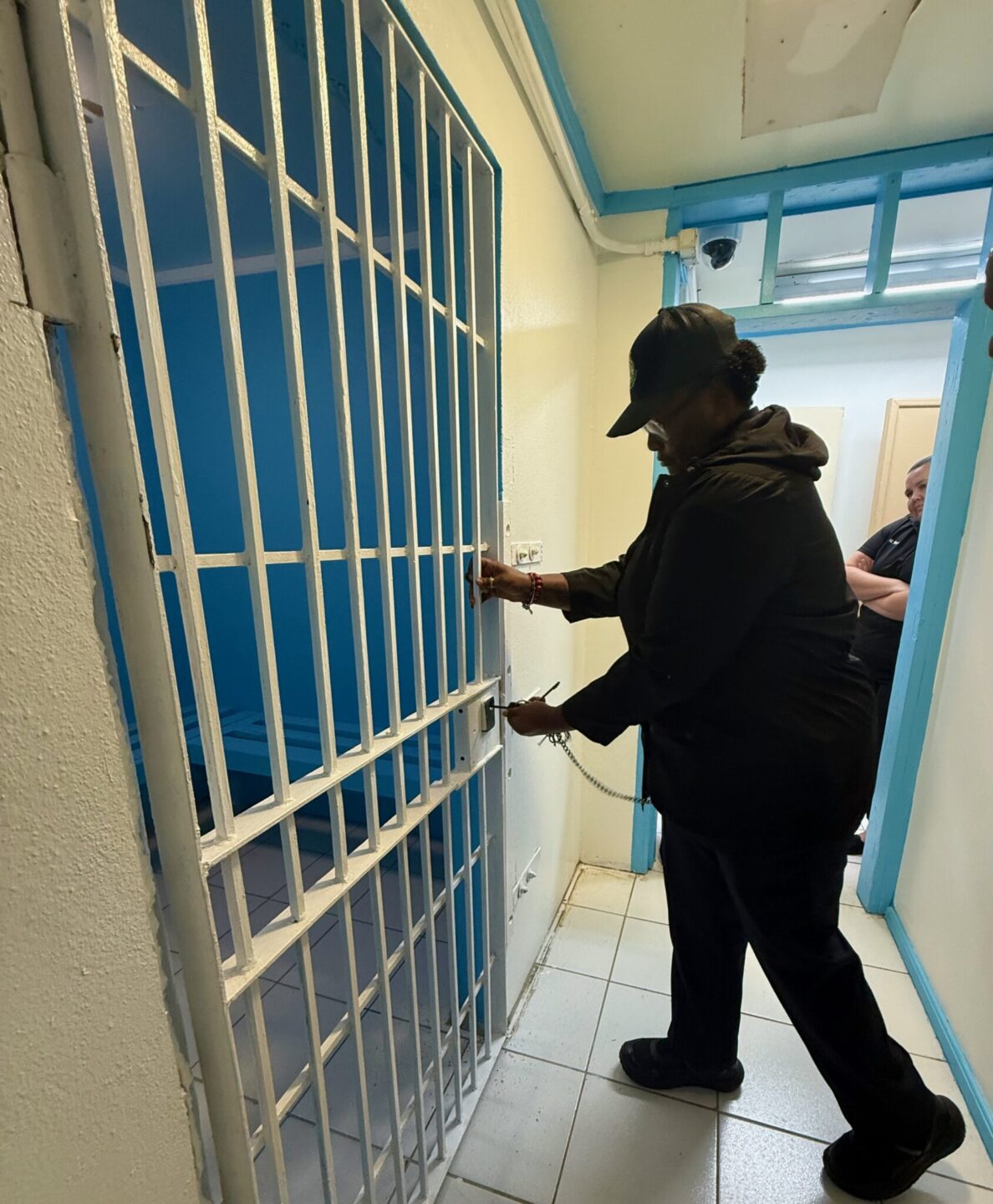
“What we have done in the past few years is take a different approach and look at how that statistic is measured internationally,” she said. “What we’ve been counting is persons who have come back and been re-convicted within a period of two years.”
She said it was important that all agencies got on the same page in terms of how re-offending was calculated to ensure officials were working from accurate and consistent data as they develop policy plans.
“There has not been a national definition of recidivism and it has not been recorded the same way,” she said.
The new figures are more precise.
“The way in which we collect that data has changed. And I think the accuracy of it has changed too,” Malice said.
The prison points to its own programmes as evidence of genuine improvement. The Enhanced Rehabilitation Unit’s Release on Temporary Licence cohort records a success rate of 84%, defined as participants not returning to custody within two years.
A new prisons bill, currently being drafted, for the first time will establish a statutory national definition of recidivism, an agreed baseline from which any future progress can be measured.
Related Videos