By Ted Nesbitt
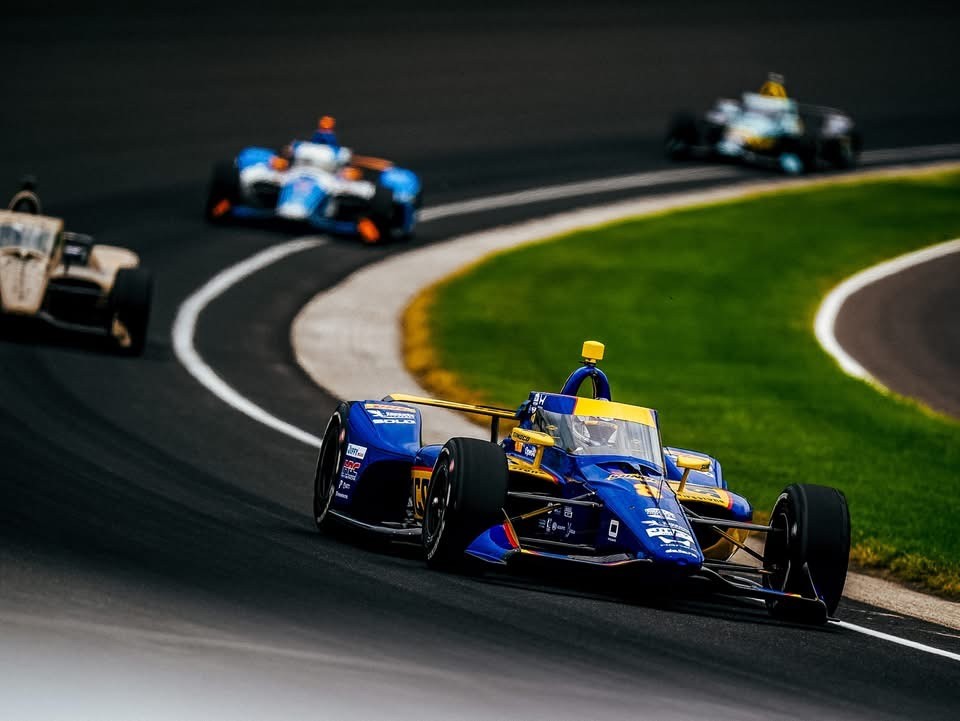
The 110th running of the Indy 500, known as ‘The Greatest Spectacle in Racing’ was run on 22 May, the Sunday of America’s Memorial Day weekend, at the famed Indianapolis Motor Speedway.
Take 350,000 race fans, spread them around a 2.5-mile oval track, add in history and pageantry, and then the actual race of 33 IndyCars travelling at speeds surpassing 230mph, and it’s undoubtedly a spectacle.
The event itself is spread out over more than two weeks, with open practice for all teams starting early in May. Qualifying for the race was held on Sunday, 17 May after a rain-out of events the day before. All 33 entries line up and take to the track one at a time, trying to post the highest four-lap average speed to pick up a starting position.
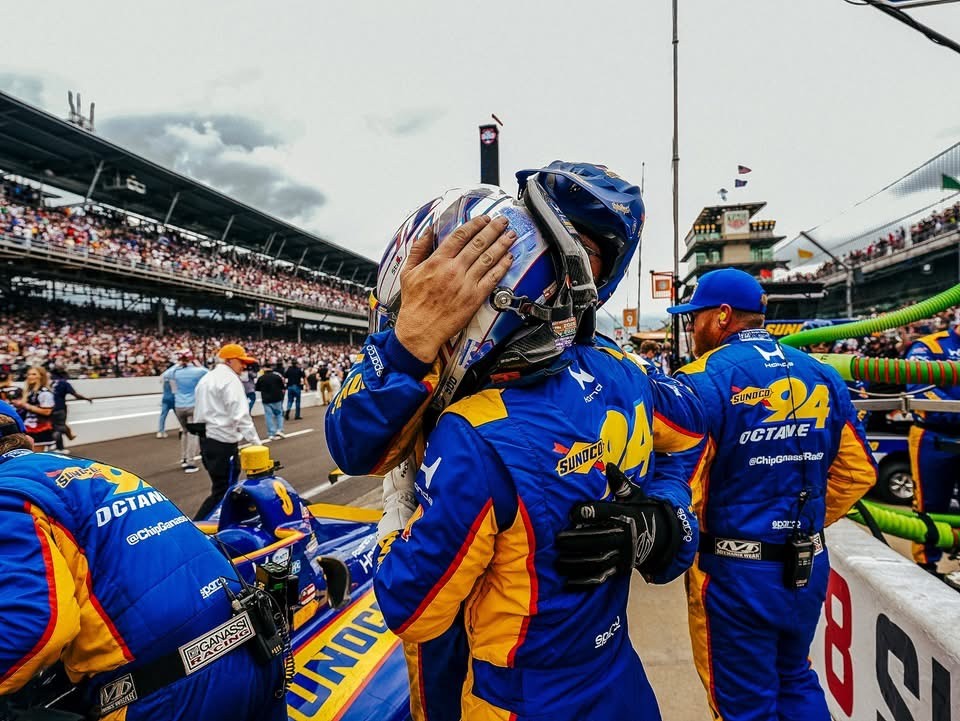
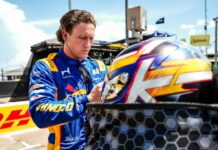
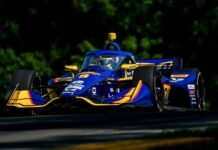
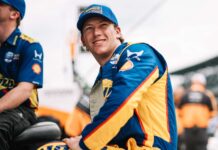
After first qualifying times were charted, Swede Felix Rosenqvist topped the charts in his Number 60 Honda for Meyer-Shank Racing. Cayman’s Kyffin Simpson charted the 12th quickest time in his Sunoco Honda, with Ganassi Honda teammates Alex Palou in 11th and Sir Scott Dixon in eighth. The top 12 cars then take to the track again to find out who ultimately starts on pole position.
When Fast 12 Qualifying was complete, Swede Rosenqvist was again top of the charts with a four-lap average speed of 232.065 mph. Spaniard Palou charted second in his DHL Honda with Team Penske driver David Malukas from Chicago in third in his Verizon Chevy. Simpson charted the seventh quickest time at 230.883 mph, with New Zealand teammate Dixon 11th at 230.347 mph. The starting grid was now set to go racing on Sunday, 24 May.
Practice continued the week between qualifying and the race as hundreds of thousands of race fans started to pour into greater Indianapolis and specifically the aptly named suburb of Speedway. Friday saw final practice on ‘Carb Day’ with the festival parade held on Saturday in downtown Indianapolis. Tens of thousands of autographs are signed, selfies taken with drivers and Indy merchandise sales of millions of dollars flies into the bags of fans. While race fans carry on partying Saturday night, the drivers and teams tuck in early as race day dawns early.
Not just another race
At exactly 6am, military cannons blast and fireworks light the sky before dawn as the gates open at the Indianapolis Motor Speedway. Race-day traffic clogs roads as early as 7am and the capacity crowd of 350,000 are mostly all on the 320-acre grounds by 11am as the festivities commence.
Past 500 winners drive cars pulled out of the Indy Museum for the day, a great hall of memories right on the speedway grounds. Pre-war two-seaters, the roadsters of the ’50s and ’60s, the first rear-engined racers and the crazy aerodynamic-chasing designs of the ’70s and ’80s all turn laps at speed much lower than they are capable of turning.
In acknowledgement of Memorial Day, a 21-gun salute and the solemn playing of ‘Taps’ quiets the grounds and invokes inflection and thankfulness in those attending – you could hear a pin drop.
The anthem performed by Jordin Sparks, a military flyover and the command of “Drivers, to your cars” was then given by WNBA superstar Caitlyn Clark. The traditional singing of ‘Back Home Again in Indiana’ brings tears to eyes of many and is indeed goose-bump inducing, before the command is given “Drivers, start your engines.”
The cars then roll off three abreast in 11 rows for pace laps. US Army Blackhawk helicopters accompany the cars on the first few pace laps, flying just 100 feet above the racers and directly in front of many of the fans in the higher grandstand seats, adding to the spectacle.
The race
When the green flag finally drops and the field of 33 storms off into Turn 1, the roar of the crowd is louder than the noise from the cars. The first few laps are watched with nearly all those in attendance on their feet before settling in for what will be nearly a three-hour race.
American Alex Rossi and Palou juggled the lead, but soon, pit stops for fuel and yellow flags due to accidents, settled the field down. Through the first half of the race, the Ganassi trio of Palou, Dixon and Simpson ran strongly in the top 10, Simpson just seconds from the lead. Australian Will Power’s car suffered a mechanical failure on lap 92 dropping fluids on the track. A yellow flag flew, during which some rain crept in and saw the red flag displayed for over 30 minutes while the event waited for the weather to pass.
The race resumed on Lap 110 with Palou and Malukas jumping ahead of Dixon. Indiana native Conor Daly moved up to third,
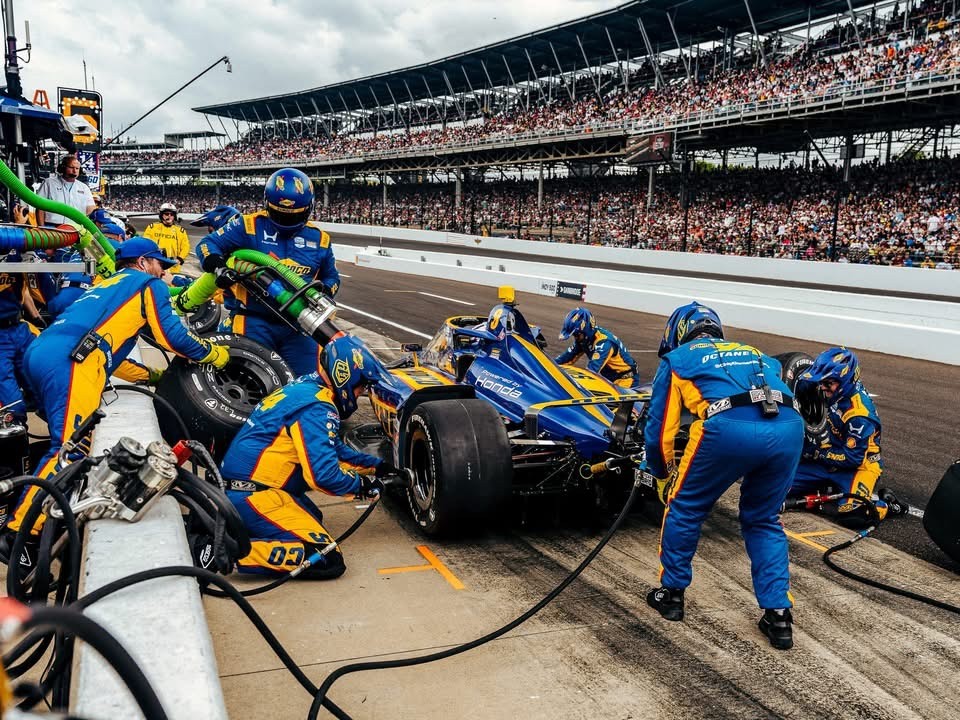
Another yellow flew on Lap 124 when Penske’s Josef Newgarden hit the Turn 4 wall hard. Rosenqvist and others pitted to go ‘off strategy’ on fuel and the race resumed on Lap 132. As the pit stops cycled, Simpson found himself in the lead of the race at Lap 150 and he maintained it for four laps.
Soon after more pit stops ensued, which moved Rosenqvist and Mexican Pato O’Ward on the alternate strategy to the lead. Dixon and Simpson pitted with 39 laps to go, looking to stretch their fuel mileage by drafting and hoping others in front would need to stop in the last 10 laps for a ‘splash and dash’ of fuel of just 1-2 seconds, which hopefully would propel the Ganassi cars to the front. Rosenqvist pitted with 34 laps to go, handing the lead back to the battling Malukas and Palou, who would still have to pit. On Lap 185 Rosenqvist moved into the lead and began pulling away, while Malukas and Palou remained over 16 seconds behind after their final stops.
A yellow flag on Lap 182 came as Brazilian rookie Caio Collet slammed the wall hard coming out of Turn 2. A red flag was thrown to allow clean up and to a green finish for the fans. On Lap 196, the green flew again with Rosenqvist’s Meyer-Shank Honda teammate Marcus Armstrong taking the lead.
Rookie Mick Schumacher, son of seven-time F1 Champ Michael Schumacher, brushed the wall drifting wide in Turn 1, bringing out one last yellow. On Lap 200 the green and white flag for Last Lap flew and a one-lap shootout was on. Malukas jumped to the lead, while Rosenqvist ran around the outside of Armstrong through Turn 1.
Rosenqvist and Armstrong remained side-by-side through the whole lap until Turn 4, when Rosenqvist moved ahead. Malukas dove low out of Turn 4 to break the draft, but Rosenqvist had the momentum coming out of Turn 4 and got the pass done with less than 100 yards left in a photo finish. The final margin of victory was 0.0233 seconds, setting a new record for closest finish in Indianapolis 500 that had stood since 1992.
Cayman’s Simpson finished 14th, teammates Dixon 15th and Palou 7th. Strategy is a big part of the Indy 500 – teams roll the dice and sometimes things work out. For the Ganassi team this time out, the luck was not there in spite of the fuel strategy. Without those two late yellows, both Simpson and Dixon surely would have finished higher in the final results.
Sunday’s Indy 500 saw 70 lead changes, the most ever in the 110-year history of the race. Indy 500 Winner Felix Rosenqvist earned US$4.34 million for the win, with over $30 million paid out in purse to all the drivers and teams.
Simpson ran strong all through May at The Brickyard, finishing all 200 laps of the race.
The IndyCar series will be back in action this coming weekend on the streets of Detroit.
Related Videos