Supplied by the Ministry of Health, Environment and Sustainability.

Immunisation is the process whereby a person is made immune or resistant to an infectious disease, typically by the administration of a vaccine.
Vaccines stimulate the body’s own immune system to protect the person against subsequent infection or disease. (WHO, 2025)
Vaccination is an act of Love
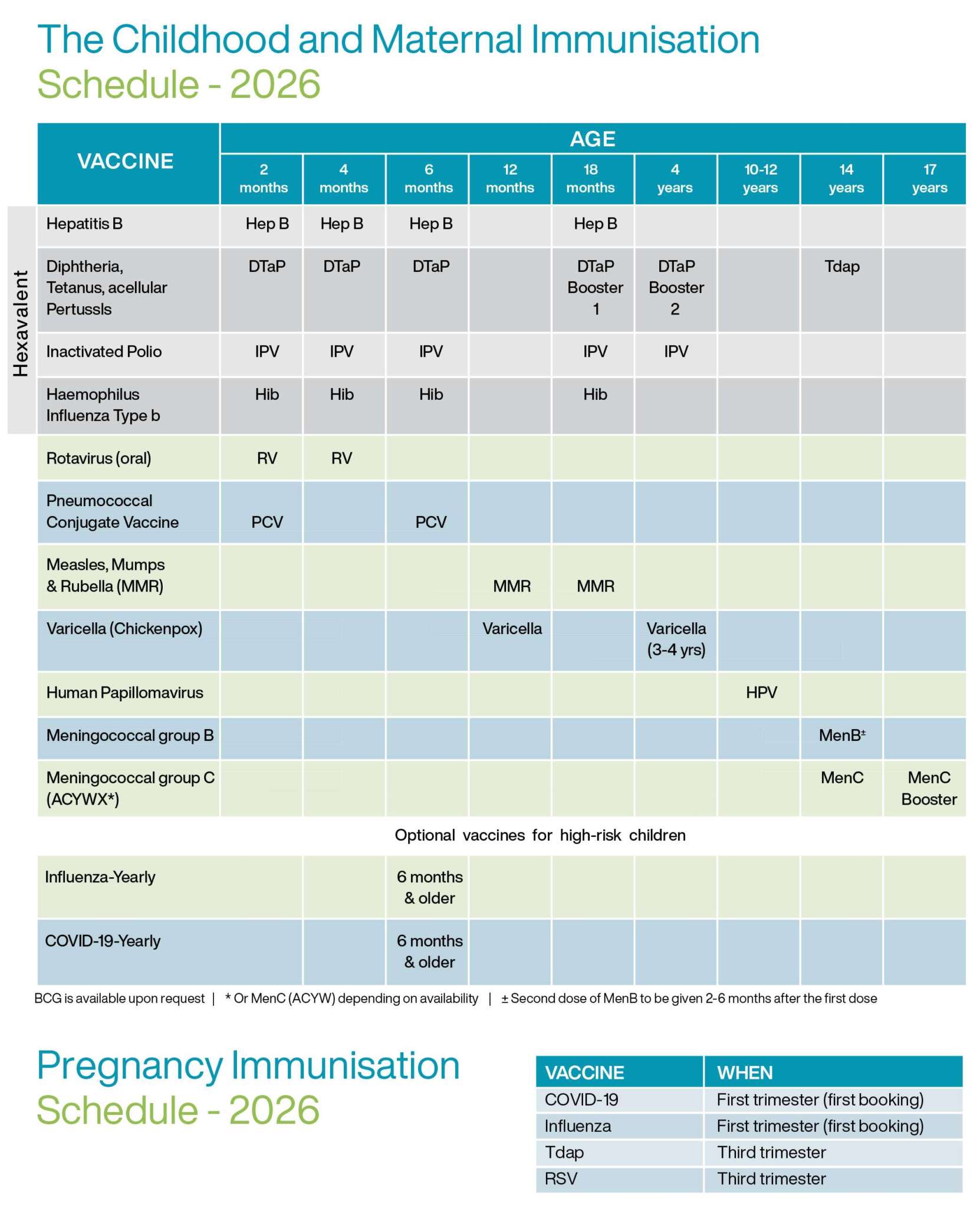
Hepatitis B Vaccine: Protects against a serious liver disease caused by hepatitis B virus.
Rotavirus Vaccine: Protects against severe vomiting, diarrhoea and dehydration caused by Rotavirus.
BCG Vaccine: Protects against tuberculosis – an infection usually of the lungs. However, tuberculosis can affect other areas of the body.
DTaP Vaccine: Protects against diphtheria (a serious throat infection), tetanus (lockjaw) and pertussis (whooping cough).
Hib Vaccine: Protects against Haemophilus influenzae type b disease which can cause serious infections of the brain, spinal cord, blood and other organs.
Polio Vaccine: Protects against polio – a paralytic disease.
Pneumococcal Vaccine: Protects against serious infections such as meningitis, blood poisoning and ear infections caused by pneumococcal bacteria.
MMR Vaccine: Protects against measles, mumps and rubella (German measles). Varicella Vaccine. Protects against chickenpox.
Human Papillomavirus Vaccine (Gardasil) 9: Protects against diseases caused by 9 HPV types. These diseases include pre-cancerous lesions, cancers and genital warts in males and females. HPV vaccines are offered in schools, Public Health Department clinics, and private doctors’ offices.
To ensure your child(ren) get all the vaccines they need, take them to a District Health Centre, Public Health Clinic or private paediatrician when they are:
- 2 months
- 4 months
- 6 months
- 12 months
- 18 months
- 3-4 years
- 10-12 years
- 14 years
- 17 years
Optional Vaccines for high risk children (BCG)
Children defined as having a high risk of exposure will include the following:
Infants and children (aged zero to sixteen years) who were born in or have lived for at least three months in a country with an annual TB incidence of 40/100,000 or greater.
Infants and children (aged zero to sixteen years) with a parent or grandparent who was born in a country with an annual TB incidence of 40/100,000 or greater.
Infants and children (aged zero to sixteen years) who live in a household or otherwise have had close contact with a person who has tested positive for pulmonary or laryngeal TB.
Helpful Vaccination Information
Rotavirus Vaccine is given orally (by mouth). All other vaccines are given by injection.
Hep B, DTaP, IPV and Hib Vaccines are given in one injection. Booster 2 minimum age 4 years.
MMR Vaccine – Minimum age for 1st dose: 12 months. Minimum interval from dose 1 to dose 2 is 4 weeks.
Varicella Vaccine – Minimum age for 1st dose: 12 months, the 2nd dose may be administered before age 4 provided at least 3 months have elapsed since the first dose.
HPV Vaccine – Males and females year 7-12. One dose schedule.
This article originally appeared in Compass Media’s 2026 Emergency Guide.
Related Videos