The United States has announced a new visa restriction policy that could bar foreign nationals accused of supporting what the Trump administration describes as ‘far-left terrorist’ groups, broadening the administration’s use of existing visa-denial powers while leaving unanswered questions about who may ultimately be affected.
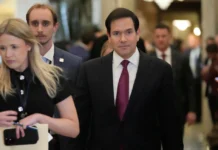
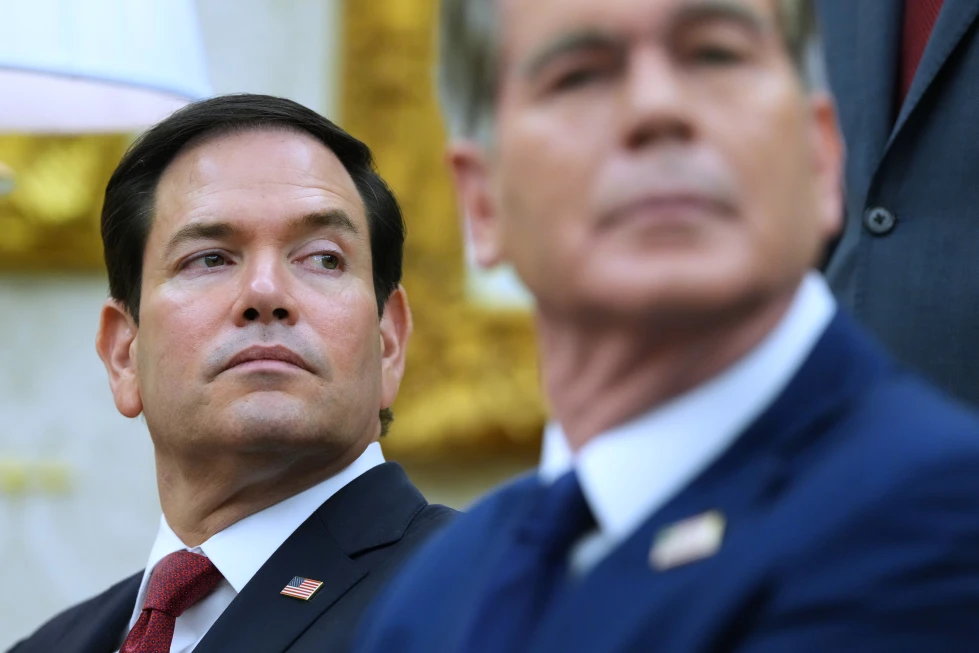
Secretary of State Marco Rubio announced the policy on 16 July following a State Department conference attended by representatives from more than 60 countries, at which he described politically motivated violence from the far left as an emerging international security threat.
According to a State Department press statement, the policy will apply to members of “Far-Left Terrorist and other aligned groups who have supported or incited acts of terrorism; supported violent criminal activity; participated in economic sabotage; financed, recruited, or provided logistical support for violent or criminal actions committed by Far-Left Terrorist and other aligned groups; and/or facilitated the convergence of Far-Left Terrorist and other aligned networks for the purposes of violent action.”
The restrictions are being imposed under Section 212(a)(3)(C) of the US Immigration and Nationality Act, a long-standing provision that allows the Secretary of State to deny visas when there are reasonable grounds to believe an individual’s entry could have “potentially serious adverse foreign policy consequences for the United States.”
Unlike criminal terrorism laws, the measure concerns eligibility to receive a US visa rather than criminal prosecution.
No definition of ‘far left’
The announcement has drawn attention because it does not define what constitutes a ‘far-left terrorist’ organisation.
Unlike the State Department’s Foreign Terrorist Organizations list, which names specific organisations through a formal legal process, the new policy does not identify any groups by name or establish a legal definition of ‘far-left terrorist.’ Instead, it describes a category of conduct, leaving individual determinations to the State Department’s visa-screening process.
It also remains unclear which organisations, if any, will be treated as covered by the policy, what evidentiary standard will be required, how ‘aligned groups’ will be identified, or whether applicants denied visas will be told the specific basis for the decision.
The announcement does not state that holding left-wing political views, belonging to a lawful socialist political party or participating in peaceful protests would, without additional conduct, trigger the restriction.
Reuters reported that the United States has designated Antifa Ost, the Informal Anarchist Federation/International Revolutionary Front, Armed Proletarian Justice and Revolutionary Class Self-Defense as Foreign Terrorist Organizations since November 2025. It also reported rewards of up to US$10 million for information concerning their financing.
Treasury Secretary Scott Bessent also said the department was expanding efforts to identify organisations that abuse charitable and nonprofit structures as vehicles for illicit finance, as part of a broader campaign to disrupt financial networks linked to political violence.
Shift in focus of counterterrorism efforts
Speaking at the ministerial, Rubio argued that Western counterterrorism efforts have focused primarily on Islamist extremism since the 11 September 2001 attacks while overlooking politically motivated violence from the left.
“For 25 years, the term counterterrorism – at least in the West – has meant, first and foremost, the fight against radical Islamist extremism,” Rubio said. “For far too long, however, our counterterrorism doctrine has had a blind spot when it comes to extremist violence from the political left.”
Rubio’s remarks reflect the Trump administration’s broader shift in counterterrorism policy, outlined in its 2026 US Counterterrorism Strategy released in May. The strategy identifies three principal threats facing the United States: Islamist terrorism, narco-terrorism and “violent left-wing extremists, including Anarchists and Anti-Fascists.”
It does not identify far-right, neo-Nazi or white supremacist violence among its primary counterterrorism priorities.
Civil-liberties organisations, including the American Civil Liberties Union, have warned that the administration’s far-left terrorism designations could be used to target lawful protest activity and political opponents rather than genuine security threats.
Reuters also reported that while administration officials repeatedly described transnational far-left terrorism as a growing threat during the conference, they provided relatively little evidence publicly to support broader claims about coordinated international networks.
For travellers from the Cayman Islands, the announcement does not create a new visa or travel-authorisation requirement. Cayman residents who travel to the United States under the Visa Waiver Program using ESTA are not subject to a visa application, while those who require a US visa will continue to be assessed under existing immigration laws.
Under the new policy, applicants who are determined by American authorities to have engaged in conduct covered by the policy, including financing, recruiting for, inciting or providing logistical support for violent or criminal acts by targeted groups, could face a visa denial.
Related Videos