

Phase two of East End project discussed
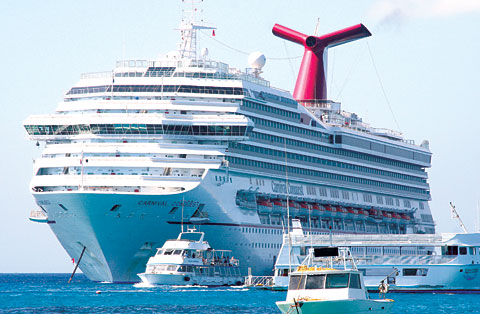
The developer behind the mooted
East End port facility says that cruise ships could use it as a home port in
the future.
This could unlock new itineraries
as the Cuban market opens up to more tourism, according to project developer
Joe Imparato.
“Cruise ships can certainly visit
Cuba and make that part of their itinerary,” he said. “Don’t forget also that
it’s becoming more and more difficult for people outside the US wanting to
board a ship in Fort Lauderdale to do that because the (airfare) is expensive
and (there are) visa problems and security issues. These folks just want to get
on a ship; they don’t want to have to get an American visa. Some of them can’t
be bothered or can’t get the visa, whatever the reason might be.
“The cruise lines have lost
business as a result of that, at least the business that’s emanating out of
Florida (and) Texas. There’s an element that has to be addressed, as an
opportunity for the cruise lines to recapture that business,” he said.
Michele Paige, president of the
Florida-Caribbean Cruise Association, said that the industry, particularly in
America, is unsure of the exact facilities that Cuban ports have to offer.
“It’s a whole lot of opportunity;
there’s a lot of pent-up demand, especially in South Florida, so it’s going to
be very interesting. There’s a lot of unknown entities. We’ve heard rumours,
but we’re not allowed to work in Cuba right now.
“What’s the shape of the
infrastructure? Are they able to take ships? We’re not going to put a
billion-dollar (facility) anyplace if the harbour’s polluted or there’s no
place for the passengers to be able to be transported around,” Ms Paige said,
adding that the organisation is not currently working with Cuba in discussing
these issues.
European lines
The East End Seaport, said Mr.
Imparato, would cover around 1,500 acres, of which around 100 acres is the
actual port basin. The excavation of the basin would create approximately 14
million cubic yards of fill. The sale of this would make phase one of the
project self-funding, he explained. Phase two could involve the creation of infrastructure,
including a cargo port, a transhipment point, berthing for mega yachts, a hydrocarbon
storage facility and a home port for cruise ships.
The developer explained that these
infrastructure projects in phase two could follow a different business model.
“(We envision) the cruise ship
terminal becoming a joint venture with a cruise company participating, the
government participating and of course ourselves as developer,” he said, adding
that the intention is not to compete with any cruise berthing at George Town.
Because of the size of the port, it would accommodate smaller ships of 2,000 to
3,000 capacity, possibly from European cruise lines which are actively seeking
a base in the Caribbean.
Airlift required
Home porting, where cruise lines
base one or more of their vessels at a suitable destination from which they
start and end their scheduled tours, requires a certain infrastructure to
support it, said Ms Paige.
“The most important thing is
airlift,” she said. “You have to facilitate 3,000 passengers and some are going
to want to come in early, some are going to want to stay late. Pre- and post-
(cruise) you have to have enough affordable airlift, whether scheduled or
charter, to bring in 3,000 passengers,” she said.
Mr. Imparato noted that any such
home porting would be seven years down the line if the project was given the
green light by government.
“We have a lot of time to plan that
airlift, the airport facilities, transportation, the hotel. Whatever we have,
we know we’re planning to put a cruise terminal in there; we’re going to do
some business along that line, and we can rise to that occasion.
“I’ve visited with several cruise
lines and discussed this in principle with them and their reaction is, ‘yes,
it’s a good idea… you’d have to improve your air support because right now your
airlift is not sufficient to support this.’” He added that should the project
be given the go-ahead, then further discussions would take place.
Economic impact
According to preliminary analysis
undertaken by the developers, Owen Roberts International Airport would have the
capacity to handle the increase in numbers, but it would require carriers to
increase their charter or scheduled flights, he said, adding that his company
would also be analysing the economic impact of associated businesses such as
transportation, hotels, fuel, food and service.
“Think about the people who we
could employ if we could home port a cruise ship: to service the ship, to house
the people, to feed the people, (transportation) and to entertain the people,
plus the boost to Cayman Airways would be phenomenal,” Mr. Imparato said.
“We could impose on the cruise
lines to employ our people on the ships, to train them for a career on the
ships,” he added. “We’re a seafaring nation. Our tradition is seafarers;
there’s no reason that we couldn’t insist on that being a condition … it would
be beneficial for the cruise line. Why not?”
Home porting benefits
In recent years, Barbados has
served as a home port for ships from several different cruise lines, according
to Bajan tourism expert Ian Bourne. He said that there were several benefits
that home porting has brought to the Eastern Caribbean island.
“If there is a delay in boarding,
for example due to a ship quarantine, which happens from time to time, hotels
benefit as a result. There’s also the likelihood that cruise passengers stay
longer (after their ship returns to Barbados)… as they are already in Barbados,
they may as well stay for another five days or 10 days, depending on their
budget. All the ancillary industries of tourism then benefit directly or indirectly.”
Additional pressure
Mr. Bourne also noted that the onus
was on the tourism industry to take care of customer service because home
porting brought with it a series of additional issues and pressures.
“Security can also be tightened up
and local people can get squeezed as a result,” he said. “Also, if there’s home
porting with only approved vehicles to provide transport for the passengers, it
can get cut-throat in taxis, for example, and people don’t feel they are
getting an even slice of the pie.”
Over the years, he added, there has
also been controversy over the use of Bajan resources to service the cruise
ships themselves.
“Even in the middle of water
shortages, in the middle of a drought, we’re selling hundreds of thousands of
gallons of water to cruise ships. People wonder why we (do that) but we also
need the money too, which is a bit of a ‘devil and the deep blue sea’ dilemma.
It’s usually a nine-day wonder; the (ships) do what they do anyway, people
holler and grumble and then life goes on – the water still ends up being sold because
the government approves it,” said Mr. Bourne.
He added that the local Bajan
traveller has found cruises have become more affordable as home porting
obviates the need to travel to Miami or San Juan, Puerto Rico, to rendezvous
with their ship.
Related Videos













MANY cruise ships depart from San Juan, Peuro Rico. It’s their home base. It brings that country a lot of additional revenue because people tend to arrive a few days early, stay in hotels, eat meals, shop, etc. Some may even stay after their cruise, since they’re already there.
If San Juan can do it, so can we! Cayman would benefit tremendously by having a home port for a cruise ship, and I don’t understand why Ms Paige says it will take 7 years. You need it NOW Cayman, and the faster they start to build it, the better for everyone on the island, including the government revenues. More tourism / accommodation tax, more tax from imported goods, etc.
Another benefit: More jobs for Camanians. Trucks bringing supplies, people filling orders, unloading the planes. Not to mention CAYMAN AIRWAYS would have to increase it’s flights to major hubs to bring down these passengers (and it could be part of the marketing for a "package deal") meaning more airline jobs, more jobs for ticket agents, ramp agents, etc etc.
The economic benefits are obvious. Let’s hope the Government doesn’t stall this one too with it’s red tape.
Let us remember we are not a San Juan nor even a Barbados – we are still a small island and these grandiose ideas can be destructive to what have heretofore been our greatest charms –
If we dont get our piece of the Cuban pie …we will loose even more ships …I want to see cuba … I have been to cayman …when the market opens in Cuba All ships will make that there #1 stop hopefully they dont forget to keep cayman on there voyage ….Let me take a moment to bash Spotts ……that is a disgrace ….
could be a nice straw market .. but why make those tourists happy …let alone give a chance for locals to make money
We would have to establish a Duty Free Zone for the East End Port. Goods offloaded (but NOT IMPORTED) would be exempt from duty.
The benefit is two fold. One, cruise ships with 5,000 people eating three meals a day for a week have massive needs. Think hundreds of containers per cruise. If they have to pay a 22% for those goods, there will be no Home Port.
Secondly, if a duty free zone is established and we have the container traffic coming for the cruise industry then we could also become a trans-shipment point (same as Panama or Miami) for the rest of the caribbean.
Just like passengers, having our goods transit the United States is to be polite… problematic.
About 80% of our goods, transit the Panama Canal and are Asia or Euro in origin… but they go to Mimai and we are buying from US wholesalers.
A duty free zone, allows us to establish direct relationship cutting out the middleman and reducing the cost of goods for the local economy… which is good for the country.
Marek
Slightly off issue but I’m amused by the FCCA quote about Cuba.
If they’re not already working with the Cuban authorities (and the response could well be worded that way simply for legal reasons) then there are plenty of operators who are.
I recently visited Cuba and if anyone on Cayman is, as was suggested above, looking seven years ahead then they better factor in the opening up of Cuba to tourists from the USA and the possibility that cruise itineraries might ‘home port’ from Havana, allowing European operators to fly their passengers in using the same charter aircraft that already bring in land-based tourists.
It seems only a matter of time before Cuba, probably with European and Canadian assistance, builds extensive facilities for cruise ships, not just in Havana harbour but also near some of the well established tourist areas.
Quite where that will leave Barbados or the Cayman Islands is anybody’s guess.