Government employees, including those in the police and fire service, have been reported for working secondary jobs during normal working hours.
Police and Fire Service employees have also been seen conducting private business in their uniforms or with government vehicles.
Chief Fire Officer Kirkland Nixon confirmed that one fire officer had recently been suspended and subsequently demoted to the rank of fireman after attending to his construction business during working hours.
‘A member of the public called and said that one truck was seen at the scene of a hotel for hours and that there was no incident there,’ said Mr. Nixon.
The entire crew of the truck accompanied the officer.
‘The officer was supposed to be on duty when he went to the job site,’ said Mr. Nixon. ‘He said he had the whole crew with him so he could respond to any calls from there.’
When the officer’s impropriety was discovered, he was immediately suspended from duty and then later demoted after a disciplinary action.
Mr. Nixon said he believes the problem of tending to private businesses during normal working hours is wide spread throughout government, especially of late.
‘There’s too much greed,’ he said, adding that the government has generally taken a laissez faire approach to the problem.
‘I take full responsibility for my staff and will do what I can to stop it,’ he said. ‘If people report it to me, I will deal with it. (Firemen) are not supposed to be doing this.’
Mr. Nixon did say, however, that not every time a fireman or fire crew is seen buying building materials are they working for themselves.
‘Sometimes rescue people go to A.L. Thompson (Home Depot) to get materials for the Department. And we do send the whole crew so they can respond (to any emergency calls) from there. But that’s not too often.’
Mr. Nixon said a fireman could be in uniform but off duty when he is seen buying building materials or on a job site.
The Chief Fire Officer agreed, however, that the general public would not know if the fireman was on duty or not, which could create the wrong perception,
‘I will deal with the issue of uniforms,’ he said.
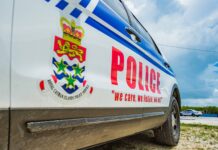
Acting Commissioner of Police Rudolph Dixon also confirmed one case of a Royal Cayman Islands Police Service officer having been found to working on a secondary business during working hours.
‘In that case, the officer chose to retire so he could fully commit himself to his business,’ Mr. Dixon said.
RCIP officers, like all civil servants, must get permission to work secondary jobs or to own a business.
‘To work a secondary job, you must apply through the chain of command,’ said Mr. Dixon. ‘The officer’s supervisor assesses if he’s in a position to work a second job, and then makes a recommendation that goes to the Commissioner.’
The Commissioner then makes the final decision whether permission to work outside the RCIP is granted.
‘The secondary job must not interfere with the officer’s duties; there can be no conflicts of interest, and no disruption of police tasks,’ Mr. Dixon said.
‘If someone is authorized to work a secondary job and it is found to be interfering with his duties, then the permission is pulled from him,’ Mr. Dixon said.
In the Fire Services, 13 firemen had been given permission to work outside of the Service, Mr. Nixon said.
Mr. Dixon said that 67 policemen had been given that permission when he last checked.
Most of the firemen were involved in construction-related businesses, an industry that has also attracted many policemen.
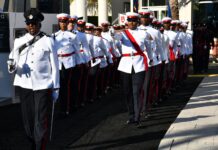
Mr. Dixon said RCIP officers are aware they are not supposed to conduct private business on duty or in uniform.
‘They know it,’ he said. ‘If we have any reports, it will be investigated and appropriate action will be taken.’
The Acting Commissioner said that he’s had to show some leniency after Hurricane Ivan.
‘Post-Ivan, police officers have been working extremely long hours,’ he said. ‘You’ve got to remember that police officers have been affected as well by the hurricane. It is difficult for them to find the time to purchase building materials for their own houses.’
Mr. Dixon said it was difficult to expect police officers to always change out of their uniforms to do things like buy building materials.
‘Many only have a few minutes to pop in and make their purchases before they have to be back at work.
‘I don’t condone it, but I personally have seen uniformed officers in a hardware store getting materials,’ Mr. Dixon said. ‘I’ve got to be understanding about that.
Sometimes, in the case of providing security services, the police do have permission to wear their uniforms on a secondary job.
‘Occasionally a business will ask for an increased police presence beyond what we would normally provide for an event, and through the police force, officers will provide security and be permitted to wear their uniforms.’
Mr. Dixon said there has been a large increase in the number of police officers working secondary jobs since Hurricane Ivan.
‘I’d say there has been a 100 per cent increase since the hurricane,’ he said.
The increased cost of living since Ivan is one of the primary reasons for the increase, Mr. Dixon said.
‘Just like other people, police officers are looking at other ways to supplement their incomes,’ he said, adding that police salaries are not very high to begin with.
Mr. Dixon also confirmed senior police officers are allowed to have outside businesses.
‘Senior officers must have permission from the Governor’s Office,’ he said. ‘More than one has the approval from the Governor to be involved in an outside company or business.’
Related Videos