

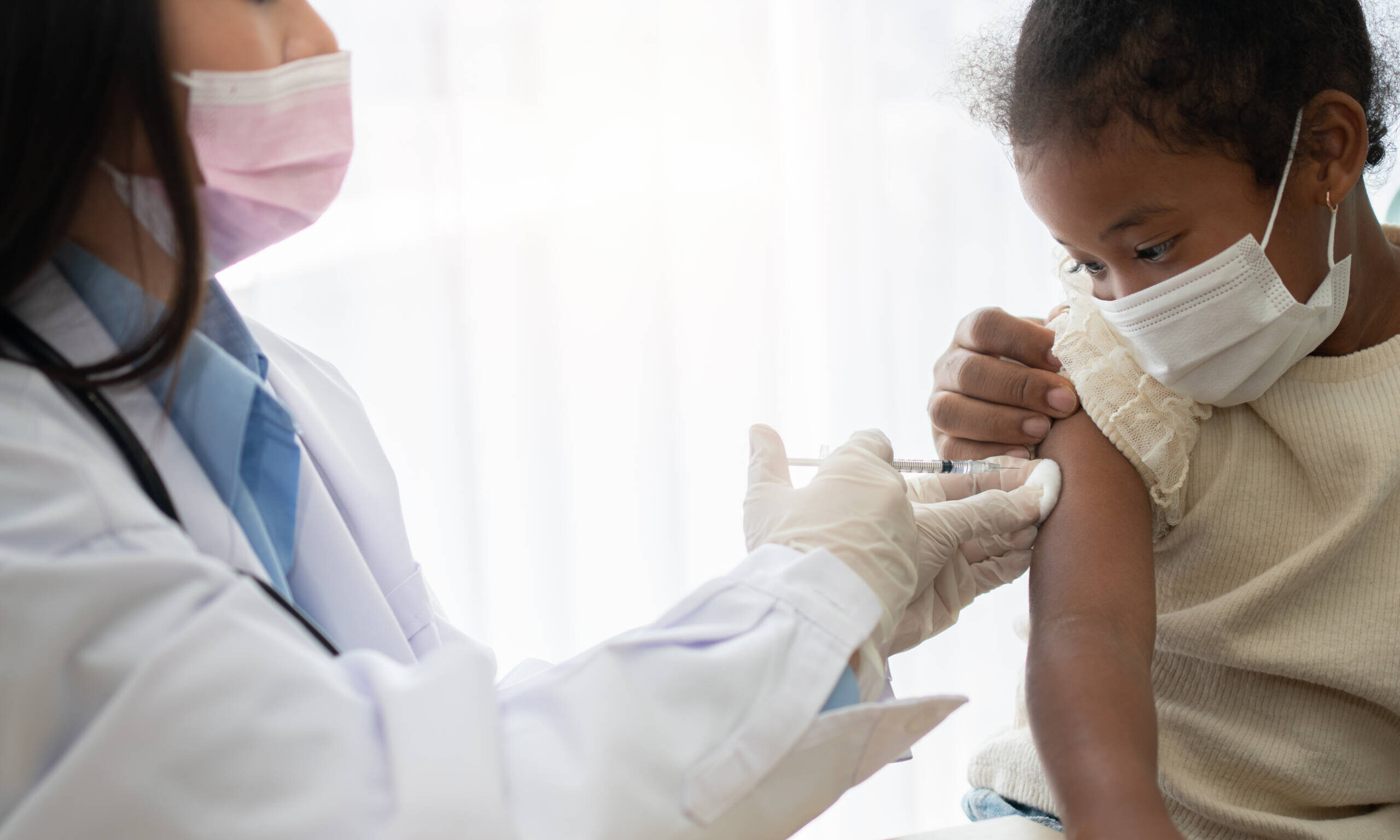
The Cayman Islands government is seeking to secure COVID-19 vaccines for 5- to 11-year-olds, but a local vaccination programme for kids will first require UK regulatory approval of a vaccine for children.
Last week, an advisory committee to the US Centers for Disease Control and Prevention voted to recommend Pfizer-BioNTech’s COVID-19 vaccine for children aged 5 to 11, and the US Food and Drug Administration authorised its use for the age group.
The US is planning to roll out a vaccination programme for children of 5 years and older immediately, and in some locations children are already receiving the jab.
Chief Medical Officer Dr. John Lee confirmed in a statement on Friday that the Cayman Islands government is committed to ensuring the availability of COVID-19 vaccinations for children between the ages of 5 and 11.
However, Cayman’s vaccination programme is overseen by the UK government, which has donated and transported both the Pfizer-BioNTech and AstraZeneca vaccines for use in the islands, he said.
“As such, the use of the Pfizer-BioNTech vaccines in this age group must first be approved by the Medicines Healthcare products and Regulatory Agency of the UK.”
He added, “Following this, the Foreign Commonwealth and Development Office would need to send the special paediatric formulations to our Islands.”
Children 5 through 11 years old will receive a separate vaccine formulation of the Pfizer-BioNTech COVID-19 vaccine. It contains one-third of the dose given to adolescents and adults, and children will receive the vaccine with a smaller needle.
Government is working with the Governor’s Office to secure the doses for children. Fully vaccinating children will require two doses three weeks apart.
Clinical trials of the Pfizer/BioNTech vaccine found it to be nearly 91% effective in preventing COVID-19 among children in the age group. The vaccine side effects in the trials were milder than for older age groups, and most commonly included fever, headaches, chills, and a sore arm.
The American Academy of Pediatrics supports the CDC advisory committee’s decision.
“The AAP recommends COVID-19 vaccination for all children and adolescents 5 years of age and older who do not have contraindications using a vaccine authorised for use for their age,” it said in a news release.
Vaccinating children would protect their health and allow them to fully engage in all of the activities that are important to their health and development, the organisation said.
While children are just as likely as adolescents and adults to be infected with COVID-19 and infect others, they are less likely to become seriously ill. But hospital admission in the US and elsewhere have seen an increasing number of children, mainly because they are not vaccinated.
Advocates say vaccinating children would help lower community transmission of COVID-19, and ultimately give children more freedom and reduce the disruptions to classroom learning in schools.
Cayman teenagers between the ages of 12 and 17 have been able to receive the COVID vaccine since June, after the UK’s Medicines and Healthcare products Regulatory Agency (MHRA) assessed that the benefits of vaccinating the age group exceeded the risks on an individual basis.
In the UK, it took until September for teenagers of 12 years and up to receive the jab.
The Joint Committee on Vaccination and Immunisation (JCVI) which advises the UK government on the implementation of the vaccine rollout noted in its advice on 2 Sept. 2021 that the vaccination health benefits for otherwise healthy adolescents on an individual basis were small, largely because they are less likely to fall severely ill.
But the committee said it did not consider the wider societal impact or educational benefits for teenagers in the age group, which may also be relevant.
In contrast to the US, Canada or Israel, the UK government approved a vaccination programme for 12- to 15-year olds involving only one dose, rather than the typical two dose full course.
This was to balance the concern over certain reported side effects such as temporary myocarditis, or irregular heart-beat, particularly in teenage boys, against the health and educational benefits for the age group.
Related Videos












Let me fix this:
Vaccinating children would protect their health and allow them to fully engage in all of the activities that are important to their health and development, the organisation said.
Should read:
Vaccinating otherwise healthy children may protect the health of unvaccinated adults and allow them to fully engage in all of the activities that are important to them, the organisation said.