

Cayman’s utility regulator OfReg has joined an international initiative launched at COP26 to accelerate and improve the regulatory capacity needed to decarbonise energy systems and meet climate change goals.
The Global Regulatory Accelerator for Energy Transition (RETA) was launched on 3 Nov. at the climate conference in Glasgow, Scotland, and brings together energy regulators to discuss the challenges they face and share best practices.
In addition to the International Energy Agency, which will coordinate the accelerator, other founding members are the UK’s Office of Gas and Electricity Markets (Ofgem), the International Renewable Energy Agency (IRENA), and the World Bank.
OfReg was invited by the UK regulator Ofgem to join the initiative.
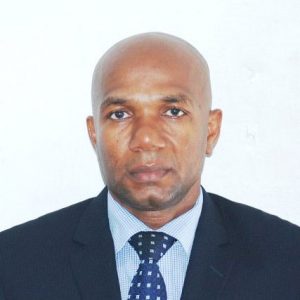
OfReg CEO Malike Cummings said in a press release, “We are optimistic that the Regulatory Accelerator will provide OfReg and the Cayman Islands, the opportunity to leverage the expertise, experiences, and networking with fellow regulators across the globe, in this concerted effort to address the existential threat of Global warming; and in particular, to help the Cayman Islands accelerate the adoption of renewable technologies to attain the aspirational goal of 70% by the year 2037.”
Regulators have an important role to play in clean energy transitions, both to encourage investment and to manage energy systems that increasingly rely on electricity from renewable sources, the IEA said in a statement. Other topics for the RETA include renewables integration, tariff structures, electrification of transport and other sectors, and the role of low carbon fuels such as hydrogen.
The IEA’s World Energy Outlook 2021 showed that controlling global temperature increase within 1.5°C requires investment in clean energy projects and infrastructure of nearly US$4 trillion a year by 2030.
Capital for such investments can cost up to seven times more in emerging economies than advanced economies, often because of concerns about local regulations. A stable and transparent regulatory environment can help reduce the cost of capital and increase the affordability of the clean energy transitions, the IEA said.
With the power sector shifting from relying on centralised fossil fuel power plants to large amounts of diffused resources, which is not available on demand, regulation is essential to ensure flexibility and capacity adequacy, the agency noted. Regulators also needed to consider new types of energy-security issues such as resilience to extreme climate events.
Ofgem said in a statement that the world quickly needs to find cleaner ways to generate electricity, heat and cool homes, and power transport and industry to support global climate goals. Energy regulators would have a significant role to play in turning ambition into real-world action to achieve this.
“The Regulatory Accelerator will enable them to collaborate to seize opportunities and solve problems to speed up the global energy transition at the lowest cost,” Ofgem said. In particular it could help countries with less developed energy systems to leapfrog the carbon-intensive paths other countries have previously taken.
Jonathan Brearley, chief executive of Ofgem, said, “The Accelerator will help regulators to learn from each other’s experiences and develop new approaches for the systems of the future. We are keen to see as many regulators as possible join the accelerator, particularly those from developing countries.
“We must think entirely differently to power the global economy without fossil fuels. It’s clear that the future for all of us lies in flexible energy systems powered by clean electricity, paid for fairly. In the long term this will better shield consumers from commodity price shocks as well as protecting the planet we all share,” he added.
Around 20 regulators covering every continent have already committed to participating in the accelerator. More are expected to follow after the COP26 climate summit concludes on 12 Nov.
The UK government has committed to provide seed funding to support the accelerator for the first year.
Related Videos












Step 1, employ consultants to advise them what to do next.