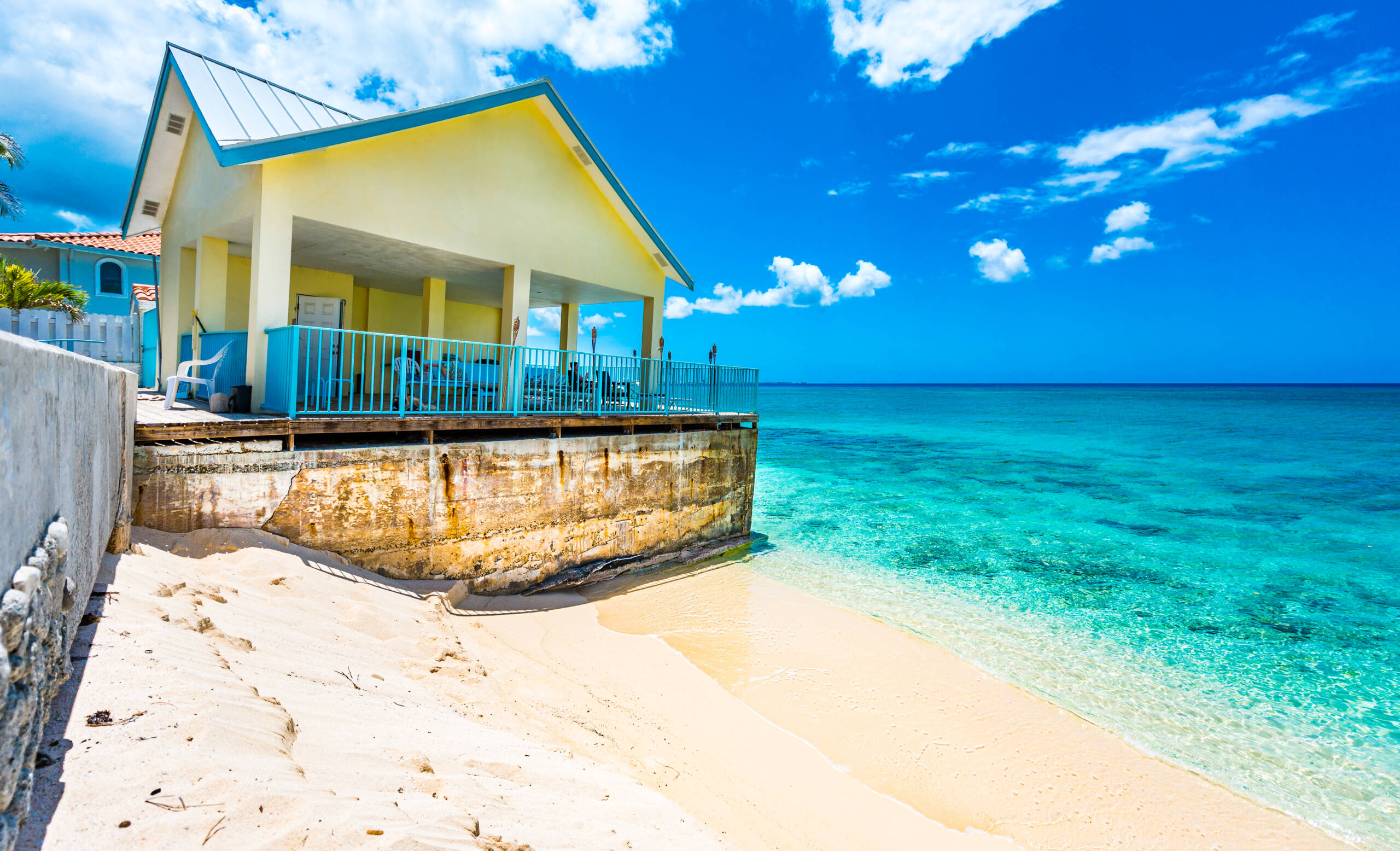
A controversial project to rebuild a cabana and seawall at the water’s edge on Boggy Sand Road is set to become a test case for the powers of Cayman’s National Conservation Council.
A judge has agreed to a temporary ‘stay’ on planning permission for the redevelopment, pending the outcome of legal proceedings between the Council and Central Planning Authority.
The authority approved the application, despite a direction from the council that it be rejected because the project would likely have a negative impact on the Seven Mile Beach marine park, which is a protected area.
The authority indicated it did not believe it was legally obliged to follow the direction, on the basis that it considers the council’s delegation of that power, to the Department of Environment, to be invalid.
Now, the National Conservation Council has filed an application for judicial review of that decision. It is seeking a ruling from the court that the delegation of its power to the Department of Environment was valid and therefore that the grant of planning permission for the Boggy Sands Road project be quashed.
The property developer, Cayman Property Investments Ltd, is named in the court proceeding as an interested party.
The case, which pits two government entities against each other, hinges on the legal interpretation of the council’s powers and how they are exercised.
Justice Ramsay-Hale ordered a stay of the planning permission – effectively halting the project – on 14 Oct. after determining there were sufficient grounds for a judicial review to proceed.
Kate McClymont of Broadhurst LLC appeared before the court on 16 Nov. on behalf of the council, seeking directions for the hearing of the judicial review proceeding. Ian Paget-Brown QC appeared for the authority and Tom Lowe QC appeared for the developer.
Ramsay-Hale gave directions for the matter to be listed for a hearing early next year.
At issue, is the legality of the council’s direction that the application to rebuild the two-story beach cabana and seawall be refused.
According to minutes of the CPA meeting from 1 Sept., the authority chose to ignore that instruction in the belief that it was legally ineffective because it came from the director of the department, Gina Ebanks-Petrie, under delegated authority, rather than from the council itself.
Lawyers for the conservation council argue, in court documents seen by the Compass, that directions to the CPA to refuse a planning application that could impact a protected area are among a wide variety of powers that can be delegated to the director of the DoE. The argument acknowledged that there are certain “directives” that cannot be delegated, but contend that this was not the case in this instance.
They further argue that the National Conservation Law places an obligation on the Central Planning Authority, and any other entity (except Cabinet) to seek its approval before granting any permit or licence that could have a detrimental impact on a protected area – in this case, the marine park.
The law also indicates that, where those negative impacts can’t be mitigated, the council should direct the authority to refuse the application.
The CPA has yet to file documents setting out the basis of its defence to the application.
Minutes from the 1 Sept. meeting, at which the matter was considered, indicate the authority was “satisfied it was not in possession of a lawful directive” from the National Conservation Council when it chose to approve the project.
The minutes further state the CPA’s belief that it has a mandate to direct development with “the economic, cultural, social, and general welfare of the people” in mind. It adds that it considered allowing the existing seawall to remain in situ to be the “least desirable” outcome for the surrounding environment.
This application will determine whether the DoE, on delegated authority from the National Conservation Council, can direct the Central Planning Authority to refuse future planning applications where it considers the underlying project will have an adverse impact on a protected area or the habitat of a protected species.
Related Videos