

The conclusions from the chart on my iPhone app are surprisingly precise.
I haven’t had a recent COVID infection, my vaccine-triggered immunity against known variants of the virus is currently extremely good, and I am approximately 119 days away from needing another booster shot.
I know this because of a new seven-minute test – available in the Cayman Islands from this week.
The Attomarker Covid-19 Antibody Immunity Test gives a real-time analysis of immunity levels, potentially crucial information for frontline workers who are consistently exposed to the virus.
The blood sample analysis tracks both the waning immunity from vaccines and ‘natural immunity’ boosts from COVID infections.
The data it generates amounts to a personal COVID-risk profile for each individual.
Integra Healthcare, based at Grand Pavilion on West Bay Road, has brought the technology to Cayman – a first for this side of the Atlantic.
It could be used, said doctors at the clinic, to generate more precise information for public health officials – or patients themselves – on when booster shots are likely to be needed.
The data can also help avoid lesser known, but potentially serious side-effects of over-vaccination – auto-immune diseases.
Developed using nanotechnology by scientists at Exeter University, with support from the UK government, the test is being promoted locally as a precision tool that can help businesses transition to ‘living with COVID’.
So what does it involve?
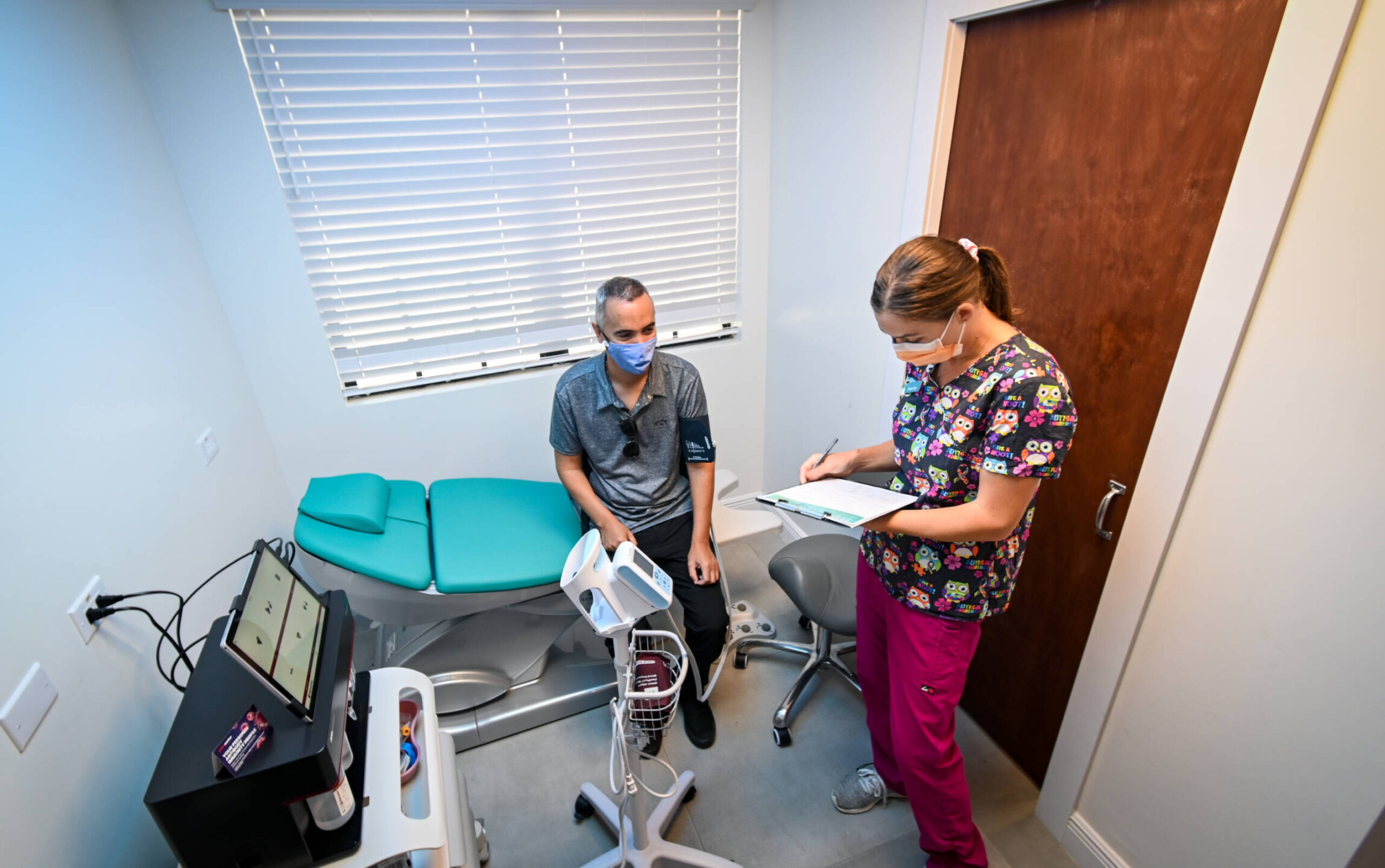
I roll up my sleeve and try not to wince as nurse Dee Ryan fixes the tourniquet and taps the vein. The blood sample is mixed, then spun through a centrifuge to separate the serum for testing.
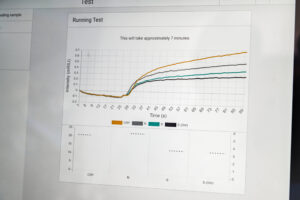
We watch the coloured lines rise and fall on a rapidly evolving graph on the iPad monitor. Seven minutes later, it produces a line graph and bar chart analysis, which I can scan to my phone using a QR code.
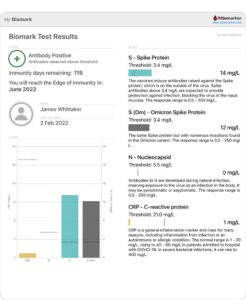
The data read-out tells me my current antibody levels and protection against COVID, whether I have had an infection in roughly the last six months, and when I will likely need another shot.
What does the information mean?
The bar chart shows I am well above the immunity threshold for COVID.
I have no antibodies which carry the markers for natural infection, so all my immunity is from the two Pfizer vaccines I had in March of last year and the booster shot I had in October.
Interestingly, my protection against the new Omicron variant – believed to evade vaccines – is almost as high as against the original virus. That suggests that the relatively high rate at which vaccinated people are contracting Omicron is connected to its high transmission rate, not to reduced vaccine efficacy.
The test sets a threshold of 3.4 milligrams of antibodies per litre of blood as adequate to be protected against COVID. My chart shows I have 14 mg/L for the original virus and 12 mg/L for Omicron.
Based on the data, I will likely be on ‘the edge of immunity’ in 119 days. That means I should be due for another booster on 22 June.
Well, not exactly…
There are other factors that could change my immunity profile between now and then.
If I contract COVID, it will give me an antibody spike that serves as a ‘natural booster’. It is also possible that my immunity rate will decline more slowly than the conservative projections factored into that 119-day prediction.
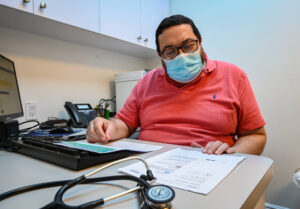
Dr. Francisco Martinez, medical director of Integra Healthcare, advises that I come back in June and repeat the test. At that point, he believes, we will be able to pinpoint if and when I need a fourth shot – assuming the option is open to me in Cayman at that time.
Should I contract COVID for the antibody boost?
The doctor looks at me reproachfully.
“No,” he says with his expression.
“COVID is still COVID,” he elaborates, “It is better not to get infected.”
Am I free to roam?
My test results put my immunity levels at more than three times higher than what would typically be necessary to repel the virus. That means I can probably go to the movies or the supermarket on a Saturday with a greater sense of security. But it doesn’t mean I absolutely won’t get COVID.
My chances of contracting the virus are less, but they are not zero, and the more I am exposed to it, the higher those chances become.
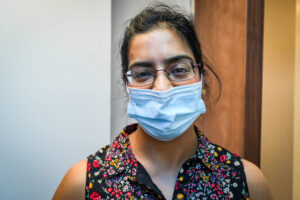
What it does show, says Dr. Shivali Kohli, senior scientific officer from Attomarker in the UK, who is in Cayman to set up the technology and train staff, is that if I do contract COVID, I should be able to fight it off.
What are the public health implications?
The test hammers home one of the sobering truths that has emerged in recent months about the vaccines – their effectiveness wanes over time.
I had the booster in October last year and, according to this data, I will need another shot in June.
Only 29% of the Cayman Islands population has had the third shot.
So those that have not had the booster, and especially those that got their first shots in the early days of the vaccine rollout, may now have antibody levels below the threshold to fight off the virus.
Kohli says she has already seen patients who were wavering about whether to get the booster, who have been persuaded to do so by the results.
Does this reinforce the message
to ‘get boosted’?
In general terms, it does, but more specifically, it provides a precision tool that can let each individual know when they should get their next shot.
Some people – especially young people or those with strong immune systems – will see their antibody levels wane at a slower rate than others. Older or more vulnerable people may see those levels decline more rapidly. Everybody is different.
Equally, the test factors in the impact of natural infections.
If COVID shots do become part of the public health landscape for years to come, the technology could help optimise how and when those jabs are distributed to preserve resources and maximise protection.
Can you be over-vaccinated?
Pinpointing precisely when to get boosted is not just a matter of avoiding unnecessary jabs. There are rare but potentially serious side-effects to being over-vaccinated, a problem stimulated by repeated or excessive exposure to the same antigen.
Data is emerging about the potential for autoimmunity – where the body’s immune system starts to attack healthy cells – in individuals that have excessively high antibody levels, says Martinez.
While more research is needed in this area, especially for the relatively new COVID vaccines, he believes it makes sense for people who are already sufficiently protected against COVID-19 to delay their boosters until necessary.
How else could this be used?
The test is being marketed as a potentially useful tool for the business community to manage their staff during the pandemic.
Restaurant and hotel owners were among the attendees at a product launch of the test at Integra’s Grand Pavilion clinic on Tuesday night, 1 Feb.
Instead of simply advertising that a business’s staff members are vaccinated, the test would allow them to demonstrate that they have high immunity levels.
Andrew Vincent, director of Integra, said it could also be useful in helping to keep staff safe from infection and from the inconvenience of self-isolation. He said it would be a powerful tool in helping virus-hit hospitality operators to thrive in the new normal.
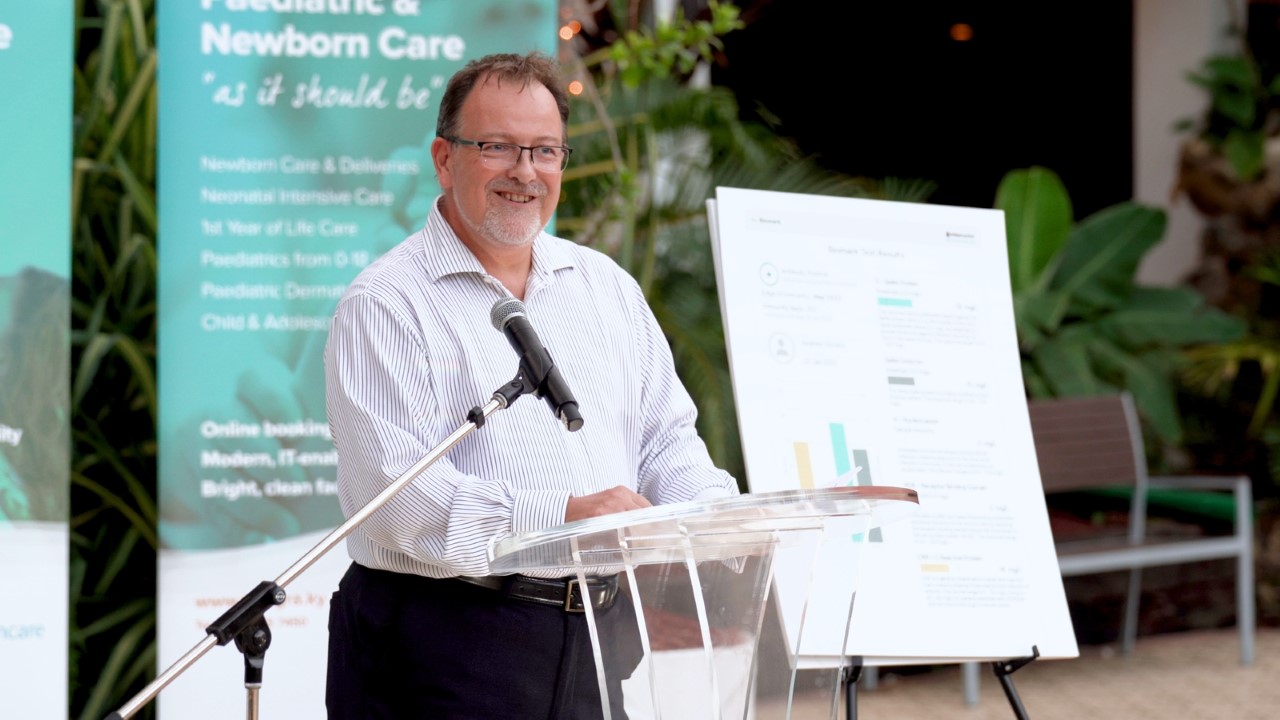
“This is a technology that allows you to rapidly assess the degree of immunity in your workforce, allowing you to better protect more vulnerable or less protected workers, and deploy people, for instance, those facing the public or tourists, with much greater confidence,” he said.
Could it be used as an immunity passport?
It is theoretically possible for test results to be used as ‘proof of immunity’. Those who don’t want to be vaccinated could seek to use the test as evidence of natural immunity to bypass vaccine mandates, as tennis player Novak Djokovic attempted to do in order to enter Australia for the Australian Open.
Armed with evidence of antibodies from his recent infection, he might have had a stronger case.
Any exemptions to vaccine requirements, however, would depend on government policy.
- The test and consultation costs $175, some of which may be covered by insurance.
Related Videos











If any of you are expecting the government to adopt this test as part of their Covid protocol for screening citizens and tourists, don’t hold your breath. Remember, the Cayman Islands is probably the only country in the world still requiring tourists to get three further Covid tests, after admission, within the first week of their visit. Other countries and their health systems have moved on from this type of thinking.