


 A senior prison official has said in a sworn affidavit that “anyone with sufficient determination to escape” from Cayman’s prison could do so.
The evidence was given in support of a decision to transfer two inmates, serving life sentences for murder, to prisons in the UK.
The official, whose name has been withheld for national security reasons, indicated the prison is currently not equipped to house Category A or Category B prisoners.
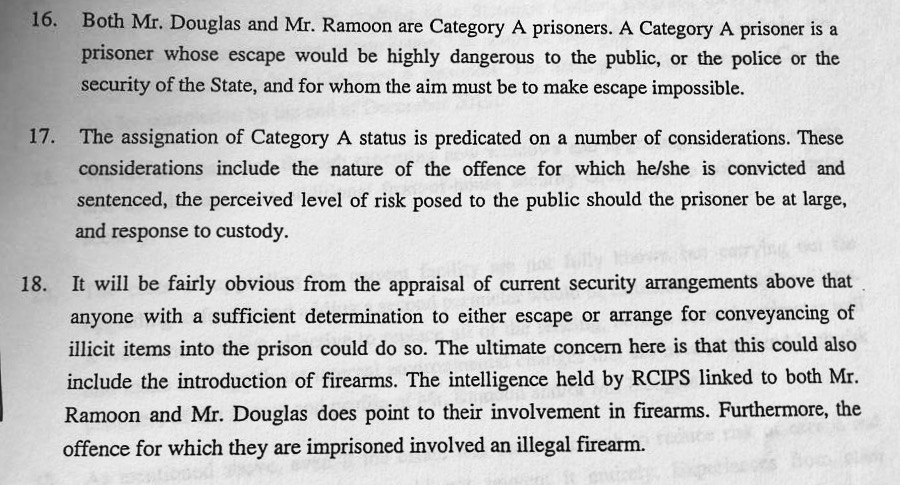
“It will be fairly obvious from the appraisal of current security arrangements… that anyone with sufficient determination to either escape or arrange for conveyancing of illicit items into prison could do so,” they said.
“HMP Northward is not able to provide the levels of security required to provide assurance of public protection against the threats provided by the most dangerous and high risk offenders.”
The official went on to state that Cayman’s prison does not conform to the “standards of physical and dynamic security” for a Category A or Category B prison – a reference to the two highest risk designations of inmates under the UK system.
According to separate data provided to the Cayman Compass under the Freedom of Information Act, there are currently two Category A prisoners at Northward. More than half of the 198 inmates at the facility are designated as Category B.
Multi-million-dollar rebuild ‘won’t eliminate risk’
The testimony is among hundreds of pages of evidence filed in an ongoing case involving brothers Justin Ramoon and Osbourne Douglas, who are seeking to contest their transfer to the UK.
The documents were released to the Compass following an application to the court.
Governor Martyn Roper also filed an affidavit indicating Cayman’s prison was not equipped to handle inmates like the brothers or armed robber Elmer Wright, who was deported to the UK in 2020.
While there have been some upgrades to the prison estate since Ramoon and Douglas were transferred in 2017, Roper wrote that HMP Northward is still not able to handle the most dangerous criminals.
A $150 million prison rebuild is expected to address some of those issues.
But Roper warned, “Even if the prison estate is made secure enough to reduce the risk of escape and reduction of trafficking, this would not prevent it entirely.”
Threats to staff
He cited the capability of Ramoon and Douglas to “cause significant harm to those working and living in the prison system” as a “critical risk” that would remain even after a full rebuild.
Roper, who gave evidence in the case, although Helen Kilpatrick was governor at the time of the initial transfer, cited intelligence reports linking the brothers to a planned escape.
“The ultimate concern here is that this could also include the introduction of firearms,” the unnamed prison official added in the 2019 affidavit.
The official also highlighted the brothers’ “negative influence” over younger prisoners; patchy disciplinary records, including charges of possession of mobile phones; and “intimidation and manipulation of staff”, among a list of concerns.
Despite this, the official acknowledges historic wing reports recording “decent behaviour and conduct”.
They continued, “These entries are not consistent with reported intelligence linking them both to intimidation and manipulation of staff, threats of violence and to reports of plans to escape and the use of weapons.”
The men deny the claims and say they have not been presented with any evidence to contest.
The court granted a Public Interest Immunity certificate in the case, which means key details and witness statements cannot be disclosed for national security reasons.
Aim to make escape ‘impossible’
The prison official argues that it is the “primary objective of any prison” to prevent inmates from escaping and continuing their criminal activities. He stated Northward is a “low security estate” that is not able to hold Category A inmates, which is the classification given to the brothers, meaning they are “highly dangerous to the public, to the police or the security of the State and for whom the aim must be to make escape impossible”.
The official indicated the issues could not be remedied without a “full prison rebuild”. He added that, while CCTV has been upgraded and border security improved, it was not “cost effective” to spend millions of dollars on further upgrades.
At that time, in 2019, there were two other Category A prisoners at the facility, but he indicated they would soon be downgraded to Category B.
Despite the fact that the majority of inmates at Northward are currently designated Category B, he added that the prison estate was not considered equipped for this classification of inmate either.
An official from the Governor’s Office, also unnamed, testified that the Ministry of Home Affairs and prison staff were working on a final business case looking at long-term options. At the time, that was expected to be completed by the end of 2021.
Further correspondence from the Governor’s Office to the UK Minister for Overseas Territories, cited in a recent Court of Appeal judgment, raised similar concerns.
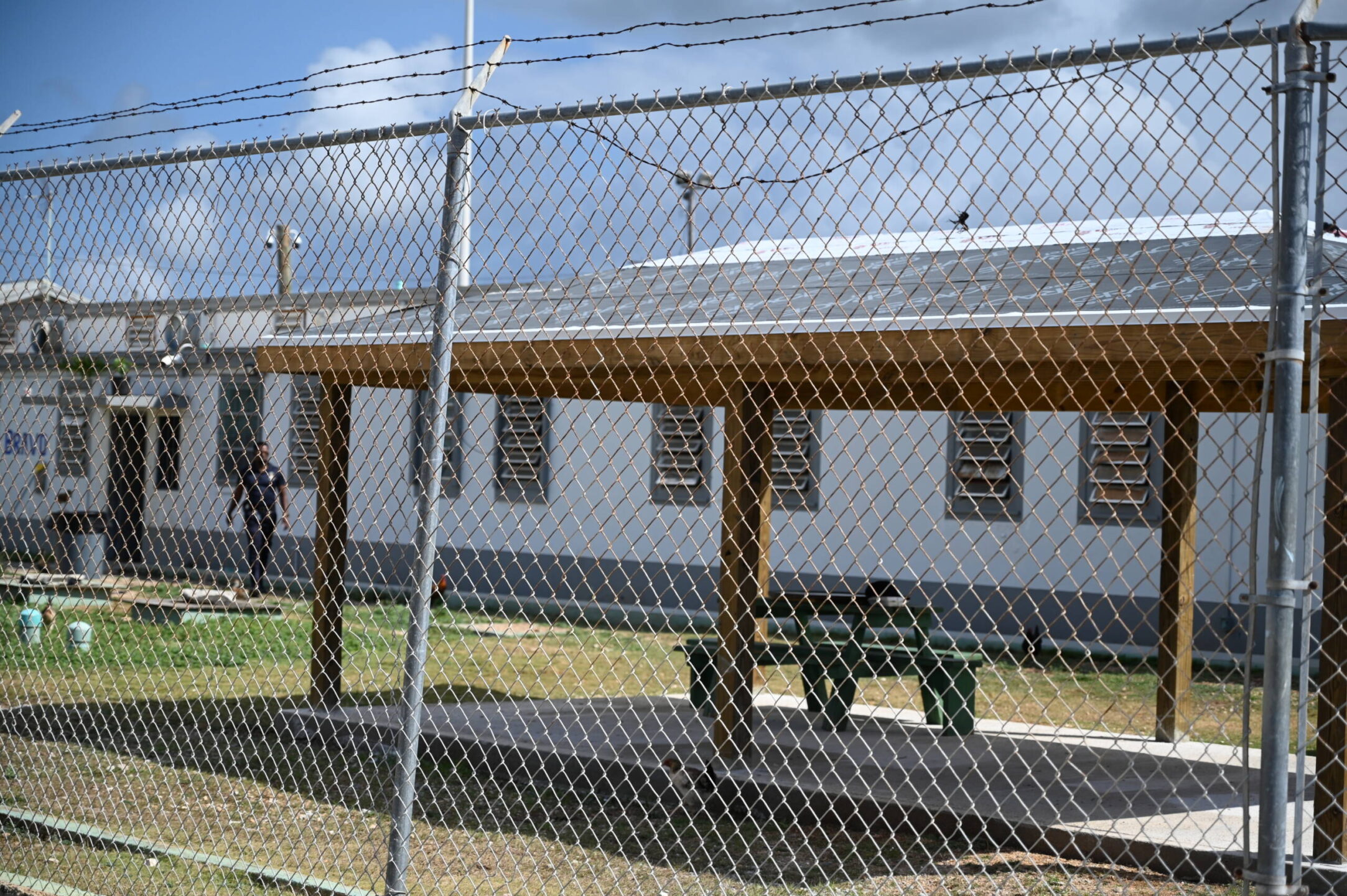
“HMP Northward was designed as a category C detention facility. The prison has a single fence and is located by the side of a public road,” the correspondence from 2017 indicated.
“As a result, there are significant difficulties in preventing contraband, including mobile phones, reaching prisoners.”
New prison to be developed in phases
Premier Wayne Panton, in his budget speech last year, acknowledged that the facility was “not fit for purpose”.
The government aims to provide a modern and secure correctional facility, Panton said, indicating that construction is expected to begin in 2022.
The budget has allocated $6.9 million and $7 million, respectively, for 2022 and 2023.
An outline business case suggests the total cost will run to $150 million.
The Prison Papers
Asked for an update, a ministry spokeswoman indicated that new facilities would be developed in phases over several years.
“This fit-for-purpose facility will both improve living conditions for inmates and enhance security,” she said, indicating significant “groundwork” had been done ahead of a procurement process.
In the interim, the prison had increased security at the current facility, the statement indicates.
“This includes installing more advanced equipment to detect contraband, equipping staff with appropriate training, and conducting regular, intelligence-based security-threat assessments,” she said.
Increased vetting for staff, prisoners and visitors and additional security training for partner agencies – including the Department of Community Rehabilitation – have also been introduced.
No precise timeline has been indicated for the completion of new facilities. It is understood that it will be rolled out in phases with different elements completed within each budget cycle.
The aim of the rebuild is also to help meet international human rights standards as well as increase capacity and access to rehabilitation services for inmates.
The existing facilities were deemed “barely fit for human habitation” in a scathing report by the UK Prisons Inspectorate in 2013. Cayman’s Human Rights Commission has since highlighted the need for upgrades in numerous missives.
While the physical changes could take several years to implement, prison officials say they have worked hard to bring in policy reform that helps improve conditions.
The creation of an Inmates Council, which allows prisoners to raise concerns with staff in a constructive way, is cited in the statement as a key factor in maintaining a stable environment, even through the challenges of COVID-19.
Increasing access to rehabilitation services, including education and vocational training, along with the ‘release on temporary licence’ programme, have helped smooth the transition back to normal life and reduce re-offending, the statement added.
Related Videos










Look around the world at those countries that have an almost zero crime rate. Such as Singapore and Dubai.
All these countries prioritize the rights of ordinary law-abiding people above those of vile and violent thugs.
They punish wrongdoing severely and quickly. This includes capital punishment.