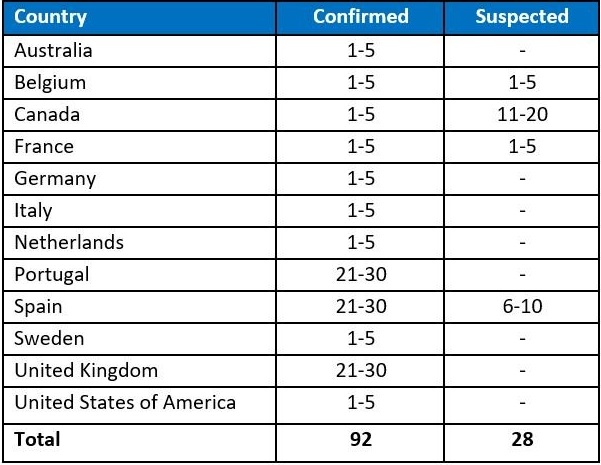
As of Saturday, 21 May, the World Health Organization had confirmed that cases of monkeypox had been identified in 12 countries where it is not endemic.
This has led the WHO to issue advisories highlighting the viral disease in a bid to ensure medical professionals who have not encountered it before can identify the virus, if a patient comes forward with symptoms.
As of Saturday, 92 confirmed cases had been found in nine European countries, including the UK, as well as in the United States, Canada and Australia. No deaths have been reported in association with the disease in these cases.
No cases have so far been identified in the Cayman Islands or anywhere else in the Caribbean.
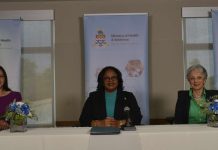
Cayman’s interim Chief Medical Officer Dr. Autilia Newton, in a public health advisory and video message released on Friday, 20 May, said, “The risk to Cayman Islands is only hypothetical at this stage and the purpose of this note is to provide concise, factual information to health professionals and the public alike, while raising awareness about signs and symptoms.”
She added, “Awareness, by medical professionals and the community, will enable prompt recognition of cases, should any appear in the Cayman Islands.”
Monkeypox is endemic in a number of Central and West African countries.
The first case this year reported outside of that region was on 7 May, when a traveller arriving in the UK from Nigeria was diagnosed with the disease. Subsequent cases in the UK, that were not associated with travel from that region, or with that particular traveller, led the UK’s Health Security Agency and National Health Services to urgently investigate where and how recent confirmed monkeypox cases were acquired and how they may be linked to each other.
According to the WHO, there are two strains of monkeypox – a West African one and a Congo Basin (Central African) one. To date, a statement from the WHO said, the cases that had been identified in the 12 countries outside Africa have been of the less virulent West African strain, and genome sequencing from a swab sample from a confirmed case in Portugal, indicated a close match of the monkeypox virus causing the current outbreak, to exported cases from Nigeria to the United Kingdom, Israel and Singapore in 2018 and 2019.
The West African strain has roughly a 1% mortality rate, health officials say.
The name monkeypox originates from the initial discovery of the virus in monkeys in a Danish laboratory in 1958. The first human case was identified in a child in the Democratic Republic of the Congo in 1970, the WHO noted.
‘Highly unusual’
“The identification of confirmed and suspected cases of monkeypox with no direct travel links to an endemic area represents a highly unusual event,” the WHO stated. “Surveillance to date in non-endemic areas has been limited, but is now expanding. WHO expects that more cases in non-endemic areas will be reported.
“Available information suggests that human-to-human transmission is occurring among people in close physical contact with cases who are symptomatic.”
The virus is transmitted from one person to another by close contact, according to the WHO, with lesions, body fluids, respiratory droplets and contaminated materials, such as bedding. The incubation period of monkeypox is usually six to 13 days but can range from five to 21 days.
Many of the recent monkeypox cases involve men who have sex with other men, the WHO stated.
In her statement on Friday, Newton said there was no need for panic.
“What we are tying to do is to alert the health professionals and the public in general about the symptoms, the signs and what is going on in the world at the moment, so should a case appear here in Cayman, we can identify it as soon as possible and put the relevant infection control measures in place to avoid the spread,” she said.
She added, “For the time being, there is obviously no need to panic because we have no cases here whatsoever.”
Symptoms
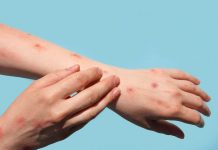
Initial symptoms of monkeypox include fever (greater than 38.5oC or 101.3oF), headache, muscle aches, backache, swollen lymph nodes, chills and exhaustion. A rash can develop, often beginning on the face, then spreading to other parts of the body, including the genitals.
The rash changes and goes through different stages, and can look like chickenpox or syphilis, before finally forming a scab, which later falls off.
Monkeypox is usually a self-limited disease, with symptoms lasting from two to four weeks.
While there is no specific vaccine for monkeypox, the smallpox vaccine has proven effective in the past, the WHO has said.
While monkeypox does resemble smallpox – a disease which has been eradicated through vaccinations – the latter was more easily transmitted and more often fatal as about 30% of patients died, according to the WHO.
The last case of naturally acquired smallpox occurred in 1977, and in 1980 smallpox was declared to have been eradicated worldwide after a global campaign of vaccination and containment.
“It has been 40 or more years since all countries ceased routine smallpox vaccination with vaccinia-based vaccines. As vaccination also protected against monkeypox in West and Central Africa, unvaccinated populations are now also more susceptible to monkeypox virus infection,” the WHO said in its statement.
Key facts
- Monkeypox is caused by monkeypox virus, a member of the Orthopoxvirus genus in the family Poxviridae.
- Monkeypox is a viral zoonotic disease that occurs primarily in tropical rainforest areas of Central and West Africa and is occasionally exported to other regions.
- Monkeypox typically presents clinically with fever, rash and swollen lymph nodes and may lead to a range of medical complications.
- Monkeypox is usually a self-limited disease with the symptoms lasting from 2 to 4 weeks. Severe cases can occur. In recent times, the case fatality ratio has been around 3-6%.
- Monkeypox is transmitted to humans through close contact with an infected person or animal, or with material contaminated with the virus.
- Monkeypox virus is transmitted from one person to another by close contact with lesions, body fluids, respiratory droplets and contaminated materials such as bedding.
- The clinical presentation of monkeypox resembles that of smallpox, a related orthopoxvirus infection which was declared eradicated worldwide in 1980. Monkeypox is less contagious than smallpox and causes less severe illness.
- Vaccines used during the smallpox eradication programme also provided protection against monkeypox. Newer vaccines have been developed of which one has been approved for prevention of monkeypox.
- An antiviral agent developed for the treatment of smallpox has also been licensed for the treatment of monkeypox.
– Source: World Health Organization
Related Videos