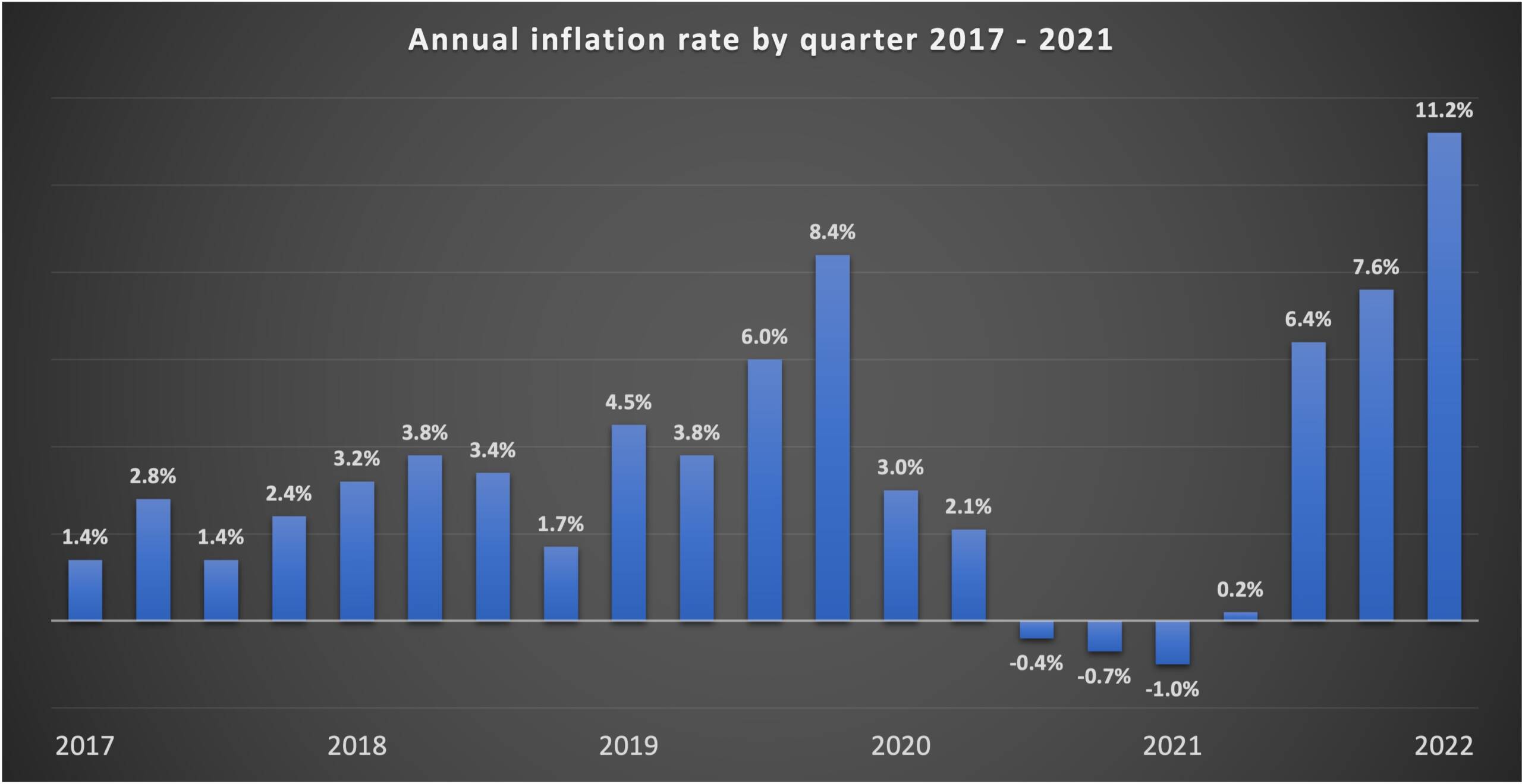
Higher utility and housing costs have pushed up consumer prices by 11.2% in the first quarter of this year.
It was the highest rate of inflation since the first quarter of 2005, when prices spiked by 11.4% in the aftermath of hurricane Ivan.
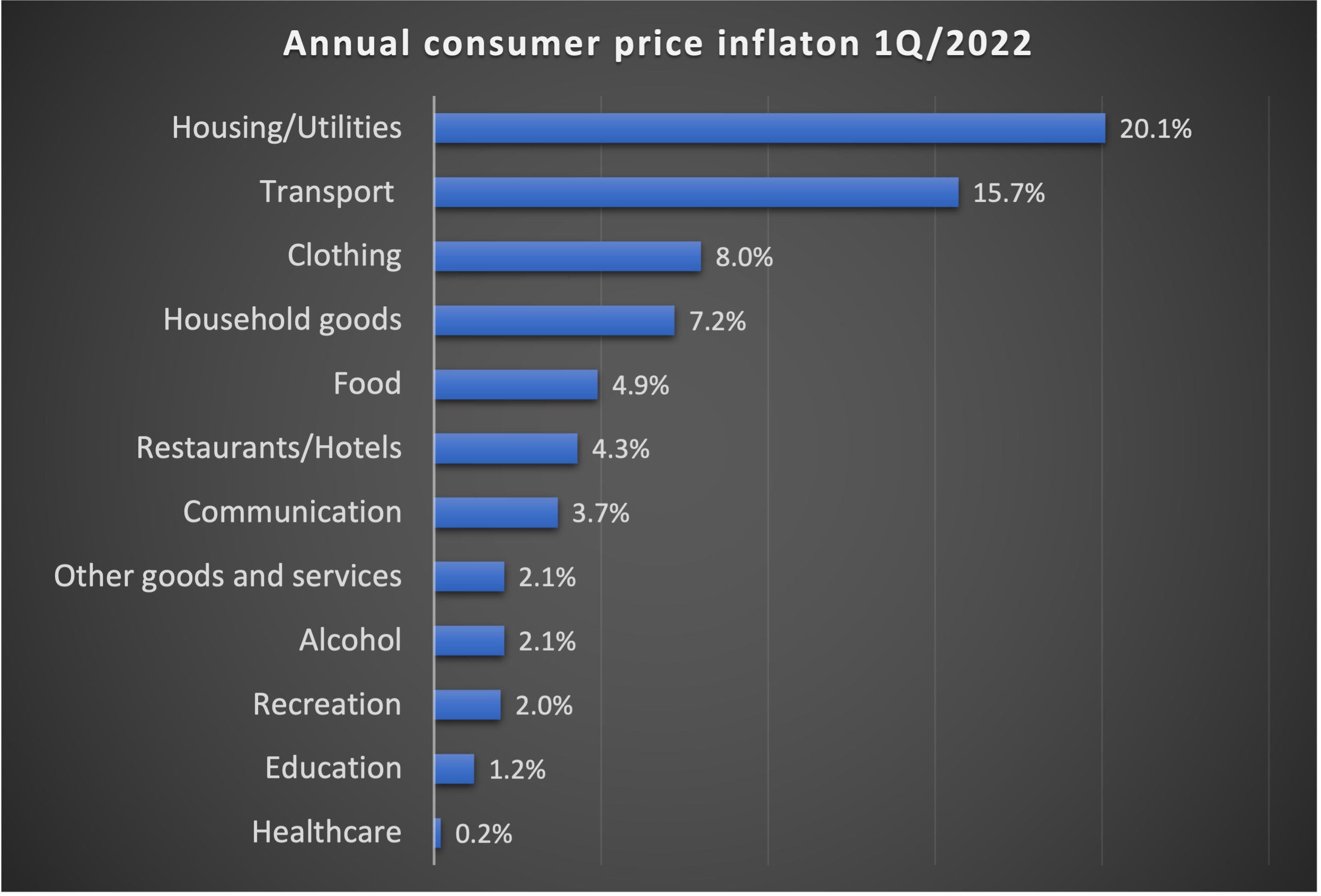
In the first three months of 2022, Cayman’s consumer price index (CPI) saw higher prices across the board in all its 12 categories.
Housing and utilities recorded the largest average price increase of 20.1% compared to the same period one year ago.
The average cost of electricity jumped 35%, followed by water supply with 25.3%, the Economics and Statistics Office reported.
Most of the price rises stem from higher energy cost across the world. Fuel prices during the period climbed 29%.
Premier Wayne Panton warned on Wednesday that fuel prices and other costs could rise further. In a message to the RF Economic Outlook conference he said it is expected that household budgets in Cayman will be substantially hit by higher fuel and electricity costs during the summer months.
During the first quarter, higher fuel costs, coupled with global supply chain bottlenecks, ensured that transport costs remained elevated. Overall transport costs were 17.1% higher. This also impacted almost all goods that must be imported to the islands.
In addition, local factors such as a growing population and limited affordable housing played a role.
Rental accommodation was on average 12.3% more expensive than 12 months ago.
Owner-occupied housing costs were 19.7% higher and the cost of building materials and maintenance of properties was up 16.2% in the first three months of the year.
Clothing (7.9%) and footwear (28%) also saw significant prices hikes, together with household goods (7.2%).
At the same time, consumers’ grocery bills were hit by higher prices for meat (13.8%) and fruits (11.9%). Fish and seafood was on average 10.8% more expensive, while the cost of vegetables was 5.2% higher.
Some items, such as oils and fats, as well as soft drinks, fruit and vegetable juices saw slight price decreases, limiting overall food price inflation to 4.9%.
Related Videos