Cayman Islands residents are being warned to prepare for a long hot summer of rising electricity bills.
As temperatures soar and fuel prices continue to rise coinciding with peak usage, the impact is likely to be seen in even higher CUC bills.
“The worse is yet to come,” Sacha Tibbetts, vice president of the company, warned in an interview with the Cayman Compass.
He said CUC was being hammered with significant fuel price hikes as the war in Ukraine plays havoc with world oil markets.
Those costs are likely to be passed on to customers at the worst possible time – the height of summer when power usage increases in most homes.
CUC sent out a message on its social media platforms this week warning, “We ask that you prepare as much as possible as unprecedented increases in fuel costs that are being experienced by CUC today will flow through to customer bills later.
“Combined with the increased consumption associated with summer, there could be significant bill increases.”
‘Worse to come’
Tibbetts said there is a time lag before rises in oil prices are reflected in customer bills. So the most recent global increases have yet to impact householders in Cayman.
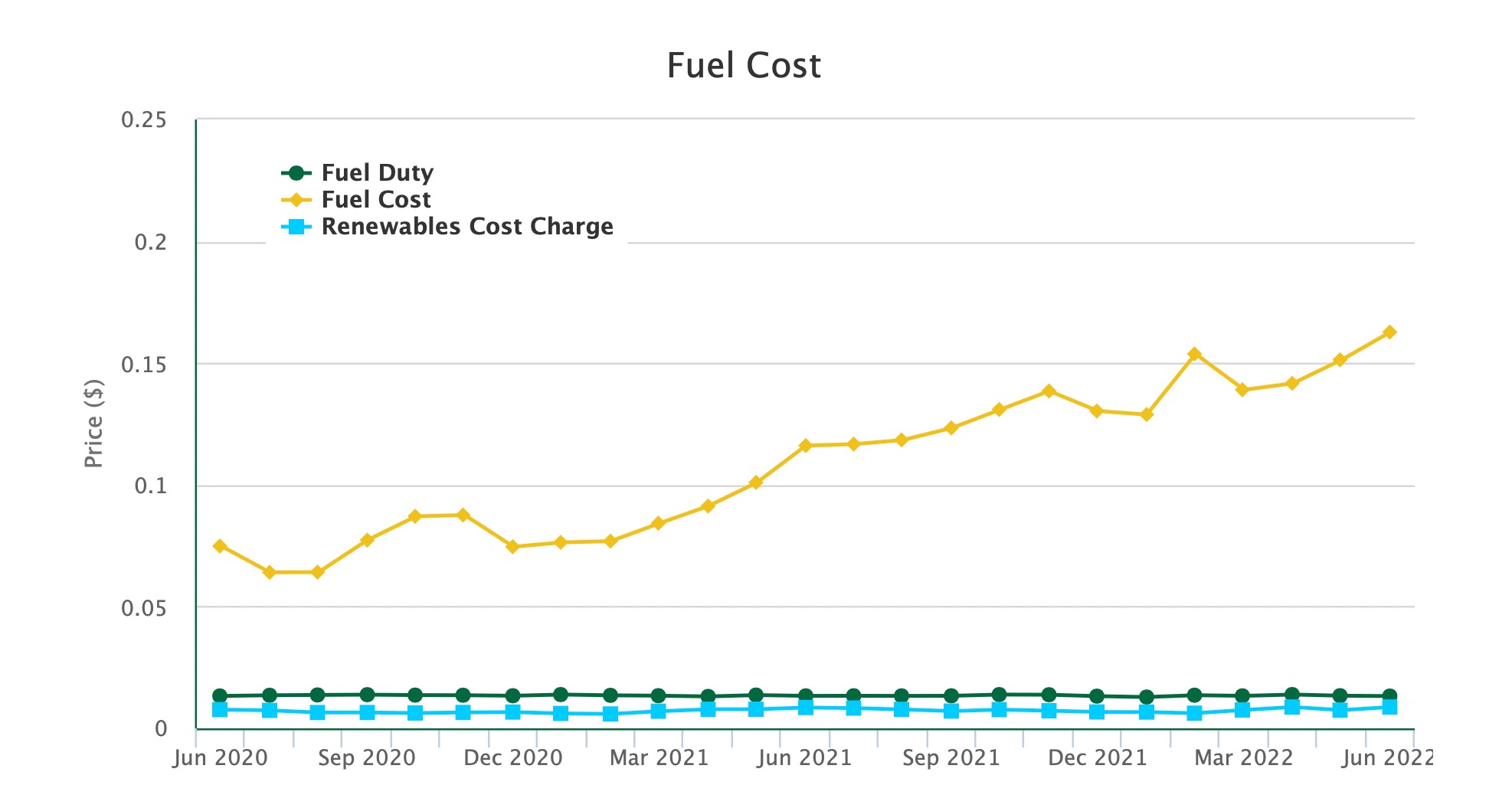
Since January the fuel surcharge – passed straight through to the customer – has gone up by just over 4 cents per kilowatt hour. That equates to around $44 a month extra on top of the average monthly bill, based on CUC figures.
But that is just the increases that are already in the pipeline.
Oil prices have continued to rise and higher bills are locked in as those increases are kicked on to customers. That will likely coincide with a rise in usage.
Tibbetts says the typical CUC customer uses up to 30% more electricity in the hot summer months.
The utility has embarked on a public information campaign urging people to moderate their usage and to be aware of how appliances, particularly air conditioners, can impact bills.
CUC profits ‘modest’ but essential
Tibbetts acknowledged that CUC received a lot of complaints about rising power bills but said the increases were tied directly to fuel prices. Cayman gets its fuel largely from the Gulf coast of the US and is subject to global economic pressures which have seen prices soar across the globe.
He said spikes like this will be inevitable until Cayman makes the transition to renewable energy.
He said CUC had done everything it could to make its plant run as cost-effectively as possible.
“We operate pretty close to the theoretical limit of fuel efficiency,” he said.
He accepted that some customers may argue for the company to take less profit, but he insisted this would make a negligible difference to electricity bills.
The fuel cost represents around $65 for every $100 on the average household bill. And CUC invests more than it earns each year in infrastructure upgrades, he said.

The company is only able to do that by offering “modest returns” to its shareholders.
If CUC operated without any profit, he said, it would not be able to raise capital and keep the grid and other critical infrastructure in shape.
“You might see a very short-term benefit to customers but there would be a rapid deterioration in service,” he said, warning Cayman would face power outages and disruptions in service that would impact its core industries.
“The percentage of dollars that go to profit is very small,” he said.
He added that stable and secure returns for investors guaranteed CUC the access to cash it needs to provide a first-world electricity grid to support Cayman’s key industries.
Related Videos