

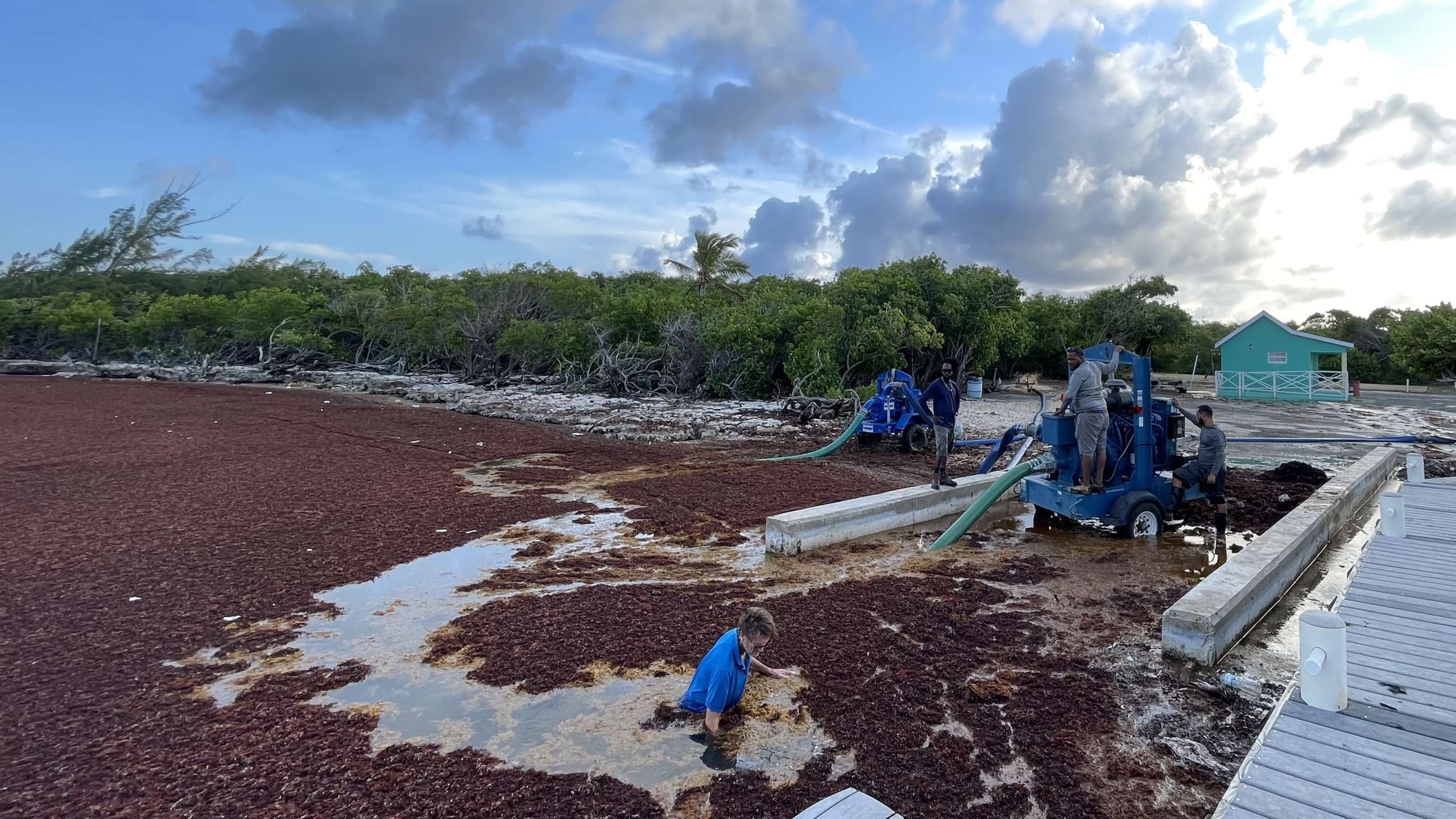
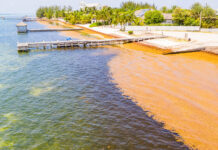
Efforts to use pumps to remove a huge blanket of sargassum from the edge of the North Sound in West Bay have been abandoned after workers found it impractical to pump the rotting seaweed from the water.
The sargassum-removal trial at Garvin Park, which began on Friday, ended on Monday, officials said.
In a statement issued the next day, Ministry of Sustainability and Climate Resiliency Chief Officer Jennifer Ahearn explained that workers had managed to remove more than 2,880 square feet of sargassum, but had found the “seaweed has now degraded to the point where pumping it out is no longer feasible”.
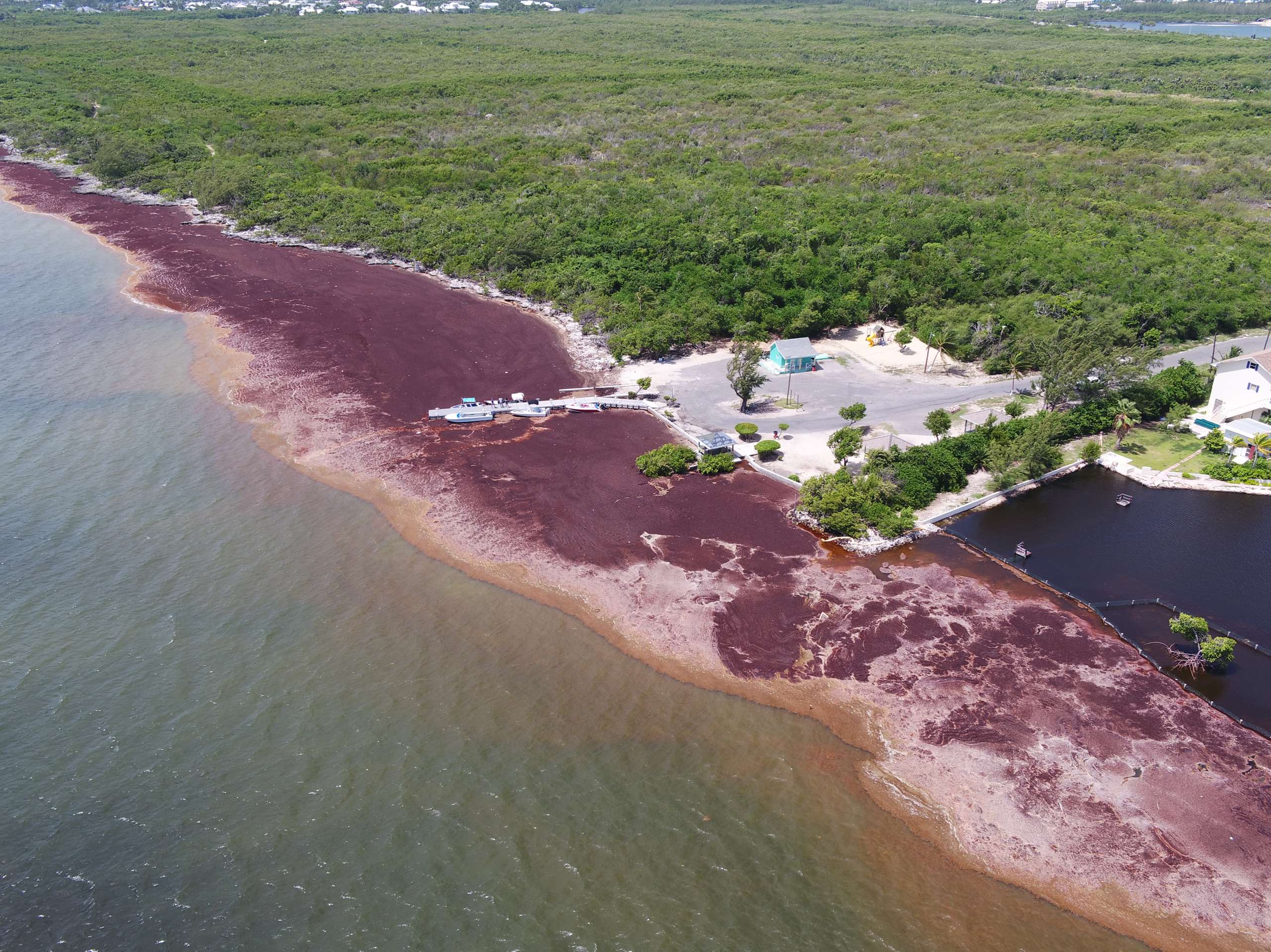
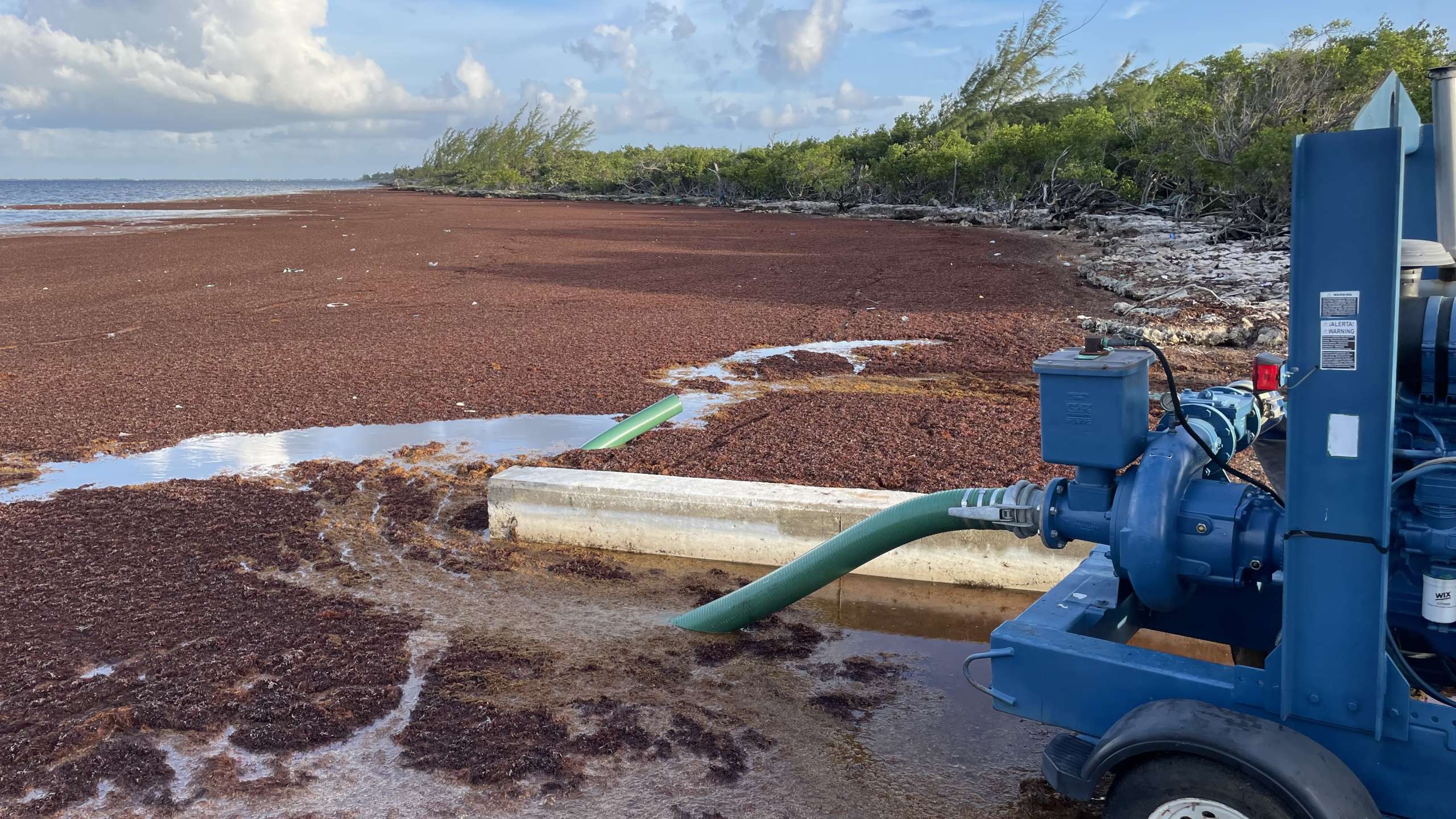
In the clean-up trial, which continued over the weekend, the pumping system was sucking sargassum and seawater from the site, filtering out the sargassum and returning the water to the sea.
Department of Environment Director Gina Ebanks-Petrie told the Compass that the trial had confirmed that once the sargassum decomposes too far, it becomes difficult to handle and pump, “so the earlier we get to it the better”.
She added, “However, the issue for us still is that the unpredictability of large Sargassum stranding events means that having response teams with exactly the right equipment ready to respond at very short notice is still a way off. In the recent case, both the government and the private sector required time to mobilise.”
Ahearn said lessons learned from the trial will inform future removal efforts and a longer-term, national response plan.
She added that the current influx of sargassum in the North Sound “is unlike any we have experienced previously in terms of its location, weather conditions and scale, demonstrating the need for scenario mapping inclusive of the private sector, which can deliver the innovations needed to manage future influx events”.
She said the teams working to come up with a plan to tackle the invasion of the seaweed had “learned a lot about the parameters for success using [the pumping] method”.
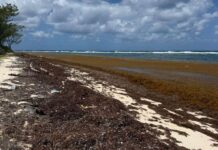
This latest influx of sargassum arrived in the North Sound on Saturday, 23 July, clogging the coastline at Morgan’s Harbour. It has since moved further south down the coast, to the Garvin Park area.
Drag the slider from left to right in the set of images below to view before and after photos.
Following meetings with various ministries and departments, the government used emergency funding to hire a private contractor to undertake the seaweed-removal trial, the statement noted.
Ebanks-Petrie, in the statement, said that, given the success over the weekend, the project team had been hopeful the pumping system would continue to be effective this week and had extended the closure of Garvin Park until Thursday.
“Unfortunately, the Sargassum started to rapidly decompose, impacting the ability of the pumps to continue functioning effectively,” she said.
Garvin Park now has been reopened to the general public.
Ebanks-Petrie added, “We know a lot more now about what worked and what did not. Every stranding event will be unique so long-term scenario mapping and response planning will be crucial to ensuring we are better prepared for the next event.”
In Tuesday’s statement Premier and Minister of Sustainability and Climate Resiliency Wayne Panton said Cayman is among many Caribbean nations dealing with “larger and more frequent” influxes of sargassum, acknowledging that there is no “magic bullet” to resolve the issue.
He added that Cayman and other impacted jurisdictions across the region “are all trying to figure out how to effectively anticipate and manage” the influxes in appropriate ways.
“The Government is staying abreast of the emerging research in terms of how to respond to these events, how to predict when and where they may occur, and potential end uses for any collected seaweed,” he said. “We look forward to collaborating with a variety of public and private stakeholders as we develop the policies and plans necessary to address future Sargassum landing events.”
Related Videos








Good Morning with regard to your article on sargassum weed. Many years ago japanese ships were found to be harvesting sargassum weed in international waters for manufacturing soaps etc. The US put a stop to the harvesting of this actual ecosystem of juvenile fish and crustaceans. We deal with it here on our beaches as well. When it dies it is brought back to sea on the next full moon high tide adding nutrients back into the sea. Two options, you may want to look into the collection system used by japan and possibly use the material for your own profit, the other might be to look into small collection vessels used here in the US to keep freshwater lakes and canals clear of an invasive weed known as hydrilla.