

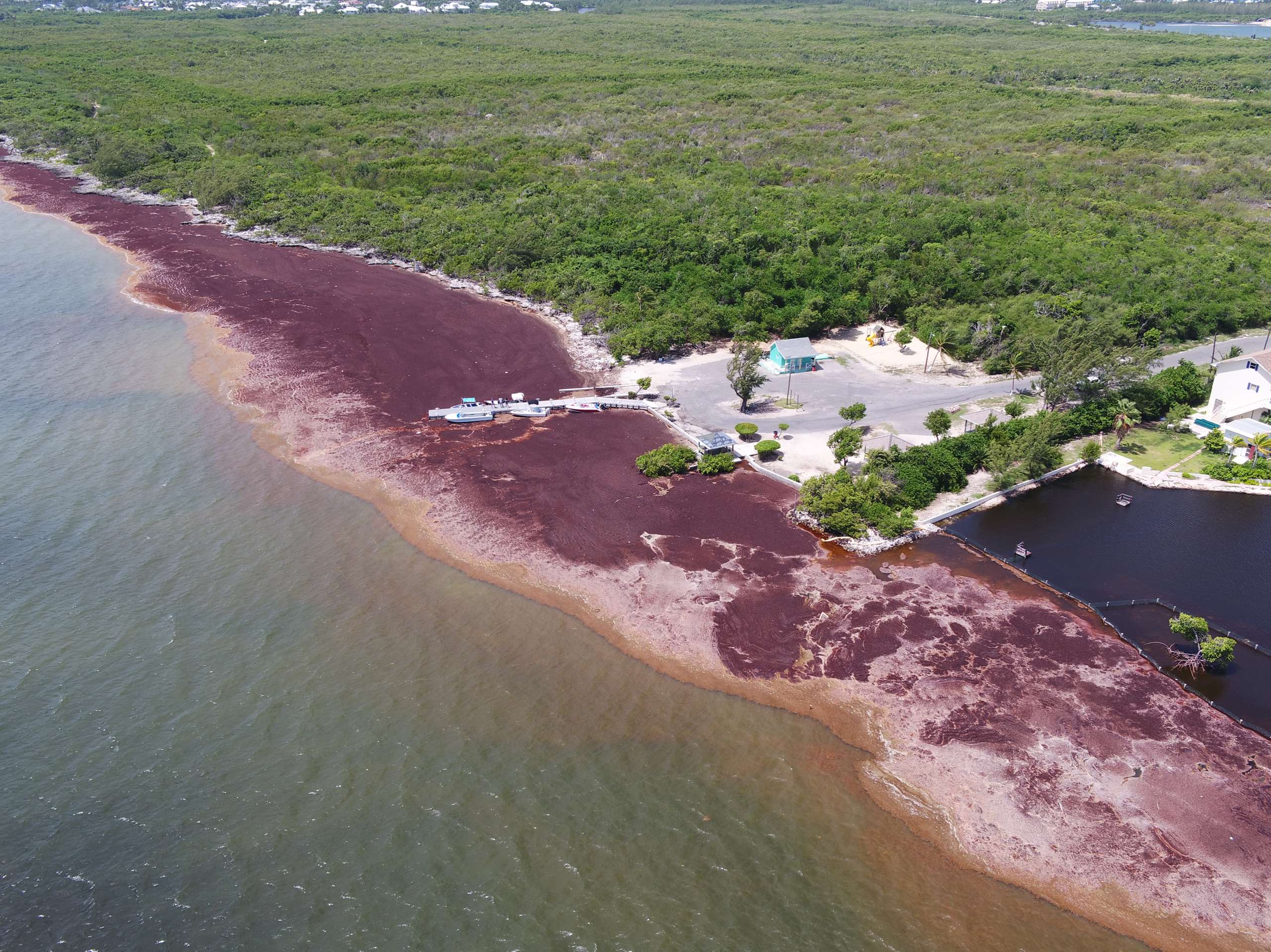
Update: The Ministry of Sustainability and Climate Resiliency and the Department of Environment advised in a press release Sunday that the closure to Garvin Park (Liars Tree) in West Bay is extended through Thursday, 4 Aug. to continue the sargassum clean-up work started over the weekend.
Boat owners can request access to the park with the gate security throughout the work period. Questions should be sent by email to [email protected] or made by phone during business hours on 949-8469.
Original story:
A trial clean-up of the massive influx of sargassum in West Bay is set to begin today, (Friday, 29 July) using giant pumps to remove seaweed that has floated into the area.
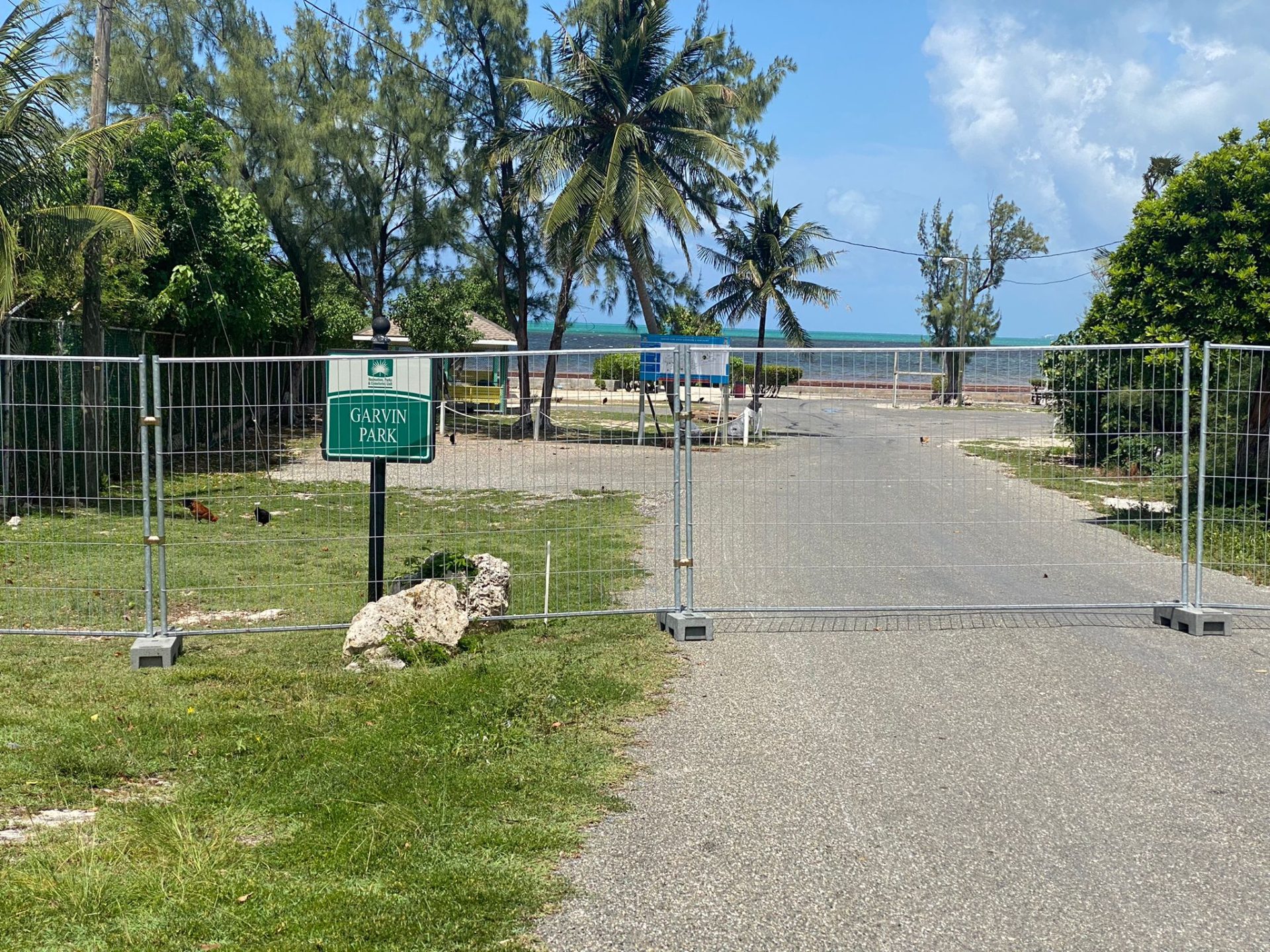
Garvin Park, also known locally as Liars Tree, next to Dolphin Cove, is closed for two days while the work is carried out, the Department of Environment has advised.
Premier Wayne Panton, questioned about how the government is addressing the issue at a press briefing on Thursday, said a contract had been signed that day with a company to use “trash pumps… that can pump significant volumes of sea water along with the seaweed in it”.
Using this technique, the pumps will attempt to suck up seawater and sargassum and then filter out the water which will be pumped back into the sea. The seaweed would then be removed and deposited at “one or more on-land disposal sites”, officials said in a press release issued this afternoon.
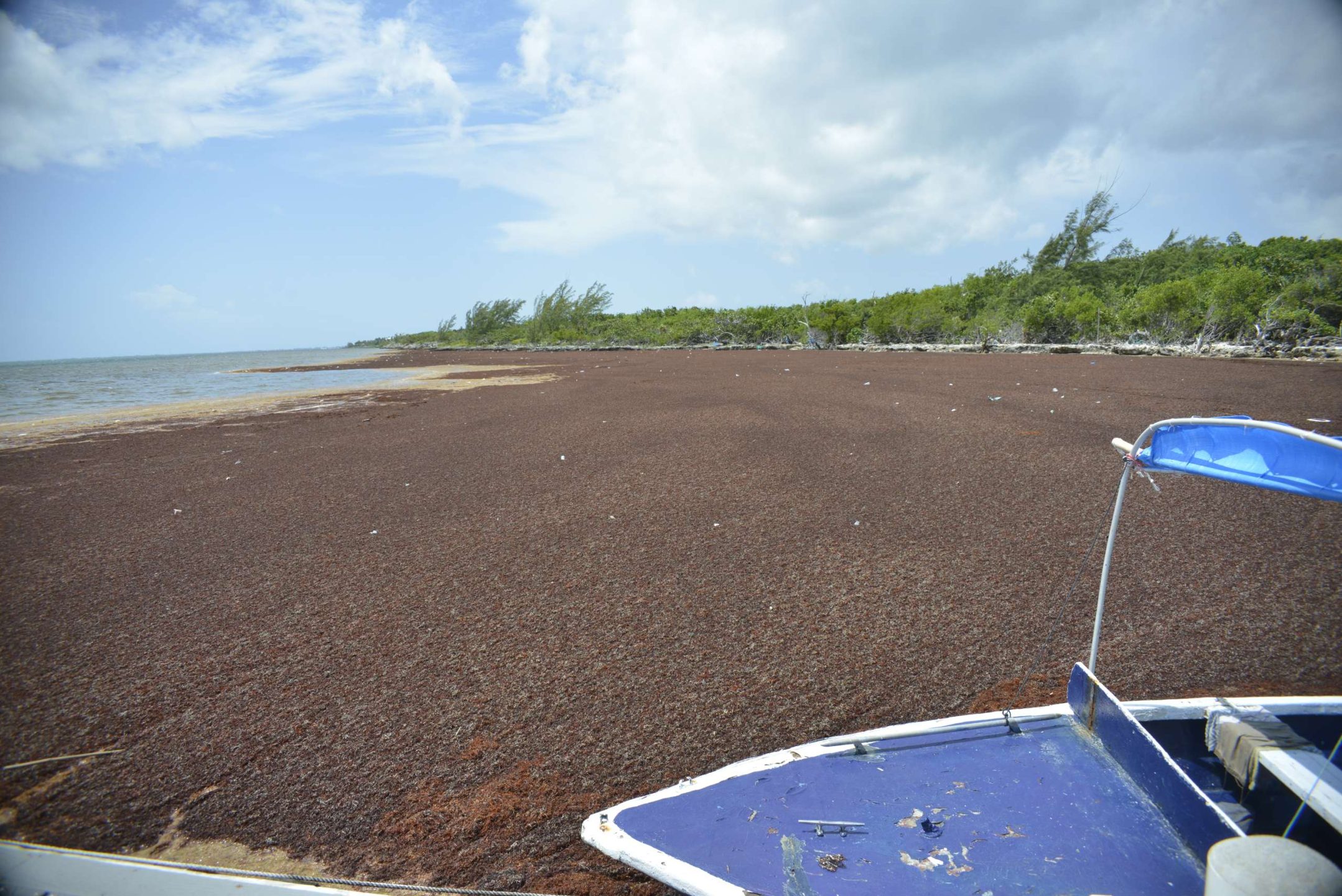
A DoE spokesperson told the Compass, “A test is being conducted with a local trash pump machine that has been repurposed to collect sargassum directly from the water.
“A test is necessary to determine what sorts of onshore and offshore geographic conditions are amenable to this possible clean-up method; what areas it will not work in; the logistics of collection, transport and use/disposal; cost and efficiency, and what impact this collection process would have on adjacent marine life.”
No easy solution
Panton, speaking at the press briefing held to announce the final results of the 2021 census, acknowledged that “there is no easy, simple way of addressing” the sargassum problem.
The government earlier this week held multi-agency meetings to try to come up with a plan to deal with the most recent sargassum influx.
The Department of Environment on Thursday morning used its drone to survey the impacted area “for us to see exactly what it looked like”, the premier said.
That footage showed that the huge blanket of sargassum that had been choking the Morgan’s Harbour and Shores area had moved toward the south.
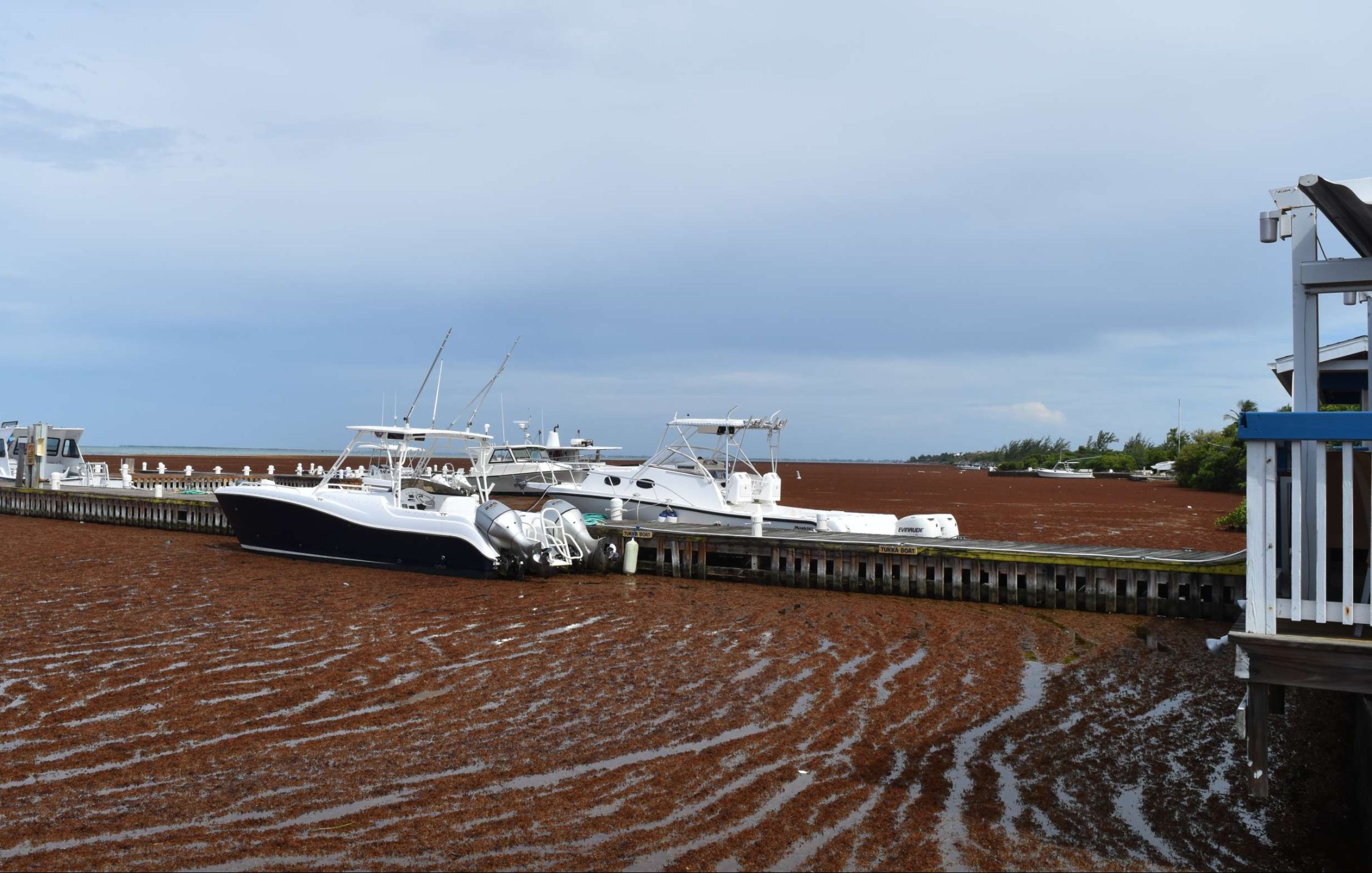
Panton said, “They are going to be conducting these tests to work out what kind of success they’re having and what kind of volume that they’re able to achieve, and utilising these pumping mechanisms.”
He added, “There is no easy answer to it. There are methods and methodologies that are utilised in other places that could perhaps work in that location, like the vessels with the conveyor belts that reverse and collect up the seaweed. Obviously, we don’t have those here at this point.”
Panton said the clean-up efforts being undertaken now were being done with equipment that is currently available. “We’re trying to deal with an issue that needs to be dealt with in a week rather than the month or two months that it’s going to take to bring in some vessel like that,” he said.
While the influx seen in West Bay is the biggest yet, the premier said Cayman has “to plan for it the next time and make sure that we either find a way to deflect it, to stop it from coming in, or we find a way to collect it before it just gathers up against the shore and creates these issues”.
Several ministries and government departments are working on coming up with a solution to the sargassum problem, officials said in a press release issued today.
These include the Ministry of Sustainability and Climate Resiliency, Department of Environment, Ministry of Planning, Hazard Management Cayman Islands, and the Department of Environmental Health.
Jennifer Ahearn, chief officer in the Ministry of Sustainability and Climate Resiliency, said in the press release, “The Cayman Islands Government is working to address the current situation and put in place long-term solutions to deal quickly with future incidents. Unfortunately, the influxes of Sargassum we are seeing in the Cayman Islands are driven by external factors such as climate change and represent an emerging, long-term issue that we will have to manage on an ongoing, annual basis.”
She added the “immediate priority” was to address the large-scale influx of sargassum in the North Sound.
DoE Director Gina Ebanks-Petrie said in the release that the trial clean-up at Garvin Park “will determine the feasibility of the strategy given the volume of sargassum”.
“There are a number of environmental, public health and economic consequences of large-scale sargassum landings and the ongoing impacts on nearby residents, businesses and the marine environment require an appropriate response,” she said.
She added that the trial removal of the seaweed using the pumping system “will determine whether the volumes that can be removed using this methodology are sufficient to make a meaningful difference”.
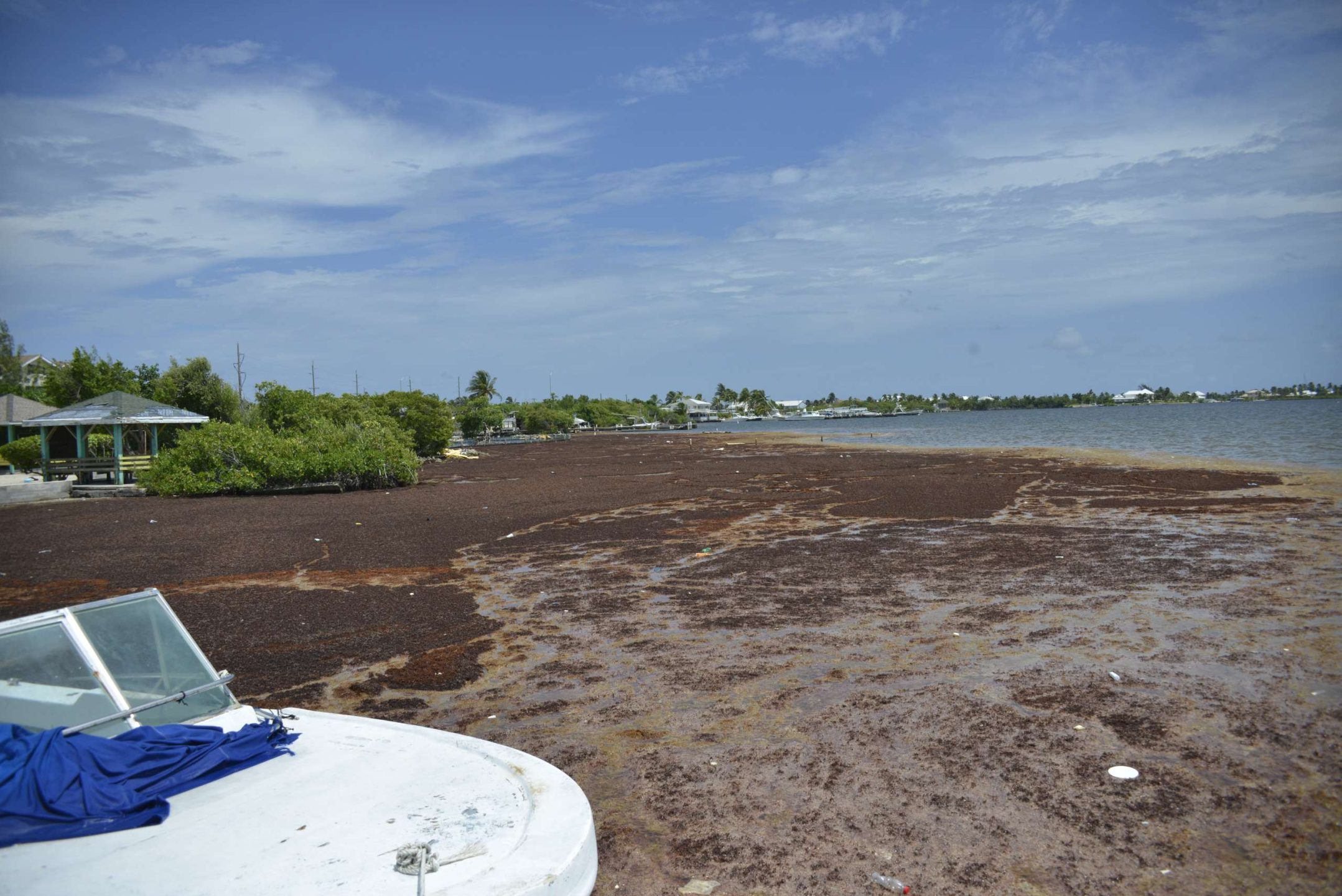
Panton, at the press briefing, said, with the sargassum mostly impacting areas of West Bay and the eastern districts, the main tourism district – Seven Mile Beach and George Town – had not been badly affected this year
Earlier this week, Deputy Leader of the Opposition Joey Hew said in a video message that the Progressives-led administration had left a plan and equipment in place to deal with the yearly influxes of sargassum.
“If the government cannot handle it, then provide the opportunity for the private sector or quickly relaunch the NiCE programme to clean up the worst areas, including our valuable tourism attractions,” Hew said.
But the premier refuted the contention that the previous government had a sargassum clean-up plan or useable equipment in place.
“Sorry to disappoint people, there… is no plan,” Panton said. He acknowledged that a beach-raking machine had been purchased that could be used with a tractor, but said that equipment would be useless for dealing with the current massive influx of the seaweed in the North Sound that was clogging ironshore and mangrove coastlines in West Bay.
Related Videos









In my opinion, Government should look at the big (and long-term) picture to implement a system to collect Sargassum before it hits the shores of the island.
Using drones and other aircraft, areas of the grass blanket can be discovered BEFORE hitting the islands and collected at sea. Then brought to land and processed for agricultural use. (possibly long-term land-fill??)
Again think for the long term, and not just for the current political term.