

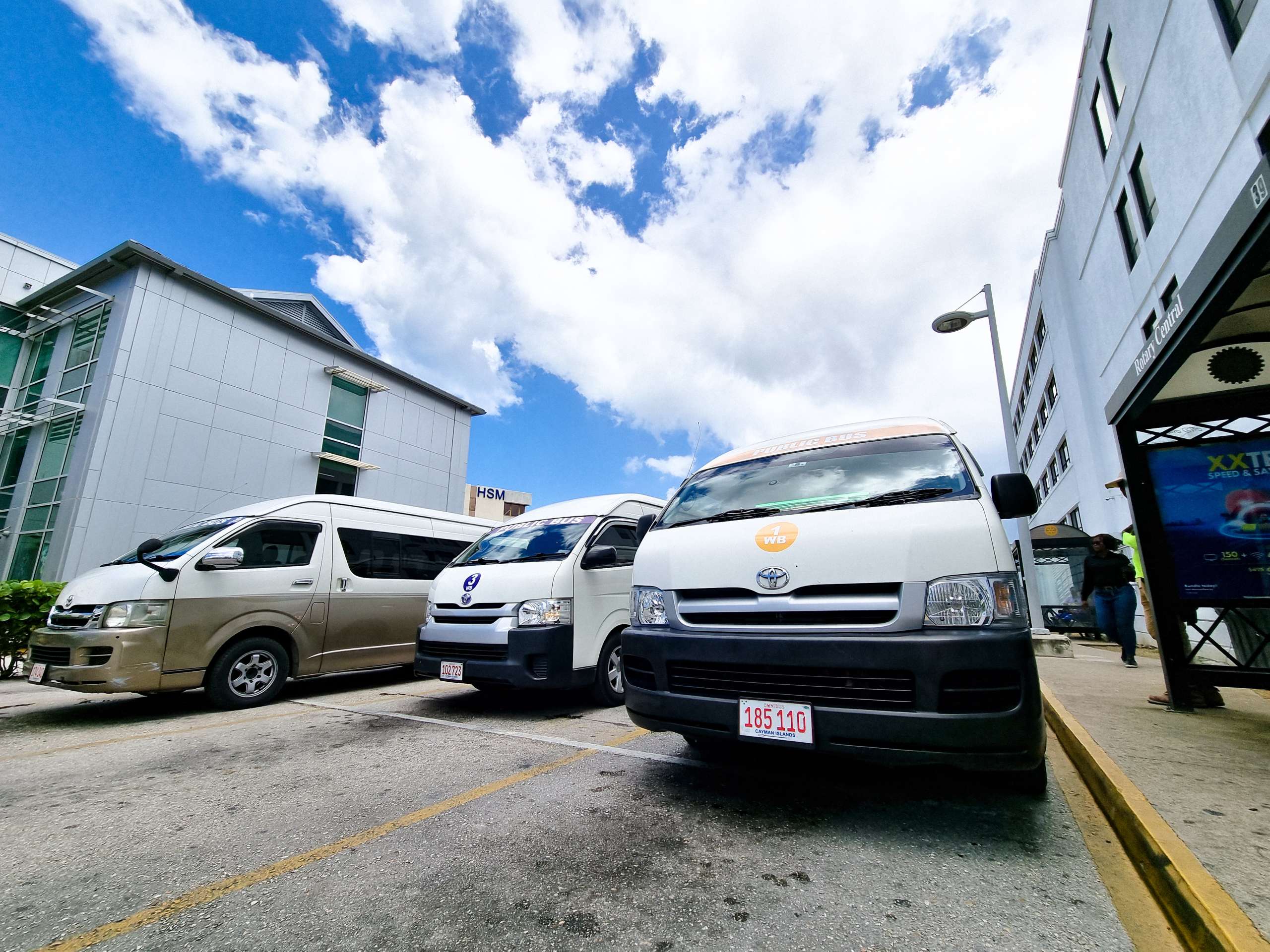
If you have taken a public bus in Grand Cayman over the past 27 years, there is a good chance you were driven by Winston Parson or one of his drivers.
Parson first got behind the wheel in 1995 and since then he has serviced every highway, narrow side street and off-road shortcut, while playing his vital role in moving passengers who rely on Cayman’s public transportation system.
During his nearly three decades on the job he has seen many changes, except in bus fares, which have not increased for more than 20 years; a ride still cost $2 for every route except to North Side and East End.
“I love my job, that’s why I’ve done it all this time,” said Parson, who started out as a driver and now owns three buses. “But things are getting harder, and more expensive.”
The latest cost-of-living data show that Cayman’s consumer price index increased on average by 12.1% between April and June compared to the same period last year. According to a Cayman Compass analysis, this staggering increase set a record high, exceeding even the price hikes of 11.4% in the aftermath of Hurricane Ivan.
“If you go to [the supermarket] one item that used to cost $1, now costs $2 or even $3,” said Parson. “Everything is now more expensive – light, water, rent, fuel, everything.”
According to the Economics and Statistics Office, the 12 divisions of Cayman’s CPI all showed higher prices.
Leading the increase was the rise in the cost of housing and utilities (19.2%) and transport (17%). Fuel prices also saw a jump of 37% during the quarter year-on-year, which pushed up the cost of water supply (37.7%) and electricity (20.2%), as well as air travel (11.3%).
Low fares worsened by rising business costs
“Everyone is feeling this increase, but we are feeling it even more because the other businesses were able to increase their prices, and when they did no one said anything,” said Parson, who explained that he and other drivers have been forced to absorb the cost-of-living rises in addition to the increased expense of doing business.
Unlike many other places, which boast a properly regulated and dependable public transportation system, which is often state-owned, Cayman’s bus service is made up of a collection of independent operators who are licensed and assigned routes by the Public Transportation Unit, which is overseen by the Public Transportation Board.
This means bus owners like Parson must shoulder the cost of vehicle maintenance, as well as be responsible for legal requirements such as work permits, and health and pension payments for themselves and any additional drivers.
Parson told the Compass that in the morning and evening, when people are commuting to and from work, he gets an average of one-and-a-half bus loads of people – or 42 passengers from the combined rush hours.
“When it’s not rush hour, we have to leave the bus depot after waiting for three minutes at the front of the line or with a full bus, whichever comes first,” he said. “But during the day we hardly leave the depot with two or three people,” said Parson before he was signalled to leave with one passenger in his 14-seater bus that had sat idling for just under four minutes.
Rumours of fare rise quashed
An image recently circulated on social media claimed bus fares had increased between $1 and $1.50. However, the PTB dismissed that as a rumour.
“Acting swiftly to quell rumours of a fare increase, the PTB has today [Friday, 2 Sept.] notified all omnibus drivers and operators that the notices advertising unauthorised fare increases must be taken down immediately,” read a statement issued by the board, which called on drivers to remove any list which suggested a price increase.
The board added that it had received a request to increase public bus fares, but “given the impact that a fare increase could potentially have on the community and on the cost of living, the request is being carefully considered and no decision has been made at this time.”
Parson told the Compass that while he understands the PTB’s concerns, keeping the bus rates the same does not address the impact on drivers.
According to a Compass analysis, the inflation-adjusted value of the US dollar from 1994 until 2022 would have resulted in almost a 100% increase or a doubling of prices. By that analysis, bus rates would currently sit at a minimum of $4 had there been a periodical increase to reflect inflation.
“We are not asking for much,” said Parson. “All we have asked for is an increase of $1 or even $1.50.”
Plans to overhaul bus system
While the bus drivers continue to grapple with the rising cost of living and business, government is looking at a way to overhaul the public transportation system.
In June, Transportation Minister Kenneth Bryan announced that his ministry was in talks with Barbados about creating a new public bus system using electric buses, which would begin as soon as January 2024.
In talking about the plan on the Cayman Compass Facebook talk show The Resh Hour, he said at the moment the discussions with Barbados officials are more of a “partnership [based on] information sharing, which will cost us nothing”.
Until a new public transportation system has been put in place, bus drivers are calling on the government to reduce various fees that contribute to the expense of doing business, increase fares, or subsidise the bus services to help offset the costs.
Related Videos








Government should immediately subsidize the bus services. It is mostly the low wage earners who take the bus, and can ill afford an increase — they are mostly barely able to survive as it is. It is an essential service, and if the bus owners find they are not making money, or worse, losing money, then they won’t be operating their busses any more. Electric busses will likely not be seen on the island for years, the government needs to do the subsidy now.
To keep cars off the road we must help the bus drivers. The government should give them money to help with inflation