


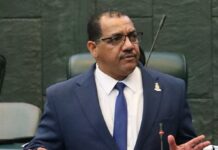
Auditing company Deloitte has completed its plan for a new public transportation system which will be made public “very shortly”, according to Infrastructure Minister Jay Ebanks.
A year ago in September 2022, the government awarded the Cayman firm a $199,600 contract to offer solutions to the islands’ transport woes.
It was expected to take up to five months to complete.
In Parliament on Wednesday, 20 Sept., Ebanks revealed that on “receiving necessary approvals”, the report and terms of reference will finally be published.
He added that funds will be made available in the upcoming budget to move forward with public transport improvements.
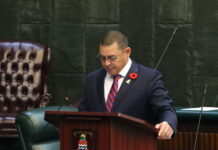
The disclosure came after Joey Hew, MP for George Town North, asked the minister for an update.
He went on to ask Ebanks what approvals are needed to enable publication.
“I just want to make sure that Cabinet has gone through the report and fully understands it before we issue it,” the infrastructure minister responded.
Hew said the general public had anticipated that the report would be ready in the first quarter of 2023.
“This is a $200,000 report, and it’s a much, much larger problem, as we hear daily on the radio about the traffic, and while roads are important, we cannot build our way out of traffic.
“Public transport has to be one of the many solutions, but a very important one,” he said.
Hew noted that the Public Transport Board in 2019 published a five-year strategic plan, and asked the minister whether or not the plan is still being followed.
‘A plague’
Ebanks responded that the ministry is steadfast in its commitment to meeting and exceeding public expectations regarding the public transportation system.
“This government actually takes it very serious that this transportation system has to be fixed,” he said, adding that funding will be made available in the next budget.
“I think as one of the members from the eastern side of the island, this has become a plague for not only me, but for my other colleagues from the eastern side of the island.
“They understand how important it is for us to fix it, and as nothing has been done with it for so long, we have taken the time now to try to sort out this.”
Ebanks said he understands the ministry may not be moving at a speed Hew likes, but added that nothing had been done previously and “we have to learn how to walk” first.
He encouraged the MP to “stay tuned”.
When the report was commissioned, Kenneth Bryan was transport minister. At the time, he said: “I’m just really excited waiting on that report to come back, to share it.”
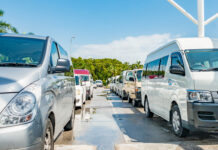
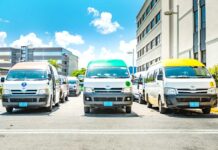
Cayman’s public transport system consists of buses on 13 routes in Grand Cayman driving to and from the Edward Street bus terminal in George Town, and three routes in Cayman Brac.
There are bus stops along the routes but very few are indented into the side of the road. Fares start from $2 and increase to $5 for longer journeys. There are no set times for arrival of buses.
Related Videos








Does Deloittes” an auditing company really have experience in dealing with traffic problems?.
Of course not. No more than any other sensible person.
Suggestions for bike lanes or bus lanes are not viable for 2 reasons:
1. Many of our roads run by homes. To widen them to install a bike or bus lane would mean taking hundreds of homes.
2. They would be under-used. Cycling is just not practical for most people as it’s too hot and humid. Not to mention dangerous.
An overpass (flyover) at the two biggest bottle-necks would help greatly, they are the AL Thompson roundabout and the Hurley’s one.
We need a proper, reliable bus service. We often visit London and Hong Kong. We use the bus network because we know the buses will arrive on time, there’s even a changing sign at the bus stops showing when the next bus will arrive. Hopeless to have a bus system that doesn’t run in the evening or cover the whole route if the drivers decide not to.
The problem is that a bus system cannot run at a profit because one needs enough capacity to handle rush hour demand; this means that the buses will run at below capacity (almost empty) the rest of the day. Or, of course, you take some buses off the road at these times and run a less frequent service. This is OK as long as the service runs on time! But you would still need to: buy the buses and pay the non-working drivers. This is less of an issue if people KNOW when the bus will arrive and can plan accordingly.