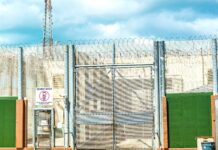
The Coroners Court has ruled that the sudden death of an inmate at Northward Prison was the result of natural causes.
Durney Loxley Ebanks, 53, died on 18 Dec. 2019, alone in his prison cell, from an apparent heart attack.
During the day-long hearing last week, on Thursday, 22 Sept., the jury of six women and one man were told Ebanks was discovered by prison officers while on a routine patrol.
“I was patrolling the Echo unit handing out snacks when I came to his cell,” said prison officer Joseph Barnwell. “At first I called his name and got no response. So, I called him louder a few more times and banged on the cell door to try to wake him up.”
Barnwell said when Ebanks failed to respond, he called for backup.
“When I was radioed for back-up, I could tell that it was urgent so I quickly made my way to the unit,” said prison supervisor Brian Poy Fong. “After making a few calls myself, I entered to check on him.”
The court heard that Ebanks’ unresponsive body was “found with his hands clenched not far from his chest as if he had endured a sudden and strong pain”, prompting Poy Fong to administer CPR for a sustained period of time.
However, despite his efforts and that of EMT officers, Ebanks was pronounced dead upon arrival at Cayman Islands Hospital a short time later.
Pre-existing heart conditions
An autopsy report revealed that the main arteries leading to Ebanks’ heart were blocked by as much as 90%, which is believed to have been the result of build-up over time.
“Anything above a 70% blockage can and often results in a sudden death,” said Dr. Kimone Fraser, a pathologist with the Health Services Authority. “This blockage was not a result of something sudden like a clot of some sort, but rather from plaque build-up which likely occurred over several years.”
Fraser added, that despite the large blockage, the nature of Ebanks’ heart complications would have required a very invasive procedure to detect, which is only done if there is sufficient reason to justify that screening.
“There were no records to suggest that he had prior heart-related complications that would have called for such a screening, which is why he probably went undiagnosed for so long,” Fraser said.
No foul play suspected
The jury was told that there were no signs of injuries, external or internal, that would suggest foul play.
“At the suspected time of the passing, Ebanks was alone in his cell, while his cellmate was out for an exercise break,” said Poy Fong, who went on to describe Ebanks as a “frequent visitor” to HMP Northward.
The reason for Ebanks’ incarceration and the length of his stay were not explained to the jury. However, they were told that he was housed, with three others, in a section for persons with behavioural problems, and each of the four inmates had a “mutual respect for each other”.
After a brief deliberation, the jury returned a unanimous verdict on death by natural causes.
Related Videos