The National Conservation Council is asking for public input on a plan to designate critical habitats for dwindling nesting populations across the Cayman Islands, to stave off “imminent” local extinction.
The conservation plan aims to put in place protections for six bird species, most of which have seen significant decline over the past century, the council says.
They include the red-footed booby, brown booby, the white-tailed tropicbird – also known as the bo’sun bird – the least tern, the bridled tern and the magnificent frigatebird.
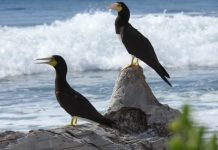
In its draft conservation plan, the council used the example of Cayman Brac’s brown boobies to show how numbers have fallen over last 100 years and more. It noted that, based on reports by Brac residents Tenson Scott and Temple Tatum – who, in 2001, relayed information from their late grandfather Ballinger Christian – in the early 20th century and into the 1930s and 40s, the brown booby nesting colony spanned most of the coast of Cayman Brac and numbers were in their thousands.

When the brown booby population was first monitored in 1983, only 170 pairs remained. In 2001, just 61 pairs were recorded at four sites, and in 2019, there were 46 pairs across three sites. One of those three remaining nesting sites, on the beach and Bluff edge along the south shore, “has been severely disturbed in recent years by development and introduced mammalian predators”, the NCC noted.
While seabirds are protected under the National Conservation Act, which means they cannot be ‘taken’ – captured or killed – “their nesting habitats remain at continued risk from threats of development, human traffic and invasive predators”, according to a public consultation document issued by the council.
The NCC says, “For several of these species, local extinction is imminent”.
“The Conservation Plan therefore aims to designate critical habitats for the most densely populated, unprotected nesting sites and to provide appropriate protections to mitigate disturbance from human and animal activity,” it states.
Threats
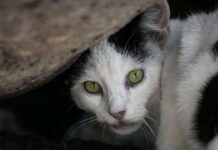
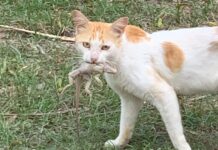
One of the biggest threats to the seabirds are feral cats on the Sister Islands, as well as free-roaming dogs and rats, the NCC says. A feral cat cull has been carried out on Little Cayman in a bid to protect chicks and juvenile birds, as well as the baby Sister Islands rock iguanas.
The NCC says habitat loss and human disturbance arising from coastal development also poses a serious threat for many of the bird species, particularly the brown boobies of Cayman Brac.
“Recreational activities on and around the small cays on Grand Cayman and along stretches of nesting beaches and bluff on Cayman Brac further cause disturbance to seabird colonies during their most vulnerable life stage,” the council said.
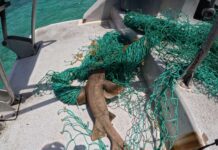
It added that by-catch in fishing gear at sea, marine oil pollution events and plastic pollution “are all additional threats of concern”, particularly for magnificent frigatebirds and the two booby species.
What’s the plan?
The NCC plans to protect nesting sites by designating them as official protected areas and critical habitats, and “to control unnatural predation in nesting colonies”, by maintaining “a sustainable control programme to remove feral mammalian predators from nesting seabird colonies”.
Other strategies include the council advising government agencies, under the National Conservation Act, to recommend measures to limit direct or indirect impact to seabird colonies; the periodic monitoring of breeding populations to assess if the conservation methods are working and to adapt them accordingly; and the designation of marine Important Bird Areas (IBAs) based on recorded foraging areas for both booby species and magnificent frigatebirds around the Sister Islands.
It also involves looking at how protective measures for marine IBAs can be implemented through local legislation and regional agreements; and designating new protected areas supporting seabird colonies as Ramsar sites under the Convention on Wetlands of International Importance.
In a frequently asked questions for landowners section on the NCC’s website, the council said the only affected landowners are those within the proposed critical habitat nesting
areas on the cliffs of Cayman Brac and Grand Cayman. The proposed critical habitat designation would extend 50 feet inland from the edge of the cliffs.
On Grand Cayman, residential and other development zones already have a construction
setback of 50 feet from cliff edges. On Cayman Brac, there is no legal setback; however, the 1975 appendix to the Development Plan that guides the Sister Islands does make specific reference to preserving the Bluff edge and cliff face, so the DoE generally recommends the same 50 feet setback as in Grand Cayman, the NCC noted.
Restrictions within a designated critical habitat generally include no construction
activities, no damaging of vegetation, no vehicles, no roaming of domestic animals, alien
species control, and maintaining safe distance from the protected species by
human, pet or drones.
While none of the six birds included in the proposed conservation plan are listed in the IUCN Red List, which identifies threatened species, the NCC says it will explore the possibility of carrying out National Red List assessments of seabird colonies in Cayman.
Where the species are found
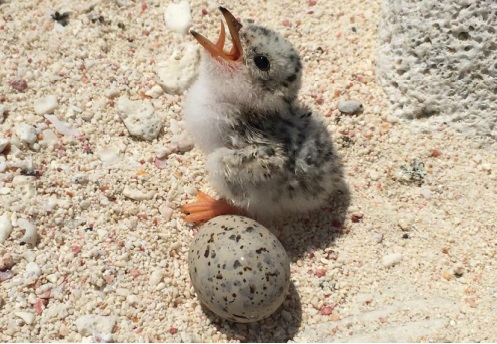
Bridled terns, which visit Grand Cayman to breed in small numbers, can be found at a single, small nesting area at Vidal Cay, off Barkers in West Bay; while least terns, which were previously found at numerous nesting sites, are now mostly nesting at Sand Cay in South Sound on Grand Cayman, with limited numbers on the Sister Islands.
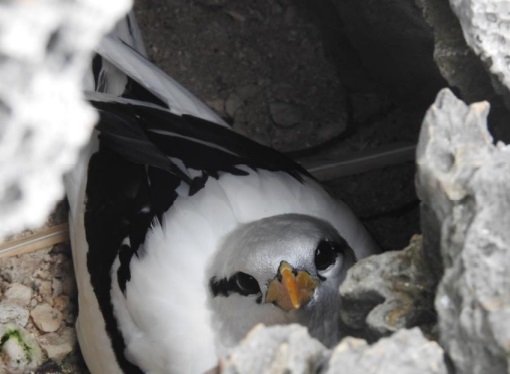
White-tailed tropicbird nests can be found in rock holes in the vertical cliffs of Cayman Brac’s Bluff, and the sea-facing cliffs at Pedro Bluff, Grand Cayman.
Red-footed boobies are found on Little Cayman, where they nest and breed at the Booby Pond, while brown boobies are found on the Bluff on Cayman Brac.
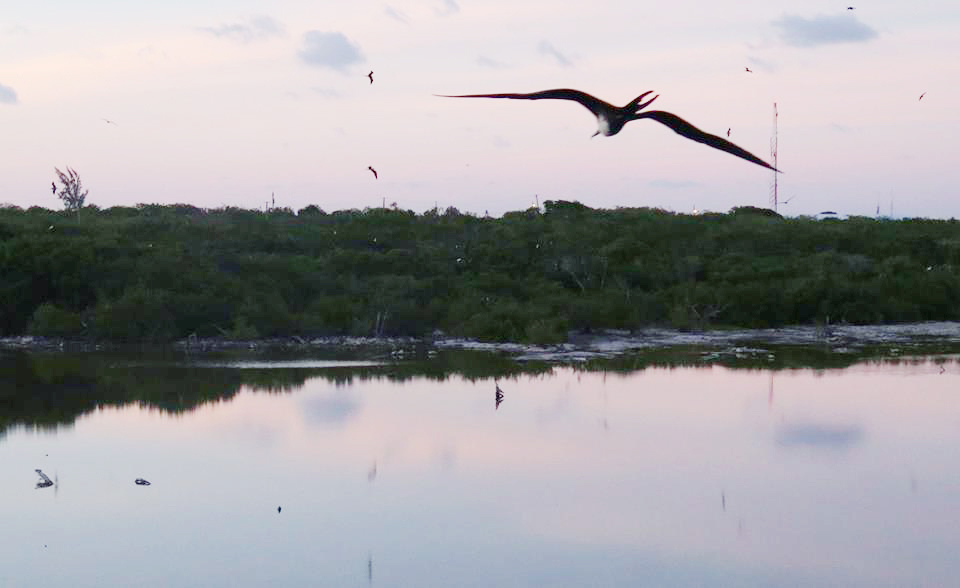
The draft conservation plan for six bird species also includes provisions to protect magnificent frigatebirds, which the NCC says, are “maintaining stable populations in the Cayman Islands at this time”.
“While no National Red List assessments have been carried out for Cayman’s seabird species, they should all be regarded as locally threatened due to nesting habitat limitations and/or low population sizes,” the conservation council noted.
Current protections

Some sites where these birds nest are already protected. For example, the nesting colony of red-footed boobies and magnificent frigatebirds, in the Booby Pond Nature Reserve on Little Cayman, is protected through the National Trust Law and the National Conservation Act, and is designated as a Ramsar site – a protected wetlands area under the Ramsar Convention of 1971.
Also, Vidal Cay and Sand Cay are protected areas under the National Conservation Act.
The brown booby and white-tailed tropicbird nesting cliffs on Cayman Brac have also been nominated and proposed for protection under the act, the conservation council said.
How to get involved
The public consultation period begins today, 28 Sept., and ends on 4 Nov.
The NCC has launched a survey aimed at obtaining public feedback on the Conservation Plan, and says public comments will be taken into consideration before presenting the final plan to Cabinet for approval.
For more information, visit the National Conservation Council site at conservation.ky.
Related Videos