

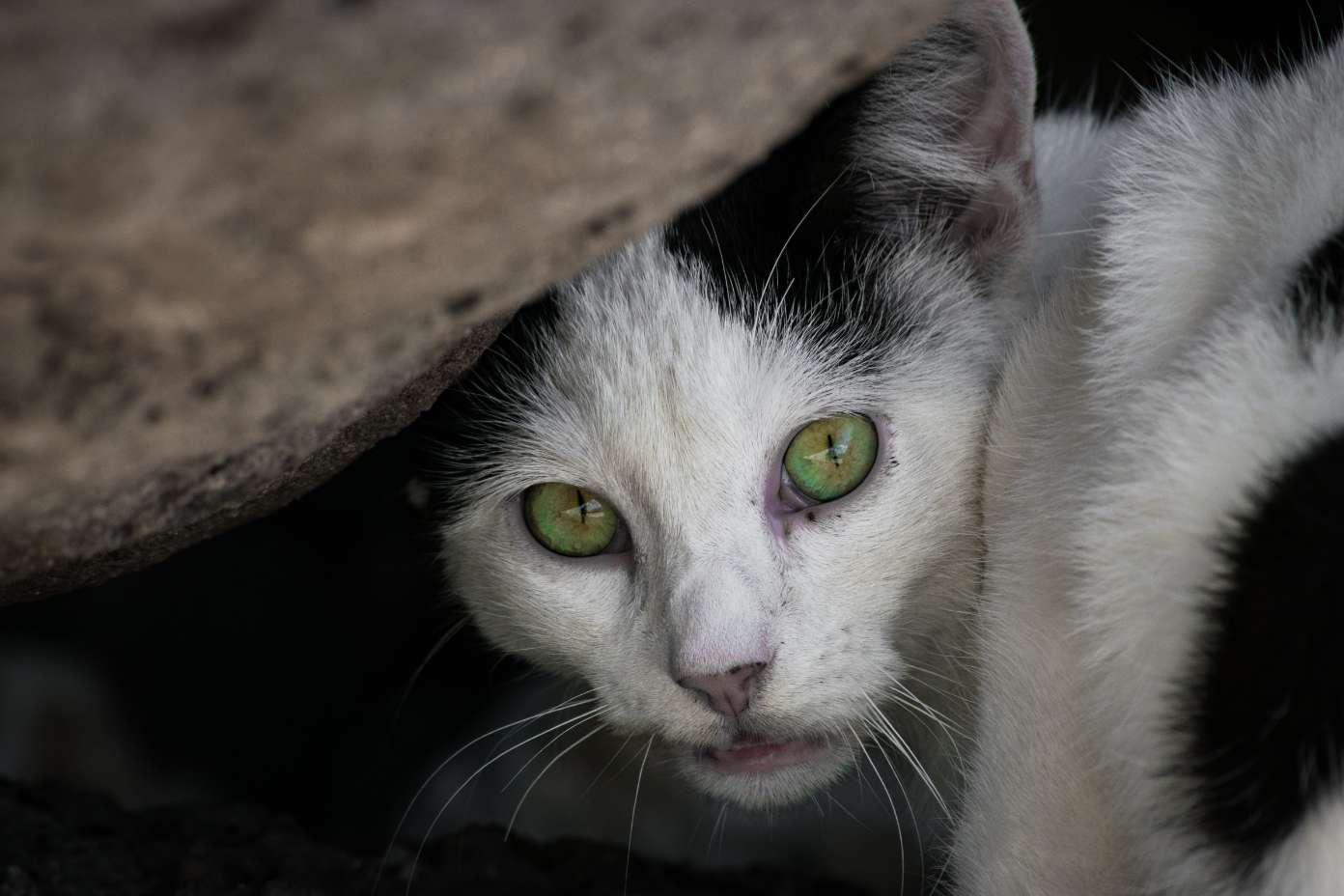
A member of the National Conservation Council and, until recently, manager of the Department of Environment’s Terrestrial Resources Unit, has responded to controversy surrounding a programme to euthanise feral cats in the Sister Islands.
Speaking at the council’s general meeting on 10 Dec., days before retiring after decades working in conservation in the Cayman Islands, Fred Burton said the culling programme is humane, focused on preventing the loss of native species and that public backlash has been driven by misunderstandings about how it operates.
“It’s a very different situation than what’s being presented in the media,” he said.
The comments came after weeks of criticism from animal welfare advocates, including a public petition calling for an end to lethal control and increased scrutiny of conservation efforts to protect endangered species such as rock iguanas and booby birds on Cayman Brac and Little Cayman.
Until recently, feral cats on Little Cayman were trapped overnight in cages and euthanised by a veterinarian using lethal injection, an approach the conservation councll said could cause unnecessary stress to the animals.
Under a newly approved protocol, trained Department of Environment staff are now using high-powered FX Dreamline air rifles to euthanise cats at close range. The National Conservation Council says the rifles allow for instantaneous and painless dispatch.
Burton said he believed there was a misconception “that we’re wandering around Little Cayman with big guns, going boom, boom, boom, whereas what we’re actually doing is using high-powered air rifles as a precision euthanasia tool for cats that are already trapped”.
The National Conservation Council said the revised approach allows euthanasia to occur “swiftly and discreetly on site”, adding that it reflects an effort to balance compassion for individual animals with the need to protect native species and habitats. The council said feral cats pose a serious and ongoing threat to Little Cayman’s ecosystem, particularly to species that are found nowhere else.
Burton said funding is now in place to fully eradicate feral cats from Little Cayman, with 2026 set aside for preparation and 2027 for implementation. On Cayman Brac, he said, the focus will remain on managing cat populations in sensitive nesting areas rather than pursuing island-wide eradication.
Environment Minister Katherine Ebanks-Wilks told MPs at a recent Finance Committee meeting that 49 cats had already been culled on Cayman Brac and 209 on Little Cayman, highlighting that “the scientific evidence that has been used to determine this process sets out that this is the most humane way to deal with euthanising an animal”.
Opposition MP for Bodden Town West Chris Saunders questioned the approach, saying, “The scariest part for me is these types of recommendations and where they’re coming from. I mean, the very name says conservation, preservation, and now we’re talking about elimination.”
Criticism from home and abroad
On 4 Dec., the Cayman Islands Humane Society issued a public statement acknowledging distress over the reports of cat culling. The organisation said it was seeking further information from the Department of Environment and emphasised that “the welfare of all animals is always our priority”.
“These issues are complex,” the statement said. “We believe it is important that any animal management activities follow established guidelines and best practices.”
The society said it was committed to engaging constructively with government to ensure humane standards remained central to any approach.
The statement came amid criticism on social media, where residents recirculated materials issued in 2023 by the US-based animal welfare group Alley Cat Allies, which condemned the culling of feral cats in the Cayman Islands. That year, the organisation also donated funds to the Cayman Islands Humane Society to cover the spaying and neutering of 100 cats.
“Slaughtering animals is not conservation, and there is no such thing as humanely attempting to wipe out an entire population of animals in an ecosystem,” said Coryn Julien, communications director for Alley Cat Allies.
A Change.org petition launched by Cayman resident Nastassja Mowbray calling for an immediate halt to the shooting of feral cats has gathered just under 700 signatures. It argues that lethal control is ineffective long term, and calls for expanded trap-neuter-return programmes, spay and neuter services, and non-lethal protection of nesting sites.
Officials, however, point to what they describe as tangible conservation gains. According to the National Conservation Council, since control efforts restarted in 2022, the rock iguana population on Little Cayman has increased dramatically, tripling from around 1,000 animals in 2022 to about 3,500 in 2025.
A video shown at the council meeting linked cat predation to declines in brown booby populations on the Sister Islands. “We have evidence of a brown booby parent that was predated upon by a feral cat,” said Department of Environment Alien Species Control Officer Nick Ebanks in the video.
The Department of Environment explained on its website that if one parent dies during nesting or rearing, the remaining adult cannot sustain the chick alone and will abandon the nest, leaving the chick to starve.
During the 2018 nesting season, the department concluded, based on documented reports, that cats had attacked and killed at least 16 brown boobies, most of them adult birds.
“I’m a cat lover. When I came here, I was pretty much against the cull because I didn’t understand it,” said Little Cayman resident Ronnie Dougall. “But when I watched and worked with them doing the cull, it made me realise how really it was a good thing.”
Editor’s note: This story has been changed from the original where quotes had been misattributed.
Related Videos











Thank you for caring about the species that you are lucky to still have. Thank you for not listening to people who cannot tell an ecosystem from a hole in the ground.