


A combination of an increase to the minimum wage, new immigration and work-permit fees and concerns over potential for further labour costs associated with immigration reform have prompted business owners to review prices ahead of the new year.
Business takes a haircut
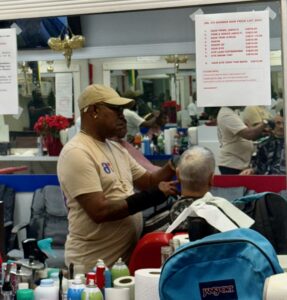
At Mr G’s Barber Shop on Eastern Avenue, a new price list has been tacked to the mirror.
A trim is going up from $15 to $18; a trim and shave from $18 to $23. The new minimum wage, higher work permit administration fees and rising product costs have all played a role, and the increase has to be passed on to the customer.
“I wouldn’t survive in business if I absorbed it all myself,” said Caymanian entrepreneur Gary ‘Mr G’ Watler, who also runs a fireworks store and an immigration consultancy business.
He knows there is a risk to pushing up prices in a business that depends on customer loyalty, and he’s already hearing grumbles from regulars, but he believes he has no choice.
“It’s yet to be seen in February … how much customers stay and how much stray,” he said.
The impact of increased labour costs, as the minimum wage rises from $6 to $8.75, along with higher work permit administration fees, is being felt across businesses of all sizes.
At Burger King, franchise owner Mark Anthony is struggling to keep prices down. The two-sandwiches-for-$6 deal – a loss leader for the restaurant – became two-for-$8 and then two-for-$9. Next year, the deal may be off the menu altogether.
Rising labour costs, including increased work permit administration fees, are adding to an already difficult environment in the fast, affordable food market.
“If I use the Whopper as a gauge of inflation – when I took over this business five years ago, the Whopper sold for $4.35 just for the sandwich. Today, I have to sell it for close to $6, and my margin has eroded.”
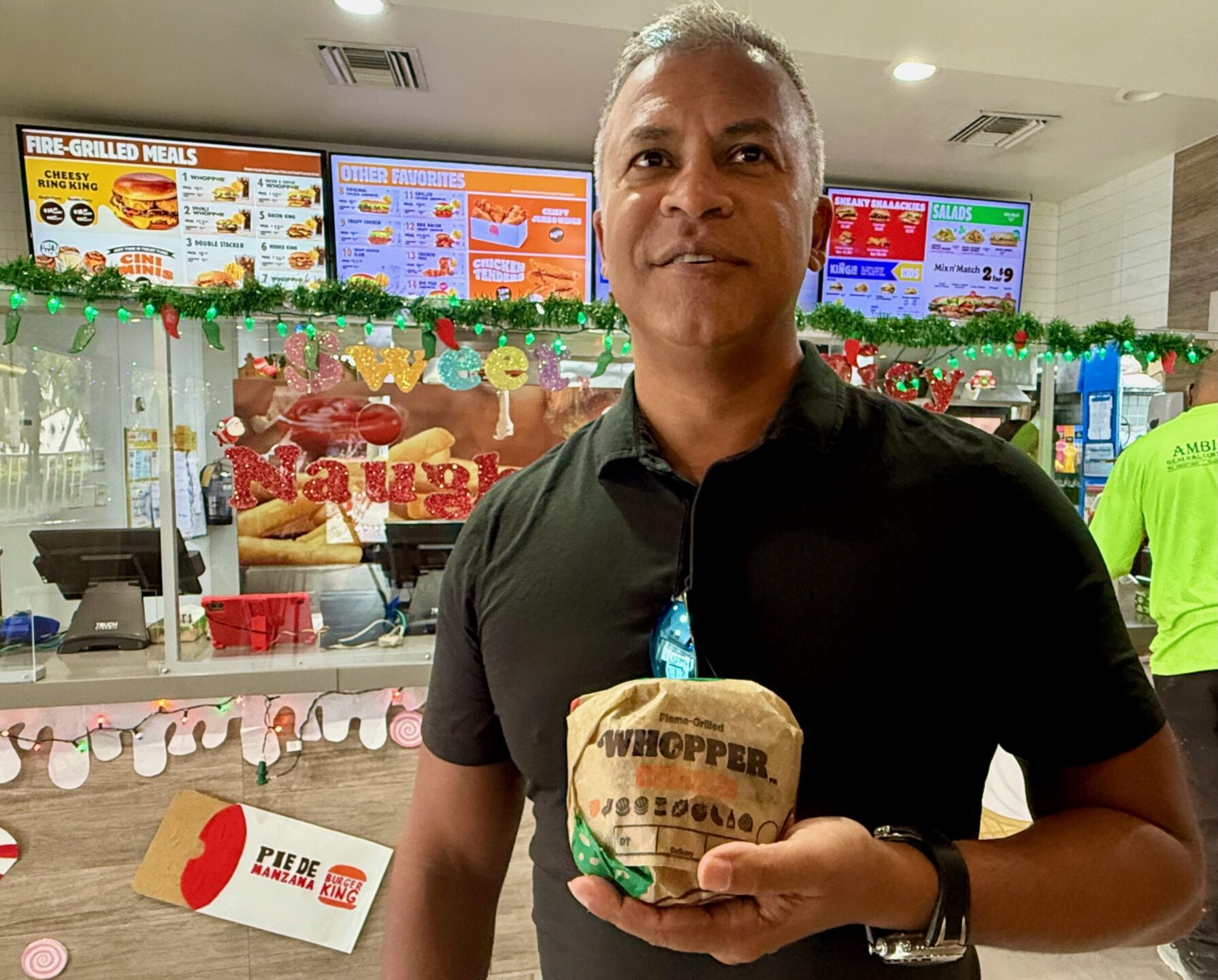
When he crunches the numbers for the new year, Anthony expects a 12–15% increase in the cost of doing business. He has already absorbed record inflation in eggs and lettuce, along with steadily rising costs for beef and chicken. He said it is inevitable that some of those increases will now be passed on to consumers.
“Food is really expensive. Labour has now surpassed that, and it is going to have an impact. If it’s impacting me, it’s impacting everybody. Everybody’s going to raise their prices.”
From fast food to fine dining, the story is the same.
Markus Mueri, of NM Ventures restaurant group, which includes Abacus and KARoo, is reviewing menu prices ahead of the new year.
“The cost of food, alcohol, rent – everything goes up every single year,” he said. “Our liquor licence went from $1,500 to $5,000. That’s a massive jump.

“I’ve been speaking to restaurants all over the island and they are saying we’ve been eating the fee increases for years, we can’t do that anymore.”
“Prices will go up all over the island. There is no other option. At the end of the day, the people of the Cayman Islands will pay for it when they go out to eat.”
It is not just food or a haircut that will cost more.
Strata fees – which have already risen in recent years due to property insurance cost increases – are expected to rise as security and landscaping firms submit new pricing, in line with minimum wage, pension and permit increases that will add significantly to labour costs in low-margin businesses.
One security firm owner, who asked not to be named, told us he is being inundated with requests for quotes as property managers try to get the best deal in the new environment. He has already cut his profit margin substantially in order to hold on to contracts. Increased work permit fees on top of labour costs are an additional headache and he said he is simply trying to hold on to his contracts to keep his staff working.
“I’ve had to increase my prices, though not by the $3 that wages have increased. We will see by February if it is sustainable.”
What are the main drivers of increased costs?
For many businesses, the biggest increase is labour.
The minimum wage rises from $6 to $8.75 on January 1 ($6.56 for employees who get tips). On top of that, a per-permit administration fee of between $150 and $500, up from $100, will apply to work permits, with smaller increases for less expensive permits. The cost of a temporary permit is also going up, along with Permanent Residency declaration filing fees.
The new Caymanian Protection Act is expected to bring additional costs, which have yet to be outlined in detail, including a requirement for an ID card for work permit holders.
There are also new charges tied to the extended pathway to becoming Caymanian for permanent residents, which will take an additional five years. Annual PR filing and fees, which can run to thousands of dollars, are often borne by employers.
Other less obvious increases, such as higher driver’s licence fees for expatriates, may also be absorbed by businesses seeking to retain staff, particularly in delivery and shift-based roles.
“Let’s call it what it is,” said Anthony. “We need more revenue so taxes are going up. That is what’s happened.”

Despite these concerns, there is no widespread dissent among business owners or representative groups.
There is broad recognition that the minimum wage needed to increase, and many employers support reforms aimed at protecting Caymanian status and promoting local employment.
Wil Pineau, the CEO of the Chamber of Commerce, said businesses had time to prepare for the impact of the wage increase. And he added that small businesses faced a difficult balancing act between passing on costs to consumers and absorbing them themselves.
“The only thing you can do is maybe adjust your prices and do what you can to cut costs. But as we know, Cayman is an expensive jurisdiction to do business. The reality is 2026 is going to be a challenging year for many micro and small businesses to adjust to these increased costs.”
Hiring local saves money
To an extent, Cayman’s immigration system has always made it economically advantageous to hire Caymanians first. The amended law and fee structure doubles down on that principle, said HSM partner Alastair David, an immigration lawyer.
He points out that many of those fees haven’t moved in over a decade. And while there may be some shock as several fees move at once, he believes the additional expense may have the desired impact of encouraging firms to promote Caymanians.
“Undoubtedly, it’s going to be more expensive to have expatriates in the Cayman Islands. Undoubtedly, more revenue will be raised by the government, but they are rightly putting forward Caymanians first.”
In some areas, foreign labour is a necessity
For some businesses, particularly in the service sector, foreign labour is not a choice; it is a necessity.
As a Caymanian business owner operating multiple major restaurant franchises, including Popeyes and Tim Hortons, Anthony said he is keen to hire locally, but he does not see long queues of applicants.
“We have a hard time getting applicants even for office roles like accounting, finance and HR.”
While his workforce is largely made up of permit holders, his customers come from across the community – many relying on meal deals for affordable food or an occasional treat.
At Mr G’s barber shop, it is a similar story.
The main concern is wage increases. But the new permit admin fees along with the potential cost of a new ID card for permit holders could add another layer of expense in a trade where hiring local is difficult.
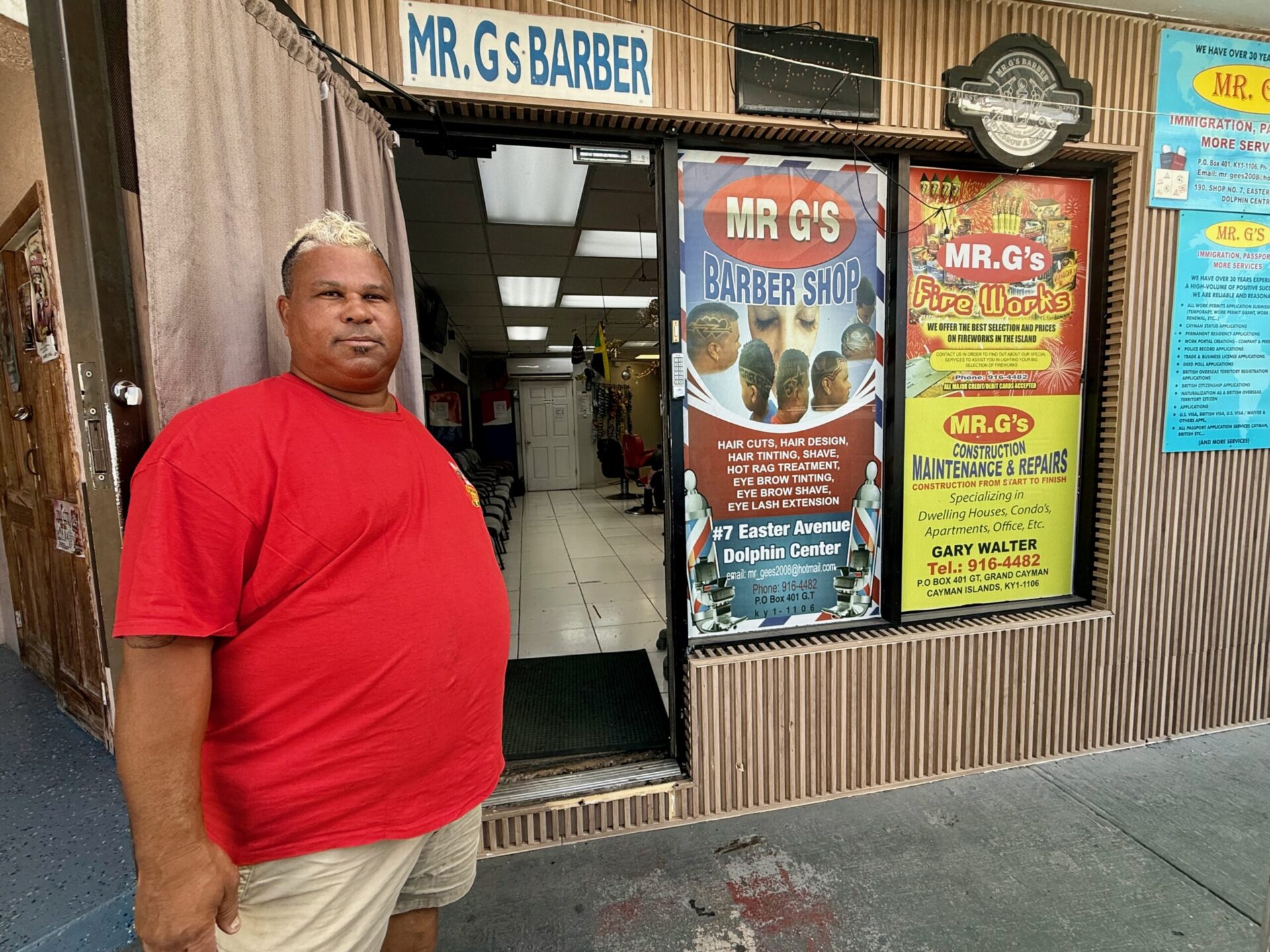
“I’ve always had to depend on foreign labour for barbers,” Watler said, adding that Caymanians trained in the trade tend to open their own shops rather than work for someone else.
As an immigration consultant, he sees the impact multiplied across several sectors and believes small and micro businesses should receive some relief from the increases. Finance Minister Rolston Anglin has pointed to a sliding scale of impacts that sees lower admin fees for less expensive permits as a sign that this line-item at least will only have marginal impact.
Both Anthony and Mueri point to the same figures: fewer than 1,500 Caymanians unemployed, and more than 40,000 active work permits.
In that context, increasing the cost of essential foreign labour or making hiring more challenging can feel punitive.
There has to be an easier fix, said Anthony.
“We’re a small country; we have the ability to sit down and say, ‘Who needs jobs? What can they do and where can they work?’”
Temporary permit switch a concern for some
For Mueri, wages are not the biggest issue. He said his staff were already earning more than the minimum and the retention of the ability to top up wages from tips is key for the sector.
He said, “Minimum wage has no impact. All our employees already earn more than that already.”
But he is concerned about access to skilled staff and labourers if work permits become more difficult to get.
Changes limiting the use of temporary work permits and restricting job mobility were presented as pro-business reforms, but he cautions there is a downside.
Mueri said temporary work permits functioned as a trial period in hospitality, allowing employers and employees to assess fit in a high-pressure environment. The ability for workers to move on it didn’t work out with one employer also helped retain skilled staff in the industry rather than lose them altogether. He suggests tweaks including six-month permits and a one-time ability to change jobs for new guest workers.
“Temporary work permits worked very well for our industry,” he said.

If it becomes harder and more expensive to recruit staff, service will suffer as prices rise. Mueri has been instrumental in various hospitality training programmes and the Cayman Islands Tourism Association is working with government to get more Caymanians into the trade. But he said there is a reality in terms of the numbers required for hospitality roles and the level of interest in the profession.
“Our young Caymanian students have many options – finance, law, banking. Hospitality is often seen as temporary, not as a career. That’s true everywhere and it is not going to change in the next 10 years.
“The single biggest problem is support staff – assistants, servers, kitchen helpers. These are essential jobs. We need to import people to do them. That’s the reality worldwide.”
The political debate
Deputy Opposition Leader Kenneth Bryan challenged the government over fee increases. He also asked for clarity over what the fee structure would be for the new provisions in the Immigration Bill, which include new annual declaration requirements and ID cards for permit holders, among other things.

Immigration Minister Michael Myles, speaking in the committee stage debate of the law, said the fees and expected revenue from them would be released once agreed by Cabinet.
And he said the failure of previous governments to increase the minimum wage for over a decade meant that adjustment was long overdue.
Bryan suggested there should have been an economic impact study to assess how all government’s new revenue measures would filter down through the economy.
“I genuinely have my concerns about the batch of fees collectively in tandem with the minimum wage increase as well as the immigration changes,” he said.
“I think it’s the cumulative effect that may see us having some unintended cost of living effects. So I am hoping that it’s kept to a minimum.”
Finance Minister Rolston Anglin has repeatedly denied that any of the increases will impact ordinary people, citing increased levies on hedge funds and multi-million-dollar properties as examples of where the new revenue measures are targeted.
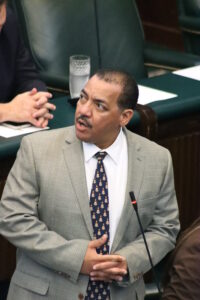
“None of our revenue measures are on the backs of people,” he insisted in Parliament last week in response to Bryan’s questions.
Speaking on Radio Cayman this week, Anglin added that Cayman had not had significant revenue measure increases for 15 years. He characterised many of the immigration-related fees as relatively minor, overdue increases that kept up with processing costs.
“We have been very targeted and very specific,” he said, insisting that the bulk of the fee increases were aimed at big business and financial services firms that could easily absorb the impact.
Related Videos












So done going out to eat. Who can afford an $8 beer or more – that is a whole hours work.
Haircuts, I’m done with these too. The whole island should grow out their hair like Fabio. Women , men and children can all have long hair because hair cuts are too expensive.
What drove the prices increases? The current government administration who is anti capitalist and has their hands in the free market every week. Don’t think any of them every took an Econ 101 class. I looked at the education of one of the gentlemen in the government the other day and was appalled to see he didn’t have much more than a high school education (don’t even know if you could count the college, the place seemed like such a joke)
“None of our revenue measures are on the backs of people,” he insisted in Parliament last week in response to Bryan’s questions.
Of course they are. Starting with the massive increase in the cost of a driving licence for non-Caymanians.
A crushing increase for people on minimum wage and a slap in the face for Permanent Residents who have already paid their dues and are entitled to fair treatment.
It would be more sensible to change the price of the award of Permanent Residence to add an annual cost. It would raise the same amount but would be less discriminatory.
Yep, really kicking the people that work hard and make the least amount of money, hit them with a crazy drivers license. I think like 63 hours of minimum wage work or so just for a drivers license.
The price increases directly hurt people.
Of course, not a suprise to anyone.
I have lived here for 56 years and seen many governments rightly attempting to protect Caymanians. However this intention to make exhorbitant increases to the driving licences of non Caymanians is over the top. I challenge the current Govt to name one other country in the world that does this. What is next?, charging them more for water and electricity, more tax on their CAL air tickets, more for having their vehicles inspected, charge them for garbage collection?. Govt annual revenue is over a billion dollars , yet 95% of this goes towards running the administration which is why we need to borrow. One sure way to raise more money is to spend less, but it seems public funds are often spent with abandon and no effort is made to mitigate expenditure. Taxing the expat sector even more will eventually kill the goose and Caymanians will then suffer themselves.