


For yet another year, key conservation plans to protect Cayman’s flora and fauna have remained on hold as they await final Cabinet approval to move forward.
The issue was raised at the general meeting of the National Conservation Council on Wednesday with members urging action.
NCC Chair Stuart Mailer, in his remarks at the final council meeting for 2024, said draft Protected Area Orders were completed for a number of parcels of land, as required under Section 7 of the NCA. The orders have yet to be issued or gazetted by Cabinet.
He said this is so even though Cabinet approval for the additions were handed down in 2021 and 2022.
“The Cabinet-approved protected areas ensure sustainable public access to some of our environmentally and culturally notable areas such as Sand Key in South Sound, Tarpon Lake on Little Cayman, and Hemmington Forest in Cayman Brac,” he said.
Some of the approved areas, he said, are less accessible, “but no less environmentally important”.
He said parcels in the Central Mangrove Wetland and Salinas Reserve on Grand Cayman and the undeveloped eastern interior woodland of Little Cayman were also approved for protection.
“Protected areas are a critically important strategy to aid us in addressing the double threat of biodiversity loss and climate change,” he said.
‘Focused and deliberate’ protected areas
Mailer said parties to the international Convention on Biological Diversity, which includes the UK and by extension the Cayman Islands, in their most recent meeting at the end of last year agreed to a target of protecting 30% of land by 2030.
“It is, therefore, extremely important that we are focused and deliberate about establishing protected areas that include representative examples of the range of native habitats which exist on our islands for the benefit of future generations,” he said.
The council, he said, awaits Cabinet’s issuing of the Protected Area Orders for “these important parcels at their earliest opportunity”.
Cabinet is also yet to formally approve the seabird conservation plan and the turtle conservation plan, both of which were completed after public consultation.
On Wednesday, the council voted on the conservation plan for the Cayman sage, which “may be extinct in the wild, but has been saved in cultivation”.
He said that plan, like the others, requires Cabinet approval.
“We expect this will join the conservation plans for wild sea turtles and seabirds, and the proposal to enable the management of land crabs by listing them on part two of the Protected Species Schedule under the NCA, all of which are pending Cabinet’s final consent,” he said.
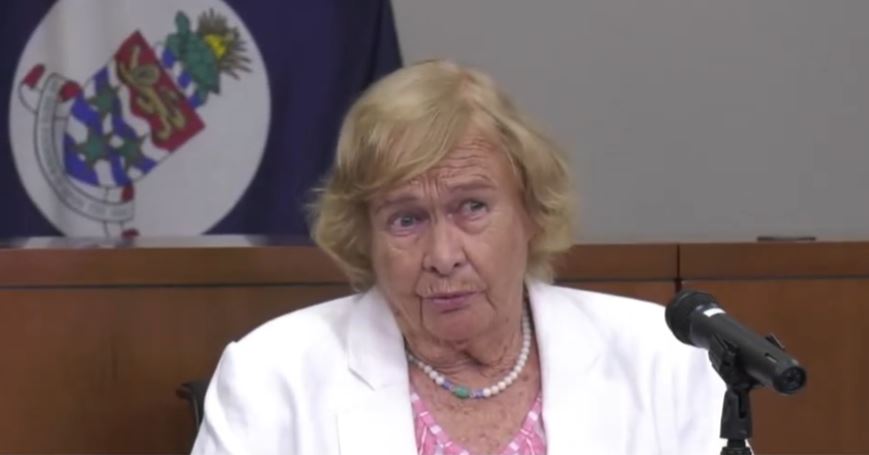
NCC members Ian Kirkham and Patricia Bradley appealed for the council’s conservation efforts to move ahead.
Kirkham noted that none of the council’s recommendations or conservation plans “will actually be put into effect without the approval of Cabinet”.
He said the council is awaiting, in some cases, on multi-year-old requests for approval.
Bradley said moving the plans forward will need the public’s support.
“I hope the public realises that there are only two conservation organisations officially in this country, the National Trust and the NCC, protecting the natural world and plants and animals and habitats. It is very important that what the work we put in is accepted and passed and taken through,” she said.
If these are not, she said, species like the booby birds in the Sister Islands will be lost “because our plan is not being carried through. So I would urge the public to support us”.
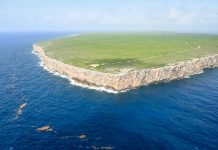
Mailer said predator-control activities on booby-nesting habitat on the Bluff on Cayman Brac were designed to protect nesting adults and fledging seabirds. Those efforts, he said, “have had very promising results with fledging success increasing from only 12.5% in 2021 to 77.8% in the 2023 nesting season when predator control activities commenced”.
“The DoE continues to collaborate on this very important work with the Royal Society for the Protection of Birds and other international experts in this area by way of a UK-funded Darwin Grant,” he added.
Related Videos









Thank you to the members of the NCC for pushing and literally fighting to protect the loss of mangroves, floral, fauna and the booby birds. Of course the present government is pushing their agenda for more development i.e. road extensions, cruise ship berthing, 10 floor condos, port in the middle of the island, etc. come April we the voters need to make some changes. In today’s situation with climate changes we the people should not literally be fighting government to protect and save the environment. Phase development is welcomed not this runaway situation for the all mighty dollar!