The National Conservation Council has given its full support to a draft plan to protect six species of native nesting seabirds across the Cayman Islands.
The proposal designates the most densely populated nesting sites as ‘critical habitats’, and provides specific protections to lessen disturbance from human and animal activity.
Among the planned restrictions in these protected areas are permits for rock climbers, a ban on roaming cats and dogs, and no public access to certain cays during nesting seasons.
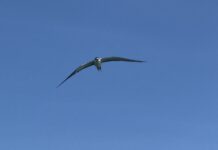
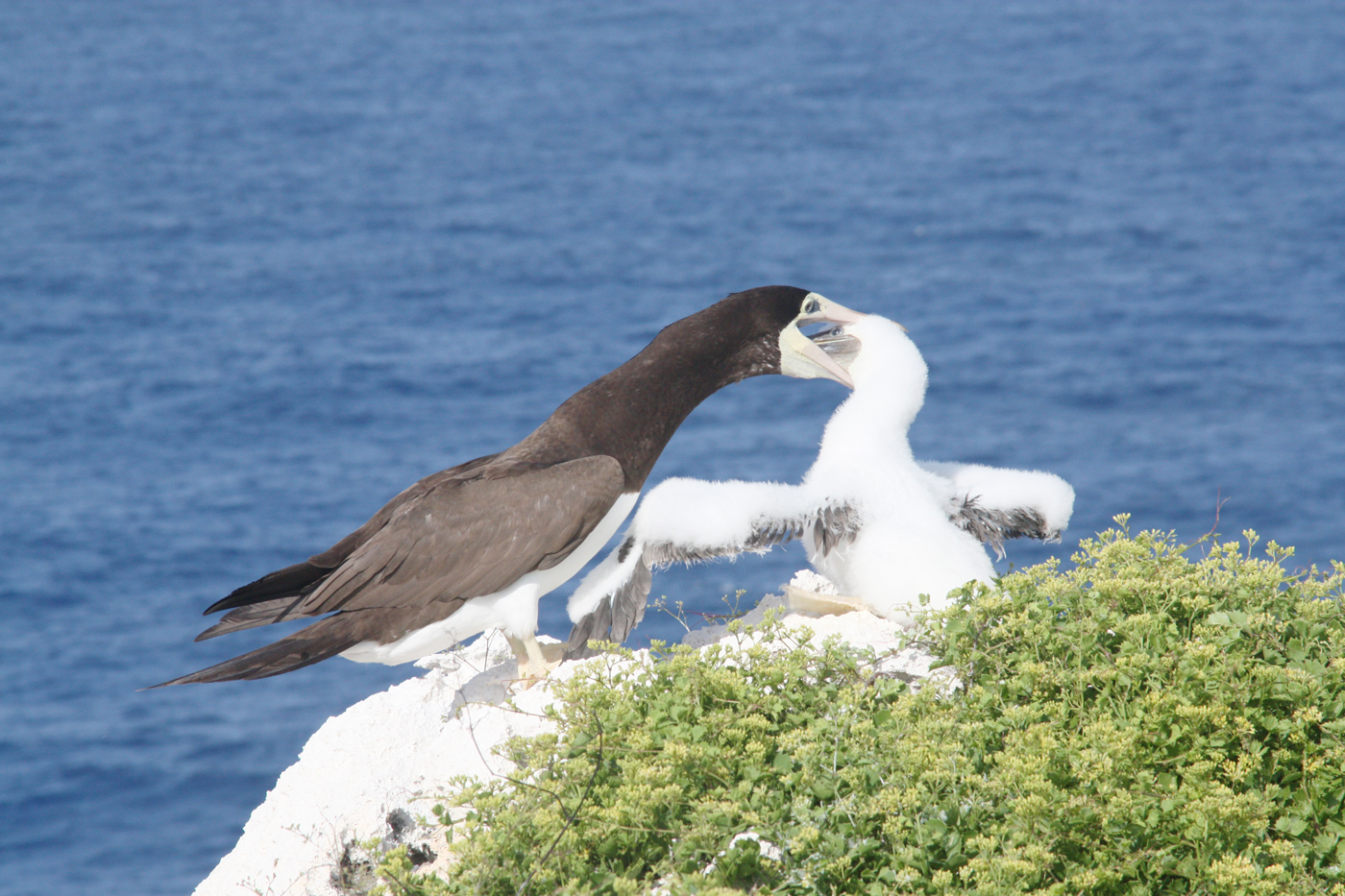
The birds the plan aims to safeguard are the brown booby, red-footed booby, magnificent frigatebird (man o’ war), white-tailed tropicbird (bo’sun bird), least tern and bridled tern.
“There are no new proposed restrictions on ‘take’, as these bird species are each fully protected under the National Conservation Act,” the conservation plan summary says.
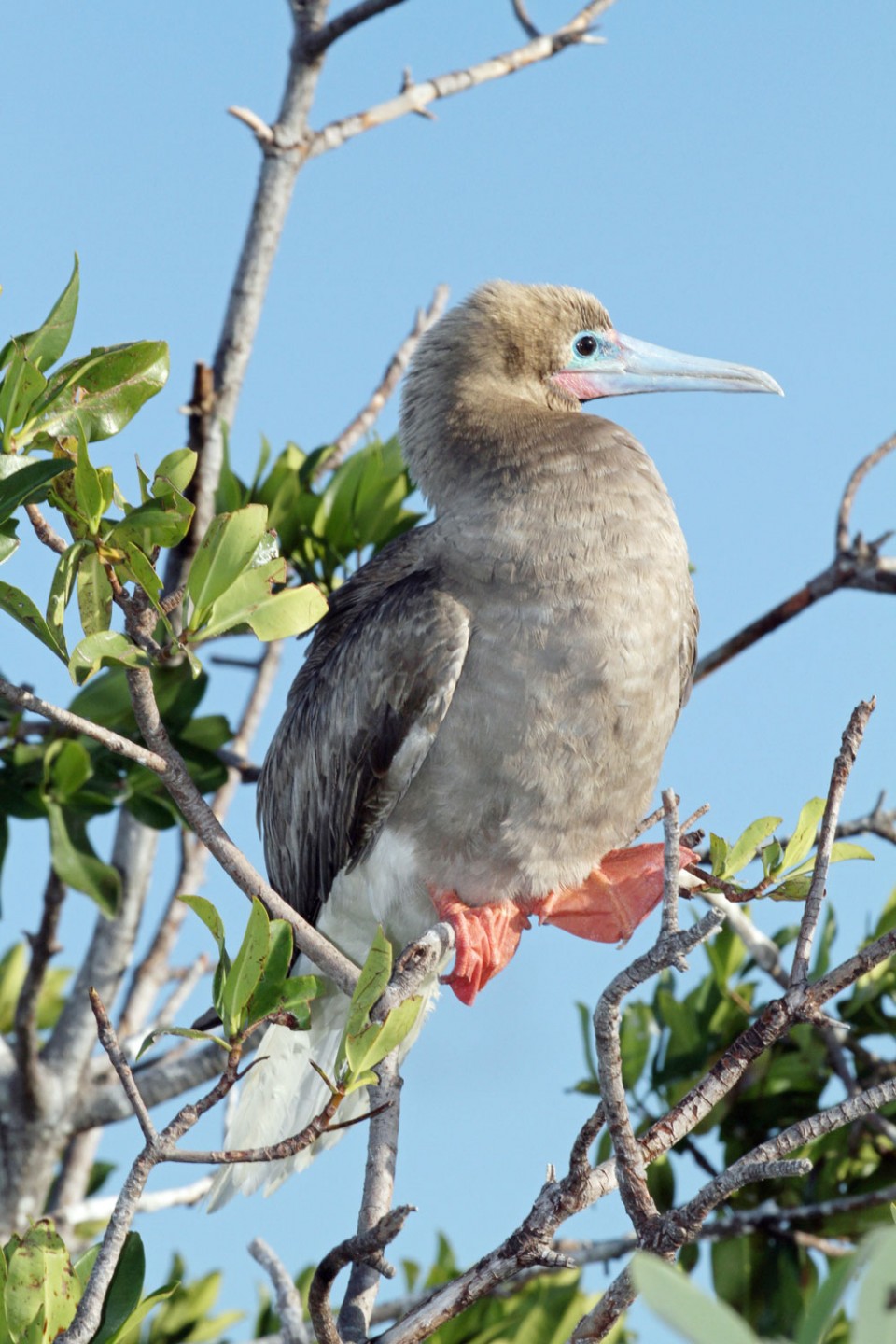
“However, their nesting habitats remain at continued risk from threats of development, human traffic and invasive predators.”
The summary stresses that most of these bird populations have experienced significant decline in the last century, and for several of these species local extinction is imminent.
The Department of Environment prepared the draft Species Conservation Plan for Colonial Nesting Seabirds, on behalf of the National Conservation Council, following consultation.
It was submitted for approval at the latest meeting of the council on 6 Dec., and then sent to the Ministry of Sustainability and Climate Resiliency for approval in Cabinet.
Critical habitats
Three key publicly-accessible nesting areas across the Cayman Islands have been designated as critical habitats in the plan.
They are Long Beach on Cayman Brac, and Sand Cay in South Sound, and Big Key or Vidal Cay off Barkers in North Sound in Grand Cayman.
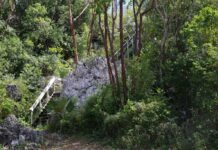
Several cliff faces and the adjacent areas of land which reach 50 feet back from the cliff edge have also been designated as critical habitats.
For the declining brown booby populations, Long Beach and the East Lighthouse Cliffs on Cayman Brac are its main nesting locations.
The white-tailed tropicbirds nest mainly on the north and south bluff cliff faces on Cayman Brac, and waterfront cliffs on the south coast of Grand Cayman.
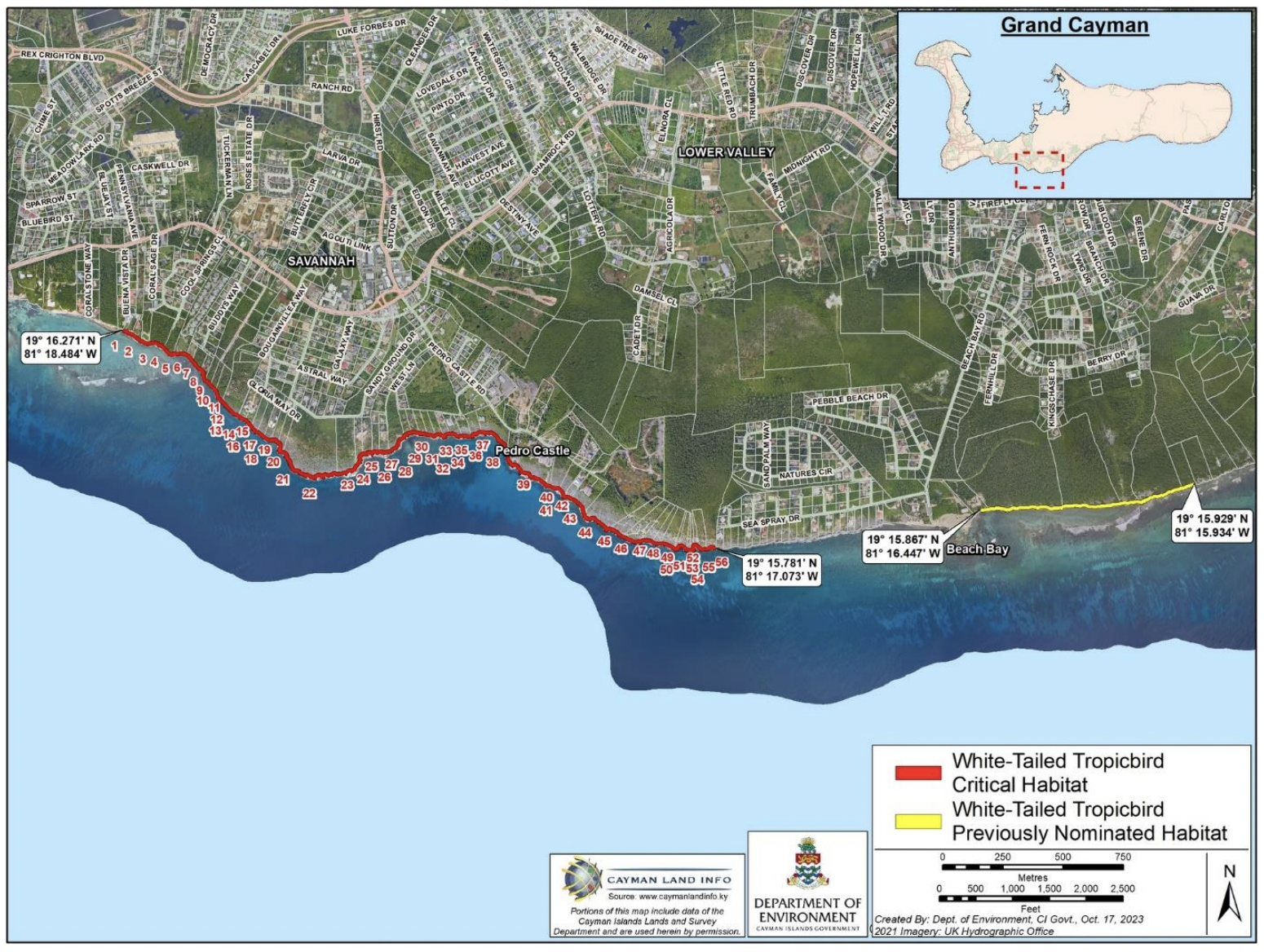
Proposed restrictions at those sites include no damaging any natural feature or vegetation, no vehicles or heavy vehicles, and no dogs or cats allowed to roam unrestrained.
“Alien species (including feral or free roaming domestic animals) may be controlled within the critical habitat by officers and agents of the Department of Environment,” the plan says.
No person or drone can approach the birds so closely that they alter their posture and begin to move away, which is defined as ‘take’ under the law.
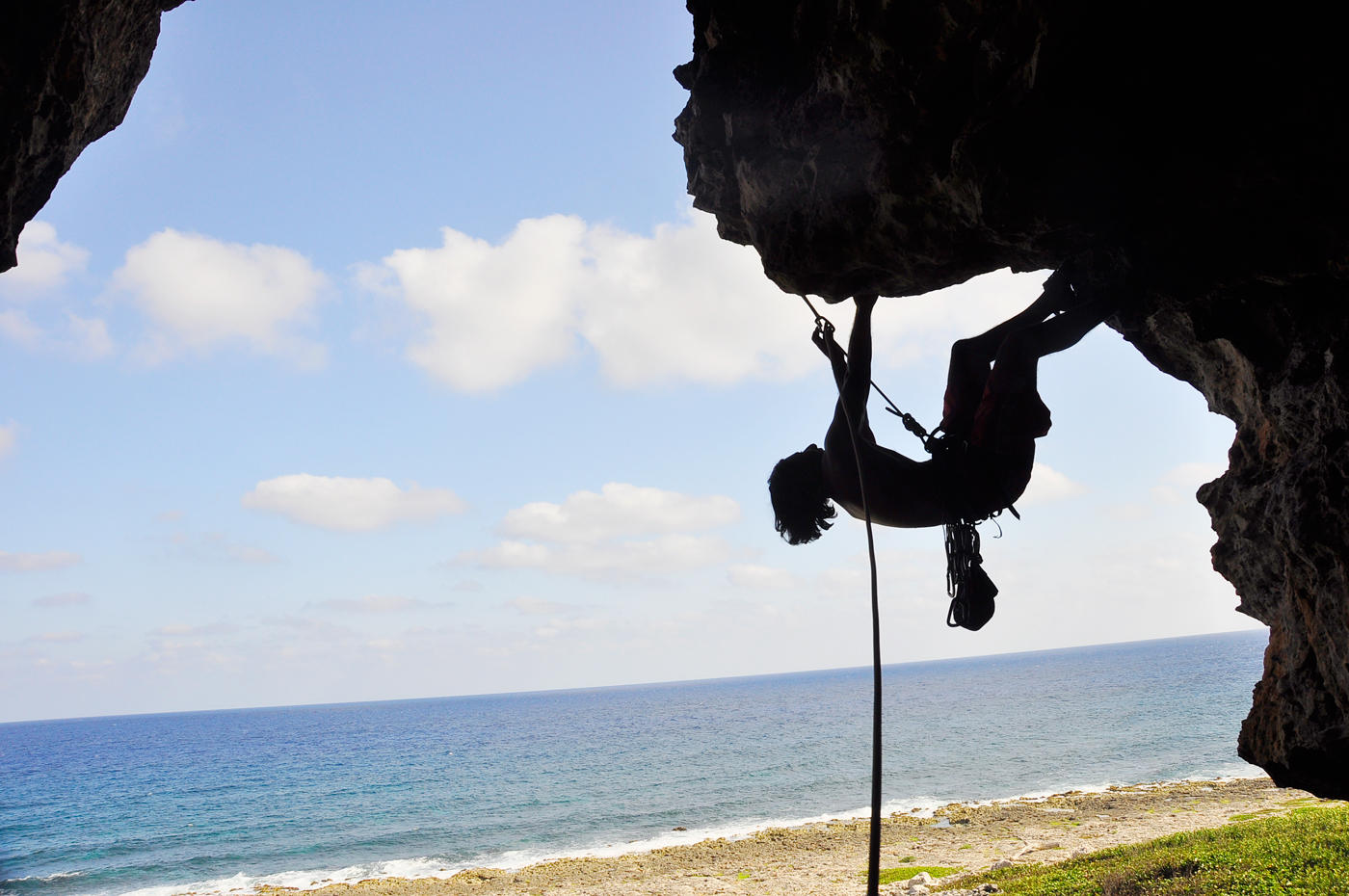
And on cliffs, rock climbing can only proceed if the National Conservation Council issues the relevant permit.
The critical habitat for the bridled tern is the entirety of Big Key off Barkers in North Sound, which has been designated a critical habitat in the plan.
The majority of Cayman’s breeding population – 28 pairs in 2019, 20 pairs in 2020 and 24 pairs in 2021 – nest on this small cay.
The plan states that between 1 May and 31 July no vessel or person may approach closer than 200 foot of the cay.
Meanwhile, the majority of Cayman’s breeding population of least terns nest on Sand Cay in South Sound – 112 pairs in 2019, 117 pairs in 2020 and 90 pairs in 2021.
For this cay, no vessel or person will be allowed to approach closer than 200 foot from 1 May to 31 Aug.
Public consultation
The National Conservation Council held a public consultation on the plan from 28 Sept. to 11 Nov. 2022.
A dedicated web page was created on the council’s website with information on the plan, including supporting data such as scientific reports.
Ahead of the consultation period, letters were sent to all of the landowners within the proposed critical habitats advising them of the draft plan.
Each of the MPs for the districts of proposed critical habitats, as well as the premier, were notified, and an online survey was held.
Of 105 respondents who answered the questions, 91 said they fully support protecting locally endangered native species, and 84 said they fully support the draft plan.
John Bothwell, secretary of the National Conservation Council, said: “Around the world seabirds who nest in these colonies are very susceptible to habitat loss and alien species predation.
“So, this plan tries to give us the tools to begin to address both of these issues locally.”
Related Videos